Hawk Tuah Girl Haliey Welch Dodges Blame for $HAWK Memecoin Crash Disaster
 LTB
LTB ‘Hawk Tuah’ Girl Haliey Welch Back in Spotlight, Sidesteps Blame for $HAWK Memecoin Catastrophe
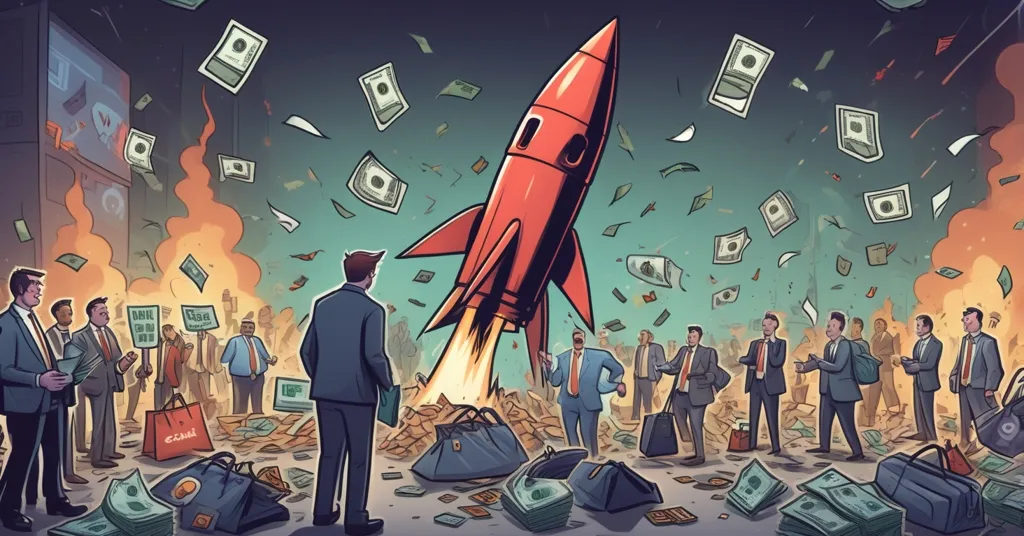
Haliey Welch, the internet sensation dubbed the “Hawk Tuah” girl, has resurfaced after a year of silence, stirring up a storm of controversy in the crypto world over her role in the disastrous $HAWK memecoin collapse. In a recent Channel 5 interview, Welch deflected responsibility for the token’s implosion last December 2024, which saw its valuation nosedive from $500 million to $25 million in just 24 hours, amid swirling accusations of a pump-and-dump scheme that left investors high and dry.
- Devastating Drop: $HAWK token crashed 95% in a day, fueling fraud allegations.
- Welch’s Stance: Claims ignorance of crypto, denies control, says scams are “normalized.”
- Community Fury: Voices like ZachXBT on X blast her for ignoring warnings and ghosting after losses.
The $HAWK Collapse: What Went Wrong?
For those new to this saga, Haliey Welch skyrocketed to fame with her viral “Hawk Tuah” catchphrase—a crude quip that turned her into an overnight meme. Riding that wave of fleeting celebrity, she launched the $HAWK token in December 2024, a memecoin riding on hype rather than any real utility. Memecoins, for the uninitiated, are cryptocurrencies often tied to internet jokes, trends, or personalities, with value driven purely by speculation rather than fundamentals. Think of them as digital lottery tickets—fun until you realize the odds are stacked against you. $HAWK was no different. Within a single day of its launch, its market cap plummeted by 95%, and today, it’s trading at a measly $0.00002975 per token, less than a fraction of a penny, according to CoinGecko data. That’s a staggering 96.7% below its all-time high of $0.0009016, with even a small uptick in 24-hour trading volume to $6,101.41 (up 32.2%) doing little to resurrect its corpse.
The collapse reeks of a pump-and-dump scheme, a scam where a token’s price is artificially inflated through hype before insiders sell off their holdings, crashing the value and leaving late investors with worthless tokens. Picture inflating a balloon just to pop it and walk away with the cash—that’s the gist. Critics and burned investors alike have pointed fingers at Welch, alleging her viral fame was weaponized to lure in unsuspecting buyers. But Welch, in her tell-all with Channel 5 journalist Andrew Callaghan, plays the clueless card hard.
“I was not controlling the coin,”
she insisted, adding with a self-deprecating jab,
“I don’t know anything about it. I have no clue. I’m dumb as a bag of rocks.”
She even mentioned being questioned by the FBI about a “phantom wallet”—a term that might hint at a hidden account used to dump tokens, though details remain vague and unsettling.
Welch’s Defense: Ignorance or Evasion?
Perhaps her most infuriating remark was on the broader plague of memecoin fraud.
“It’s done every single day… like it’s normal at this point,”
she said, shrugging off scams as just another day in the crypto jungle. That casual dismissal has enraged many, sounding less like an observation and more like an excuse. Normal? Maybe in some dystopian crypto reality show, but not in a space desperately fighting for mainstream trust. The U.S. Securities and Exchange Commission (SEC) didn’t let her off without scrutiny, launching an investigation into her role, as reported by Cryptopolitan on Welch’s return to the spotlight. Yet, after digging, they filed no charges. Welch, speaking to TMZ, confirmed she cooperated fully with authorities and attorneys. But the lack of legal consequences doesn’t mean she’s in the clear with the public. The crypto community on X has been merciless, with prominent investigator ZachXBT laying out a damning timeline:
“She starts posting about meme coins […] entirety of CT tells her not to launch a token […] she launches meme coin anyway […] after she blames partners and disappears off social media with followers losing funds […] no one should feel bad for the ‘trauma.’”
Another X user partially agreed with her on scam prevalence but rejected her framing:
“She’s not wrong about the reality — scams happen daily. But ‘normalized’ is the wrong take.”
But is Welch a calculated grifter or just a naive pawn in a game she didn’t grasp? Let’s chew on that. Memecoin launches often involve shadowy “partners” or developers who handle the tech side while the public face—here, Welch—absorbs the spotlight and the heat. If she genuinely had no control, as she claims, pinning the entire fiasco on her might be misplaced. The SEC’s decision not to charge her suggests they couldn’t prove direct intent or wrongdoing, or perhaps couldn’t untangle who really pulled the strings. The opacity around her alleged partners and that mysterious “phantom wallet” raises red flags—were others siphoning funds behind the scenes? Still, her choice to launch despite loud warnings from the community, followed by vanishing from social media post-crash, as ZachXBT highlighted, undercuts any victim narrative. Ignorance is a weak shield when people’s savings are wiped out.
Memecoin Market: A Fraud Epidemic
Welch’s $HAWK disaster isn’t an isolated incident—it’s a glaring symptom of a memecoin market drowning in fraud. Recent reports are damning: 98-99% of new tokens on platforms like DexScreener—a tool for tracking prices on decentralized exchanges—and Pump.fun, a token launchpad, exhibit scam-like behavior. We’re talking rug pulls, where developers hype a project, collect funds, then abandon it, disappearing with the cash, alongside blatant pump-and-dump schemes. The Solana blockchain, known for its low transaction fees and lightning-fast processing, has become a breeding ground for this garbage. Unlike Bitcoin’s deliberate design constraints that prioritize security and scarcity, Solana’s accessibility makes spinning up a scam token cheaper than a cup of coffee. Compare that to Ethereum, another major blockchain with higher fees and stricter developer scrutiny—while not immune to scams, its ecosystem sees fewer fly-by-night memecoins due to cost barriers. Despite the cesspool, the total memecoin market cap hovers at $33.2 billion, down just 0.3% in the last 24 hours. Meanwhile, estimated inflows into crypto scams overall hit a jaw-dropping $14-17 billion in 2025. That’s billions funneled into digital snake oil.
This isn’t just a numbers game—it’s personal. Imagine a small-time investor, lured by Welch’s viral fame, dumping a few grand into $HAWK only to watch it vanish overnight. That’s the human cost of unchecked hype. As a champion of decentralization and Bitcoin’s ethos of sound money, I see memecoins as a distracting sideshow, often tainting the real financial revolution blockchain tech promises. Unlike Bitcoin’s bedrock of scarcity and resistance to fiat inflation, tokens like $HAWK are digital confetti—pretty until they litter your portfolio. Yet, I’ll concede that altcoins and blockchains like Ethereum or even Solana carve out niches Bitcoin doesn’t touch, from smart contracts to experimental projects. The issue isn’t the tech; it’s the predators exploiting it with zero accountability.
Red Flags: How to Spot a Memecoin Scam
If there’s a silver lining to this mess, it’s the chance to educate. Want to avoid the next $HAWK? Here are warning signs to dodge memecoin scams:
- Anonymous Developers: If the team behind a token hides their identity, run. Transparency is non-negotiable; $HAWK’s backend players were murky at best.
- Overhyped Celebrity Endorsements: A famous face like Welch’s doesn’t equal credibility. Fame can be a smokescreen for shady dealings.
- No Utility or Whitepaper: If there’s no clear purpose or technical plan for the token, it’s likely just hype. $HAWK had zero substance beyond a meme.
- Unrealistic Promises: Sky-high returns overnight? That’s a fairy tale. Real crypto value builds over time, not in a hype-driven flash.
Due diligence isn’t optional—it’s your lifeline. The $HAWK debacle had these red flags plastered all over it, yet greed and FOMO (fear of missing out) still drew people in. Let’s not just blame the scammers; investors bear responsibility to research before clicking “buy.”
Bitcoin vs Memecoins: A Stark Contrast
Zooming out, let’s stack this up against Bitcoin, the gold standard of crypto. Bitcoin’s value lies in its decentralized design, limited supply, and role as a hedge against failing fiat systems. It’s not perfect—scams and bad actors haunt every corner of this space—but its purpose isn’t tied to a viral soundbite or a fleeting trend. Memecoins like $HAWK, on the other hand, are often gambling chips masquerading as innovation. While I lean toward Bitcoin maximalism, I recognize that other blockchains fill unique roles—Ethereum with programmable contracts, Solana with scalability. But when 99% of Solana-based memecoins stink of fraud, it’s hard to defend their place in the ecosystem without serious caveats. These incidents don’t just hurt wallets; they poison public perception of crypto, painting even legitimate projects like Bitcoin with the same scammy brush. Worse, they fuel calls for heavy-handed regulation that could throttle real innovation in the name of “protection.” Freedom in this space shouldn’t mean freedom to exploit.
What’s Next for Memecoins and Crypto Trust?
The $HAWK fiasco shines a harsh light on a memecoin craze that’s more casino than currency. If we’re serious about accelerating crypto’s disruption of traditional finance—pushing for effective accelerationism—then cleaning up this cesspool isn’t optional; it’s urgent. Platforms like Solana need to raise barriers to entry for token creation, even if it slows “innovation.” Regulators, while often overreaching, might have a point when they eye this space with suspicion—cases like Welch’s don’t help. And personalities thinking of jumping on the crypto bandwagon? Learn the basics or don’t bother. Welch’s claim of ignorance offers little solace to those left holding empty bags, and her “normalized” remark is a slap to everyone battling for crypto’s legitimacy.
So, where does this leave us? Investors, treat memecoins as the high-risk gamble they are—do your homework or prepare for pain. Developers, stop hiding behind “decentralized” anonymity to prey on the naive. And the broader community? Keep calling out nonsense like $HAWK with no mercy. Bitcoin’s promise of privacy and financial sovereignty doesn’t extend to shielding scammers. If we want to fast-track a decentralized future, we’ve got to draw a hard line between disruption and deception. Until then, navigate this meme-fueled minefield with eyes wide open.
Key Takeaways and Questions
- What sparked the $HAWK token collapse involving Haliey Welch?
Launched in December 2024, the $HAWK memecoin tied to Welch’s “Hawk Tuah” fame crashed from a $500 million valuation to $25 million in a day, with many alleging a pump-and-dump scheme that devastated investors. - Did Welch face consequences for the $HAWK disaster?
The SEC investigated her involvement but filed no charges, though she faced intense backlash from the crypto community for her role and subsequent silence. - How does Welch explain her involvement in the token?
She denies controlling $HAWK, admits to being clueless about cryptocurrency, and controversially calls memecoin scams “normalized,” drawing sharp criticism for her tone. - What’s the state of fraud in the memecoin market today?
Fraud is rampant, with 98-99% of new tokens on platforms like DexScreener and Pump.fun showing scam traits, especially on Solana, while crypto scam inflows hit $14-17 billion in 2025. - Is Welch solely to blame, or is there a bigger issue at play?
While Welch’s decision to launch despite warnings and her disappearance post-crash raise accountability questions, the broader memecoin market’s predatory nature and shady developers suggest she may be just one piece of a systemic problem.