Hyperunit Whale’s $200M Gain Turns to $250M Ether Loss: Crypto Trading Risks Unveiled
 LTB
LTB Hyperunit Whale’s $200M Trump Tariff Triumph Crashes into $250M Ether Disaster: Crypto Risks Exposed
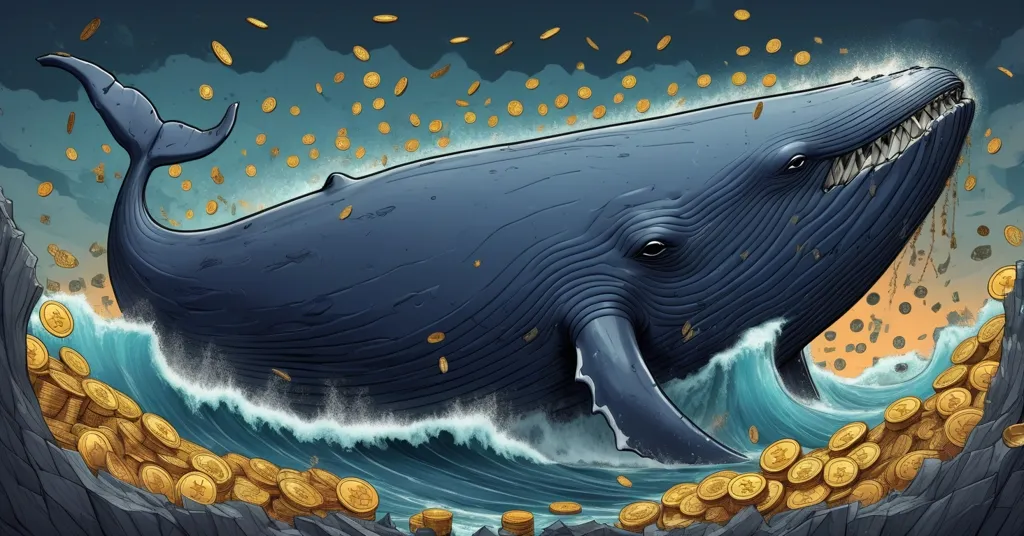
A pseudonymous crypto trader dubbed the “Hyperunit whale” has gone from hero to cautionary tale in a heartbeat, raking in $200 million from a perfectly timed short during a market meltdown, only to lose $250 million on a disastrous Ether bet. This wild ride, sparked by geopolitical curveballs and amplified by the brutal volatility of crypto, lays bare the razor-thin line between genius and ruin in leveraged trading.
- Stunning Gain: $200M profit from shorting Bitcoin and Ether before a Trump tariff-driven crash.
- Catastrophic Loss: $250M erased on a long Ether position, leaving the Hyperliquid account at $53.
- Core Warning: Leveraged trading’s lethal risks exposed, even for the biggest players.
Trump Tariffs Unleash Crypto Chaos
In October, former US President Donald Trump dropped a bombshell: a proposed 100% tariff on Chinese imports, aimed at shielding domestic industries from foreign competition. While the policy targeted traditional markets, its shockwaves ripped through the crypto sphere, a space often seen as a haven from geopolitical meddling. The announcement fueled fears of a global economic slowdown, prompting a mass sell-off of risk assets like Bitcoin (BTC) and Ether (ETH). The result? A staggering $18 billion in liquidations across the crypto industry, dwarfing typical daily trading volumes and rivaling historic crashes like the 2021 Terra-Luna implosion. For context, liquidations occur when leveraged positions—trades made with borrowed funds—fail to meet margin requirements, forcing platforms to sell off assets at a loss to cover debts. This tariff-induced panic set the stage for both massive wins and devastating losses, with one trader momentarily riding the wave to glory.
Hyperunit Whale’s $200M Masterstroke
Enter the Hyperunit whale, a shadowy figure who seemed to have a crystal ball. Just before the tariff news broke, this trader placed enormous short positions on Bitcoin and Ether, betting their prices would plummet. A short position, for the uninitiated, involves borrowing an asset to sell it high, then buying it back at a lower price to pocket the difference. When the market tanked, the whale cashed in to the tune of $200 million, a move so precise it turned heads across Crypto Twitter. Was it sheer genius, dumb luck, or something shadier? The timing has fueled whispers of insider knowledge—did this trader have a tip-off about the tariff announcement? While no evidence of misconduct has surfaced, the speculation underscores a persistent issue in crypto: a lack of transparency in an unregulated frontier where big players can move markets with a single trade.
The $250M Ether Collapse
High on success, the Hyperunit whale flipped the script, staking a colossal long position on Ether worth over $730 million. A long position is the opposite of a short—betting an asset’s price will climb, often using leverage to amplify returns. The whale’s total investments across ETH, Bitcoin, and Solana (SOL) topped $900 million, according to blockchain analytics firm Arkham Intelligence. But the market had other plans. Ether, Ethereum’s native token, nosedived to $2,418.31, a brutal 10.31% drop in just 24 hours as reported by CoinMarketCap. On-chain data revealed over $130 million in unrealized losses before the whale finally sold, locking in a $250 million deficit. The Hyperliquid trading account, once a fortress of wealth, crumbled to a laughable $53. From millions to pocket change—guess even whales can’t swim in shallow waters. Despite this, Arkham notes the trader still holds $2.7 billion in other cryptocurrencies, a reminder that even catastrophic losses don’t always mean game over in this space. For more details on this staggering turn of events, check out the full breakdown of the Hyperunit whale’s $200M gain and $250M loss.
For those new to the game, leverage is like playing poker with a credit card. You borrow funds to bet big, magnifying your wins if the cards fall right. But if they don’t, a small price swing can trigger liquidation—your position gets forcibly closed, and you’re left with nothing. In Ether’s case, the whale’s overconfidence in a bearish market, combined with leveraged exposure, turned a bad call into a financial abyss. This isn’t just a personal flop; it’s a glaring red flag about crypto’s merciless volatility.
Hyperliquid: Playground for High-Rollers, Pitfall for the Reckless
Let’s talk about Hyperliquid, the platform where this drama unfolded. It’s a decentralized trading hub specializing in perpetual futures, contracts that let traders speculate on price movements with high leverage—sometimes up to 100x. Its appeal? Low fees, anonymity, and the promise of outsized gains for those with deep pockets and deeper nerves. Whales flock to Hyperliquid for the freedom it offers compared to centralized exchanges, which often impose stricter rules or KYC (Know Your Customer) requirements. But freedom comes at a cost. With little regulatory oversight, there’s no safety net when things go south. The Hyperunit whale’s wipeout—down to $53—illustrates how quickly a leveraged bet on a platform like this can incinerate wealth. It’s a stark contrast to more conservative trading environments, where guardrails might limit such carnage but also cap potential profits.
Leveraged Trading: A Double-Edged Sword
Leveraged trading is the heart of this saga, a tool that can forge fortunes or shatter them. On one hand, it’s a turbocharger for skilled traders. A small price move in your favor can yield exponential returns—think turning $10,000 into $100,000 overnight during a bull run. Some argue it’s essential for market liquidity, allowing big players to amplify their impact. But let’s not kid ourselves: for most, it’s a trap. The Hyperunit whale, presumably a seasoned operator, got torched despite billions in holdings. If they can’t handle the heat, what chance do retail investors have? A single misstep, a sudden news drop, or even a whale dumping their stack can trigger a cascade of liquidations. The data speaks for itself—$18 billion wiped out in October alone. Leverage isn’t just risky; it’s a loaded gun in a market as unpredictable as crypto.
Playing devil’s advocate, though, isn’t leverage just a tool? With ironclad discipline and risk management, a trader could theoretically mitigate the downsides. Stop-loss orders—automatic sell triggers at a set price—can cap losses. Position sizing, betting only a fraction of your capital, can keep you in the game. But in practice, human greed and market chaos often override logic. The Hyperunit debacle proves even the pros aren’t immune to overreach. So, while leverage has its defenders, the reality is it’s a gamble most shouldn’t touch.
Who’s Behind the Whale? Speculation and Shadows
The crypto community loves a good mystery, and the Hyperunit whale’s identity is the latest obsession. On-chain sleuths, like analyst Eye, have dug into public blockchain data—transactions are transparent on networks like Ethereum, after all—and linked wallet activity to Garrett Jin, co-founder of WaveLabs and GroupFi, and a former exec at BitForex exchange. The clues lie in Ethereum Name Service (ENS) domains, personalized crypto addresses like “ereignis.eth” and “garrettjin.eth,” tied to the whale’s trades. Jin, however, has clapped back, denying personal ownership.
“The fund isn’t mine – it’s my clients’,”
he insisted, framing himself as a middleman rather than the mastermind. There’s no smoking gun of insider trading or foul play, but the court of public opinion isn’t so forgiving. In a space where trust is scarce, every big win or loss invites suspicion. Whether Jin’s involved or not, the episode highlights how on-chain analytics can unmask pseudonymous players—both a boon for transparency and a thorn in the side of privacy advocates.
Lessons for the Crypto Community
So, what can we take from this financial bloodbath? For retail investors—those of us without billions to cushion the fall—the Hyperunit whale’s story is a brutal wake-up call. First, steer clear of leverage unless you’ve got a death wish or a hedge fund’s worth of experience. Second, diversify your holdings. Bitcoin might be the king of sound money, a store of value built on unshakeable security, but altcoins like Ether power ecosystems Bitcoin can’t touch—think decentralized finance (DeFi) or non-fungible tokens (NFTs). That innovation comes with volatility, though. ETH’s price swings during this saga outpaced BTC’s, a reminder that altcoins are often riskier bets. Third, use tools like stop-loss orders to limit downside, and never bet more than you can afford to lose. Crypto isn’t a get-rich-quick scheme; it’s a war of attrition.
For the broader community, this reinforces why we champion decentralization. Bitcoin, at its core, is a middle finger to centralized control, a hedge against policies like Trump’s tariffs that can destabilize markets. Yet even decentralized systems aren’t immune to real-world chaos. As a Bitcoin maximalist, I’d argue sticking to BTC’s stability might’ve spared the whale this wreck. But I’ll concede Ethereum and Solana have their place—fast transactions and smart contracts fill gaps Bitcoin doesn’t. The trick is knowing the risks and respecting the market’s power to humble even the mightiest players.
Key Questions and Takeaways
- What sparked the Hyperunit whale’s $200 million profit?
The trader shorted Bitcoin and Ether just before a market crash triggered by Trump’s 100% tariff plan on Chinese imports, a shock that caused $18 billion in liquidations across crypto. - Why did the whale lose $250 million on Ether?
A leveraged long position on ETH, worth over $730 million, imploded as Ether’s price fell to $2,418.31, slashing the Hyperliquid account to $53 in a brutal market downturn. - What are the dangers of leveraged trading in crypto?
It amplifies losses as much as gains—small price drops can wipe out accounts via liquidation, as seen with the whale, making it a high-risk strategy for most. - Is there proof of insider trading by the whale?
No hard evidence exists, despite speculation over the perfect timing of the shorts; it could just as easily be sharp instinct or sheer coincidence. - How does this tie to Bitcoin and decentralization?
It highlights Bitcoin’s relative stability as a store of value over volatile altcoins like Ether, while showing decentralized markets still face real-world policy shocks. - What can retail investors learn from this disaster?
Avoid leverage, diversify holdings, set stop-losses, and respect crypto’s volatility—big wins are rare, but big losses are a heartbeat away.
Navigating Crypto’s Choppy Waters
As we push for effective accelerationism—driving innovation to upend the status quo—the Hyperunit whale’s downfall is a sobering gut punch. Blockchain and decentralized finance are our path to privacy, freedom, and a system that doesn’t bow to bureaucrats or bad policy. But that path is riddled with traps: market crashes, reckless bets, and the ever-present shadow of scams. We’re not here to peddle hype or baseless price predictions. Adoption comes from raw, unfiltered truth about the good, the bad, and the ugly in crypto. If even whales can drown in these turbulent waters, is true financial freedom worth the storm—or do we batten down with Bitcoin’s battle-tested anchor? That’s a question worth wrestling with as this revolution marches on.