IREN Raises Up to $3B to Pivot from Bitcoin Mining to AI Data Centers
 LTB
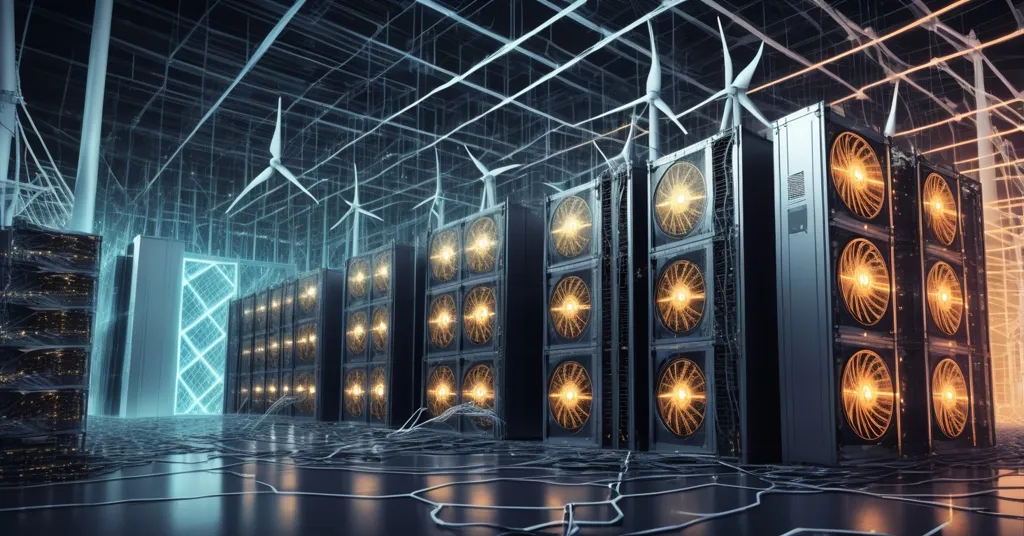
LTB IREN Secures Up to _3 Billion to Pivot From Bitcoin Mining to AI Data Centers is going all-in on a shift from Bitcoin mining to AI data centers, backed by a roughly $2.6 billion to $3.0 billion convertible note raise that could reshape the company’s future. The wager is simple enough: sell power, space, and GPU hosting to AI giants instead of grinding through Bitcoin’s brutal mining economics.
- $2.6B–$3.0B convertible note raise to fund AI infrastructure
- Sweetwater, Texas is the center of the expansion
- Nvidia and Microsoft add credibility, but also concentration risk
- Bitcoin mining stays, but increasingly as the legacy business
- Dilution, execution risk, and power constraints remain the big red flags
IREN’s bet: from Bitcoin miner to AI infrastructure provider
IREN is no longer acting like a company content to live and die by Bitcoin block rewards. It wants to be seen as an AI data center operator and GPU-hosting infrastructure provider, with long-term contracted revenue replacing the old cycle of hashpower, difficulty spikes, and market mood swings.
That shift makes sense on paper. Bitcoin mining is a rough business. Margins get squeezed by rising network difficulty, energy costs, and the simple fact that every miner on Earth is trying to do the same thing. AI infrastructure, by contrast, can lock in longer contracts and potentially smoother cash flow. In plain English: renting compute to big customers is a lot less chaotic than praying that the next halving doesn’t turn your spreadsheet into a crime scene.
But there’s no free lunch here. IREN is trading one set of risks for another: execution pressure, customer concentration, financing costs, and the possibility that markets are getting a little too excited about every miner with a power contract and a dream.
The financing: convertible notes, capped calls, and dilution math
IREN completed a convertible note offering worth roughly $2.6 billion to $3.0 billion. For readers who don’t spend their weekends reading debt prospectuses, a convertible note is basically a loan that can later convert into shares. Investors get the security of debt now, plus the chance to become equity holders later if the stock performs well.
The notes mature in 2033 and carry a modest 1.0% annual coupon, which is just finance-speak for interest. The initial conversion price is $73.07 per share.
IREN also spent about $200 million on a capped call, a structure meant to reduce dilution if the stock rises sharply. In this case, it lifts the effective conversion price to around $110.30. That doesn’t eliminate dilution, but it helps blunt the damage if the shares rip higher.
And dilution is not some abstract accounting footnote here. IREN’s share count has already expanded by about 50% over the past year. Existing shareholders have every reason to keep a skeptical eye on how all this capital gets deployed. Raising billions can fuel growth; it can also quietly transfer value out of current holders’ pockets if management overpromises and underdelivers.
Sweetwater, Texas: the new center of gravity
The heart of the plan is IREN’s Sweetwater campus in Texas. Sweetwater 1 is now live after connecting to ERCOT, the Electric Reliability Council of Texas, which oversees the state’s grid. That connection matters because AI infrastructure is only as useful as the power behind it. No electricity, no GPUs, no revenue. Simple as that.
The broader Sweetwater campus spans about 2,200 acres, with roughly 1.4 gigawatts of capacity and a target of 2 gigawatts as expansion continues. For anyone not used to utility-scale numbers, that is enormous. A gigawatt is not “a pretty decent data center.” It is industrial-scale compute territory.
IREN says it wants to host more than 700,000 GPUs across its buildout. That’s not a side project or a PR stunt. It is a serious attempt to become a meaningful player in the AI compute supply chain, which means more power, more cooling, more fiber, more hardware, and a lot more operational complexity than mining rigs humming in the desert.
Another site, Childress, is also part of the larger expansion story. The broader vision is clearly multi-site, multi-gigawatt, and very much geared toward the kind of infrastructure AI companies need when they are trying to scale without bottlenecking on compute.
Why Nvidia and Microsoft matter
IREN is leaning hard on high-profile partners to sell the pivot. The company says it has a five-year AI cloud arrangement with Nvidia worth about $3.4 billion. Nvidia reportedly received warrants exercisable at around $70, covering up to 30 million shares. IREN also disclosed a multi-billion-dollar AI cloud hosting agreement with Microsoft.
Those names matter. They help turn a story that could have looked like “former miner suddenly discovers AI” into something more credible. If Nvidia and Microsoft are involved, investors naturally infer that someone serious sees value in the setup.
Still, there’s a catch. Big customers are not the same thing as guaranteed victory. They can validate the model, but they can also create a nasty concentration problem. If a large chunk of revenue depends on a handful of mega customers, then IREN’s much-praised stability can disappear fast if demand shifts, pricing changes, or contract terms get renegotiated.
IREN says total contracted AI revenue is roughly $15 billion. That’s a huge number, and it is exactly the sort of figure that can make bulls dream and skeptics reach for the fine print. Contracted revenue is great, but only if the company can actually build the infrastructure on time, keep it filled, and avoid getting nicked to death by costs along the way.
Bitcoin mining is still there, but the hierarchy has changed
IREN still targets 30 EH/s of Bitcoin mining hashrate by year-end. EH/s means exahashes per second, a measure of mining power. It’s the amount of computational firepower a miner throws at the Bitcoin network in the race for block rewards.
That target shows Bitcoin mining is not being abandoned outright. But the role has clearly changed. It looks more like a legacy line of business now, not the main engine of the company’s future.
That’s telling. The move reflects the reality that miners are businesses first, ideological mascots second. If AI compute can deliver steadier returns than hashpower, rational executives will chase the better economics. Maximalists may grit their teeth, but capital doesn’t care about tribal loyalty. Capital cares about ROI.
The numbers behind the pivot
IREN’s recent quarterly revenue came in at about $144.8 million, well below analyst consensus of around $220 million. The company also reported a net loss of roughly $0.30 per share.
That mismatch helps explain why the pivot is happening with so much urgency. Bitcoin mining alone is no longer enough to satisfy the market’s appetite for growth. AI infrastructure gives IREN a cleaner narrative and, if executed well, potentially better economics.
But narratives don’t pay utility bills. Capacity does. Utilization does. Signed contracts do. And that’s where the real test begins.
Wall Street is split, which is usually a clue that nobody’s fully sure what to do with the thing
IREN shares were reported near $52.94, about 29% below the analyst target of $75. The stock fell 8.47% in a single European trading session after the issuance and earnings release, was down about 12.1% on the week, and was still up around 25% year-to-date. RSI was cited near 56, which is basically neutral momentum rather than a screaming buy or sell signal.
Analyst targets range from $26 to $105, which is a polite way of saying nobody agrees on how to value this beast. JPMorgan has an underweight rating with a $46 target. Goldman Sachs sits at neutral with a $44 target. BTIG is more bullish with an $80 target.
The split makes sense. Bulls see a miner turning into an AI infrastructure operator with major contracts, industrial-scale power access, and a huge runway. Bears see dilution, execution risk, and a stock that could be pricing in perfection before the concrete is even dry.
Why Bitcoin miners are chasing AI
IREN is not alone. This is part of a broader trend: Bitcoin miners are trying to monetize their biggest asset beyond mining itself — access to lots of power and industrial-scale sites.
That is the real hidden value in many mining companies. They already have land, grid connections, energy expertise, and a tolerance for giant infrastructure bets. AI companies need exactly those things, especially as compute demand keeps growing and cloud providers race to secure capacity.
So yes, the pivot is rational. It may even be one of the smarter moves in the sector. But there’s a reason not every miner succeeds at this game. Building and operating multi-gigawatt campuses is brutally hard. Power delivery can lag. Cooling can fail. Construction schedules can slip. Capex can balloon. And “we have demand” is not the same thing as “we can profitably serve that demand at scale.”
What could go wrong?
Plenty.
IREN faces dilution pressure, because financing a massive AI buildout usually means issuing more stock or taking on more obligations. It faces execution risk, because data centers are not magic boxes that appear when the deck is polished enough. It faces customer concentration risk, because big names are great until one of them blinks. And it faces power and buildout risk, because all the contracts in the world mean nothing if the infrastructure comes online late or underutilized.
There’s also the possibility that the market is getting ahead of itself. AI infrastructure is undeniably important, but not every company racing into the sector will become a winner. Some will become case studies in expensive ambition. That’s the part investors tend to forget when headlines start sounding like prophecy.
Here’s the blunt version: IREN may be positioning itself for the future, but the future still has to show up on schedule and pay its bills.
Key questions and takeaways
-
What is IREN becoming?
A Bitcoin miner that is increasingly trying to operate like an AI infrastructure and GPU hosting company. -
Why raise so much capital?
To fund a large-scale AI data center buildout, especially at the Sweetwater campus in Texas. -
Why do Nvidia and Microsoft matter?
Their involvement gives the strategy more credibility and suggests demand for IREN’s compute capacity. -
Is Bitcoin mining finished at IREN?
No, but it is becoming secondary to the AI push rather than the core growth story. -
What is the biggest risk?
Execution. Building and filling multi-gigawatt campuses is hard, expensive, and easy to get wrong. -
Why are investors nervous about dilution?
Because the company has already increased its share count significantly, and more financing can water down existing holders. -
Is this a broader industry trend?
Yes. Many miners are trying to turn power-heavy infrastructure into AI compute revenue instead of relying only on Bitcoin mining.
The bigger picture
IREN’s move says a lot about where parts of the Bitcoin mining industry are headed. Mining is still the original game, but the economics have gotten harsher and the capital requirements keep rising. AI, meanwhile, is vacuuming up power, chips, and data-center capacity at a ridiculous pace.
That makes this pivot understandable, maybe even necessary. But it doesn’t make it easy. The company is trying to convert a legacy mining footprint into dependable, high-margin utilization from mega customers. That is a serious industrial transformation, not a quick rebrand.
If IREN executes well, this could look like one of the smarter repositionings in crypto-adjacent infrastructure. If it stumbles, shareholders may end up funding a very expensive lesson in the difference between hype and cash flow. The market loves a bold pivot. It just hates paying for a botched one.