Itaú Unibanco Endorses Bitcoin as Hedge Against Brazilian Real Devaluation
 LTB
LTB Itaú Unibanco Champions Bitcoin as a Hedge Against Brazilian Real Devaluation
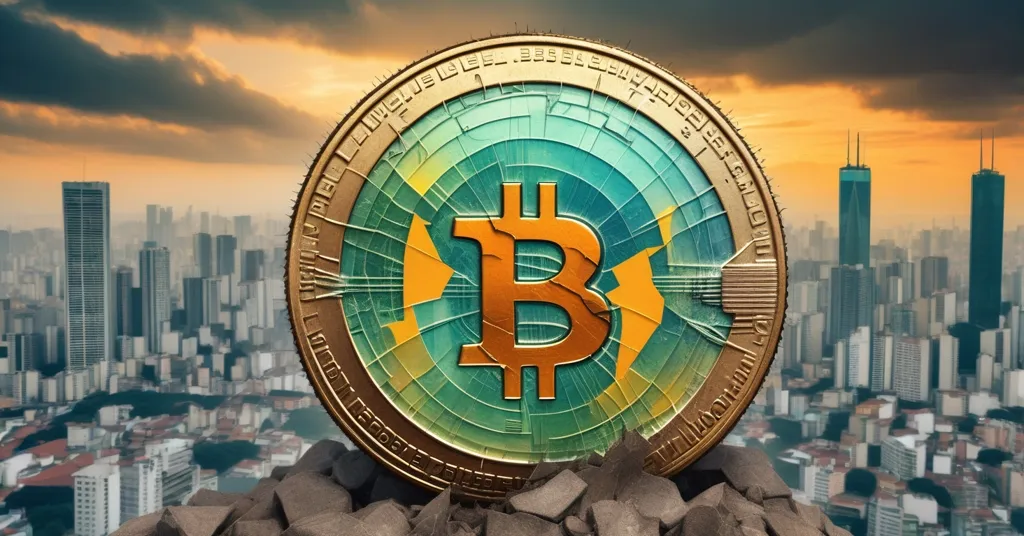
Brazil’s heavyweight financial institution, Itaú Unibanco, has made a groundbreaking call: Bitcoin isn’t just a speculative toy but a legitimate hedge against the relentless slide of the Brazilian real. As the largest private bank in the country, based in São Paulo, Itaú is signaling a seismic shift in traditional finance by urging investors to consider this decentralized cryptocurrency as a shield amid domestic currency woes and global economic storms.
- Big Move: Itaú Unibanco endorses Bitcoin as a hedge against Brazilian real devaluation.
- Allocation Tip: Recommends a cautious 1% to 3% portfolio slice for diversification.
- Local Focus: Targets Brazilian investors grappling with currency volatility and external shocks.
Brazil’s Economic Quagmire: Why Hedging Matters
The Brazilian real has been a perennial underdog in the global currency ring, taking punch after punch from domestic economic instability and external pressures. Hyperinflation in the late 20th century scarred generations, with prices doubling in mere months during the worst of it in the 1980s and early 1990s. Even today, the real stumbles against the US dollar, losing significant ground over the past decade—down roughly 50% since 2015 alone. For everyday Brazilians, this isn’t abstract economics; it’s a gut punch. Imported goods, from electronics to medicine, become pricier, while savings shrivel when converted to stronger currencies for travel or investment. Holding onto wealth in a depreciating currency is like storing water in a cracked bucket—eventually, it’s gone.
This is where Itaú’s recommendation lands with such weight. Hedging isn’t a fancy Wall Street tactic for Brazilians; it’s a survival strategy. Whether it’s stashing cash in US dollars, buying gold, or now, dipping into Bitcoin, the goal is the same: preserve value when the local currency can’t. Brazil’s exposure to global shocks—think commodity price swings, geopolitical tensions, or post-pandemic inflation—only sharpens the need for alternatives. Itaú’s nod to Bitcoin, as highlighted in recent insights, isn’t just a trend; it’s a response to a perfect storm of economic fragility that leaves investors desperate for a lifeline.
Bitcoin as a Shield: Itaú’s Game-Changing Stance
Itaú Unibanco’s recent strategy note lays out a clear case: Bitcoin, the flagship cryptocurrency, offers a unique way to protect against the real’s erosion. The bank suggests a modest portfolio allocation of 1% to 3%, a small but deliberate stake designed to diversify without derailing an investor’s overall strategy. Why Bitcoin? Its decentralized nature means no government or central bank pulls the strings—unlike fiat currencies tied to a country’s economic health. Plus, it often moves independently of traditional assets like stocks or bonds, so when the broader market tanks, Bitcoin might not follow suit. This low correlation makes it a compelling piece of the diversification puzzle.
For those unfamiliar, Bitcoin was born in 2009 from the mind of the mysterious Satoshi Nakamoto. It runs on a blockchain—a public, tamper-proof ledger of transactions maintained by a global network of computers. No single entity controls it, which is why many view it as a store of value akin to digital gold. Just as gold has historically held worth during economic turmoil, Bitcoin’s appeal lies in its potential to retain value when local currencies falter. Itaú sees this as particularly relevant for Brazil, where the real’s performance against the dollar often dictates financial stability. While exact data from Itaú’s note isn’t public, broader trends like Brazil’s inflation rate—hovering around 4-5% in 2023—and capital flight to safer currencies underline the urgency of finding a hedge.
Risks and Realities: Bitcoin Isn’t a Magic Fix
Let’s cut through the hype—Bitcoin isn’t a golden ticket to financial salvation. Itaú is blunt about the risks, and for good reason. Bitcoin’s price swings are legendary; it’s not uncommon to see 20% drops or spikes in a single week. Just look at 2021: it soared past $60,000, only to crash below $30,000 months later, leaving latecomers nursing heavy losses. The bank warns against trying to time these wild swings—playing that game is a surefire way to get burned. Instead, they push a patient, long-term mindset, treating Bitcoin as a small, steady hold rather than a lottery ticket.
Beyond volatility, there are other storm clouds. Regulatory uncertainty in Brazil looms large; while the government passed a crypto framework in 2022, enforcement and taxation rules remain murky. A sudden crackdown could spook markets or limit access. Then there’s the environmental angle—Bitcoin mining guzzles energy, with critics pointing to its carbon footprint as a dealbreaker. For eco-conscious investors, this is a nagging concern. And let’s not forget the practical hurdles: setting up a secure wallet, navigating sketchy exchanges, or avoiding scams isn’t exactly user-friendly for a newbie. While Bitcoin shines as a hedge in theory, the road to owning it can be a minefield.
Here’s a devil’s advocate take: does a traditional bank like Itaú endorsing Bitcoin undermine its rebellious, anti-establishment ethos? Bitcoin was born to bypass the very institutions now co-opting it. Is this mainstream embrace a win for mass adoption, or does it dilute the vision of financial freedom Satoshi dreamed of? It’s a tension worth chewing on, especially as more old-guard players dip their toes into decentralized waters.
Global Context: A Trend Beyond Brazil
Itaú isn’t a lone wolf in this crypto experiment. Across the pond, US giants like Morgan Stanley and Bank of America have also greenlit Bitcoin allocations of up to 4% for certain clients, though with strict caveats around suitability—think high-net-worth individuals with risk tolerance. Their reasoning mirrors Itaú’s: diversification and hedging against uncertainty. But the stakes differ. In the US, Bitcoin often plays as a speculative bet or inflation hedge; in Brazil, it’s a more visceral defense against a crumbling currency. Market maturity plays a role too—US investors have more robust infrastructure and regulatory clarity, while Brazil’s crypto scene is still a bit of a Wild West.
Look at other emerging markets for parallels. In Venezuela, where hyperinflation obliterated the bolívar, Bitcoin became a lifeline for locals to store value or send money abroad. Argentina, battling similar currency woes, has seen crypto adoption spike. These cases bolster Itaú’s logic: when fiat fails, decentralized assets can step in. Brazil isn’t at that extreme yet, but with the real’s shaky trajectory, the playbook feels eerily familiar.
Practical Takeaways: Can Brazilians Make Bitcoin Work?
So, how does Bitcoin stack up against other hedges for Brazilian investors? Historically, many turn to US dollar-denominated assets or gold to shield wealth. Dollars offer stability but often require offshore accounts or high fees to access. Gold holds cultural trust as a safe haven, though it’s less liquid and harder to store securely. Bitcoin, by contrast, is globally accessible with just an internet connection—provided you can navigate the tech. Its costs are lower for small transactions, but the risk of theft or loss due to poor security is real. Unlike gold, it’s not tangible, which can feel unsettling to traditionalists.
Adoption isn’t seamless. Many Brazilians lack the know-how to set up a crypto wallet or pick a reputable exchange—local platforms exist, but horror stories of hacks abound. Tax implications are another gray area; while Brazil recognizes crypto, reporting gains can be a headache without clear guidance. Itaú’s advice assumes a level of financial literacy not everyone has. Still, the rise of user-friendly apps and local education initiatives could lower these barriers over time. For now, Bitcoin as a hedge demands both caution and curiosity.
What’s Next for Bitcoin in Brazil?
Itaú’s move could be a domino tipper. If Brazil’s largest bank is dipping into Bitcoin, will competitors like Bradesco or Santander follow suit? A wave of endorsements might fast-track mainstream crypto adoption, especially if paired with clearer regulations. Local exchanges could see a boom, and public interest—already high with Brazil ranking among the top crypto adopters in Latin America—might explode. But there’s a flip side: greater scrutiny from authorities worried about money laundering or tax evasion could tighten the noose.
This also ties into Bitcoin’s broader mission of decentralization and financial freedom. Itaú’s cautious embrace might bring crypto to the masses, but does it risk turning a revolutionary tool into just another bank-approved asset? Could this spark a real shift in how Brazilians view money, or is it just a headline that fades with the next market dip? The answers will shape not just Brazil’s financial future, but Bitcoin’s identity in the global south.
Key Questions and Takeaways
- What’s behind Itaú Unibanco’s push for Bitcoin as a hedge against Brazilian real devaluation?
Itaú highlights the dual threat of global economic uncertainty and the real’s persistent weakness. They see Bitcoin as an alternative asset untethered to domestic cycles, offering a buffer against currency erosion. This stance reflects a growing need for non-traditional investments in volatile economies like Brazil’s.
- Why limit Bitcoin to just 1% to 3% of a portfolio?
This tiny allocation balances Bitcoin’s diversification benefits with its notorious price swings. Itaú aims to capture its unique market behavior without exposing investors to outsized risk. It’s a pragmatic way to test the waters while safeguarding broader financial stability.
- How does Bitcoin’s role differ for Brazilians compared to other global investors?
For Brazilians, Bitcoin is a critical shield against local currency depreciation and external economic shocks, far more urgent than in stable economies. While US investors might treat it as a speculative play, in Brazil, it’s about preserving purchasing power. The stakes feel personal when your savings melt away with each exchange rate drop.
- What risks does Itaú warn about with Bitcoin investments?
Itaú flags Bitcoin’s brutal short-term volatility, cautioning against market timing or speculative bets. They also implicitly acknowledge broader risks like regulatory uncertainty and technical barriers. Their advice is clear: approach with discipline, not dreams of overnight riches.
- How does Itaú’s position compare to other global financial giants?
Itaú’s stance aligns with US banks like Morgan Stanley and Bank of America, which also advocate small Bitcoin allocations of up to 4% for select clients. However, the urgency in Brazil—driven by currency woes—sets it apart from the more speculative motivations in mature markets. It’s a global trend with local flavor.
- Is Bitcoin’s mainstream adoption a betrayal of its roots?
Bitcoin was built to disrupt banks, not join them, so Itaú’s endorsement raises eyebrows. While it could drive adoption, it risks turning a tool of financial freedom into just another portfolio checkbox. The tension between revolution and co-optation remains unresolved.