Jack Dorsey Pushes Bitcoin Toward Everyday Money With Block Payments Focus
 LTB
LTB Jack Dorsey is pushing Bitcoin toward the one use case that actually matters: money people can spend, save, and hold without begging a bank for permission. Through Block, he’s backing tools meant to make Bitcoin payments, self-custody, and merchant adoption more practical, not just more hyped.
- Jack Dorsey wants Bitcoin to work as everyday money
- Block is building around payments, merchants, and self-custody
- The goal is real-world utility, not empty price-pump theater
- The hard part is turning a volatile asset into usable money
Bitcoin as money, not just a chart to stare at
Bitcoin has always lived a split life. On one side, it’s treated like digital gold: scarce, durable, and something to tuck away as a hedge against monetary debasement. On the other, it’s supposed to be a decentralized payments network — digital cash for a system that doesn’t need banks, card networks, or some suit in a compliance department approving your transfer like a hall monitor with a grudge.
Dorsey has long backed the second vision. His push through Block is built around a simple idea: if Bitcoin is going to matter in the long run, it can’t just sit in cold storage as a speculative trophy. It has to be useful in daily life.
That means Bitcoin payments that are not a total clunky mess. It means merchant adoption, so businesses can actually accept it. It means self-custody tools, so users can hold their own coins instead of trusting an intermediary to do it for them. And it means building financial infrastructure around Bitcoin’s actual strengths: permissionless transfers, censorship resistance, and a monetary policy that doesn’t get rewritten whenever central bankers feel like hitting the panic button.
What Block is trying to solve
Block’s Bitcoin initiatives are aimed at making the network more practical, not just more popular. That distinction matters.
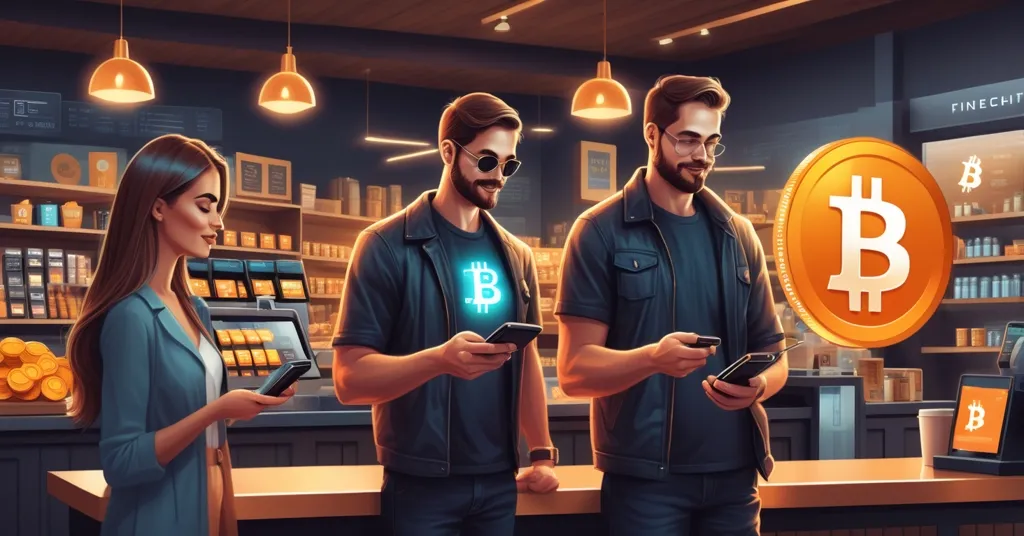
Bitcoin payments are the obvious starting point. If a transaction is too slow, too expensive, or too awkward, people won’t use it for everyday commerce. That’s not a philosophical failure; it’s just bad product design. A payment system lives or dies on whether someone can actually pay for coffee, groceries, or a service without needing a tutorial and a prayer.
Merchant adoption is the next hurdle. For businesses, accepting Bitcoin has to make sense operationally. “Because freedom” is a nice slogan, but it doesn’t balance a register. Merchants want smoother checkout, lower friction, fewer chargeback headaches, and a reason to care beyond crypto conference talking points. If Bitcoin is going to work as money, businesses need a real reason to plug it in.
Self-custody is the part that separates Bitcoin from the usual fintech walled garden. It means you control your own private keys and therefore your own coins. No bank can freeze them. No payment app can quietly decide you’re too risky to serve. No middleman gets to play landlord with your money. That is one of Bitcoin’s biggest selling points, and it’s also one of the biggest UX problems. Power is great. Losing your seed phrase because you wrote it on a napkin next to your lunch order is not.
There’s also a bigger theme underneath all this: financial inclusion. If money can move without requiring a bank account, a credit score, or approval from some gatekeeper, then Bitcoin opens a door for people who’ve been excluded from the traditional system or repeatedly burned by it. That’s not utopian nonsense. It’s a real advantage of open, decentralized payments.
Why this vision hits a nerve
Dorsey’s position is a quiet slap in the face to the “Bitcoin is only an asset” crowd. The store-of-value case is valid, but it can also become a cop-out. If everyone hoards Bitcoin forever and nobody spends it, then sure, scarcity still exists — but the network risks becoming a beautifully engineered museum piece.
Money is supposed to move. It should be spendable, transferable, and usable in real commerce. If Bitcoin can’t get there, critics will keep dismissing it as a fancy savings vehicle for tech bro survivalists and macro nerds. If it can get there, the entire conversation changes.
That’s why Block’s focus on utility is important. It pushes Bitcoin beyond the “number go up” crowd and into the messier, more serious world of actual economic use. No amount of influencer nonsense changes the fact that adoption comes from usefulness, not memes.
The hard reality: Bitcoin is still not frictionless
Let’s not romanticize this. Bitcoin as everyday money is a tough sell for perfectly obvious reasons.
Volatility is the biggest headache. Nobody wants to get paid in something that can swing hard before the bill is due. That makes spending less attractive, especially for workers and businesses that need predictability. Bitcoin may be sound money over a long horizon, but “long horizon” doesn’t help much if you’re trying to make payroll on Friday.
Transaction experience still matters too. Bitcoin is better understood as a settlement layer than a toy retail payment app. For fast, cheap payments, scaling tools and payment layers matter. If the user experience is clunky, merchants and consumers will default to easier alternatives even if they like the philosophy.
Merchant incentives are another problem. Businesses don’t adopt payment rails out of ideological purity. They adopt them because the costs, speed, and customer demand make sense. If the Bitcoin checkout experience isn’t clearly better — or at least clearly different in a useful way — adoption will crawl.
And then there’s the uncomfortable truth that many people like Bitcoin precisely because they expect it to go up, not because they want to buy a sandwich with it. That’s not exactly a moral failure, but it does expose the gap between Bitcoin as an investment and Bitcoin as money. Traders treat everything like a casino. Unfortunately, they then act surprised when the chips don’t behave like cash.
Bitcoin as digital cash, digital gold, or both?
The debate over Bitcoin’s role is not going away, and honestly, it shouldn’t. Bitcoin can serve more than one function. In some markets, it may be mainly a savings asset. In others, it may be a payment rail or a way to move value across borders without asking permission. For businesses and institutions, it can act as a treasury reserve. For individuals, it can be a hedge, a medium of exchange, or a long-term store of value.
The point is not to force Bitcoin into a single box. The point is to make sure it remains useful. Dorsey’s push through Block reflects a belief that usage is what gives Bitcoin staying power. A monetary network that people actually rely on is harder to ignore, harder to censor, and harder to dismiss as a hobby for finance nerds with too much time and too many hardware wallets.
That’s also where the decentralization argument gets real. If money is permissionless, then anyone can participate. No one needs approval from a corporate intermediary. No one gets excluded because a platform decided they were inconvenient. That’s a powerful concept — and one that the traditional financial system has spent decades proving it cannot be trusted to deliver consistently.
Key takeaways and questions
What does Jack Dorsey want Bitcoin to become?
He wants Bitcoin to function as everyday money — something people can use, not just hold and speculate on.
How is Block involved?
Block is working on Bitcoin-related initiatives aimed at payments, merchant tools, and self-custody to make the network more usable in real life.
Why does merchant adoption matter?
Bitcoin becomes far more useful if businesses accept it in regular commerce. Without merchants, Bitcoin stays mostly theoretical for day-to-day spending.
What is self-custody?
Self-custody means controlling your own Bitcoin directly, rather than leaving it in the hands of a company or platform.
What’s the biggest obstacle to Bitcoin as everyday money?
Volatility, user experience friction, and limited merchant adoption still make spending Bitcoin harder than simply holding it.
Is Bitcoin only a store of value?
No. The store-of-value case is strong, but Bitcoin can also serve as a payments network, a savings tool, and a censorship-resistant monetary system.
Why does this matter for financial freedom?
Because money that can be used without permission from banks or payment processors gives people more control over their own economic activity.
Dorsey and Block are betting on utility over hype, which is exactly the right instinct. Bitcoin does not need more breathless price nonsense or another round of shameless shilling. It needs real infrastructure, better user experience, and serious adoption. If Bitcoin is ever going to be more than a speculative asset, it has to become money people actually use. That’s the whole game.