Judge Rejects SBF New Trial Bid as FTX Fraud Conviction Holds Firm
 LTB
LTB A federal judge has rejected Sam Bankman-Fried’s bid for a new trial in the FTX fraud case, keeping the disgraced former CEO’s legal options narrow and his conviction intact.
- Judge Lewis Kaplan denied the new trial request.
- The court said SBF’s “newly discovered” evidence was not actually new.
- His bid to remove Judge Kaplan was also rejected.
- The Second Circuit appeal remains SBF’s main legal path.
- The FTX collapse still stands as one of crypto’s ugliest failures.
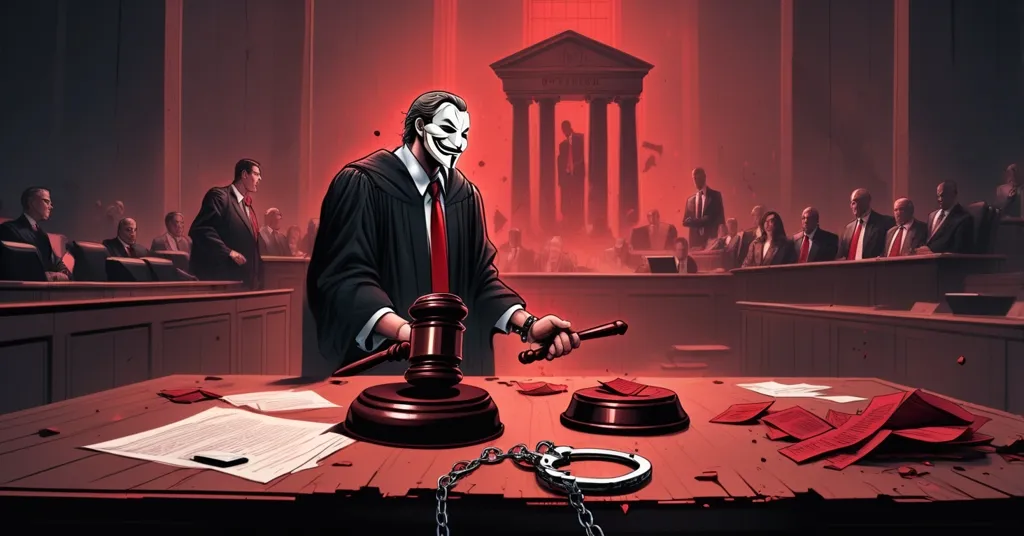
U.S. District Judge Lewis Kaplan of the Southern District of New York rejected Sam Bankman-Fried’s motion for a new trial, ruling that the former FTX CEO failed to present any genuinely “newly discovered” evidence. Kaplan also turned away Bankman-Fried’s attempt to have him removed from the case, calling the recusal request untimely and unsupported.
In plain English: the court wasn’t buying the comeback pitch.
Bankman-Fried filed the motion in February without consulting his lawyers, then later tried to withdraw it after saying he did not believe he would get a fair hearing before Kaplan. That didn’t help. The judge said the motion looked like part of a plan to “rescue his reputation,” and noted that the government’s “extensive and detailed opposition” was enough on its own to sink the request.
That’s a pretty stiff way of saying the defense had no real legs to stand on.
Kaplan wrote that the supposed evidence Bankman-Fried claimed was newly discovered was not actually new, and that this argument was “baseless on multiple independently sufficient levels.” He also dismissed the judge-removal attempt as “presumptively untimely,” which is courtroom language for: too late, too thin, and not remotely persuasive.
Bankman-Fried was convicted on all counts on November 2, 2023 after a five-week trial that included testimony from former Alameda CEO Caroline Ellison and former FTX executive Nishad Singh. Those witnesses helped lay out how FTX customer funds were allegedly misused through Alameda Research, while the exchange tried to plug the widening hole with its illiquid FTT token.
Kaplan said those witnesses were not “newly discovered” because Bankman-Fried knew about them before trial and could have tried to compel their testimony. He also brushed aside claims about government threats and retaliation as “wildly conspiratorial and entirely contradicted by the record.”
That’s the sort of line you do not want coming from the judge when your defense strategy is already hanging by a thread.
For readers less familiar with the legal machinery here, a motion for a new trial is an attempt to reopen a criminal case after conviction. Courts usually grant that only when truly new evidence emerges that could not reasonably have been found earlier and might have changed the outcome. Bankman-Fried’s bid did not come close to clearing that bar, at least in Judge Kaplan’s view.
His separate appeal, filed in April 2024, is still pending before the U.S. Court of Appeals for the Second Circuit. That remains his main legal path now, and it is a much harder road than trying to relabel old evidence as “new” and hoping the court plays along.
Bankman-Fried is already serving a 25-year sentence, or 300 months, after being found guilty of wire fraud, securities fraud, commodities fraud, and money laundering-related charges tied to the collapse of FTX. The judge rejected new trial request for FTX CEO Sam Bankman-Fried, and the case has become a symbol of what happens when a centralized crypto empire is run like a personal piggy bank with a glossy brand and a billion-dollar PR budget.
The FTX collapse in November 2022 was not just another exchange failure. It exposed an estimated $8 billion shortfall after customer funds were allegedly funneled into Alameda Research, where they were used for risky bets and balance-sheet patch jobs. The exchange then allegedly tried to paper over the damage using FTT, a native token that was far too illiquid to function as real rescue capital. If you needed cash and your solution was “more of our own token,” you were already deep in clown shoes territory.
The blowup helped trigger the 2022 crypto winter, set off contagion across the market, caused bankruptcies, and pushed regulators into a much harsher spotlight on crypto exchanges, lenders, and custodians. That part still matters because the damage was bigger than one company or one convicted founder. It shattered trust, and once customer trust gets torched, the whole sector pays for it.
There’s also a broader lesson here that the industry should never forget: custody matters. Transparency matters. And if a platform can quietly treat customer assets like working capital, the “innovation” was always just smoke. Centralization can scale fast, but so can fraud. FTX proved that with a wrecking-ball level of force.
Bankman-Fried’s remaining appeal may still produce another round of legal drama, but the latest ruling makes one thing clear: the court is not interested in rewriting history so a convicted fraud defendant can save face. The damage from FTX is still being unwound, and the reputation of SBF is likely beyond repair. Good. Some bridges are supposed to burn.
Key questions and takeaways
What did Judge Lewis Kaplan decide?
He denied Sam Bankman-Fried’s motion for a new trial and also rejected his bid to have the judge removed from the case.
Why was the new trial request rejected?
Because the supposed “newly discovered” evidence was not actually new, and the government’s opposition was strong enough to defeat the motion.
Did the recusal motion work?
No. Kaplan said it was “presumptively untimely” and unsupported by the record.
What happens next for Sam Bankman-Fried?
His appeal before the Second Circuit is still pending and is now his main remaining legal avenue.
Why does the FTX collapse still matter?
It exposed an estimated $8 billion shortfall, helped trigger the 2022 crypto winter, and became a warning sign for centralized crypto platforms.
What does this ruling say about SBF’s defense?
It weakens it further. The court’s language suggests the motion was more about reputation management than legal merit.
What’s the big crypto takeaway?
Never confuse branding with solvency. If customer funds are being used like a corporate slush fund, the house can collapse fast and take the market mood with it.