Memecoins Surge $8 Billion in 2026: CryptoQuant Signals Wild Start to the Year
 LTB
LTB Memecoins Roar Back to Life: $8 Billion Surge Signals a Wild 2026 Start, Says CryptoQuant
After being written off as a fading fad, memecoins have staged a ferocious comeback, defying skeptics with an $8 billion market cap surge in early 2026. CryptoQuant data reveals that after plummeting to a historic low of 3.2% altcoin market dominance in December 2025—down from a peak of 11% in November 2024—these meme-driven tokens are once again capturing trader imagination with double-digit gains across the board.
- Memecoin market cap jumps $8 billion in 2026, rebounding from a 3.2% altcoin dominance low.
- PEPE surges 65% year-to-date, BONK up 49%, FLOKI up 40% in the rally.
- Bitcoin’s stability near $93,000 opens the door for speculative bets on riskier assets.
Memecoin Comeback: Breaking Down the Numbers
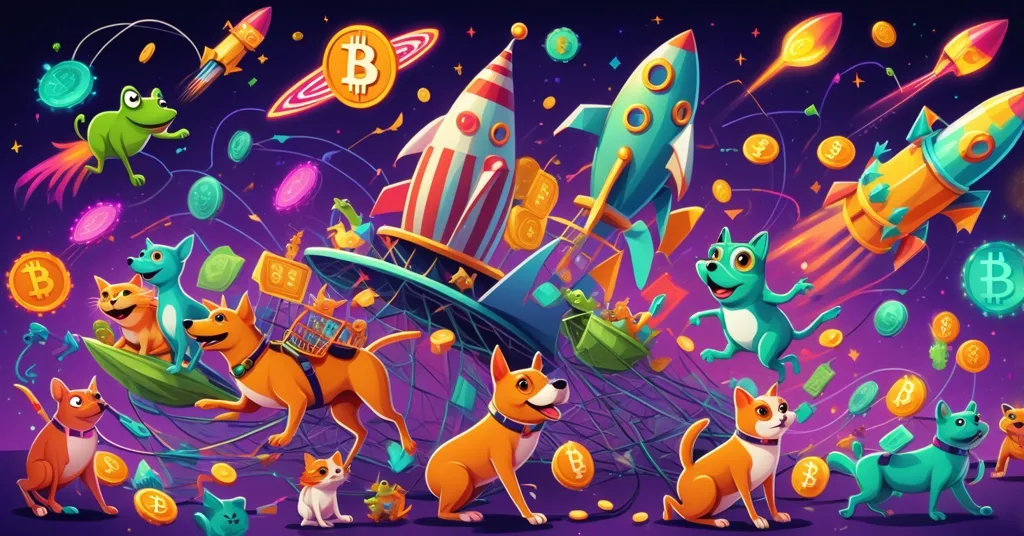
For those new to the crypto circus, memecoins are digital currencies often born from internet memes or cultural quirks—think dogs, frogs, or cats. Unlike Bitcoin, which aims to be a decentralized store of value, or Ethereum, with its smart contract empire, memecoins thrive on community hype and speculative trading, often lacking any real-world utility. Yet, their allure is undeniable. After a brutal collapse in market share late last year, the sector has exploded back to life, as highlighted by recent CryptoQuant analysis on memecoin resurgence. PEPE, a frog-themed token, led the charge with a staggering 65% gain year-to-date, including a 34% spike in just 24 hours that tacked on $3 billion to its market cap. BONK, a Solana-based contender, rocketed 49%, while FLOKI jumped 40%. Even the veterans, Dogecoin and Shiba Inu, posted solid gains of over 20% and 18.9% weekly, respectively. Trading volumes across the sector hit a hefty $9 billion, with short liquidations—when bearish bets are forcibly closed due to sudden price surges—amplifying the upward momentum.
Market dominance, for clarity, refers to the slice of the total cryptocurrency pie that a specific sector like memecoins holds compared to others. Dropping to 3.2% meant memecoins were barely a blip in the altcoin space, a far cry from their 11% peak just a month prior. This rebound isn’t just a fluke; it’s a signal of renewed speculative fever that could either ignite a supercycle or crash spectacularly. Let’s dig into why this is happening now.
Driving Forces Behind the Frenzy
So, what’s fueling this chaotic resurgence? A big piece of the puzzle is Bitcoin, the heavyweight of crypto, which recently smashed through the $90,000 barrier and is now trading steadily around $93,000. When Bitcoin holds firm at these levels, it acts like a safety net for traders, almost like a stable stock market encouraging punts on riskier ventures. With BTC volatility low—based on recent on-chain metrics from platforms like CryptoQuant—capital is rotating into speculative corners like memecoins. It’s a psychological nudge: if the king isn’t crumbling, why not gamble on the jesters?
Timing plays a role too. Post-holiday trading often brings a wave of fresh enthusiasm, as investors return from seasonal breaks itching to make moves. This mirrors patterns from late 2020, when low-volume periods gave way to a memecoin explosion in 2021, ballooning the sector’s market cap from under $10 billion to over $100 billion. Analysts are now floating the idea that if momentum persists, we could see memecoins hit a $69 billion market cap by Q1 2026. Before you get too excited, though, let’s temper that optimism with some hard truths further down.
Pump.fun and the Token Creation Boom
A major catalyst in this memecoin madness is Pump.fun, a Solana-based platform that’s turned token creation into a free-for-all. For the uninitiated, Pump.fun lets anyone launch a new cryptocurrency on the Solana blockchain with minimal effort—slap together a meme, pay a small fee, and boom, you’ve got a token. It’s responsible for roughly 70% of new token launches on Solana and up to 25% of the network’s daily transactions. Since early 2024, over 13 million tokens have been birthed on the platform, accounting for a third of all Solana tokens, and it’s generated a staggering $866 million in revenue, per Messari data. Is this the future of decentralized innovation, or a breeding ground for chaos?
As Bitcoin maximalists, we see the double-edged sword here. On one hand, Pump.fun embodies the permissionless ethos of blockchain, aligning with our passion for disrupting centralized gatekeepers. Anyone can experiment, and that’s powerful. On the other, most of these tokens are digital trash, destined to collapse under rug pulls or whale dumps. Still, independent memecoins—not tied to launchpads—hold 86.2% of the sector’s market cap, per CoinGecko’s 2025 report, showing that raw community energy still trumps platform hype. Launchpad tokens peaked at 20.5% market share in January 2025 before fading, proving the mob rules in this space.
Global Trends and Thematic Quirks
Memecoins aren’t just a numbers game; they’re a cultural phenomenon. Dog-themed tokens (excluding Dogecoin) dominate with 39.5% of the sector, because apparently, we can’t resist a good pup even in pixel form. But frog and cat tokens are clawing their way up—PEPE, alongside feline contenders like POPCAT and MEW, are gaining ground in this bizarre digital zoo. It’s almost laughable, but it speaks to how memecoins tap into internet culture in ways traditional finance never could.
Geographically, the craze is global. The United States leads with 30% of memecoin-related page views, up from 20% earlier in 2025, while emerging markets account for 38% of interest. Regions like Southeast Asia and parts of Africa, often leveraging mobile-first access, see crypto as a gateway to financial opportunity outside broken traditional systems. This retail-driven wave, fueled by smartphones and cheap data, highlights how memecoins democratize speculation—though often at a steep cost to the unprepared. It’s decentralization in action, messy as hell, but real.
Risks and Reality Checks: Bull Trap or Supercycle?
Now, let’s cut through the euphoria. Are we witnessing the dawn of another memecoin supercycle, or just a glorified bull trap waiting to snare the gullible? History leans toward caution. Memecoins are infamous for pump-and-dump schemes, where early whales inflate prices, cash out, and leave latecomers with worthless bags. The $9 billion trading volume looks impressive, but if liquidity dries up, this rally could evaporate overnight. Worse, broader macroeconomic headwinds—think inflation spikes or central bank rate hikes—could hammer the entire crypto market, memecoins first. Even Bitcoin’s current stability isn’t a guarantee; a sudden BTC drop could yank the rug from under these speculative toys.
The dark side is uglier still. Scams and rug pulls thrive in this space, preying on FOMO-driven newcomers. Take a hypothetical example: a shiny new dog token launches on Pump.fun, racks up a $10 million market cap in days, only for the anonymous devs to drain liquidity and disappear. It happens more than you’d think, and it’s why we have zero tolerance for scammers or baseless shilling. Those peddling guaranteed “moonshots” or wild price predictions? They’re full of crap, and we’re not here to indulge delusions. Our goal is adoption through truth, not blind hype.
Yet, there’s a counterpoint worth chewing on. Not all memecoins are pure gambling dens. Some, like Dogecoin in its early days, have pivoted to charity drives or community projects, showing a sliver of potential beyond speculation. Could a few of today’s memes evolve into something more? It’s a long shot, but blockchain’s beauty is in the unexpected. Still, don’t bet the farm on it.
Looking Ahead: Memecoins in the Crypto Ecosystem
So, where does this leave us as we peer into 2026? Memecoins are a loud, messy reminder of what’s possible when barriers crumble. They accelerate blockchain experimentation, embodying a kind of “effective accelerationism” that pushes adoption forward, even if through absurdity. A nobody in a remote village can launch a token and rally a community—try doing that with a bank. But the flip side is a minefield of risk, and ignoring that is reckless.
As Bitcoin purists, we know BTC remains the unshakable foundation of this space—a decentralized lifeline and the truest rebellion against financial tyranny. Memecoins, and altcoins broadly, play a different game, filling niches Bitcoin shouldn’t touch. They test boundaries, onboard the curious, and sometimes even fund good causes, but they’re not the future of money. They’re a carnival sideshow, entertaining yet dangerous. Could their antics draw regulatory heat, forcing governments to clamp down on crypto innovation? Possibly. Or might they pull in the next wave of users who eventually discover Bitcoin’s deeper value? That’s the gamble.
For now, tread with eyes wide open. Memecoins are a double-edged sword, cutting through the status quo while often wounding the unwary. Do your own damn research, ignore the shills, and remember: hype is a drug, and the hangover sucks. We’re here for decentralization, freedom, and disruption—not for watching you get burned.
Key Takeaways and Questions on the Memecoin Surge
- What triggered the 2026 memecoin rally?
A mix of post-holiday speculative enthusiasm and Bitcoin’s steady price around $93,000 created ideal conditions for traders to dive into riskier assets like memecoins. - Which tokens are spearheading this resurgence?
PEPE with a 65% gain, BONK at 49%, FLOKI at 40%, Dogecoin over 20%, and Shiba Inu with 18.9% weekly gains are leading the charge. - What’s Pump.fun’s role in this memecoin boom?
It’s a dominant force on Solana, driving about 70% of new token launches, creating over 13 million tokens since 2024, and raking in $866 million in revenue. - Is this rally built to last, or a fleeting bull trap?
Historical trends hint at potential growth to a $69 billion market cap by Q1 2026, but fading volumes or economic shocks could turn this into a painful mirage. - Why are emerging markets so hooked on memecoins?
Accounting for 38% of global interest, these regions use mobile-first access to tap into crypto as a financial alternative, often bypassing broken traditional systems.