Minnesota Bitcoin ATM Ban Stirs Debate as BlockDAG, DeepSnitch AI, HYPER Presales Surge
 LTB
LTB Minnesota’s Bitcoin ATM Ban Sparks Debate While Presale Hype Soars with BlockDAG, DeepSnitch AI, and HYPER
Minnesota is making waves with a proposed ban on Bitcoin ATMs to combat scams, just as the crypto presale market heats up with speculative fervor around projects like BlockDAG, DeepSnitch AI, and Bitcoin Hyper (HYPER). This clash of regulatory caution and unbridled innovation underscores the ongoing struggle in the cryptocurrency space—how to protect consumers without stifling the decentralized revolution.
- Regulatory Push: Minnesota’s House File 3642 aims to ban crypto kiosks over fraud concerns.
- Presale Frenzy: BlockDAG, DeepSnitch AI, and HYPER raise millions with bold post-launch gain predictions.
- Reality Check: Hype around massive returns carries huge risks in an unregulated market.
Minnesota’s Crackdown on Bitcoin ATMs: Protection or Overreach?
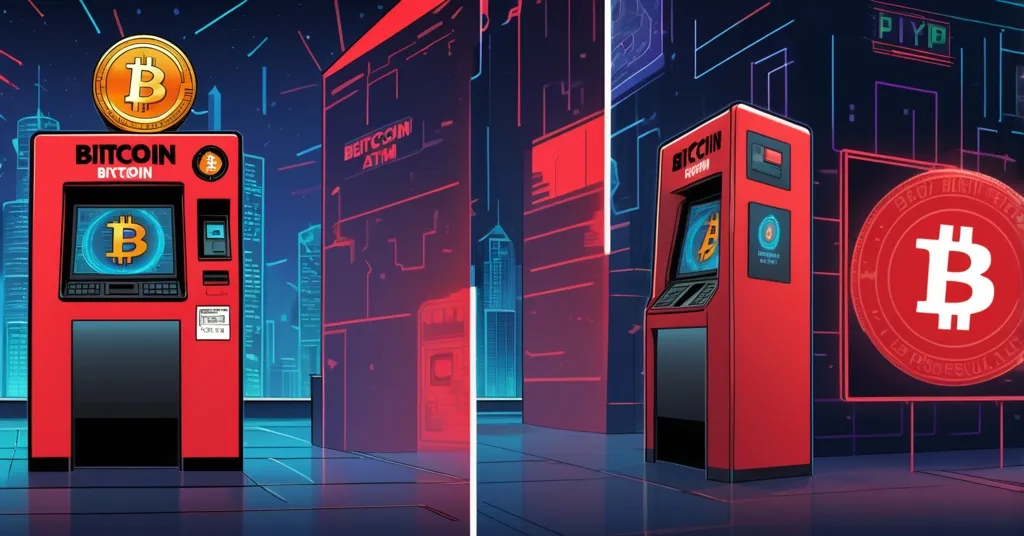
On February 26, Minnesota Representative Erin Koegel introduced House File 3642, a bill seeking a statewide ban on virtual currency kiosks, more commonly known as Bitcoin ATMs. With 350 licensed machines currently operating in the state through companies like Bitcoin Depot and Coinflip, these devices have become a lightning rod for regulatory scrutiny. Koegel labels the technology as “novel” and “minimally regulated,” citing numerous law enforcement reports of scammers exploiting residents. She’s not wrong to point out the vulnerabilities—Bitcoin ATMs often facilitate transactions that are nearly impossible to reverse or trace, making them a prime tool for fraudsters preying on the unsuspecting, often the elderly or tech-averse.
“Transactions are often hard to track and irreversible,” Koegel stressed, pinpointing why these machines pose a significant challenge for consumer protection.
For those unfamiliar, Bitcoin ATMs are physical terminals where users can buy or sell cryptocurrencies like Bitcoin using cash or debit cards. They’re a bridge between the digital and physical worlds, offering convenience, especially for those without easy access to traditional banking or online exchanges. However, they often come with sky-high fees and minimal identity verification, creating a perfect storm for scams. Fraudsters might impersonate authorities or romantic interests, convincing victims to deposit cash into these machines under false pretenses, only for the funds to vanish into untraceable wallets.
Minnesota isn’t starting from zero on this issue. A 2024 law already imposes a $2,000 deposit limit for new users and requires operators to refund victims of fraud. Yet, Koegel argues these measures fall short, pushing for a total ban to eliminate the risk altogether. It’s a response to real harm—stories of life savings lost to kiosk scams aren’t hard to find. But let’s not pretend this isn’t a sledgehammer approach. Banning Bitcoin ATMs outright could cut off a vital access point for legitimate users, especially the underbanked who rely on these machines to participate in the crypto economy. It’s a classic case of throwing the baby out with the bathwater—scammers are the problem, not the tech itself.
Looking broader, Minnesota isn’t alone in its skepticism. States like New York have tightened rules on crypto kiosks, and globally, countries like the UK have cracked down with stricter licensing requirements. The Federal Trade Commission reported over $110 million in crypto-related scam losses in 2022 alone, with ATMs often cited as a vector. On the flip side, Bitcoin advocates argue these machines are crucial for financial inclusion, embodying the ethos of decentralization by bypassing centralized gatekeepers. As champions of freedom and disrupting the status quo, we can’t ignore that a ban might do more harm than good for those on the fringes of the financial system. Why not focus on better education or targeted enforcement against scammers instead of torching the infrastructure?
Presale Mania: High Stakes and Higher Risks
While Minnesota wrestles with ground-level fraud, the digital realm of crypto presales operates in a largely unchecked Wild West, promising riches but often delivering rubble. As regulators tighten the screws on physical access points, projects like BlockDAG, DeepSnitch AI, and Bitcoin Hyper (HYPER) are pulling in millions from investors chasing the next moonshot. Presales—where tokens are sold at a discount before a public launch or exchange listing—thrive on the allure of getting in early for massive returns. But let’s cut through the noise: most of these projects fizzle out, leaving bagholders with worthless digital assets. Let’s dissect each one with a Bitcoin-maximalist lens, tempered by an appreciation for niche innovation.
DeepSnitch AI: AI-Powered Hype or Substance?
DeepSnitch AI has raised a noteworthy $1.78 million during a market slump, with its presale price pegged at $0.04228. The community is buzzing with predictions of 100x to 300x gains post-launch, which, for clarity, means a $1 investment could theoretically balloon to $100 or $300—a tantalizing but wildly speculative prospect often discussed in contexts like DeepSnitch AI’s projected massive pumps. What sets DeepSnitch apart is its tech offering: a live intelligence layer driven by five AI agents, paired with a user-friendly dashboard. This includes tools like token explorers to research new coins, contract audits to spot potential scams, and real-time sentiment tracking, which analyzes online chatter to gauge market mood. For newbies, think of sentiment tracking as a digital vibe check—helping traders sense whether a coin is hot or about to flop based on social media buzz.
On paper, it’s innovative, especially for traders drowning in data. But here’s the harsh truth: AI doesn’t equal alchemy. Predicting 300x gains is pure fantasy at this stage, more rooted in community exuberance than hard evidence. Historically, projects promising outsized returns during the 2017-2018 ICO craze often turned out to be rug pulls or vaporware—over 80% failed to deliver, per some estimates. DeepSnitch’s lack of transparency on team credentials or long-term tokenomics (how tokens are distributed and managed) raises red flags. I’m all for tech that accelerates decentralized trading, but without proven utility post-launch, this could be just another shiny object in a sea of broken promises.
BlockDAG: Massive Raise, Massive Questions
BlockDAG is another heavyweight, having pulled in a staggering $450 million during its presale at a dirt-cheap price of $0.0001 per token. The launch target is set at $0.05, implying a 40x jump right out of the gate, with community optimists eyeing $1 or more after listings on major exchanges. An airdrop slated for early March adds to the excitement—airdrops being free token distributions to early supporters as a marketing play. For those new to the game, a 40x gain means turning $1 into $40 at launch, though holding to $1 would be a 10,000x return, which is frankly more dream than reality.
The numbers are eye-catching, no doubt, but let’s play devil’s advocate. Presale-to-launch pumps often lose steam if the project lacks real-world use or adoption. BlockDAG’s roadmap and utility remain murky—will it solve a tangible problem in the blockchain space, or is it just riding the hype wave? As a Bitcoin maximalist, I’m skeptical of altcoins that don’t clearly carve out a niche Bitcoin itself can’t fill. Ethereum, for instance, dominates smart contracts, a space Bitcoin wisely avoids. BlockDAG needs to justify its existence beyond speculative fervor, or it risks joining the graveyard of forgotten tokens. Proceed with caution—big raises don’t guarantee big outcomes.
Bitcoin Hyper (HYPER): Scaling Bitcoin or Overreaching?
Bitcoin Hyper, or HYPER, rounds out the trio with a presale price hovering between $0.0136754 and $0.0136763, amassing millions in funding. It pitches itself as a Layer 2 solution for Bitcoin, tackling the network’s notorious scalability woes—slow transaction speeds and high fees during peak demand. HYPER uses the Solana Virtual Machine, a high-speed blockchain framework, to process transactions off Bitcoin’s main chain, aiming for faster, cheaper operations. Think of Layer 2 as a side road easing traffic off Bitcoin’s congested highway, cutting wait times and costs for users.
The community predicts a surge to $0.15 post-launch, with long-term hopes of reaching $1.90. Tying itself to Bitcoin’s brand while promising innovation is clever—scalability is indeed a pain point. But here’s the counterpoint: the Layer 2 space is crowded with contenders like Lightning Network, which already has traction for Bitcoin payments. Integrating Solana’s tech with Bitcoin’s rigid infrastructure is a technical nightmare, and HYPER’s success hinges on execution and adoption, neither of which is guaranteed. While I champion Bitcoin as the gold standard of decentralization, I’ll concede that altcoin projects like HYPER could fill gaps Bitcoin shouldn’t—yet the odds of it becoming a game-changer are slim. Another speculative bet in a market full of them.
The Bigger Picture: Regulation vs. Revolution
The contrast between Minnesota’s regulatory hammer and the presale gold rush couldn’t be sharper. Lawmakers are addressing genuine pain—kiosk scams have devastated vulnerable people, with losses piling up across the U.S. A ban might be heavy-handed, but ignoring fraud isn’t an option. Meanwhile, presales embody the raw, untamed spirit of decentralization, offering early adopters a shot at life-changing gains while testing the boundaries of blockchain tech. Yet, let’s not drink the Kool-Aid: wild predictions of 100x or 300x returns are often just hot air. The 2017 ICO boom saw thousands of projects implode, and post-FTX scrutiny reminds us the crypto space remains a minefield of grifters.
From a Bitcoin-maximalist standpoint, these presale dramas are side shows. Bitcoin itself stands unshaken—its value proposition as a censorship-resistant, decentralized store of value doesn’t hinge on the latest shiny token. That said, I’m not blind to the role altcoins and protocols play. Ethereum’s smart contract dominance, Solana’s speed, and even speculative projects like HYPER address niches Bitcoin doesn’t need to touch. The ecosystem thrives on experimentation, even if most experiments fail. But for every genuine innovator, there are ten scammers waiting to fleece the naive. Minnesota’s potential ban and the presale buzz both reflect crypto’s growing pains—balancing consumer safety with technological freedom is a puzzle we’re nowhere near solving.
Looking ahead to 2024, expect more of this tug-of-war. Regulators worldwide are watching post-FTX fallout, with the EU’s MiCA framework and U.S. SEC crackdowns signaling tighter oversight. Presales, meanwhile, will keep riding market cycles—booming in bull runs, fading in bears. Bitcoin will weather it all, as it always has, but the collateral damage of scams and failed projects risks alienating the masses we need for mainstream adoption. Effective accelerationism means pushing forward, yes, but not recklessly. Stay sharp, do your own research, and never wager more than you can lose.
Key Takeaways and Questions on Crypto’s Dual Fronts
- What’s behind Minnesota’s Bitcoin ATM ban proposal?
House File 3642, introduced by Rep. Erin Koegel, seeks to eliminate crypto kiosks due to rampant scams, with irreversible and untraceable transactions exploiting vulnerable residents. - Is a ban on Bitcoin ATMs justified?
Partially—scams are a real issue, but a total ban risks excluding legitimate users, especially the underbanked, who rely on kiosks for crypto access. Targeted enforcement might be smarter. - Why is DeepSnitch AI generating buzz in its presale?
Its $1.78 million raise and AI tools for trading—like sentiment tracking and contract audits—fuel excitement, though 100x-300x gain predictions are wildly speculative and unproven. - What drives BlockDAG’s presale appeal?
A $0.0001 price with a $0.05 launch target suggests a 40x jump, but without clear utility or adoption, it’s a gamble, not a guarantee, despite raising $450 million. - Can Bitcoin Hyper fix Bitcoin’s scalability issues?
HYPER aims to as a Layer 2 solution via Solana’s Virtual Machine, but competing with established players like Lightning Network and delivering results is far from certain. - Are massive presale gain predictions trustworthy?
Not a chance—claims of 100x or 300x returns are mostly baseless hype. The crypto market is brutal, and most early-stage projects collapse, leaving investors burned. - How does Bitcoin stand amid this chaos?
As the bedrock of decentralization, Bitcoin remains unaffected by presale dramas or regulatory spats, while altcoins experiment in niches it doesn’t need to dominate.