Nvidia’s H200 AI Chip Exports to China Blocked by U.S. Security Concerns
 LTB
LTB Nvidia’s H200 Chip Sales to China Hit a Wall Over U.S. Security Fears
Nvidia thought it had scored a major win with the green light to export its powerful H200 AI chips to China, but nearly two months after former President Donald Trump’s approval, the U.S. government has thrown up a massive roadblock. National security concerns are keeping shipments on ice, leaving Nvidia, its competitors, and Chinese tech giants in a frustrating stalemate that echoes broader battles over technological sovereignty.
- Export Standoff: Nvidia’s H200 AI chip shipments to China are stalled by U.S. national security reviews despite initial approval.
- Market Potential: CEO Jensen Huang estimates the Chinese market could be worth $50 billion annually.
- Ripple Effects: AMD and Chinese firms like Alibaba and ByteDance are also tangled in this regulatory mess.
The H200 Stalemate: A High-Stakes Delay
Back in December, Trump pushed through an export approval for Nvidia’s H200 AI chips, a move that seemed to open the door to one of the world’s largest tech markets. For those unfamiliar, AI chips are specialized hardware built to handle the heavy lifting of artificial intelligence tasks—think faster processing for everything from data center operations to machine learning models. The H200 is a top-tier player in this space, a critical asset for any company or nation racing to lead in AI innovation. But despite the initial thumbs-up, the wheels of progress have screeched to a halt with delays in securing necessary U.S. license approvals.
The U.S. Commerce Department finished its review in January and even loosened some export rules, but the State Department is playing hardball. They’re worried about the potential for these chips to be used by Chinese entities for military or intelligence purposes—a concern not easily dismissed in today’s tense geopolitical climate. A source close to the situation didn’t mince words:
“State is making it very difficult.”
This isn’t just petty bureaucracy. The concept of dual-use technology—hardware that can serve both civilian and military ends—is at the heart of the issue. An AI chip like the H200 could power a harmless recommendation algorithm or, just as easily, enhance surveillance systems or autonomous weaponry. Chris McGuire, a former export controls official now with the Council on Foreign Relations, highlighted the weight of these fears:
“The State Department has deep expertise in whether and how Chinese companies could use these chips to support Chinese defense and intelligence services… If State is raising concerns… there are real and significant risks.”
Billions on the Line for Nvidia and Beyond
For Nvidia, the stakes are astronomical. CEO Jensen Huang, who personally brokered the deal with Trump, pegs the Chinese market for these chips at a jaw-dropping $50 billion a year. That’s a goldmine even for a giant like Nvidia, but right now, suppliers are slamming the brakes on H200 component production, spooked by the licensing uncertainty and wavering demand. Every day of delay bleeds potential revenue and market share.
Nvidia isn’t alone in this mess. AMD, a fierce competitor in the AI chip arena, is also stuck waiting for approval to ship its MI325X chip under the same export agreement. AMD CEO Lisa Su confirmed they’re still in limbo, a frustrating echo of Nvidia’s plight. This isn’t just a corporate headache—it’s an industry-wide snag that’s slowing down access to cutting-edge tech globally.
Could these chips have a direct impact on the crypto world? Absolutely. High-powered AI hardware like the H200 could turbocharge Bitcoin mining operations by optimizing hash rate computations, potentially slashing energy costs—a holy grail for miners. Beyond that, blockchain projects integrating AI, such as decentralized machine learning platforms, could leverage this tech for faster, more efficient data processing. If these chips remain locked behind regulatory bars, the ripple effects might hit crypto innovation harder than we think.
China’s Tech Giants Caught in the Crossfire
On the other side of the Pacific, Chinese tech behemoths like Alibaba and ByteDance are feeling the squeeze. Beijing is mulling limited access to the H200 chips for these companies, but only if the U.S. licensing clears. For now, these firms are in a bind. Alibaba, a titan in cloud computing, and ByteDance, the force behind TikTok’s global reach, rely on AI for core operations—user analytics, content algorithms, you name it. Without the latest chips, they’re like athletes competing with outdated gear.
They’re not sitting on their hands, though. Both companies are exploring costly workarounds, like renting servers abroad to tap into similar computing power. It’s a clunky, expensive fix, but it shows how desperate the need is. Meanwhile, China’s broader push for tech self-reliance is gaining steam. State-backed efforts through companies like SMIC (Semiconductor Manufacturing International Corporation) and massive government subsidies aim to build domestic chip capabilities. Can they rival Nvidia anytime soon? Unlikely—they’re years behind in cutting-edge tech—but these restrictions might just light a fire under their efforts, much like Bitcoin emerged as a response to centralized financial overreach.
Bureaucratic Chaos and Unrealistic Demands
What makes this situation particularly maddening is the convoluted process behind it. Trump’s decision to approve the sales before hammering out restrictions flipped the usual playbook on its head. Typically, export controls—U.S. rules restricting the sale of sensitive tech to protect national interests—are set first, then approvals follow. Here, agencies are retrofitting rules after the fact, leading to clashes between departments. Commerce is eyeing economic upside, while State, Defense, and Energy prioritize blocking any tech that could bolster China’s military. It’s a bureaucratic cage match, and the fighters can’t agree on the rules.
Then there are the conditions tied to the deal. If approved, Nvidia must fork over 25% of sales to the U.S. government, keep half the shipments in the States, run third-party testing domestically, and demand detailed usage reports from Chinese buyers to ensure no military applications. Uncle Sam wants his cut of the silicon pie, but at what cost? Let’s be blunt: expecting full transparency from buyers in a geopolitical standoff is like asking a fox to guard the henhouse. These stipulations feel more like performative posturing than practical safeguards.
Geopolitical Tech War: A Bigger Picture
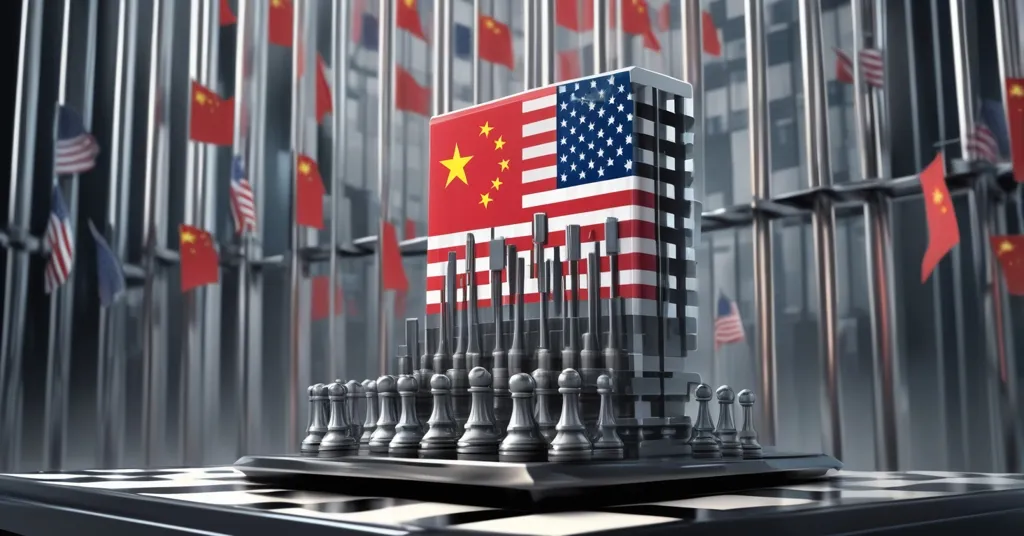
This isn’t an isolated spat—it’s the latest chapter in a long-running U.S.-China tech war. Since the Trump era tightened export controls, with measures persisting under Biden, advanced technology has become a battlefield. From Huawei bans to earlier chip restrictions, the U.S. has made it clear: cutting-edge tech is a strategic asset, not just a commodity. AI chips like the H200 aren’t mere tools; they’re pawns in a global chess game for dominance.
China, for its part, is hell-bent on tech independence. Beijing doesn’t want to rely on Western hardware, yet its top firms still crave the best chips available. This mirrors a familiar tension in the crypto space—think of nations banning Bitcoin while their citizens mine or trade in secret. The U.S. faces a tough dilemma: how do you cash in on economic gains without arming a potential rival? Stifle too much, and you risk pushing innovation underground or accelerating China’s self-reliance. Ease up, and you might hand over tech that could be weaponized. There’s no easy answer.
Crypto and AI: Shared Fights for Freedom
For those of us in the Bitcoin and blockchain camp, this saga hits close to home. Control over AI chips parallels the regulatory stranglehold governments try to place on decentralized finance. Just as Bitcoin challenges centralized banking, access to cutting-edge tech challenges traditional power structures in geopolitics. If the U.S. keeps playing gatekeeper, could we see a black market for AI chips emerge, much like underground crypto exchanges thrive in banned regions? History suggests it’s not just possible—it’s likely.
From a Bitcoin maximalist view, this reeks of the same overreach we see in fiat systems—governments hoarding control while innovation suffers. Yet, I’ll play devil’s advocate: there’s a grain of truth in the security concerns. China’s military ambitions aren’t fiction, and dual-use tech is a real risk. But let’s not kid ourselves—choking off progress under the guise of safety often does more harm than good. As effective accelerationists, we should push for tech to spread faster, not be locked behind red tape. And let’s not ignore altcoins or other blockchains like Ethereum, which could carve out niches with AI integrations for smart contracts or decentralized apps, even if Bitcoin remains king.
One chilling thought: if restrictions tighten further, underground markets for AI tech could spawn scams and exploitation, just as we’ve seen in crypto’s shadier corners. We’ve got zero tolerance for that garbage—whether it’s fake ICOs or black-market chip deals, the community must stay vigilant.
Key Takeaways and Burning Questions
- Why are Nvidia’s H200 AI chip exports to China stalled?
The U.S. State Department’s national security fears over potential military use by Chinese entities are blocking shipments, despite Trump’s initial approval. - How does this impact global tech and crypto innovation?
Delays in accessing top-tier AI hardware slow tech progress, potentially hindering blockchain projects and Bitcoin mining optimizations that rely on advanced processing power. - Are the U.S. export conditions for Nvidia even feasible?
Some are—sales cuts and testing can be enforced—but expecting honest usage reports from Chinese buyers in this climate is borderline delusional. - Could these restrictions push China toward tech independence, mirroring Bitcoin’s ethos?
Without a doubt; U.S. barriers may speed up China’s domestic chip production, just as Bitcoin defies centralized financial control. - Is a black market for AI chips a real threat, akin to crypto’s underground?
Yes, restricted tech often breeds illicit markets, much like crypto thrives in gray zones, though this risks scams we must fiercely oppose. - What’s the lesson for decentralization advocates in Bitcoin and beyond?
This fight over AI tech mirrors the battle for Bitcoin’s sovereignty—centralized control stifles progress, underscoring the urgent need for decentralized solutions in tech and finance.
What’s Next for Tech and Crypto?
We’re at a crossroads. If the U.S. doubles down on restrictions, don’t be surprised if China’s underground chip markets start looking like crypto’s wild west—unregulated, chaotic, and ripe for abuse. On the flip side, if licensing clears with heavy-handed conditions, it might just be a hollow victory for Nvidia, with profits gutted by government cuts and oversight. Alternatively, China could pull a rabbit out of its hat, fast-tracking domestic production to rival Western tech far sooner than expected.
For the crypto crowd, this is a stark reminder of why decentralization matters. Whether it’s Bitcoin bypassing banks or blockchain projects seeking freedom from tech gatekeepers, control battles like this shape the future we’re fighting for. Will the U.S. strike a balance, or will overreach backfire? And how will these ripples shape the decentralized innovations we’re banking on? Keep watching—this clash of titans is just heating up.