NYSE Pushes Tokenized Stocks as Bitcoin Holds Above $79K
 LTB
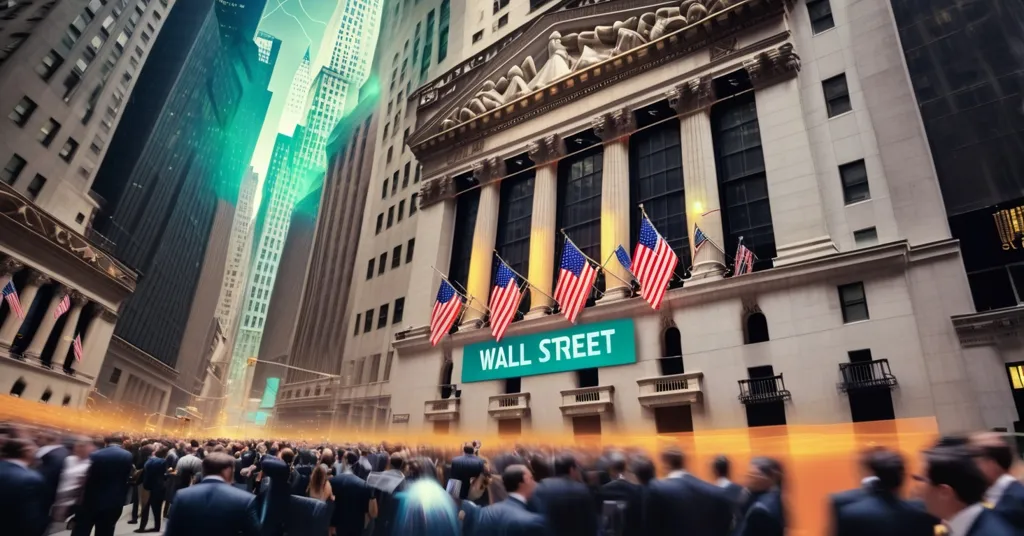
LTB The New York Stock Exchange wants to bring tokenized stocks and tokenized ETFs onto its own market rails — a cautious but important step toward mainstream tokenized securities in the U.S.
- NYSE files SEC rule change for tokenized securities
- Same ticker, same rights, same order book
- Settlement stays on DTC rails at T+1
- Stablecoin rules, reserve caps, and DAO liability keep tightening
- Bitcoin holds above $79,000 as institutional demand keeps coming
NYSE Wants Tokenized Stocks on Wall Street’s Rails
The filing is notable for what it is and what it is not. It does not try to rip out the legacy market system and replace it with some fully on-chain utopia. Instead, the NYSE is asking the U.S. Securities and Exchange Commission to allow “tokenized versions of eligible stocks and ETFs” to trade on the same infrastructure as their traditional counterparts.
That’s the institutional way: modern-looking wrapper, same old plumbing. Call it progress, call it risk management, call it Wall Street making a blockchain fashion statement while keeping the control room locked.
Under the proposal, tokenized securities would keep the same CUSIP — the unique ID used to track a security — and the same ticker. They would also carry the same rights and characteristics, trade in the same order book, and receive the same execution priority as the non-tokenized version.
For readers less buried in market jargon: an order book is where buy and sell orders meet. Execution priority means which order gets filled first when buyers and sellers are matched. If tokenized and conventional shares sit in the same order book, the market is saying these are not two separate assets. It is the same security, just dressed in a blockchain-friendly wrapper.
Even with all that tokenization talk, the back end would stay firmly inside the old machinery. Clearing and settlement would still go through the Depository Trust Company (DTC), the clearing and settlement arm of the DTCC, on a T+1 basis.
T+1 means a trade settles one business day after it is executed. That is faster than the old T+2 setup, but it is still not instant blockchain settlement. So yes, the shiny new wrapper is arriving — but the old rails are still doing the heavy lifting.
The DTCC is already running a three-year tokenization pilot program, which tells you where institutions really are on this. They want the benefits of tokenization — faster transferability, better automation, maybe lower operational friction — without handing the steering wheel to some chaos goblin fantasy of totally ungoverned markets.
There is a reason this approach is attractive to big finance. It lets institutions test tokenization without blowing up custody, compliance, or settlement norms. That may disappoint the “everything on chain tomorrow” crowd, but it is how serious adoption usually happens: slowly, selectively, and with a ridiculous number of lawyers in the room.
Stablecoin Regulation Is Tightening, Not Relaxing
That same control-first mindset is showing up in Washington. Senate negotiations over the Clarity Act may be moving ahead after a compromise on stablecoin yield language. The compromise would reportedly ban crypto firms from offering deposit-like returns — meaning interest or yields that look too much like what a bank deposit pays — while still allowing incentives tied to actual platform use.
That distinction matters. Regulators are trying to stop stablecoins from becoming shadow banks with a slick app and a crypto logo, while still leaving room for legitimate product utility. In plain English: you can build a payment tool, but you do not get to cosplay as a bank unless you want bank-style supervision breathing down your neck.
Coinbase CEO Brian Armstrong has urged the Senate Banking Committee to move quickly on the bill. That impatience makes sense. Regulatory ambiguity is a tax on builders, investors, and users alike. The longer lawmakers drag their feet, the more the market stays trapped in a gray zone where innovation gets punished and the only people guaranteed to win are the consultants.
BlackRock is also pushing back on another regulatory squeeze. The firm opposed an Office of the Comptroller of the Currency (OCC) proposal that would cap tokenized reserve assets at 20%. BlackRock warned the restriction could constrain growth, including for its tokenized product BUIDL.
The firm also asked for clarity on whether Treasury ETFs could count as reserve assets, and it wants two-year floating-rate Treasuries included as eligible reserves. That is not a trivial detail. Reserve assets are the collateral behind many tokenized financial products, so if regulators get too stingy about what counts, the entire category gets kneecapped before it matures.
BlackRock’s point is simple enough: if tokenized finance is going to be treated like grown-up finance, then the reserve rules need to be clear, useful, and not weirdly self-sabotaging. Otherwise the industry gets the usual government special — a lot of speeches about innovation, followed by a policy document that could choke a horse.
Bitcoin Still Gets the Last Word
While Washington debates how tightly to leash the sector, Bitcoin keeps reminding everyone why it remains the hardest asset in the room.
Bitcoin traded above $79,000, hitting around $79,034 on OKX, up roughly 0.69% on the day. That move came alongside continued institutional accumulation.
Morgan Stanley’s spot Bitcoin ETF, MSBT, reportedly bought 286.693 BTC via Coinbase, worth about $22.48 million. Its holdings were reported at around 2,620 BTC, or roughly $204 million. That is not just “institutional interest” as a marketing phrase. That is actual balance-sheet exposure.
Institutional demand has become one of the defining pillars of the current Bitcoin market. Say what you want about TradFi, but when the suits start buying size, they do not usually do it because of a Reddit thread and a dream.
There was also a huge stablecoin transfer on the tape. Whale Alert flagged a transfer of 331.46 million USDT, worth about $331.36 million, to Kraken. Large transfers like that do not automatically mean anything dramatic, but they often signal repositioning, liquidity movement, or plain old big-money behavior. In crypto, when a whale swims, everybody notices the splash.
Bitcoin’s strength matters because it still acts as the market’s cleanest signal when macro gets messy. And macro is definitely messy.
Trump said he would review Iran’s latest proposal but suggested it would be difficult to accept, which raises the risk of renewed U.S. airstrikes. At the same time, the Fed policy conversation is drifting toward a more neutral stance rather than a clearly cut-leaning one. Nick Timiraos, the Wall Street Journal reporter often treated as a close read on Fed messaging, has framed the shift as a more “neutral” posture.
That matters for crypto because liquidity expectations still drive sentiment. When markets think money will be easier, risk assets tend to breathe easier. When the Fed sounds less dovish and geopolitics gets hotter, Bitcoin often becomes the asset people reach for when they want a clean, scarce, globally tradable store of value with no central banker attached to it.
DAO Liability Just Got Less Abstract
Not all the pressure is coming from regulators trying to define securities or stablecoins. A U.S. court also blocked the transfer of about $71 million in ETH linked to Arbitrum DAO, in a case involving frozen assets tied to the KelpDAO hack and claims related to North Korea-linked terrorism judgments.
The court reportedly framed a DAO as a potentially culpable “partnership”, which is a big deal. A DAO, or decentralized autonomous organization, is supposed to be a community-governed structure where token holders or participants vote on decisions. But if a court treats it like a partnership, then participants could be dragged into legal liability in ways many decentralized projects have not fully modeled.
That is the ugly part of decentralization: the code may be distributed, but legal responsibility often wants a face, a name, and a mailing address. Once a DAO is treated like a partnership, the fantasy that governance can float above old legal structures starts looking pretty flimsy.
This is a key procedural obstacle for decentralized governance. If courts keep forcing DAOs into familiar liability boxes, that could constrain growth and make future projects more cautious about open participation. Some of that caution is healthy. A lot of it is just the law catching up to a structure that was always going to be tested by reality eventually.
Brazil Draws a Line Around Crypto Payments
Beyond the U.S., another government is drawing a hard boundary between crypto ownership and crypto use in payments. Brazil’s central bank will prohibit eFX providers from using stablecoins and Bitcoin in cross-border settlement starting Oct. 1.
Retail crypto buying and holding in Brazil remains allowed. The restriction targets settlement, not ownership. But it is still a meaningful move. The new rule forces eFX payments through authorized FX accounts or non-resident bank accounts, effectively trying to ring-fence cross-border payments from crypto rails.
That matters because cross-border settlement is one of crypto’s clearest real-world use cases. If you are a remittance company or a payment provider, crypto can be a way to move value faster and with fewer intermediaries. Brazil is saying that for now, at least in institutional payment flows, it wants the old rails to stay in charge.
That does not kill adoption. It does, however, remind everyone that governments are perfectly willing to tolerate crypto as an asset while resisting it as a payments network. They like the speculative upside. They are less enthusiastic about permissionless money moving around their borders without asking nicely.
The Bigger Picture
All of these developments point in the same direction: tokenization is gaining legitimacy, but the state is still deciding the terms of entry.
Wall Street wants tokenized securities, but not if it means giving up established settlement systems. Washington wants stablecoin regulation, but only if yields, reserves, and payment flows stay boxed in. Courts are starting to test whether DAOs can be treated like legal partnerships. Brazil is tightening the screws on crypto settlement even while leaving retail ownership alone.
Meanwhile, Bitcoin keeps drawing institutional capital and holding above major round-number levels while macro uncertainty refuses to sit still. That combination is why BTC continues to matter as more than just a trade. It is the benchmark asset for a sector that is being partially welcomed, partially regulated, and partially cornered at the same time.
The most important thing to understand here is that tokenization is not some magic escape hatch from the financial system. It is the financial system adapting to blockchain on its own terms. That may sound less romantic than the original cypherpunk dream, but it is how adoption usually works when serious money gets involved.
What did NYSE file with the SEC?
NYSE filed a rule change that would allow tokenized versions of eligible stocks and ETFs to trade on the same market infrastructure as their traditional counterparts.
How would tokenized stocks and ETFs differ from normal ones?
They would keep the same CUSIP, ticker, rights, and execution priority. The main difference is the wrapper: the asset would be represented in a blockchain-friendly format while the market plumbing stays mostly the same.
Would tokenized securities settle on-chain?
Not under the NYSE proposal. Clearing and settlement would still happen through the DTC on a T+1 basis, meaning the trade settles the next business day.
Why does T+1 matter?
T+1 reduces settlement time compared with older systems, but it is still not instant. It shows the market is willing to modernize, just not enough to abandon the traditional infrastructure that keeps things orderly.
What is happening with stablecoin regulation?
Senate talks around the Clarity Act may be advancing after a compromise that would ban deposit-like returns on stablecoins while still allowing incentives tied to real platform use.
Why is BlackRock fighting the OCC proposal?
BlackRock says a 20% cap on tokenized reserve assets could limit growth, including for BUIDL. It also wants clearer rules on whether Treasury ETFs and certain Treasuries can count as reserves.
Why does Bitcoin above $79,000 matter?
It shows Bitcoin remains the market’s leading asset as institutions keep buying and macro uncertainty stays elevated. Price alone is never the whole story, but strong BTC demand still says a lot about investor appetite.
Why is the Arbitrum DAO court case important?
Because the court’s treatment of a DAO as a potentially culpable “partnership” could expose decentralized governance participants to legal liability and make future DAO structures more cautious.
What is Brazil changing?
Brazil’s central bank will prohibit eFX providers from using stablecoins and Bitcoin in cross-border settlement starting Oct. 1, while still allowing retail crypto buying and holding.
What is the real takeaway from all this?
Tokenization is moving from theory to implementation, but regulators and institutions are making sure it happens on tightly controlled terms. Bitcoin still stands apart as the asset with no permission request form attached.