OpenAI’s $1B Cerebras Deal: AI Power Surge with Blockchain Potential
 LTB
LTB OpenAI’s Multi-Billion-Dollar Deal with Cerebras Systems: A Power Play with Crypto Implications
OpenAI, the powerhouse behind ChatGPT, has secured a staggering multi-billion-dollar agreement with Cerebras Systems, an AI chip startup backed by OpenAI CEO Sam Altman, to access up to 750 megawatts of computing power by 2028. This deal, paired with a $1 billion joint investment alongside SB Energy for energy infrastructure under Project Stargate, underscores a relentless push to dominate AI innovation—while opening doors for parallels and potential synergies with the blockchain and cryptocurrency sectors.
- Compute Power Surge: OpenAI to harness 750 MW from Cerebras for faster AI processing.
- Energy Infrastructure Bet: $1 billion investment with SB Energy for sustainable data centers.
- Community Friction: Rising opposition to data centers over noise and resource demands.
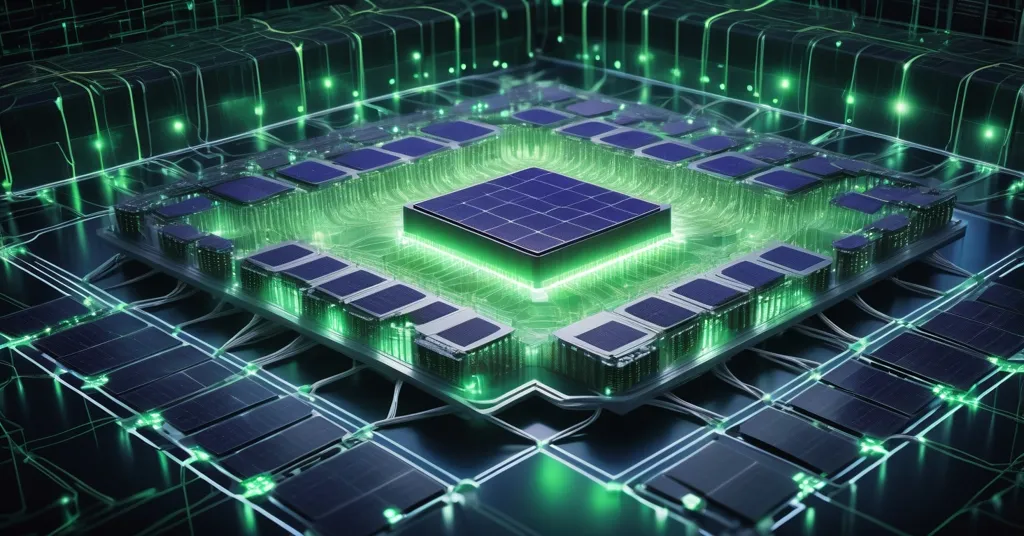
The AI sector is in a frenzied race for computational dominance, with demand for processing power exploding as models tackle everything from real-time coding to image generation. OpenAI, historically tethered to Nvidia’s GPUs and cloud giants like Microsoft and Oracle, faces chronic capacity shortages. To break free, they’ve turned to Cerebras Systems in a billion-dollar deal, a company pioneering a single-chip design—a massive piece of silicon that fuses processing power, memory, and bandwidth into one unit. Unlike traditional GPU setups where data bottlenecks can slow things down, this approach delivers low-latency inference, meaning AI tasks are processed with minimal delay, resulting in faster, more seamless user experiences. Sachin Katti of OpenAI highlighted the edge this provides:
“Cerebras adds a dedicated low-latency inference solution to our platform. That means faster responses, more natural interactions, and a stronger foundation to scale real-time AI to many more people.”
Andrew Feldman, co-founder and CEO of Cerebras, echoed the transformative potential, stating:
“Just as broadband transformed the internet, real-time inference will transform AI, enabling entirely new ways to build and interact with AI models.”
OpenAI is already integrating Cerebras’ high-speed capacity into its inference stack across various workloads. Picture a coding assistant that doesn’t lag or an image generator that delivers results before you can blink. In a space where user patience wears thinner than a memecoin’s utility, shaving off milliseconds can be a game-changer. This could position OpenAI ahead of competitors like Anthropic, particularly for real-time applications where every tick of the clock matters.
Sam Altman’s Dual Role: A Trust Minefield
But let’s cut through the hype. The deal stinks of potential conflict with Sam Altman wearing two hats as OpenAI’s CEO and a Cerebras investor. This smells worse than a shitcoin pump-and-dump—when your leader has personal stakes in a partner company, trust takes a brutal hit. There’s no hard proof of wrongdoing, but the optics alone raise red flags. Are decisions being made for OpenAI’s strategic gain, or do personal financial interests cloud the picture? In an industry already rife with skepticism about centralized power, this kind of overlap fuels distrust, much like shady centralized exchanges have long plagued crypto.
Project Stargate: Energy Meets AI Ambition
Beyond chips, OpenAI is staking a massive claim on infrastructure through Project Stargate, a collaboration with SB Energy, a SoftBank Group company. Both are injecting $500 million each—$1 billion total—into multi-gigawatt data centers and energy solutions. A flagship 1.2-gigawatt site in Milam County, Texas, promises thousands of construction jobs and claims to minimize water usage with advanced designs. To put that power scale into perspective, it’s akin to running tens of thousands of Bitcoin mining rigs at full tilt. This vertical integration of compute and energy could redefine how tech scales sustainably, potentially offering a blueprint for energy-hungry sectors like cryptocurrency mining.
Yet, there’s a storm brewing. The “Not-in-my-backyard” (NIMBY) movement is gaining traction in 2025, with communities rebelling against data centers over noise pollution and staggering water consumption for cooling systems. If you’ve ever been near a server farm, you know the hum—it’s a relentless drone no noise-canceling headset can kill. Add in millions of gallons of water drained in often drought-stricken areas, and you’ve got a public relations nightmare. Convincing locals to embrace these industrial beasts is like getting a boomer to HODL through a bear market—good luck with that. OpenAI and its partners are pitching economic growth, workforce training, and green tech like liquid cooling as solutions. But let’s not kid ourselves: skepticism runs deep, and Bitcoin mining’s history of “sustainable” promises falling flat under scrutiny suggests OpenAI might face similar backlash.
Diversification Risks: A High-Stakes Gamble
Stepping away from heavy reliance on Nvidia and cloud titans like Microsoft and Oracle is a calculated move. Reducing dependency could slash costs and shield OpenAI from supply chain hiccups—if Nvidia stumbles, they’re not left stranded. But here’s the flip side: onboarding new tech like Cerebras’ isn’t a plug-and-play deal. Integration snags, underperformance, or scalability hiccups could turn this into a costly misstep. It’s a gamble not unlike blockchain projects betting on untested layer-2 solutions—huge upside if it works, but a mess if it doesn’t. And let’s not forget regulatory risks. Governments have cracked down on Bitcoin mining for energy overuse in places like China. Could AI’s voracious power appetite draw similar heat? OpenAI’s sprint forward might hit a bureaucratic wall faster than a miner fleeing a ban.
AI Compute: A Booster for Blockchain?
Now, let’s zoom out to a bigger picture—one that hits home for Bitcoin and blockchain enthusiasts. The compute race in AI has direct parallels to crypto’s own struggles with energy and efficiency. Bitcoin mining farms guzzle power on a scale rivaling small nations, while Ethereum’s pre-merge Proof of Work days were no picnic either. OpenAI’s push for efficient hardware with Cerebras could ripple into decentralized tech. Imagine low-latency inference optimizing blockchain node operations, slashing delays in transaction validations, or supercharging smart contract executions on platforms like Ethereum. Picture a DeFi protocol processing trades with the snap of AI-driven compute, or privacy-focused chains like Monero leveraging faster, more secure computations for shielded transactions. If harnessed right, this tech could be rocket fuel for decentralization, breaking free from centralized chokeholds.
But there’s a counterpoint to chew on. OpenAI’s infrastructure, for all its innovation, remains a centralized behemoth. Data centers, even “sustainable” ones, are controlled by a handful of players—much like the centralized exchanges crypto maximalists love to hate. Could a truly decentralized AI model, powered by blockchain networks, be the real endgame? As Bitcoin champions a trustless ethos, the question looms: will AI’s compute revolution empower decentralization, or just build taller walls for corporate giants?
Energy Wars: Lessons from Bitcoin Mining
The energy wars of AI also mirror crypto’s ongoing battles. Bitcoin mining has faced relentless flak for its environmental footprint, with operations often migrating to wherever power is cheapest, sustainability be damned. OpenAI’s pledges of green tech and minimal water use sound noble, but crypto’s track record shows such claims can crumble under scrutiny. Liquid cooling and job creation might placate some critics, yet if water shortages or power grid strains hit Milam County, public sentiment could sour fast. The crossover lesson here is clear: tech advancements, whether in AI or blockchain, must prioritize genuine sustainability over PR spin—or risk alienating the very communities they aim to serve.
Key Takeaways and Burning Questions
- How does the Cerebras deal strengthen OpenAI’s AI dominance?
By leveraging Cerebras’ low-latency hardware, OpenAI can deliver faster, more responsive AI tools, potentially outpacing rivals in real-time applications like coding and image generation. - Why does Sam Altman’s involvement in Cerebras raise red flags?
His dual role as OpenAI CEO and Cerebras investor sparks concerns of conflict of interest, threatening trust in leadership decisions with echoes of shady crypto schemes. - Can OpenAI mitigate community resistance to data centers?
Promises of jobs and sustainable tech like liquid cooling might help, but deep environmental and noise concerns won’t disappear overnight, much like mining backlash persists. - What does Project Stargate mean for tech infrastructure?
It could set a standard for merging AI compute with energy solutions, offering a model that crypto projects might adapt for sustainable scaling. - Is diversifying away from Nvidia and cloud giants a wise move?
It reduces reliance risks, but integrating new tech like Cerebras brings technical and scalability challenges that could derail progress if mishandled. - How could AI compute advancements impact Bitcoin and blockchain?
Faster, more efficient processing could optimize transaction validations, smart contracts, and DeFi protocols, potentially accelerating decentralization—if the tech trickles down.
As OpenAI charges ahead with Cerebras’ cutting-edge chips and energy-intensive projects like Stargate, they’re not just reshaping AI—they’re testing the boundaries of tech’s collision with society. For Bitcoin and blockchain advocates, these developments carry critical lessons about power, perception, and the fight for a decentralized future. Will AI and crypto converge to liberate both spaces, or will centralized giants simply tighten their grip? That’s the multi-billion-dollar question worth pondering.