Pepe Coin Surges 65% Amid Market Crash: Whale Bets and Pepenode Hype Analyzed
 LTB
LTB Pepe Coin Rockets 65% Amid Crypto Chaos: Whale Plays and Pepenode Hype Under the Microscope
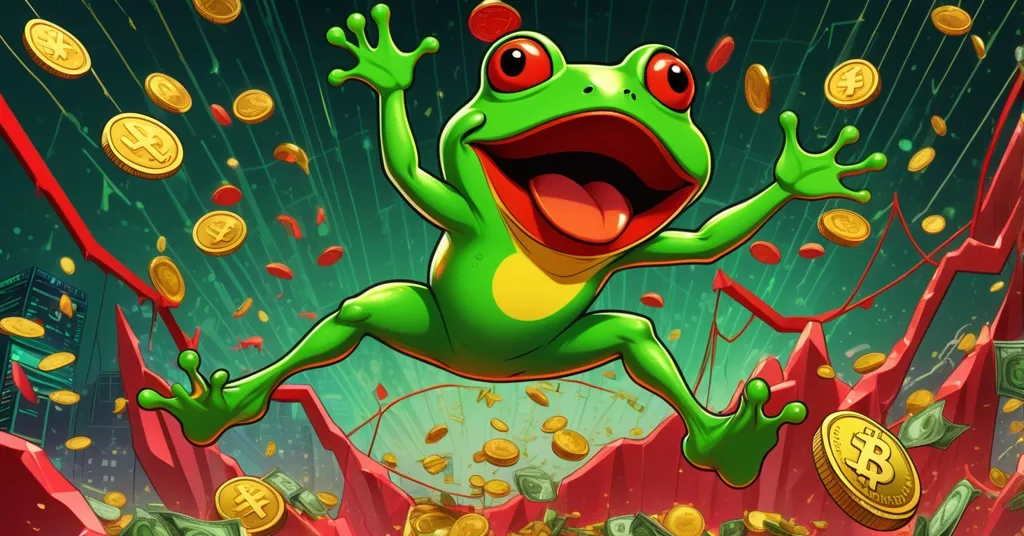
Pepe Coin (PEPE) has staged a jaw-dropping 65% surge in just seven days, shrugging off a brutal crypto market downturn that’s battered heavyweights like Bitcoin and Ethereum. This frog-themed meme coin, often written off as a speculative joke, is drawing massive attention—and capital—from big players known as “whales,” while spawning curious offshoots like Pepenode. Is this a sign of undiscovered brilliance, or just another bubble primed to burst?
- Defiant Rally: Pepe Coin surges 65% in a week, outpacing top meme coins amid market turmoil.
- Whale Bets: Open interest in PEPE futures hits a record 75 trillion contracts, showing heavyweight conviction.
- Pepenode’s Debut: A presale project linked to Pepe’s fame pitches virtual mining, but reeks of high risk.
Pepe Coin’s Surge: Digging into the Data
Let’s strip away the hype and get to the numbers behind this unexpected rally. Data from CoinGlass reveals that open interest in PEPE futures—a measure of unsettled derivative contracts like futures and options—has skyrocketed to an all-time high of 75 trillion PEPE as of January 3. For those not steeped in crypto lingo, open interest isn’t about how many TikTok videos mention a coin; it’s a snapshot of real money locked into bets on future price movements. Unlike trading volume, which can be gamed by bots or fake trades, this metric often signals genuine belief in a coin’s direction, especially when it spikes like this. It’s a clear sign that big money, likely from whales, is leveraging hard into PEPE’s upside, even as the broader market bleeds.
On the price front, PEPE has climbed to $0.000060, punching through a key resistance level at $0.0000060 and escaping what chart nerds call a “falling wedge pattern.” Think of a falling wedge as a dam about to break—prices squeeze lower until buyers flood in, often sparking an uptrend. But before you rush to buy, a warning: the Relative Strength Index (RSI), a gauge of whether a coin’s price momentum is overheating, is deep in overbought territory. Imagine RSI as a car’s speedometer—if it’s maxed out, you’re likely to spin out or slow down soon. While the bigger trend looks bullish, a short-term pullback could slap late entrants with losses. For more insights on PEPE’s dramatic rise, check out this detailed analysis of Pepe Coin’s price surge.
As for where PEPE might hop next, some analysts are tossing out targets like $0.0000095 in the short term, with a potential 31% jump if it clears the 200-day Exponential Moving Average (EMA)—a line tracking average price over 200 days, often used to judge if an asset is in a long-term bull or bear phase. Longer-term, whispers of $0.000015 float around. Let’s cut the crap, though: meme coins like PEPE aren’t built on tech or utility; they’re powered by Reddit threads, X memes, and raw sentiment. These predictions are little more than dartboard guesses, and anyone swearing by them is either naive or hustling you to buy their bags before they dump. Meme coin surges are a rollercoaster—thrilling until the tracks run out.
Whale Activity: What’s Behind the Big Money Moves?
Why are whales doubling down on PEPE while Bitcoin and Ethereum struggle to keep their heads above water? The broader crypto market is getting hammered by real-world pressures—rising interest rates, stubborn inflation, and regulators circling like vultures. Bitcoin, the cornerstone of decentralized money, is fighting to hold critical price levels, while Ethereum wrestles with scaling hiccups post-merge and adoption hurdles. Against this dreary backdrop, a 75 trillion PEPE futures contract stack isn’t just odd; it’s a blazing signal that serious players see something in this meme coin that the rest of us are missing.
Who might these whales be? Crypto’s anonymity makes it a guessing game, but they could be early adopters flush with gains, hedge funds testing speculative waters, or even organized groups orchestrating pumps through backchannels on Discord or Telegram. We’ve seen this playbook before with Dogecoin—whale-driven spikes lure in retail traders dreaming of quick riches, only for the big fish to swim away with profits as prices crash. That’s the grim reality of this space: for every “to the moon” chant on social media, there’s often a silent exit strategy by those with the most to gain. Open interest is a useful clue to market mood, but it’s not a crystal ball. Retail investors following whales risk being the last ones holding the bag.
Pepenode Presale: Fresh Idea or Familiar Gamble?
Hot on Pepe’s heels comes Pepenode ($PEPENODE), a presale project banking on the frog’s fame with a novel twist. Unlike classic crypto mining, which demands pricey hardware and enough electricity to power a small town to secure blockchain networks, Pepenode offers a “mine-to-earn” (M2E) model that’s fully virtual. No GPUs, no tech headaches—just a gamified setup where users simulate mining through the platform and earn $PEPENODE tokens, plus airdrops of other meme coins like Fartcoin ($FARTCOIN) and Bonk ($BONK). If naming a token Fartcoin doesn’t scream “crypto’s gone full clown mode,” I’m not sure what does.
To spice things up, Pepenode says up to 70% of tokens used for platform upgrades will be burned—taken out of circulation forever—to create a deflationary effect that might boost value by shrinking supply. Interested folks can pick up $PEPENODE via wallets like Best Wallet on the project’s official site. Sounds neat, right? Hold your horses. Token burns are a flashy trick, but they’re worthless if no one wants the coin in the first place. And hitching so tightly to Pepe’s brand without a track record of utility smells like a high-stakes bet. History is littered with “earn” schemes—play-to-earn games, yield farms—that promised the world and collapsed when the hype faded or devs pulled a disappearing act with investor cash. Pepenode could be a clever experiment, or just the latest meme coin money grab. Step lightly.
Meme Coins and the Decentralized Dream: Brilliance or Bane?
What do breakout stories like PEPE and quirky spinoffs like Pepenode reveal about the crypto landscape? At their best, meme coins capture the raw, rebellious heart of decentralization. Anyone with an idea and a laptop can launch a token, rally a community, and thumb their nose at Wall Street’s gatekeepers. Value doesn’t need a corporate stamp of approval—it can spring from a shared joke, a viral image, or sheer collective will. That’s powerful, chaotic, and beautiful in its own messy way.
But there’s a flip side, and it’s ugly. Meme coins are volatility incarnate, capable of turning modest investments into fortunes—or ash—in a matter of hours. They’re ripe for manipulation, with whales and insiders often orchestrating pumps and dumps that leave retail players burned. And for every legit project, there are countless scams, rug pulls, and broken promises. Meme coins highlight blockchain’s permissionless nature, but they also expose its perils—freedom without guardrails can be a double-edged sword.
As advocates of effective accelerationism and shaking up stagnant systems, we applaud the unbridled creativity meme coins bring. They fill niches Bitcoin doesn’t touch, nor should it. Bitcoin is the unassailable foundation of this financial revolution—its security, scarcity, and commitment to sovereignty make it the gold standard of decentralized money. Yet, altcoins and experimental protocols, even the absurd ones, push the boundaries of what’s possible, testing ideas in real time. We’re just not here to sell you snake oil. Meme coins are a speculative sideshow, not a retirement plan. They’re fascinating experiments in psychology and market dynamics, but also stark warnings that true disruption demands vigilance.
Peering Ahead: Market Reckonings and Regulatory Risks
Pepe Coin’s middle finger to market gravity is captivating, but it’s not eternal. Overbought signals like a sky-high RSI hint at a potential correction, and history proves meme coin rallies often end with tears for those who jump in late. Pepenode adds a layer of intrigue with its offbeat mine-to-earn angle, but the specter of it being a fleeting hype machine looms large. Beyond the price swings, there’s a broader concern: how will the meme coin craze shape the regulatory battlefield?
Authorities globally are already chomping at the bit to tame crypto’s wild west, and high-profile booms or busts tied to tokens like PEPE could light a fire under those efforts. A spectacular crash or scam could hand regulators the ammo they need to impose heavy-handed rules, potentially choking not just meme coins but legitimate innovation across the space. We’re all for smashing outdated financial systems, but unchecked mania can invite backlash that sets the cause of decentralization back years. It’s a tightrope, and we’re all walking it.
Investing in meme coins is a high-wire act with extreme volatility and risk. Research should always trump hype—don’t stake what you can’t afford to lose on a frog or any other internet fad. The crypto frontier is a land of opportunity for the daring, but only the sharp-eyed survive.
Key Takeaways and Critical Questions
- Why is Pepe Coin spiking 65% while the market crashes?
Huge whale activity, with 75 trillion PEPE in futures contracts, shows deep confidence in further gains despite headwinds like inflation and regulation hitting Bitcoin and Ethereum. - Are Pepe Coin’s price targets realistic?
Short-term goals like $0.0000095 and long-term hopes of $0.000015 are pure speculation—meme coins swing on sentiment, and overbought signals suggest a dip could hit soon. - What does whale interest in PEPE mean for everyday traders?
Open interest highlights big money’s belief in upside, offering a hint of market direction, but retail investors risk buying high if whales exit, a frequent trap in meme coin cycles. - Is Pepenode a breakthrough or a risky play?
Its virtual “mine-to-earn” concept and token burns are interesting but untested, and leaning on Pepe’s popularity without solid utility marks it as a dangerous speculation. - How do meme coins contribute to the crypto revolution?
They reflect blockchain’s untamed, permissionless ethos and test new cultural value models, but also lay bare risks like volatility and fraud, balancing Bitcoin’s steady foundation. - Could Pepe Coin’s surge spur regulatory crackdowns?
Absolutely—dramatic rallies or collapses in meme coins could push governments to fast-track strict rules, impacting not just speculative tokens but the entire decentralized ecosystem.