
Philippines Pushes Digital Senior Citizens ID Acceptance via eGovPH App
 LTB
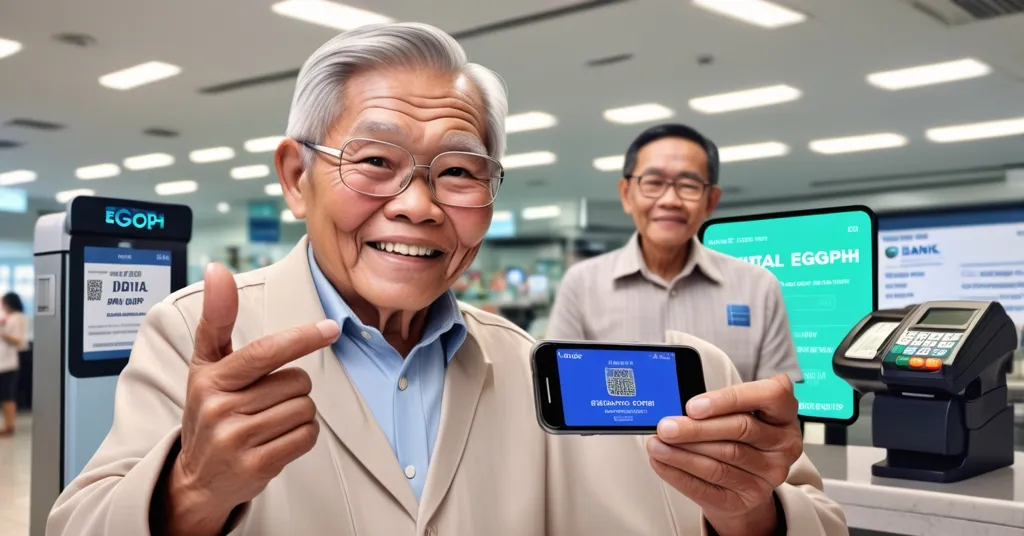
LTB The Philippines is pushing harder for acceptance of its digital National Senior Citizens ID, and it wants government offices, banks, financial institutions, and private businesses to treat it like the real ID it is. For older Filipinos, that means easier access to discounts, tax exemptions, benefits, and identity checks through the eGovPH app instead of playing paperwork roulette at every counter.
- Digital National Senior Citizens ID available through the eGovPH app
- Government and private institutions urged to accept it as valid ID
- Used for discounts, VAT exemptions, benefits, account opening, and verification
- Part of the Philippines’ wider government digitalization push
The National Commission of Senior Citizens (NCSC) is reminding institutions to recognize the digital National Senior Citizens ID, or NSCID, as an official government-issued ID. NCSC chairperson and CEO Ma. Merceditas Gutierrez said the digital version should be accepted just like other government IDs available through the eGovPH App.
“We call on all institutions and establishments to accept the digital NSCID in accordance with the law, similar to other government IDs available through the eGovPH App,” — Ma. Merceditas Gutierrez, NCSC chairperson and CEO.
That’s the core of the push: the ID is not meant to be a gimmick, a convenience feature, or some pretty icon on a phone that nobody honors when it matters. It is intended to work as a valid digital identity for Filipino citizens aged 60 and above. In practical terms, that should mean less nonsense at pharmacies, transport counters, banks, and government desks.
The digital NSCID can be used for the 20% senior citizen discount, VAT exemptions, medicines and food purchases, public transportation services, government assistance programs, benefits and priority accommodations, account opening, loan applications, benefit claims, and identity verification. VAT stands for value-added tax, which is a sales tax added to many purchases. So when the state says senior citizens are entitled to VAT exemptions, this is not a random perk. It is part of a legal benefit package older Filipinos are supposed to receive without a scavenger hunt.
“The digital National Senior Citizens ID is an official and legitimate government-issued identification designed to make services more accessible and convenient for our senior citizens,” — Ma. Merceditas Gutierrez.
That part matters because the whole idea only works if institutions actually accept it. A digital ID that gets shrugged off by a cashier, teller, or clerk is just expensive bureaucracy in app form. The goal here is simple: fewer lines, fewer forms, fewer excuses, and less of that classic public-service ritual where nobody seems sure which document is valid today.
The digital NSCID was launched in August 2025 by the NCSC and the Department of Information and Communications Technology (DICT) as part of the Philippines’ broader government digitalization drive. By April 2026, more than 1.3 million senior citizens had used the digital NSCID through the eGovPH app. That’s a meaningful sign of adoption, especially in a country where older citizens often get stuck dealing with slow, fragmented, and frankly outdated systems.
The broader numbers suggest the government is taking this much further than a pilot project. Under the E-Governance Act, the Philippine government issued 84 million digital IDs in 2025, and those IDs were used in more than 100 million transactions across public and private sectors. Those figures likely include a mix of usage types and users, so they should be read as a sign of scale rather than a perfect measure of unique adoption. Still, it’s a strong indicator that the national digital ID push is moving from theory to daily use.
The eGovPH app is being positioned as a one-stop platform for government services. In plain English, that means one app is supposed to give people access to multiple official services instead of forcing them to bounce from agency to agency like a bureaucratic pinball. The app’s eLocal Government Unit feature also allows remote access to documents such as birth certificates, marriage certificates, business permits, and licenses.
It is already connected to more than 600 local government units, with plans to integrate 1,700 more. That expansion is important because a digital identity system is only as useful as the number of services willing to recognize it. If the plumbing is there but the taps are closed, the whole thing is just tech theater.
“The digital national ID is more than just an ID—it’s the foundation of a truly digital government. It enables seamless access to services, reduces red tape, and fosters trust between citizens and the government,” — DICT Undersecretary David Almirol Jr.
“This is just the beginning. We are continuously improving and adding more services to enhance the user experience.” — David Almirol Jr.
There’s a lot to like in that vision. Digital identity can reduce wait times, cut down repeated verification, and make it easier for people to prove who they are without lugging around folders of paper copies. For senior citizens, that convenience can be more than a minor upgrade. It can mean faster access to medicine discounts, smoother benefit claims, and fewer trips back to a government office just to fix some minor clerical mess.
But let’s not pretend the hard part is over. Digital transformation in government sounds sleek until it runs into reality: fragmented systems, poor training, inconsistent enforcement, and institutions that act as if “new process” means “ignore until someone complains loudly enough.” If banks, stores, transport operators, and offices refuse to honor the digital NSCID, the system loses a big chunk of its usefulness.
Former DICT official Tirso Raymond “Mon” Gutierrez described the core problem bluntly: agencies often still operate in silos. That’s bureaucratic speak for “they all do their own thing and don’t talk to each other properly.”
“The biggest challenge for us in government is how to accomplish this digital transformation journey… It’s not enough that agencies have individual automated processes. They operate in silos.” — Tirso Raymond “Mon” Gutierrez.
“Once you are able to download the app, you can now access all government agencies with only one single entry. And that’s what we refer to as a single sign-on.” — Tirso Raymond “Mon” Gutierrez.
“Single sign-on” simply means one login or one verified entry can open access to multiple services. That is a real quality-of-life improvement if it works as advertised. It also shows why centralized digital identity systems are so attractive to governments: less duplication, fewer logins, cleaner records, and easier service delivery. The state gets efficiency. Citizens get less hassle. In theory, everybody wins.
In practice, there are also real concerns that deserve attention. Centralized digital ID systems can create privacy risks if data is poorly protected, over-collected, or linked too tightly across services. A phone can be lost. An account can be hacked. A user can be locked out. And not every senior citizen is comfortable with smartphones, QR codes, or app-based verification. Some don’t have reliable internet. Some may have poor vision or limited digital literacy. A good system has to work for them too, not just for the people who already live on their phones.
That’s the tradeoff governments rarely mention when they sell digital convenience: the more seamless the system becomes, the more power it concentrates in one platform. That can be efficient. It can also become a control point if the rollout is sloppy or the safeguards are weak. Convenience and control often show up in the same suitcase.
Still, the Philippines is making a serious bet on digital public services, and the digital NSCID is part of that larger shift. For senior citizens, the promise is straightforward: a valid government ID, easier access to legally mandated benefits, and fewer absurd hoops. For the rest of the country, it’s another sign that digital identity systems are becoming core infrastructure, not side projects.
The real test is not whether the app exists. It’s whether institutions actually accept it, seniors can use it without pain in the neck, and the system stays secure while scaling up. If that happens, the digital NSCID could become one of the more practical pieces of the Philippines’ e-government push. If not, it’ll just be another example of government technology that looked good on paper and collapsed under real-world friction.
What is the digital NSCID?
It is the digital version of the Philippines’ National Senior Citizens ID, available through the eGovPH app and intended to serve as official identification.
What can the digital NSCID be used for?
It can be used for senior citizen discounts, VAT exemptions, government assistance, account opening, loan applications, benefit claims, transportation services, and identity verification.
Who should accept it?
Government offices, banks, financial institutions, and private establishments are being urged to accept it as a valid government ID.
How many senior citizens have used it?
More than 1.3 million senior citizens had used the digital NSCID through the eGovPH app as of April 2026.
Why is the Philippines pushing this system?
The government wants to reduce red tape, improve access to services, and build a more unified digital government system.
What is the eGovPH app?
It is a government super app that gives users access to digital IDs and multiple public services, including local government documents.
What are the risks?
Uneven adoption, privacy concerns, technical failures, and digital exclusion could weaken the system if rollout and enforcement are handled badly.
Does this have anything to do with crypto or blockchain?
Not directly, but it fits into the broader conversation about digital identity, trust systems, and the balance between convenience, privacy, and state control.