Pro-XRP Lawyer Blasts TRUMP and MELANIA Meme Coin Crash: $4.3 Billion Lost
 LTB
LTB Pro-XRP Lawyer Slams Meme Coin Crash as TRUMP and MELANIA Tokens Wipe Out $4.3 Billion
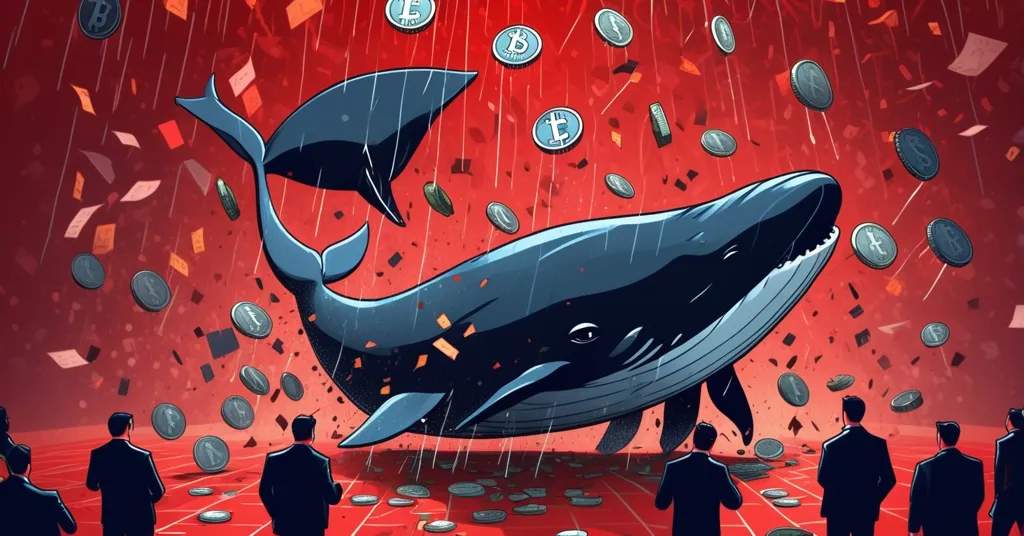
Brace yourself for a tale of crypto carnage that’s as infuriating as it is predictable. The TRUMP and MELANIA meme coin meltdown has obliterated a staggering $4.3 billion in retail investor wealth, exposing the predatory underbelly of speculative markets and igniting fierce debates over insider trading, market manipulation, and regulatory black holes in the cryptocurrency space.
- Retail Devastation: Over 2 million wallets are underwater as TRUMP and MELANIA tokens collapsed by up to 99%, erasing $4.3 billion.
- Insider Jackpot: Just 45 early wallets cashed out with $1.2 billion in profits, a sickening 20:1 loss-to-gain ratio for small-time traders.
- Regulatory Clash: Pro-XRP lawyer Bill Morgan pushes for investigation, while ex-SEC director Marc Fagel doubts securities laws apply.
The Crash: A Brutal Numbers Game
Imagine pouring your hard-earned savings into a “hot” token, hyped as the next moonshot, only to wake up to a near-total loss. That’s the nightmare for millions of everyday traders caught in the TRUMP and MELANIA meme coin fiasco. These politically themed tokens, cloaked in a deceptive “official” branding, sucked in retail liquidity at an unprecedented scale. At their peak, they fueled a fear-of-missing-out (FOMO) frenzy, with prices soaring as small-time players piled in. Then, the inevitable happened—TRUMP plummeted by 92%, and MELANIA cratered by a jaw-dropping 99%, leaving over 2 million wallets holding bags of near-worthless digital junk. The total damage? A gut-wrenching $4.3 billion wiped out from retail portfolios.
For those unfamiliar, meme coins are a bizarre subset of cryptocurrency. Unlike Bitcoin, which serves as a decentralized store of value and a hedge against centralized financial systems, or Ethereum, which powers smart contracts and decentralized applications (dApps), meme coins are often internet gags turned speculative gambles. Think Dogecoin, born in 2013 as a joke mocking crypto hype, or Shiba Inu, which rode a 2021 viral wave to absurd valuations. They’re driven by social media buzz and viral marketing rather than utility or innovation. TRUMP and MELANIA exploited political branding, creating a false sense of legitimacy that lured in unsuspecting investors. As crypto analyst Zach Humphries noted:
“The situation is worse than initially believed… the ‘official’ branding created a powerful perception of legitimacy, drawing in retail liquidity at scale.”
This faux credibility was a trap, pure and simple. The tokens followed the textbook meme coin cycle: a rapid surge fueled by hype, explosive gains for early holders, and a catastrophic collapse once liquidity dried up. It’s a pattern we’ve seen play out repeatedly, but the scale of this disaster—$4.3 billion lost—has turned heads and raised serious questions about the ethics and mechanics of these speculative traps. For deeper insight into this devastating crash, check out this detailed analysis of the meme coin meltdown.
Insider Games: A Predatory Wealth Transfer
Here’s where the story gets even uglier. While retail traders bore the brunt of the crash, a tiny group of insiders made out like bandits. Blockchain data—think of it as a public ledger where every transaction is visible to anyone, like a bank statement on display—reveals that just 45 early wallets pocketed approximately $1.2 billion in profits by dumping their holdings at peak prices. These wallets, often belonging to “whales” (large holders) or project insiders with access to pre-mined tokens (coins created and held before public release), timed their exits perfectly, saddling latecomers with crushing losses. The math is nauseating: for every $1 gained by these early players, retail lost $20. It’s not just a market dynamic; it’s a predatory wealth transfer.
Tools like Etherscan or Dune Analytics allow anyone to track wallet activity on public blockchains, which is how such disparities come to light. This transparency is one of crypto’s greatest strengths—it exposes scams and insider games in ways traditional finance often hides. But it’s also a double-edged sword: seeing the scam unfold in real-time doesn’t prevent the damage. Small-time traders, often lacking the knowledge or resources to analyze on-chain data, jump in blind, driven by hype or promises of quick riches. By the time the rug is pulled, it’s too late. The TRUMP and MELANIA crash isn’t an anomaly; it’s the logical endpoint of a system where information asymmetry and unchecked greed run rampant.
Regulatory Tug-of-War: Who’s to Blame?
The sheer magnitude of retail harm has sparked renewed calls for accountability. Pro-XRP lawyer Bill Morgan has been vocal about the need for scrutiny, suggesting that a $4.3 billion loss warrants investigation into what reeks of a high-profile pump-and-dump scheme. For the uninitiated, a pump-and-dump is a manipulative tactic where an asset’s price is artificially inflated through hype or coordinated buying, only for early holders to sell at the top, crashing the value and leaving others with losses. Morgan’s stance implies that agencies like the Securities and Exchange Commission (SEC) or other consumer protection bodies should dig into whether fraud or market manipulation fueled this disaster.
But not everyone agrees. Former SEC regional director Marc Fagel throws a bucket of cold water on the idea of government intervention. His perspective suggests that meme coins likely don’t qualify as securities—think stocks or bonds with promised returns—under existing laws. Meme coins are more akin to speculative collectibles, bought on pure gamble with no guarantees. Fagel’s take, in essence, is: “You jumped into the shark tank; don’t cry for a lifeguard.” It’s a harsh but not entirely baseless point. Crypto’s ethos has long been “caveat emptor” (buyer beware), rooted in personal responsibility over nanny-state protections. Still, it dodges the glaring regulatory gap that lets such predatory schemes thrive unchecked.
Historically, meme coins have slipped through the cracks of oversight. During Gary Gensler’s tenure as SEC chair, tokens like Dogecoin or celebrity-endorsed flops largely avoided classification as securities, leaving retail exposed with little legal recourse. Securities laws are built for traditional assets, not digital memes, creating a gray zone where regulators struggle to define jurisdiction. Are meme coins securities? Commodities? Digital tulips? Without clear rules, everyday traders—often the least equipped to navigate these murky waters—become easy prey for scams and insider plays. And while Bitcoin maximalists like myself champion decentralization over bureaucratic meddling, we can’t ignore the human cost when millions of wallets get wrecked overnight.
The Bigger Picture: Meme Coins and Crypto’s Reputation
Let’s zoom out. The TRUMP and MELANIA debacle isn’t just a standalone horror show; it’s a symptom of deeper rot in speculative crypto markets. The ethical stench of this wealth transfer—$1.2 billion to a handful while the masses lose everything—is hard to stomach. Sure, Bitcoin isn’t immune to volatility or bad actors (think Mt. Gox or endless scams), but its value proposition rests on disrupting centralized finance and empowering individuals with censorship-resistant money. Meme coins, by contrast, rarely offer anything beyond enriching a few at the expense of many. They’re less a tool for financial freedom and more a carnival game rigged against the crowd.
Yet, there’s a counterpoint worth chewing on: meme coins, for all their degeneracy, sometimes drive crypto adoption. They pull in new users—often younger, tech-curious crowds—who might later explore legit projects like Ethereum’s DeFi ecosystem or Bitcoin’s lightning network. Dogecoin, for instance, got headlines and brought fresh eyes to blockchain tech, even if most got burned. But let’s not romanticize it: the cost of this “onboarding” is often shattered trust. Crashes like this erode confidence in crypto broadly, tainting even solid projects. If we’re serious about upending the status quo through effective accelerationism—pushing tech forward fast to reshape systems—we can’t let meme coin circuses undermine the mission.
Another angle to consider is overregulation as a backlash. If the SEC or other bodies clamp down too hard in response to these disasters, we risk smothering the very freedom that makes crypto revolutionary. Permissionless DeFi protocols, Bitcoin’s borderless transfers, and privacy-focused innovations could get caught in the crossfire of well-meaning but heavy-handed rules. It’s a delicate balance: how do we shield the vulnerable without killing the ethos of decentralization? I’m skeptical of government fixes—the last thing we need is innovation strangled by red tape—but basic consumer education or industry self-policing (think exchanges delisting predatory tokens) might be a start.
Lessons for Crypto’s Future: Don’t Feed the Hype Machine
So, what can we take away from this mess? As a Bitcoin advocate, I’m tempted to wag a finger at altcoin excess and say, “Stick to BTC; it’s the only real play.” And there’s truth there—Bitcoin’s long-term value accrual through halving cycles and growing institutional adoption stands in stark contrast to meme coins’ fleeting pump cycles. But I’ll concede that altcoins and other blockchains fill niches Bitcoin neither can nor should. Ethereum’s smart contracts power real utility; meme coins, at their rare best, capture cultural zeitgeist. The problem isn’t their existence; it’s the unchecked hype and predatory mechanics that screw over the little guy.
For everyday traders, some practical advice: before buying any token, do your homework. Check if it even has a whitepaper (a document outlining purpose and tech)—most meme coins don’t. Use blockchain explorers like Etherscan to scan wallet distribution; if a few addresses hold massive chunks, that’s a red flag for insider dumps. Look for team transparency—anonymous devs often spell trouble. And for the love of Satoshi, don’t chase FOMO; if it’s already up 1,000%, you’re likely the exit liquidity for someone else. These steps won’t eliminate risk, but they’ll arm you against obvious scams.
Let’s cut through the noise with some key questions and straight answers on this fiasco:
- What triggered the collapse of TRUMP and MELANIA meme tokens?
A hype-driven surge, fueled by deceptive “official” branding, pulled in massive retail inflows, followed by insider selling and a liquidity crunch, tanking prices by up to 99%. - Why did retail investors lose so much compared to insiders?
Early wallets dumped at peak prices for $1.2 billion in profits, while over 2 million late-entering traders absorbed $4.3 billion in losses as the tokens crashed. - Is there a case for regulatory action in meme coin crashes?
Bill Morgan argues the scale of harm justifies probing potential fraud, but Marc Fagel counters that meme coins likely fall outside securities laws, questioning government involvement. - How does branding manipulate investor behavior in crypto markets?
The faux legitimacy of “official” branding on TRUMP and MELANIA sucked in retail fast, showing how perception can override rational risk assessment in speculative frenzies. - Can meme coins align with crypto’s broader mission of decentralization?
Rarely—most lack the utility or ethos of Bitcoin or Ethereum, often devolving into predatory schemes rather than tools for financial sovereignty or innovation.
This disaster is a glaring wake-up call. Blockchain tech holds insane potential to redefine money and power, but the meme coin space remains a minefield of scams and shattered dreams. As Bitcoiners, we can smirk at altcoin chaos, but we’re not spotless—our ecosystem has blind spots too. The path forward isn’t banning meme coins or begging for bailouts; it’s fostering skepticism, due diligence, and real value creation. If we’re serious about financial freedom, let’s stop feeding hype machines and start building systems that don’t fleece the vulnerable. Until then, crashes like TRUMP and MELANIA will keep piling up—and the joke will be on us all.