Ripple and XRP Aim to Challenge SWIFT and Banks by 2026: A Financial Revolution?
 LTB
LTB Can XRP and Ripple Disrupt Major Banks and SWIFT in 2026?
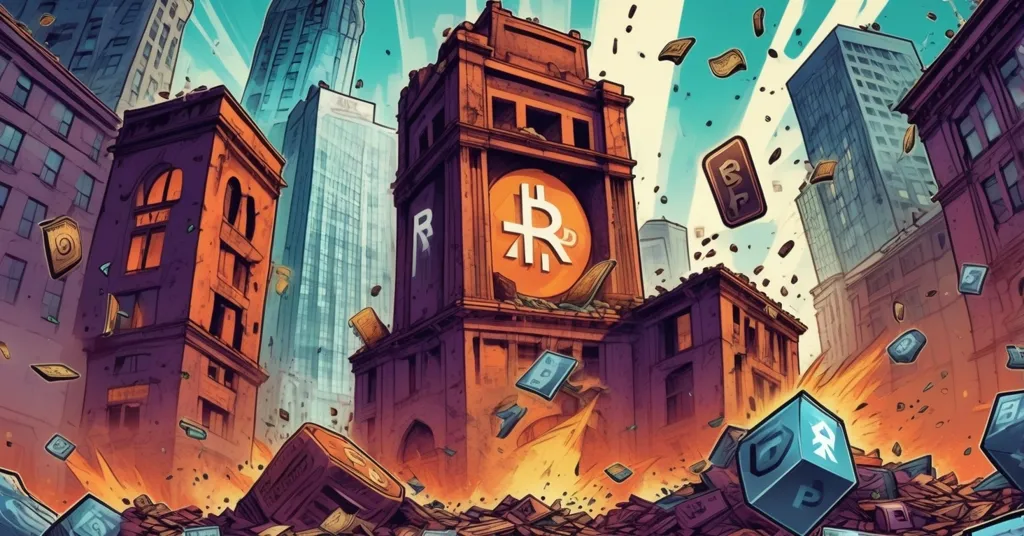
Ripple, the force behind the cryptocurrency XRP, is no longer just a player in cross-border payments—it’s aiming to topple the giants of global banking. With a flurry of strategic acquisitions and a direct challenge to SWIFT, the backbone of international finance, Ripple is positioning itself as a serious contender in treasury, custody, and liquidity services. But can a crypto project truly upend centuries-old financial institutions, or is this ambition just a shiny mirage?
- Ripple’s Power Play: Aggressive acquisitions in treasury, stablecoin tech, and brokerage to rival core banking functions.
- SWIFT Under Fire: Targeting 14% of SWIFT’s cross-border transaction volume by 2030.
- Banks in Trouble: Outdated systems and staggering modernization costs leave traditional finance vulnerable.
Ripple’s Empire-Building Moves
Ripple’s transformation from a niche payments solution to a potential banking rival is a masterclass in strategic aggression. Initially, XRP served as a bridge currency for cross-border settlements via RippleNet, a blockchain-based platform that’s already partnered with over 300 banks and financial institutions worldwide for faster, cheaper transfers. But Ripple isn’t content playing nice with the system—it’s building a fortress to challenge the very foundations of traditional finance.
Here’s a quick rundown of Ripple’s 2025 acquisition spree that’s turning heads. In April, it snagged Hidden Road, now rebranded as Ripple Prime, a global prime broker clearing trillions annually for over 300 institutional clients. This thrust Ripple into high-stakes territory, offering services like custody (safekeeping assets) and liquidity provision (ensuring enough cash for transactions)—areas banks have dominated for decades. Then, in October, Ripple dropped $1 billion on GTreasury, a treasury management platform for handling cash flow and financial risk. Add to that the $200 million purchase of Rail in August to supercharge its stablecoin infrastructure with Ripple USD (RLUSD), plus smaller grabs like Palisade and Solvexia (a Sydney-based fintech under GTreasury as of January 6, 2026), and you’ve got a company hell-bent on redefining the financial playbook.
For those new to the jargon, let’s break it down. Treasury management is about steering an organization’s financial ship—managing cash reserves, payments, and risks. Stablecoins like RLUSD are cryptocurrencies pegged to stable assets (often the US dollar) to avoid the wild price swings of something like Bitcoin, making them practical for real-world transactions. Prime brokerage? That’s the big-league stuff—think clearing trades and offering credit to hedge funds, traditionally a bank’s bread and butter. Ripple’s dive into these waters isn’t just bold; it’s a declaration of war on legacy finance.
SWIFT Under Siege: Ripple as a True Alternative
Ripple’s most audacious target is SWIFT, the global messaging network that powers most international bank transfers, handling trillions annually. SWIFT is the old guard—reliable but often slammed for slow processing (sometimes days) and hefty fees. Ripple smells blood, leveraging its blockchain rails—digital pathways built on blockchain tech that move money across borders securely and near-instantly—for a direct assault. CEO Brad Garlinghouse isn’t mincing words about their goal.
“We plan to capture up to 14% of SWIFT’s current cross-border volume within the next five years,” said Ripple CEO Brad Garlinghouse.
This isn’t idle bragging. With over 300 institutional partners on RippleNet, the company is already proving it can deliver XRP cross-border payments faster and cheaper than SWIFT’s clunky system. They’re also using liquidity corridors—pre-funded pools of capital in different currencies—to ensure transactions flow without the usual delays from currency mismatches. As a SWIFT alternative, Ripple isn’t just competing; it’s aiming to rewrite the rules of global transactions.
Banks’ Achilles Heel: A Tech Nightmare
Why are banks quaking in their polished loafers? Their tech is a mess—think systems from the 1970s or ‘80s, stitched together over decades like a Frankenstein’s monster of code. Updating this junk isn’t a quick fix; it’s a brutal slog costing individual institutions between $3 billion and $4 billion, based on industry estimates. It’s like trying to run a cutting-edge app on a flip phone—good luck loading anything while Ripple’s streaming in 4K.
Take a hypothetical major player like Barclays. Some of its legacy systems reportedly delay international transfers by 3-5 days, with fees biting a chunk out of every transaction. Compare that to RippleNet, which can clear payments in under 10 seconds for a fraction of the cost. As crypto commentator Vincent Van Code pointed out on X, Ripple is gunning for the holy grail of banking profits.
“Ripple is encroaching on banks’ multi-trillion-dollar treasury, remittance, and custody revenue streams, areas historically protected by legacy infrastructure,” noted Vincent Van Code, a crypto commentator on X.
Banks are bleeding cash just to stay relevant, while Ripple’s blockchain financial services slice through inefficiencies like a hot knife through butter. If they can’t adapt, they’re at risk of losing not just market share but entire revenue streams worth trillions.
The Decentralization Dilemma: Hero or New Villain?
Now, I’m all for shaking up the old guard with tech that moves at the speed of now—effective accelerationism is the name of the game. Ripple’s blockchain hammer is swinging hard at banking’s glass house, and I’m here for the shatter. But let’s hit pause and ask: Is Ripple the hero we need, or just a new villain in disguise? As a Bitcoin diehard, I’ve got to call it out—Ripple’s centralized control over a massive XRP stash smells more like Wall Street than Satoshi Nakamoto’s vision of pure, untainted freedom.
Bitcoin is about owning your wealth, no middleman, no strings. XRP? It’s Ripple’s puppet, dancing to the tune of over 300 institutional partners. Sure, it’s disrupting banks, but is it just replacing one centralized power with another? Hardly the liberation we crave. And let’s not forget the regulatory heat—Ripple’s already tangled with the SEC over XRP’s status as a potential security back in 2020. If it starts chipping away at banks’ trillions in fees, expect governments and lobbyists to come down harder than a Bitcoin bear market.
Still, I can’t deny Ripple and XRP are filling a niche Bitcoin doesn’t touch: enterprise-grade financial plumbing. Bitcoin is digital gold, a middle finger to central banks and a store of value for the individual. XRP is trying to be the pipes of a new system—less sexy, but damn useful for the suits. Different beasts, different wars. Even if you’re a Bitcoin-only purist, XRP’s war on banks could pave the way for broader blockchain acceptance, indirectly boosting Bitcoin’s legitimacy in the eyes of skeptics.
What’s Next for XRP and Global Finance?
If Ripple pulls this off, the financial sector could face a tectonic shift. Imagine cross-border payments taking seconds, not days, costing pennies instead of percentages. Picture a Filipino freelancer sending $500 home—instead of a $25 Western Union fee and a 2-day wait, RippleNet slashes it to $1 and 5 seconds. That’s disruption with teeth. But there’s a dark side: If Ripple grows too powerful, are we just trading one set of overlords for another? And what about the broader crypto ecosystem—does XRP’s rise as banking’s new darling sideline Ethereum’s DeFi innovations or Bitcoin’s push for individual sovereignty?
Then there’s the wildcard of central bank digital currencies (CBDCs) looming on the horizon. Is Ripple positioning XRP and RLUSD as a private-sector rival to government-backed digital cash? If so, the regulatory battles could make past SEC skirmishes look like child’s play. Banks won’t roll over quietly either—they’ve got deep pockets and deeper connections to fight back. Ripple might storm the castle of legacy finance by 2030, but if it hoards too much control, we’re just swapping one centralized giant for another. Keep your eyes peeled—and your Bitcoin wallet closer. For more insights on this potential shift, check out this analysis on XRP challenging major banking institutions.
Key Takeaways and Questions on Ripple’s Banking Battle
- What drives Ripple’s challenge to major banks?
Ripple is building a rival empire through acquisitions like Hidden Road (Ripple Prime), GTreasury, and Rail, targeting treasury management, stablecoin tech like RLUSD, and brokerage services that mimic core banking roles. - How real is Ripple’s threat to SWIFT?
Very real—they aim to seize 14% of SWIFT’s cross-border volume within five years, using blockchain rails and XRP cross-border payments to outpace SWIFT’s slow, costly system with over 300 partners already onboard. - Why can’t banks keep up with Ripple?
Legacy systems from decades past and modernization costs of $3-4 billion per institution cripple banks, while Ripple’s sleek tech cuts transaction times and fees dramatically. - Could Ripple reshape global finance?
Absolutely, by slashing into banks’ multi-trillion-dollar treasury, remittance, and custody profits, though its centralized nature risks creating a new financial overlord instead of true decentralization. - Has XRP outgrown its original purpose?
Yes, it’s no longer just a settlement token—XRP now plays a role in liquidity corridors and stablecoin integration, directly challenging traditional banking services on a global scale.