Ripple’s $750M Buyback Sparks XRP Holder Fury Over Wall Street Bias
 LTB
LTB Ripple’s $750M Share Buyback: Unpacking the Impact on XRP Price and Holders
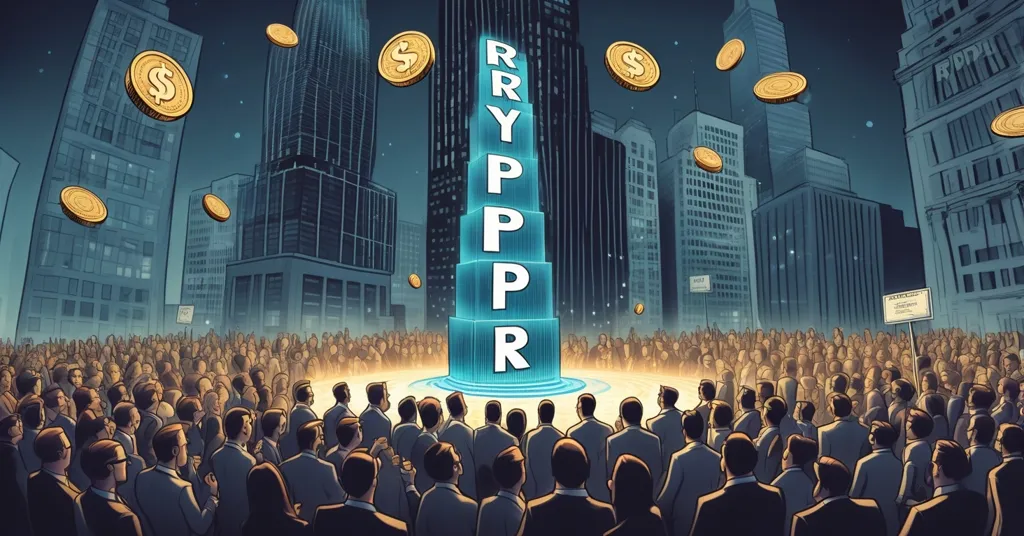
Ripple’s recent $750 million share buyback has sent shockwaves through the XRP community, spotlighting a fierce debate over whether the company prioritizes Wall Street bigwigs or the everyday investors holding XRP. With Ripple’s valuation now at a towering $50 billion, the move raises hard questions about fairness, strategy, and the future of XRP in a rapidly shifting crypto landscape.
- Massive Buyback: Ripple’s $750 million share repurchase pushes its valuation to $50 billion, up 25% from $40 billion.
- Community Backlash: Critics argue Ripple’s XRP sales fund buybacks for institutional gain, sidelining retail holders.
- Broader Tension: This clash reflects ongoing struggles between corporate moves and decentralized ideals in crypto.
The Buyback Breakdown: Ripple’s Financial Power Play
Ripple, the payments company closely tied to the XRP cryptocurrency, dropped a bombshell with its announcement of a $750 million share buyback from investors and employees. Coming on the heels of a $500 million funding round in November 2025, this move has catapulted Ripple’s valuation to $50 billion—a 25% jump that signals serious financial clout in a market where many crypto firms are still scrambling to survive. At face value, it’s a flex of strength, a middle finger to bearish sentiment in the industry. But beneath the headlines lies a growing unrest among XRP holders who question who really benefits from this corporate maneuver.
For the uninitiated, a share buyback is when a company repurchases its own shares from the market, often to boost the value of remaining shares or return value to equity holders. In Ripple’s case, this $750 million repurchase isn’t just pocket change—it’s a statement of intent, potentially paving the way for bigger moves like an Initial Public Offering (IPO). Yet, as Ripple’s valuation soars, many retail investors—those everyday folks holding XRP in their wallets—are left wondering why their token isn’t seeing the same love.
XRP Price Pressure: The Escrow Sales Controversy
Central to the storm is Ripple’s alleged buy-and-sell cycle, brought into sharp focus by crypto analyst @WhaleFUD. The accusation is damning: Ripple sells XRP, the native token of the XRP Ledger (XRPL)—a blockchain built for lightning-fast, low-cost cross-border payments—to fund these private equity buybacks. This, critics say, creates a stark imbalance where institutional investors and venture capital firms reap the rewards of Ripple’s growth, while retail XRP holders are reduced to mere liquidity providers, fueling the machine without getting a cut of the profits. For a deeper look into this dynamic, check out this analysis on Ripple’s trading patterns and their effect on XRP.
“Retail is the liquidity, while Wall Street is the winner.” – @WhaleFUD
Let’s unpack this for clarity. Liquidity providers, in this context, are the retail investors buying and selling XRP on exchanges. Their activity helps maintain a fluid market, allowing larger players to move in and out with ease. But according to skeptics, Ripple’s strategy exploits this by offloading XRP to pad its war chest for corporate plays like buybacks, leaving small investors with depreciating tokens and no stake in the company’s $50 billion valuation. It’s a raw deal, a slap in the face to those who bought XRP expecting to ride Ripple’s success.
Then there’s the escrow mechanism, a critical piece of this puzzle. Ripple holds around 40 billion XRP in escrow—a locked stash designed to control supply and prevent market flooding. Each month, 1 billion XRP is released, with any unsold portion returned to escrow for future cycles. Historically, these releases have often correlated with downward pressure on XRP price, as markets anticipate extra supply. Critics allege Ripple times these sales strategically, using the proceeds to juice share prices ahead of potential IPO rumors, while XRP holders watch their investments bleed. Data from past years shows consistent price dips around escrow unlocks, though correlation isn’t always causation. Still, the optics are rough, and the XRP community isn’t buying the “it’s just business” excuse.
RLUSD: Friend or Foe to XRP’s Use Case?
The frustration spills over into Ripple’s newer ventures, notably the RLUSD stablecoin. For those new to crypto, a stablecoin is a digital asset pegged to a stable value—often the US dollar—to avoid the wild price swings of tokens like Bitcoin or XRP. RLUSD aims to offer businesses a reliable medium for transactions, especially cross-border payments, without the volatility risk. It’s a smart pitch for institutional clients who prioritize predictability over speculative gains. But here’s the rub: many in the XRP community see RLUSD as a direct competitor to XRP’s core use case on the XRPL, which was built for the same payment niche.
Why hold XRP for remittances if a Ripple-backed stablecoin can do the job with less risk? Compared to giants like USDT (Tether) or USDC (USD Coin), RLUSD is a latecomer, but Ripple’s focus on enterprise clients could give it an edge in niche markets. Yet, for retail investors, it feels like Ripple is pivoting away from XRP, diluting its purpose while equity holders cash in on diversified revenue streams. It’s salt in the wound for those already steamed about the share buyback, reinforcing the narrative that Ripple’s priorities lie with institutional partners, not the grassroots base that hyped XRP in its early days.
Historical Friction: Ripple and the XRP Community
This isn’t the first time Ripple has clashed with its community. The company’s relationship with XRP holders has been rocky, marked by past controversies like the ongoing legal battle with the US SEC over whether XRP qualifies as a security—a designation that could slap heavy regulations on the token and dent investor trust. While that case remains unresolved, it’s cast a long shadow, amplifying skepticism about Ripple’s commitment to XRP over corporate gains. Each new move, from buybacks to stablecoins, feels like another chapter in a saga where retail investors provide the fuel but rarely share the victory lap.
Zoom out, and this mirrors patterns across crypto history. The 2017 ICO boom saw countless projects raise millions from retail buyers, only for early insiders to dump tokens at peak hype. The 2021 layer-1 blockchain frenzy repeated the cycle, with VCs and founders banking profits while latecomers held devalued bags. Ripple’s situation stinks of the same imbalance, a bitter reminder that even projects pitched as revolutionary can fall into old Wall Street traps—blockchain or not.
Ripple’s Defense: A Counterview on Strength
Not everyone is waving pitchforks, though. Blockchain researcher BankXRP offers a brighter spin, viewing the $750 million buyback as proof of Ripple’s liquidity and deep-rooted confidence in the XRP ecosystem. A $50 billion valuation doesn’t materialize from thin air, and Ripple’s recent acquisitions—like the $1 billion purchase of GTreasury and the $1.25 billion deal for Hidden Road—show a company doubling down on growth. These moves, from treasury management to financial infrastructure, could bolster Ripple’s business case, indirectly lifting the XRPL’s relevance if more firms adopt its tech for payments.
The argument here is that a stronger Ripple ultimately benefits XRP, even if the path feels like a rollercoaster for token holders. It’s not a zero-sum game—corporate expansion could drive adoption of the XRP Ledger, increasing demand for the token over time. Even amid market uncertainty and XRP price pressure from escrow sales, BankXRP sees this as a long-term bet on ecosystem health. It’s a rare ray of optimism in a debate heavy with cynicism, suggesting that patience might yet pay off for the beleaguered XRP faithful.
IPO Speculation: Widening the Equity-Token Gap?
Looming over this drama is the specter of a Ripple IPO. With regulatory hurdles like the SEC lawsuit potentially nearing resolution, whispers of a public offering are growing louder. An IPO could skyrocket Ripple’s visibility and valuation, handing massive gains to equity holders—those same institutional investors already benefiting from buybacks. But for XRP holders? The outlook is murkier. Without direct ties to Ripple’s stock, retail investors might watch from the sidelines as Wall Street cashes in, further widening the gap between equity and token value. Market analysts have speculated that an IPO could trigger even more XRP sales to fund corporate milestones, piling on the pain for price-conscious holders. It’s a scenario that tests the very ethos of crypto as a tool for financial inclusion over elite enrichment.
A Bitcoin Maximalist Lens: Centralization’s Cost
As someone who leans toward Bitcoin maximalism, I can’t help but see Ripple’s saga as a glaring warning about centralized control in crypto. Bitcoin doesn’t have a CEO or boardroom pulling strings that screw over its users; it’s a protocol driven by code and community consensus. No escrow dumps, no buybacks—just pure, decentralized scarcity. That said, I’ll concede XRP and the XRPL carve out a niche Bitcoin doesn’t touch: ultra-fast, dirt-cheap transactions tailored for payments. Ethereum and other altcoins push boundaries too, with smart contracts and DeFi innovations Bitcoin wisely avoids by design. But when a project like Ripple seems to prioritize equity over token holders, it’s a brutal reminder of the risks in hitching your wagon to centralized crypto plays. Ripple’s growth is undeniable, but at what cost to the folks who believed in XRP from the jump?
Key Takeaways and Questions for XRP and Crypto Enthusiasts
- What does Ripple’s $750 million share buyback mean for its valuation?
It elevates Ripple’s worth to $50 billion, a 25% increase from its prior $40 billion market value, showcasing robust corporate momentum. - How does Ripple’s buy-and-sell cycle impact retail XRP holders?
Critics claim Ripple sells XRP to fund buybacks, benefiting institutional investors while retail holders act as liquidity providers with no direct share in corporate gains. - Why are XRP community members frustrated with RLUSD?
The RLUSD stablecoin is viewed as competing with XRP’s payment use cases on the XRPL, hinting that Ripple may be sidelining its original token for newer initiatives. - Could Ripple’s buyback signal upside for XRP’s future?
Supporters like BankXRP argue it reflects Ripple’s financial health and belief in XRP, potentially driving long-term ecosystem growth despite short-term price woes. - What does this reveal about centralized crypto projects?
It highlights a persistent rift between corporate strategies and community expectations, raising doubts about trust and adoption in centrally controlled projects like Ripple. - Should we watch for an IPO in Ripple’s future?
With regulatory clarity possibly nearing, an IPO could boost equity value for institutional holders but risks further alienating XRP investors if token benefits lag behind.
Ripple’s $750 million buyback and soaring valuation paint a picture of corporate triumph, but for many XRP holders, it’s a bitter pill laced with betrayal. As champions of decentralization and disruption, we must keep asking: can projects like Ripple grow without shafting their base? Crypto was forged to upend the status quo, not redux Wall Street’s playbook with a shiny blockchain gloss. Ripple’s next steps—be it deeper XRPL integration, regulatory wins, or an IPO splash—will be a proving ground for balancing profit with principle. For now, XRP holders are stuck on the sidelines, and they’re not chuckling at the irony of funding someone else’s champagne toast. Keep an eye on adoption metrics and corporate announcements; the real story is still unfolding.