Robert Kiyosaki Predicts Market Crash: Bitcoin Buying Opportunity in 2026?
 LTB
LTB Robert Kiyosaki’s Market Crash Warning Ignites Bitcoin Bulls: Opportunity in Chaos?
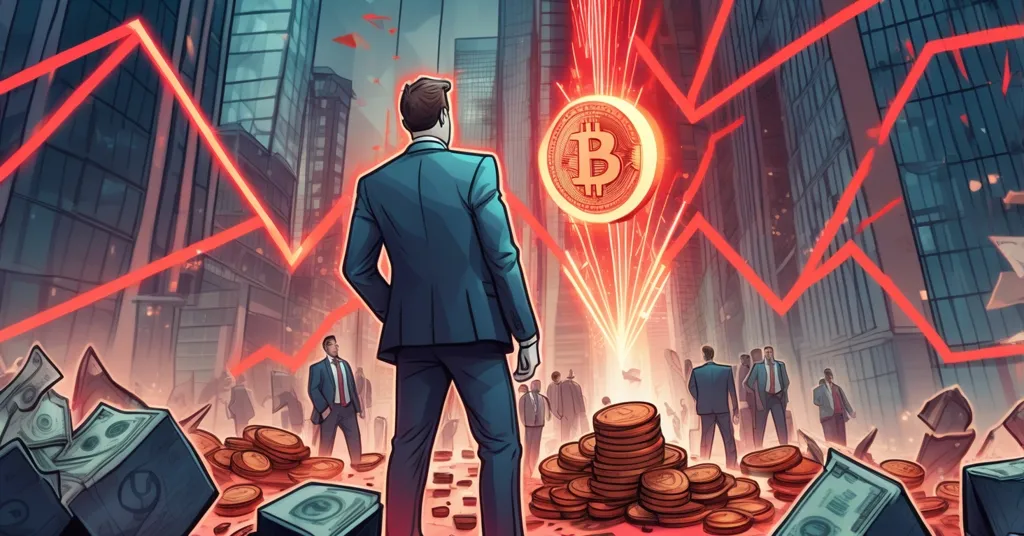
Robert Kiyosaki, the financial mind behind Rich Dad Poor Dad, has sounded the alarm on what he calls the “biggest stock market crash in history,” a prediction he’s been touting since 2013. With Bitcoin slipping below $70,000 and altcoins caught in a relentless downturn, his latest proclamation on social media is stirring both fear and excitement among crypto investors. Far from panicking, Kiyosaki is champing at the bit for this collapse, seeing it as a golden window for those ready to pounce on undervalued assets like Bitcoin and Ethereum.
- Crash Ahead: Kiyosaki predicts a historic stock market collapse, echoing warnings from his 2013 book Rich Dad’s Prophecy.
- Contrarian Cheer: He’s thrilled about the potential downturn, framing it as a buying opportunity for prepared investors.
- Asset Advice: Advocates for “real assets” like gold, silver, Bitcoin, and Ethereum to weather the storm.
Kiyosaki’s Crash Prophecy: A Decade in the Making
Back in 2013, Kiyosaki laid out a dire vision in Rich Dad’s Prophecy, forecasting a financial meltdown that would eclipse all others. On February 17, 2026, he doubled down via Twitter, stating:
“I Am Warning You: In Rich Dad’s Prophecy published 2013 I warned of the biggest stock market crash in history still coming. That giant crash is now imminent. The good news is those of you who followed my rich dad’s warning and prepared….the coming crash will make you richer…”
His message cuts through the noise like a blade. This isn’t just a grim forecast; it’s a roadmap for those who’ve listened to his advice over the years. For Kiyosaki, a crash isn’t the end—it’s the beginning of wealth-building for the savvy. And with traditional markets showing cracks and crypto feeling the heat, his words, as highlighted in a recent piece on Kiyosaki’s latest warning, hit harder than ever.
Market Turmoil: Bitcoin and Altcoins Under Pressure
Let’s paint the current picture. Bitcoin, often hailed as “digital gold” for its role as a store of value, has dipped below the $70,000 mark—a threshold that often shakes trader confidence. Altcoins, those other cryptocurrencies like Solana or Cardano that tend to ride Bitcoin’s coattails with even wilder swings, are bleeding out with no sustained rallies in sight. Market sentiment is shaky at best, with investors torn between holding on for dear life (a crypto term, HODL, meaning to cling to your assets through volatility) or bailing out before things get uglier. It’s a treacherous landscape, and clear direction is rarer than a confirmed Satoshi Nakamoto tweet.
Yet Kiyosaki isn’t losing sleep over this. He’s practically rubbing his hands together, declaring:
“I can’t wait for the coming giant crash.”
That’s the mindset of a true contrarian. To him, market crashes aren’t catastrophes; they’re clearance sales. When prices tank, whether in stocks, real estate, or crypto, it’s time to buy low with the expectation of selling high later. His “buy the fear” philosophy is a siren call to Bitcoin bulls who see every dip as a stepping stone to future gains.
Bitcoin as Digital Gold: Why Scarcity Fuels Optimism
Why does Kiyosaki put Bitcoin on a pedestal alongside gold and silver? It comes down to scarcity—a concept central to Bitcoin’s design. For those new to the space, Bitcoin has a hard cap of 21 million coins, coded into its protocol since its creation in 2009 by the pseudonymous Satoshi Nakamoto. Most of these coins are already in circulation, and “halvings” (events roughly every four years that cut the reward for mining new Bitcoin in half) further tighten the supply. This dwindling availability mimics the rarity of precious metals, positioning Bitcoin as a hedge against inflation and economic chaos in Kiyosaki’s view. So, when the price drops below $70,000, is it a red flag or a neon “buy now” sign? For him, it’s clearly the latter.
Historical patterns back up some of this optimism. Bitcoin has weathered brutal crashes before—think the 2017 peak of $20,000 followed by an 80% drop, or the 2020 COVID panic that saw prices plummet before soaring to $69,000 in 2021. Each time, BTC clawed its way back, often to heights that made past peaks look trivial. For Bitcoin maximalists like myself, who see BTC as the ultimate decentralized currency, these cycles aren’t just noise; they’re proof of resilience. Kiyosaki’s Bitcoin price prediction, while not specific on numbers, aligns with this narrative of crypto as a long-term safe haven during economic downturns.
Ethereum’s Utility: A Different Kind of “Real Asset”
Kiyosaki also gives a nod to Ethereum, the second-largest cryptocurrency by market cap, as a “real asset” worth holding. Unlike Bitcoin, which primarily functions as a store of value, Ethereum is a platform for decentralized applications (dApps—think apps running on blockchain without a central authority) and smart contracts (self-executing agreements coded on the blockchain). It’s the backbone of much of decentralized finance (DeFi), a sector aiming to rebuild financial systems without banks, through protocols like Uniswap for swapping tokens or Aave for lending and borrowing crypto. Ethereum’s utility in powering these innovations—from DeFi to non-fungible tokens (NFTs)—makes it a standout in Kiyosaki’s portfolio recommendations.
Why does this matter? If traditional markets crumble as Kiyosaki predicts, Ethereum’s role in enabling financial inclusion—letting anyone with internet access participate in global finance—could shine brighter. It fills a niche Bitcoin doesn’t aim to, and that’s fine by me. While I lean toward Bitcoin’s purity as money, I recognize that diversity in the blockchain ecosystem, with altcoins like ETH carving out unique spaces, strengthens the broader push for decentralization.
The Risks of Buying the Fear: Not All Roses and Rainbows
Let’s not drink the Kool-Aid without a reality check. Kiyosaki’s excitement for a crash might fire up Bitcoin bulls, but it’s not a universal strategy. For one, “buying the dip” assumes you’ve got spare cash to throw around—hardly a reality for everyone when bills are piling up. Contrarian investing often carries a privilege that not all investors share; waiting out a storm is a luxury if your portfolio is your lifeline. And let’s be blunt: crypto isn’t a guaranteed jackpot. Bitcoin below $70,000 might look like a steal, but volatility cuts both ways. Price drops can spiral further if panic selling hits, especially given Bitcoin’s low liquidity during mass sell-offs.
Then there’s the darker side of crashes. Systemic risks lurk in the crypto space—think exchange collapses like Mt. Gox in 2014 or FTX in 2022, where millions in user funds vanished overnight. Stablecoins, often pegged to fiat currencies to provide stability, can depeg during chaos, as seen with TerraUSD’s implosion. These events shatter trust and can scare off even seasoned investors. Altcoins, hyped as the next big thing, often disappear faster than a viral internet trend—many are outright scams preying on desperation during downturns. Kiyosaki’s advice to hold “real assets” like BTC and ETH assumes you can stomach these swings and dodge the fraudsters. Not everyone has the nerves—or the luck—for that game.
Moreover, his track record isn’t flawless. Predicting “the biggest crash in history” for over a decade raises eyebrows. Some economists argue we’re more likely facing cyclical corrections than an all-out apocalypse, pointing to stabilizing factors like central bank interventions post-2008 or tech-driven economic growth. If Kiyosaki’s been crying wolf too long, following his lead could mean tying up capital in anticipation of a crash that never comes. So, is his Bitcoin advice a masterstroke or just a flashy gamble? That’s the million-dollar question.
Decentralization’s Moment: Chaos as a Catalyst
Zooming out, Kiyosaki’s warning feeds into a narrative close to our hearts: decentralized assets as a rebellion against a flawed financial system. Central banks printing money endlessly, inflation gnawing at savings, and stock markets buoyed by dubious policies—these are the fractures Bitcoin was born to challenge. Since its inception, BTC has stood as a middle finger to centralized control, championing freedom, privacy, and individual sovereignty over money. A market crash, as brutal as it might be, could accelerate this shift. When trust in traditional systems falters, people look for alternatives—enter blockchain technology and cryptocurrencies.
From an effective accelerationism (e/acc) standpoint, chaos isn’t just tolerable; it’s desirable if it speeds up the adoption of decentralized tech. Imagine a world where a 2026 crash pushes millions toward Bitcoin wallets or Ethereum-based DeFi platforms as banks falter. That’s disruption of the status quo in real time. But there’s a flip side: governments spooked by economic turmoil often clamp down harder. Regulatory backlash—think blanket crypto bans or punitive taxes—could stifle innovation just as it’s gaining traction. It’s a tightrope walk, and while I’m rooting for decentralization to win out, we can’t ignore the risk of a crackdown turning this revolution into a pipe dream.
Historical Context: What Past Crashes Tell Us About Crypto
To ground Kiyosaki’s prediction, let’s look at history. The 2008 financial crisis, triggered by subprime mortgages, saw global markets lose trillions—yet Bitcoin emerged a year later as a direct response to that centralized failure. During the 2020 COVID crash, Bitcoin initially tanked to below $4,000 in March, only to rocket past $60,000 by year-end as stimulus-fueled inflation fears drove adoption. These recoveries aren’t flukes; they reflect a pattern where BTC thrives post-crisis as a narrative of “digital gold” takes hold. If Kiyosaki’s crypto market crash forecast for 2026 materializes, history suggests Bitcoin could again emerge stronger—provided the ecosystem doesn’t implode under its own weight with scandals or technical failures.
Current economic indicators add layers to this puzzle. Persistent inflation, hovering above central bank targets in many regions, and tightening monetary policies from bodies like the U.S. Federal Reserve could indeed precipitate a downturn. But they could also bolster Bitcoin’s case as an inflation hedge. The catch? If a crash sparks mass liquidations in over-leveraged crypto markets, short-term pain could be excruciating before any recovery. It’s a coin toss, and Kiyosaki’s bet on “buying the fear” hinges on timing the bottom—a feat even seasoned traders rarely nail.
Key Takeaways: Unpacking Kiyosaki’s Warning for Crypto Investors
- What is Robert Kiyosaki’s latest market crash prediction for 2026?
He’s forecasting the “biggest stock market crash in history,” a warning he’s echoed since 2013, claiming it’s now imminent and poised to reshape financial landscapes. - Why does Kiyosaki see a market crash as a positive for Bitcoin investors?
He views it as a unique chance to snag undervalued assets like Bitcoin at discounted prices, turning economic turmoil into potential long-term wealth. - Which cryptocurrencies and assets does he recommend during a downturn?
Kiyosaki pushes “real assets” such as Bitcoin for its scarcity, Ethereum for its utility in decentralized finance, plus traditional hedges like gold and silver. - How does Bitcoin’s limited supply fuel Kiyosaki’s bullish stance?
With a 21 million coin cap and halvings curbing new supply, Bitcoin’s rarity positions it as a safe haven during market chaos, making dips temporary in his eyes. - What are the dangers of Kiyosaki’s ‘buy the fear’ crypto strategy?
While Bitcoin below $70,000 might tempt investors, extreme volatility, systemic risks like exchange failures, and scam-heavy altcoin markets could burn the unprepared. - Could a market crash boost decentralized finance adoption?
Potentially, as distrust in traditional systems drives interest in Bitcoin and blockchain solutions, though regulatory pushback could throttle this momentum.
For Bitcoin bulls, Kiyosaki’s words might be the rallying cry to double down during this dip. For the cautious, his forecast of a historic crash could plant seeds of doubt about every position. Either way, his contrarian take underscores a core truth of crypto: volatility isn’t a glitch; it’s baked into the system. As champions of decentralization, we see a crash not just as a test but as a potential catalyst for broader change—provided the ecosystem can weather the storm without fracturing. So, is Kiyosaki’s vision a blueprint for profit or a reckless roll of the dice in crypto’s wild frontier? That’s for you to wrestle with as the market teeters on the edge.