Roubini Blasts GENIUS Act as Bitcoin Plummets to $67K Amid Stablecoin Risks
 LTB
LTB Roubini Slams GENIUS Act: Stablecoin Risks and Bitcoin Crash at $67K
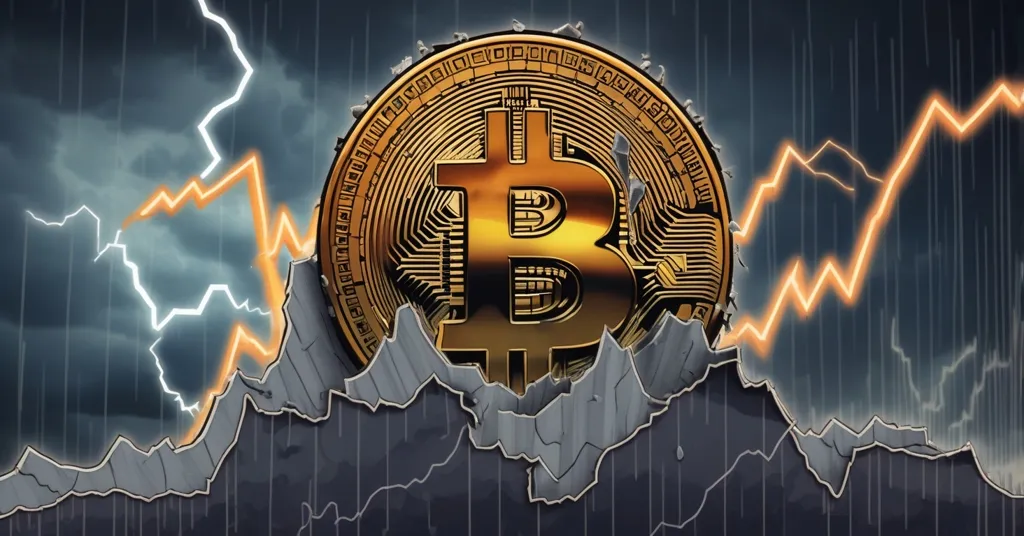
Nouriel Roubini, the economist who foresaw the 2008 financial meltdown and earned the moniker “Dr. Doom,” has unleashed a blistering attack on Bitcoin and the crypto industry, labeling a proposed US legislative push as outright dangerous. With Bitcoin tanking to $67,400—down a brutal 45% from its late-October peak—Roubini’s warnings about systemic collapse and regulatory folly stand in stark contrast to bullish diehards like Robert Kiyosaki, exposing a crypto market teetering between hope and havoc.
- Bitcoin’s Nosedive: Trading at $67,400, a 45% plunge from its recent high, erasing over $1 trillion in market cap.
- Roubini’s Fury: Brands Bitcoin a “pseudo-asset class” and dubs the GENIUS Act the “Reckless Idiot Act,” predicting banking chaos.
- Stablecoin Threat: Without safeguards, stablecoins risk triggering financial runs, especially with interest payments.
- Divided Market: Investors ditch crypto for gold as Kiyosaki doubles down on Bitcoin’s future.
Bitcoin’s $1 Trillion Wipeout
The numbers don’t lie, and they’re not pretty. Bitcoin’s current price of $67,400 represents a staggering loss of over $1 trillion in market capitalization since its peak just months ago. Historically, dips like this have lured in bargain hunters eager to “buy the dip,” but this time, the cavalry isn’t coming. The usual wave of support from retail and institutional investors is eerily absent. Instead, capital is flowing out of crypto and into traditional safe havens like gold. Over the past three months, US gold ETFs have sucked in more than $16 billion in inflows, while spot Bitcoin ETFs have hemorrhaged $3.3 billion in outflows. It’s a loud and clear message: fear is overpowering faith in digital assets right now.
Even companies that bet big on Bitcoin as a treasury reserve—through what’s known as Digital-Asset Treasuries (DATs)—are feeling the burn worse than the coin itself. Firms like MicroStrategy, MARA Holdings, Metaplanet, and even GameStop, which made headlines for adopting Bitcoin as a corporate asset, are seeing their stock prices tank below the value of their crypto holdings. MicroStrategy, for instance, has amassed over 200,000 BTC under CEO Michael Saylor’s relentless accumulation strategy, positioning it as a “Bitcoin play” for investors. Yet, their shares are trading at a discount to the underlying Bitcoin value, signaling skepticism about whether corporations can truly treat crypto as cash-equivalent. This isn’t just a market correction; it’s a gut punch to the idea that Bitcoin can seamlessly replace fiat in balance sheets. Is corporate adoption a visionary move or a reckless gamble? The jury’s still out, but the red ink isn’t inspiring confidence.
Roubini’s Doomsday Warning
Nouriel Roubini isn’t just a casual skeptic; he’s a heavyweight economist with a track record of spotting financial trainwrecks. His latest broadside against crypto is as unsparing as ever. He calls Bitcoin a “pseudo-asset class,” meaning it doesn’t belong in the same category as legitimate investments like stocks, bonds, or real estate, which typically have intrinsic value or generate income. Instead, he ties it to “the mother of all bubbles” and labels it a “Ponzi Game,” suggesting its value hinges purely on speculative hype rather than fundamentals. On Bitcoin’s supposed role as a currency or inflation hedge, Roubini doesn’t hold back:
Calling Bitcoin or any other crypto vehicle a ‘currency’ has always been bogus.
He argues Bitcoin fails every test of money—it’s too volatile to be a store of value, too clunky for everyday transactions, and often linked to illicit activities like money laundering or ransomware payments. But his real venom is reserved for regulatory moves that could embed crypto deeper into the financial system, specifically the GENIUS Act. This proposed US legislation—details of which remain vague at this stage—appears aimed at integrating cryptocurrencies into mainstream banking, potentially allowing institutions to hold digital assets or offer crypto-related services. Roubini scoffs at the idea, sarcastically renaming it the “Reckless Idiot Act” and cautioning that such a move without ironclad oversight could spell disaster:
The bill should be called the “Reckless Idiot Act.”
While specifics on the GENIUS Act are scarce, it’s believed to be part of broader discussions in Congress about how to regulate digital assets without stifling innovation. Lawmakers have been split, with some pushing for crypto-friendly policies and others warning of systemic risks. Roubini’s critique isn’t baseless—rushing integration without addressing volatility, fraud, and consumer protection could expose banks to unmanageable threats, as highlighted in his recent comments on the dangers of stablecoins and reckless legislation. Think of the 2008 crisis, where interconnected systems amplified a localized mortgage failure into a global meltdown. If crypto’s wild swings or scams bleed into traditional finance, who foots the bill? Roubini’s warning, while alarmist to some, forces us to ask hard questions about whether we’re ready for this leap.
Stablecoin Time Bomb
Roubini’s sharpest concern centers on stablecoins, a subset of cryptocurrencies designed to maintain a steady value, usually by being pegged to fiat currencies like the US dollar. Popular examples include Tether (USDT) and USD Coin (USDC), which aim for a 1:1 ratio with the dollar through backing by cash or other reserves. For the uninitiated, stablecoins act as a bridge in the crypto world—used for trading, payments, or as a safe harbor during market volatility. But Roubini sees a fatal flaw: they operate without the safety nets that underpin traditional banking. There’s no lender-of-last-resort support, which is like a financial firefighter—think central banks like the Federal Reserve stepping in to prop up failing institutions during a crisis. Nor do they have deposit insurance, a government-backed guarantee (like the FDIC in the US) that protects your money if a bank goes under.
Without these protections, a sudden loss of confidence in a stablecoin—say, if doubts arise about its reserves—could trigger a modern-day bank run, where users rush to withdraw funds en masse, collapsing the system. History offers grim parallels; the 2008 crisis saw runs on institutions like Lehman Brothers, and even earlier, the Great Depression was fueled by bank panics. Roubini’s fear escalates when considering platforms that might offer interest payments on stablecoins, a feature some are testing to attract users:
Interest payments on stablecoins could undermine the foundations of the banking system.
Here’s why this matters. If stablecoins offer juicy yields—through lending mechanisms on platforms like Aave or Compound—they could pull depositors away from regulated banks, which are bound by stricter rules and reserve requirements. Banks rely on deposits to fund loans, the lifeblood of the economy. If a crisis hits and stablecoin holders demand their money back without a safety net, the fallout could ripple through the entire financial ecosystem. Take Tether, for instance, which has faced scrutiny over whether its reserves fully back its $110 billion market cap. Past controversies, like fines for misrepresenting reserve holdings in 2021, highlight Roubini’s point. Even USDC, which touts transparency, isn’t immune to systemic shocks. Without regulation, are stablecoins a ticking time bomb? It’s a question we can’t ignore.
Kiyosaki’s Bullish Bet
Not everyone’s ready to write crypto’s obituary. Robert Kiyosaki, the “Rich Dad Poor Dad” author turned Bitcoin evangelist, is buying more even as prices crater. Snagging another whole Bitcoin at $67,000, his optimism rests on two pillars. First, he foresees a catastrophic devaluation of the US dollar, driven by ballooning national debt and what he dubs “The Marxist Fed” printing trillions in “fake dollars.” Second, he’s fixated on Bitcoin’s hard-coded limit of 21 million coins—a cap built into its design that ensures no more can ever be created, unlike gold, which can keep being mined. Kiyosaki puts it bluntly:
Although Bitcoin is crashing I bought one more whole Bitcoin for 67k. Why? Two reasons: #1: Because the Big Print will begin when the US debt crashes the dollar and ‘The Marxist Fed’ begins printing trillions in fake dollars. #2: The magical 21 millionth Bitcoin is getting close to being mined. When the 21st millionth Bitcoin is mined… Bitcoin becomes better than gold.
Whether you buy his rhetoric or not, the fear of dollar erosion isn’t pure fantasy. With US debt surpassing $35 trillion and inflation concerns lingering, many see Bitcoin as a potential escape from fiat debasement. Its scarcity, enforced by unchangeable code, is a cornerstone for maximalists who argue it’s a superior store of value. But let’s not drink the Kool-Aid uncritically. Bitcoin’s fixed supply hasn’t stopped past crashes—look at 2018 or 2021, where prices plummeted despite the same 21 million cap. Adoption hurdles like transaction scalability and energy consumption (mining still guzzles electricity) also dent the “better than gold” narrative. Kiyosaki’s bet is bold, but it’s far from a sure thing when investors are fleeing to gold ETFs by the billions. Is scarcity enough to save Bitcoin, or just a comforting story amid the chaos?
Global Regulatory Tightrope
The GENIUS Act isn’t the only regulatory flashpoint for crypto. While US lawmakers grapple with integrating digital assets into banking, other regions are carving their own paths. The European Union’s Markets in Crypto-Assets (MiCA) framework, set to fully roll out by late 2024, aims to standardize rules for crypto issuers and service providers, including strict reserve requirements for stablecoins. It’s a more structured approach than the US’s fragmented debate, though critics argue it could stifle innovation. Meanwhile, India has taken a harsher stance, imposing a 30% tax on crypto gains and a 1% transaction levy, driving some traders underground. These global contrasts highlight the high-stakes chess game crypto is playing—too much regulation risks choking growth, while too little could invite the disasters Roubini predicts. The US’s flirtation with ideas like the GENIUS Act sits in this messy middle, where balancing freedom and stability feels like walking a tightrope over a volcano.
What’s Next for Crypto?
Stepping back, the crypto space feels like a high-stakes showdown between old financial gatekeepers and new digital rebels. Roubini’s dire warnings about systemic collapse and reckless legislation aren’t just grumpy skepticism—they’re a call to confront real flaws in scalability, oversight, and risk. Stablecoin vulnerabilities, especially, demand urgent attention; ignoring them isn’t optimism, it’s negligence. Yet, Kiyosaki’s faith in Bitcoin taps into why many of us are here: to disrupt a broken fiat system that’s failed too many for too long. I’m all for accelerating a decentralized future where power isn’t hoarded by central banks—but damn, we can’t pretend the pitfalls don’t exist.
There’s a middle ground worth exploring. Some blockchain technologists argue that Bitcoin and stablecoins can coexist with traditional finance through smarter, not reckless, regulation. Think transparent reserve audits for stablecoins or capped crypto exposure for banks—solutions that mitigate runs without killing innovation. This isn’t about surrender; it’s about building a system that lasts. Crypto’s promise to redefine money and freedom is real, but so are the perils. Dig deeper, stay skeptical, and let’s shape this revolution without burning it down. Revolution or ruin? Only time will tell.
Key Takeaways and Questions on Bitcoin, Stablecoins, and Regulation
- Why is Bitcoin dropping despite regulatory support?
Even with friendlier US policies and Wall Street interest, Bitcoin has crashed 45% to $67,400 as investors lose confidence, pulling $3.3 billion from Bitcoin ETFs and pivoting to gold. - What makes stablecoins a risk to financial stability?
Stablecoins lack critical backups like central bank bailouts or deposit insurance, meaning a loss of trust could spark runs, especially if interest payments draw funds from regulated banks, as Roubini cautions. - Is the GENIUS Act progress or a potential disaster?
Roubini labels it reckless, warning that integrating crypto into banking without robust safeguards could destabilize the system—a sobering concern despite the appeal of mainstream adoption. - Does Bitcoin’s scarcity guarantee its value amid market fear?
Kiyosaki banks on the 21 million coin cap as a long-term edge over gold, but past crashes and current $3.3 billion ETF outflows show scarcity alone doesn’t shield against panic. - Are Digital-Asset Treasuries a failed corporate strategy?
Companies like MicroStrategy and MARA are underwater on Bitcoin holdings, suggesting corporate adoption might be premature or overly speculative in volatile markets.