Russia’s Atom EV Set for April Launch: A Bold Bid to Rival Chinese Giants
 LTB
LTB Russia’s Atom Electric Car Gears Up for April Launch: A Tech Rebellion on Wheels
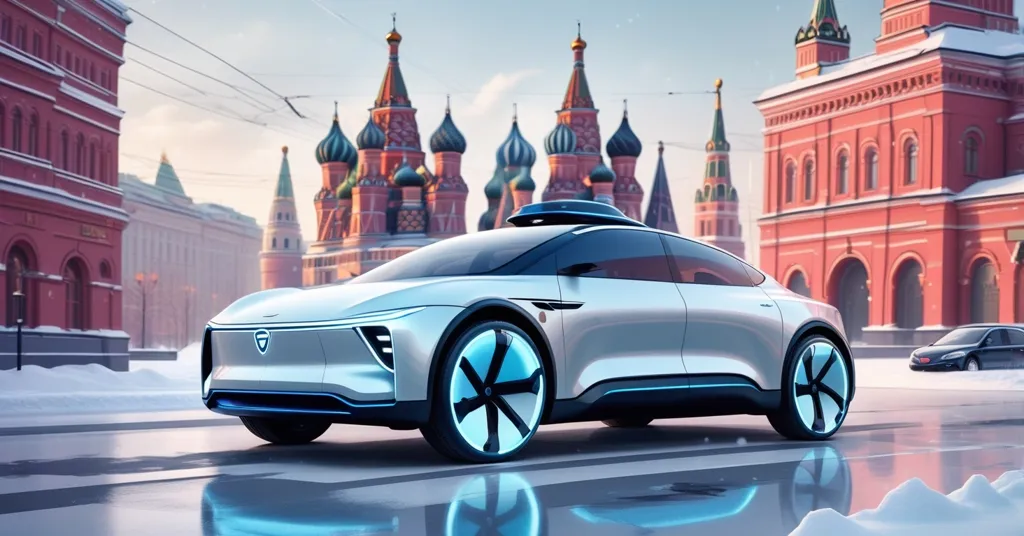
Russia is rolling out a bold contender in the electric vehicle (EV) race with the Atom, a domestically crafted machine by Kama, set to launch official sales in April. Beyond just a car, the Atom represents a defiant push for technological independence in a sanction-heavy landscape, aiming to rival Chinese EV giants with aggressive pricing and cutting-edge autonomous tech.
- Sales Kickoff: Atom EV sales begin in April, exclusively online with home delivery.
- Price Play: Pre-order at $51,000, potentially under $40,000 with government subsidies, targeting Chinese competitors.
- Autonomous Feat: Completed 95% of an 800 km Moscow-to-Kazan drive using driver-assist tech.
Atom EV: A Price Tag to Shake the Market
Hailing from Kazan, Tatarstan, Kama has been sculpting the Atom since 2021, unveiling its first working prototype in Moscow by May 2023. This isn’t just another EV; it’s a calculated jab at global market dynamics. Alexander Kostylev, Kama’s Commercial Director, laid out the timeline with no fluff:
“We plan to open the sales season, officially in April.”
Now, let’s talk numbers—because that’s where the Atom gets spicy. Priced at 3.9 million rubles (around $51,000) for pre-orders, it’s already gunning for the affordable luxury segment. But with government discounts—a not-so-subtle nod of state support—it could drop to 3 million rubles, or just under $40,000. Anatoly Kiyashko, Director of Government Relations at Atom, didn’t hold back on the ambition:
“We will announce the price to the public in February. For now, we can say that our car is cheaper than Chinese counterparts, but in its price range, it is certainly one of the mass-market luxury cars.”
For the uninitiated, mass-market luxury means a vehicle that offers premium vibes—think sleek design and high-tech perks—without the bank-breaking cost of a Tesla or BMW. If the Atom sticks to this pricing, especially with subsidies, it could rattle Chinese brands like BYD, who’ve long owned the budget EV game with cutthroat costs. But let’s not get starry-eyed yet—delivering on quality at that price in a sanction-hit economy is a gamble, and Russian manufacturing doesn’t exactly have a sterling rep for flawless execution. For more details on the upcoming launch, check out the latest on Russia’s Atom electric car sales starting in April.
Autonomous Tech: Impressive, But Not Flawless
Beyond the wallet-friendly pitch, the Atom’s autonomous capabilities are raising eyebrows. In a standout test, it tackled an 800 km journey from Moscow to Kazan, with 95% of the trip managed by driver-assist systems. Kiyashko couldn’t resist bragging about the milestone:
“We had a test drive from Moscow to Kazan, and Atom completed 95% of the journey autonomously, meaning with the help of its driving assistants.”
Let’s unpack this for those not steeped in tech-speak. Autonomous driving, or self-driving tech, relies on cameras, sensors, and artificial intelligence to steer, brake, and dodge obstacles—like a digital co-pilot with eagle eyes. Covering 95% of such a long haul autonomously is no small potatoes, especially for Russia, which has historically trailed behind heavyweights like the US and China in this arena. Compared to Tesla’s Autopilot or Waymo’s fully driverless cabs, the Atom isn’t at the finish line—but it’s damn close for a newcomer.
That said, 5% manual intervention hints at kinks. Was it potholes, snow, or erratic traffic that forced a human hand? Real-world chaos—think Russian winters or rural roads—could expose limits in the system. Kama’s got bragging rights, sure, but full autonomy isn’t here yet, and pretending otherwise would be pure hype.
Sales Strategy: Online-Only in a Skeptical Market
Kama’s approach to selling the Atom is as futuristic as its tech. Forget dealerships—they’re going fully online, complete with home delivery. Test drives? Sorted via partnerships in major Russian cities. Early units will hit 2023 pre-order customers first, while batches also head to car-sharing services, taxi fleets, and regional authorities for pilot programs. It’s a smart ecosystem play, not just a car launch.
But here’s the rub: can an online-only model build trust in a market wary of domestic tech? Russians aren’t exactly known for snapping up big-ticket items sight unseen, especially when past homegrown projects have flopped. Add sanctions limiting payment systems or logistics, and this digital-first strategy could hit speed bumps. Still, cutting dealership overhead might keep costs low, and if taxi fleets bite, adoption could snowball. It’s a high-stakes bet on modern buying habits.
Russia’s Tech Sovereignty Gamble: Atom as a Symbol
Zooming out, the Atom isn’t just metal and circuits—it’s a banner for Russia’s quest for technological sovereignty. That’s a fancy way of saying “building our own stuff so we don’t need the West.” Amid sanctions and isolation tied to conflicts like Ukraine, reducing reliance on foreign tech is priority one. President Vladimir Putin is all in, pushing for a turbocharged rollout of autonomous transport. With fewer than 100 self-driving vehicles produced yearly in Russia now, he’s eyeing nearly 1,000 by 2028. His vision? Ramp up production, export globally, and claim a slice of the autonomous pie.
Look, Russia playing catch-up in tech isn’t new—automotive innovation has never been its forte. But there’s a parallel here to decentralized movements we champion. Much like Bitcoin flips the bird at centralized banks, the Atom is Russia’s middle finger to global tech gatekeepers. A long shot? Hell yes. But disruption often comes from the underdog, and a Russian EV shaking the table fits that rebellious vibe.
Challenges Ahead: Sanctions and Reality Bites
Before we get too cozy with the underdog story, let’s slap some reality on this. Russia’s got hurdles taller than the Kremlin walls. Sanctions have gutted access to Western chips, software, and supply chains—crucial bits for any EV or autonomous system. Past Russian car projects, like the Lada, haven’t inspired confidence in quality or reliability. And while Putin’s 1,000-unit dream by 2028 sounds nice, scaling from under 100 now, in a strangled economy, is borderline fantasy without serious breakthroughs or loopholes.
Then there’s the China factor. Chinese EV makers churn out vehicles faster than you can say “subsidies,” with years of refinement under their belts. Atom’s price edge is cute, but can it match the polish or infrastructure—like charging networks—that brands like BYD bring? Globally, Russia’s also up against titans in the US and Europe. Even emerging players like India are pushing EV agendas with less geopolitical baggage. Russia’s niche might be domestic grit, but international relevance feels like a pipe dream for now.
Could Blockchain or Crypto Play a Role?
Here’s a speculative twist for our crowd: could the Atom’s online sales platform eventually tap into cryptocurrency payments? With Russia navigating sanction-induced financial friction, and crypto gaining traction as a borderless transaction tool, it’s not a wild leap. Imagine buying an EV with Bitcoin or a stablecoin—bypassing traditional banking chokeholds. Kama hasn’t hinted at this, but in a world where tech-forward industries flirt with decentralized finance, it’s a possibility worth musing over. After all, rebellion against the status quo is the thread tying Bitcoin and projects like Atom together.
The Road Ahead for Atom
Come April, the Atom’s launch will be a litmus test for Russia’s tech mettle. If Kama nails delivery, quality, and early adoption through fleet partnerships, it could spark a mini-revolution in domestic innovation. Fail to match the hype—or worse, flop on reliability—and it risks becoming another footnote in Russia’s spotty industrial history. Either way, this EV is a microcosm of a broader fight: can a nation under pressure innovate its way to relevance? We’re watching, and frankly, the stakes couldn’t be higher.
Key Questions on Russia’s Atom EV Launch
- What’s the big deal about the Atom EV for Russia?
It’s a flagship for technological independence, a push to rival global EV players and ditch reliance on foreign systems amidst sanctions. - How does Atom’s pricing stack up against Chinese EVs in 2024?
At $51,000 pre-order, potentially under $40,000 with subsidies, it’s cheaper than many Chinese models, aiming for affordable premium appeal. - How advanced is Atom’s autonomous driving tech?
Pretty solid—95% of an 800 km test was autonomous, though 5% human intervention shows it’s not fully self-driving yet. - Can Russia seriously compete in the global EV and autonomous market?
It’s a steep climb. Sanctions, tech gaps, and weak infrastructure are brutal barriers, though state backing and domestic focus might carve a small niche. - Why go online-only for Atom sales, and what’s the risk?
It cuts costs and aligns with modern trends, but building trust without showrooms in a skeptical market, plus sanction-hit logistics, could backfire.