Russia’s Crypto Dilemma: Fraud Crackdown Clashes with Legalization Push
 LTB
LTB Russia’s Crypto Conundrum: Crackdown on Fraud vs. Legalizing Bitcoin Transactions
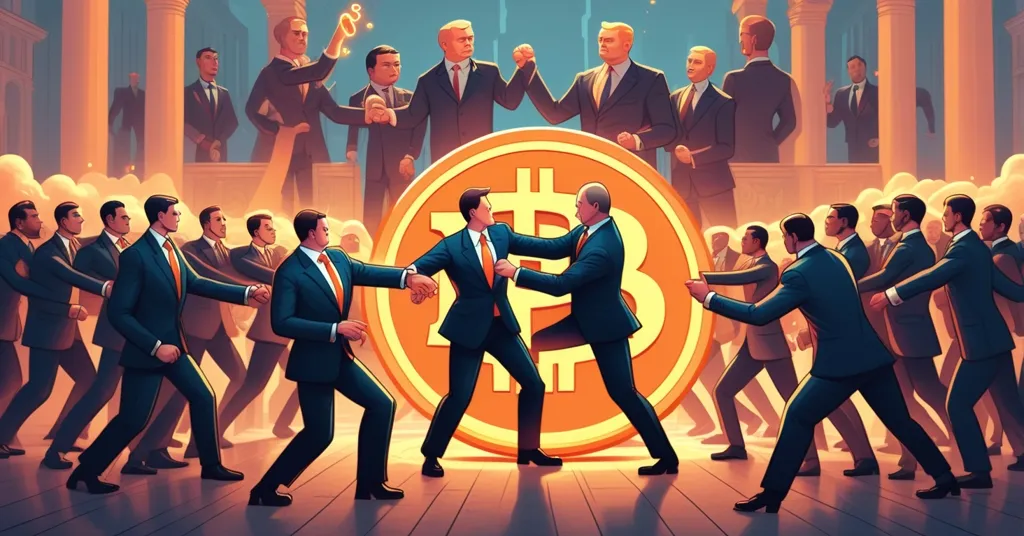
Russia is grappling with a high-stakes balancing act in the cryptocurrency space, as the Central Bank pushes for severe penalties on unregulated operations while pressure mounts to legitimize crypto for international payments. This dual track reflects a nation wrestling with rampant fraud and the urgent need to dodge Western sanctions, but it also begs tough questions about freedom, state control, and the true spirit of decentralized finance.
- Fraud Crackdown: Central Bank of Russia (CBR) targets gray market scams with proposed penalties for illegal crypto use.
- Legalization Urgency: VTB Bank demands swift regulation to enable crypto payments amid sanctions pressure.
- Global Access at Risk: Foreign exchanges like Bybit and OKX may face bans once domestic rules are set.
The Fraud Fight: Central Bank’s Iron Fist
The Central Bank of Russia, led by Governor Elvira Nabiullina, is waging war on the unregulated crypto underworld. Many Russians dipping their toes into digital currencies are getting burned, often becoming unwitting pawns in elaborate scams. In just the past three months, over 1,800 individuals have been hit with banking blacklists, cut off from financial services after being flagged for suspicious crypto transactions. Nabiullina isn’t holding back, calling out the gray market as a breeding ground for deceit that’s bleeding citizens dry.
“Fraudsters are taking advantage of the gray market … A systemic solution is, of course, regulating cryptocurrency with the introduction of liability for transactions outside the regulated segment.” – Elvira Nabiullina, Governor of the Central Bank of Russia
“Essentially, these cryptocurrency sellers become unwitting participants in fraudulent schemes.” – Elvira Nabiullina, Governor of the Central Bank of Russia
For those new to this space, the “gray market” means crypto dealings outside any legal or regulatory oversight—think peer-to-peer trades on Telegram or shady, unlicensed platforms. It’s like buying knockoff gear from a sketchy street vendor: cheap and quick, but you might end up with nothing but a headache. While this underground offers freedom from red tape, it leaves users exposed to phishing scams, Ponzi schemes, and now, in Russia, the risk of waking up to a frozen bank account. The CBR’s plan? Slap penalties on anyone operating outside a soon-to-be-defined legal framework, hoping to scare off the scammers—or at least make them think twice, as highlighted in discussions about Russia’s push for penalties on illegal crypto activities.
But let’s get real for a second. These blacklists aren’t just catching mastermind criminals; they’re snaring everyday folks who thought they were making a quick buck or hedging against a crumbling ruble. Imagine selling some Bitcoin (BTC) to a stranger online, only to find your savings account locked the next day with no clear path to appeal. That’s the messy reality for many of those 1,800 Russians, caught in a regulatory no-man’s-land where innocence isn’t a defense. The CBR’s tough stance might deter fraud, but it’s also a stark reminder of how half-baked rules can punish the little guy hardest.
Legalization as a Sanctions Lifeline
While the CBR plays hardball with scammers, a very different urgency is brewing on another front. VTB Bank, Russia’s second-largest financial giant and majority state-owned, is pounding the table for rapid legalization of cryptocurrency transactions. CEO Andrey Kostin is crystal clear: clients, especially major exporters, are clamoring for crypto as a way to settle international payments. With Western sanctions—tied to the war in Ukraine—cutting Russia off from systems like SWIFT (a global network banks use to transfer money across borders), traditional finance is a dead end. Kostin wants crypto trading via brokerage accounts rolled out the moment regulations allow.
Moscow is racing to respond. The goal is to lock in comprehensive crypto legislation by this summer, moving past a patchwork “experimental” legal regime to a full-fledged framework. A bombshell proposal from the CBR could redefine the game: classifying cryptocurrencies and stablecoins as “monetary assets,” meaning they’d be treated as a form of currency or property under the law. For the uninitiated, stablecoins like USDT or USDC are digital currencies pegged to something stable, often the US dollar, to avoid the rollercoaster price swings of Bitcoin. Legitimizing these could make them viable for payments and investments in Russia, though you can bet heavier taxes and state scrutiny will tag along for the ride.
Geopolitical Chess: Crypto as a Sanctions Dodge
Let’s cut through the noise—Russia’s crypto pivot isn’t just about protecting Ivan from scams. It’s a calculated geopolitical play. Sanctions over the Ukraine conflict have choked off access to global financial networks, leaving the Ministry of Finance and CBR scrambling for workarounds. Crypto, with its borderless potential, is a tempting tool for foreign trade settlements. Picture a Russian exporter using Bitcoin or a stablecoin to pay a Chinese supplier, bypassing Western-controlled banking rails entirely. It’s pragmatic as hell, but also a bitter irony for a technology born to defy centralized power. Bitcoin was meant to stick it to Big Brother, not become his getaway car.
This isn’t a new stance for Russia, which has historically eyed crypto with suspicion, linking it to money laundering and crime under Putin’s watch. Past flirtations with outright bans have given way to necessity now, as sanctions bite harder. If successful, Russia could set a blueprint for other sanctioned nations—Iran, Venezuela, you name it—to lean on decentralized finance (DeFi) for survival. That’s a double-edged sword: it might drive adoption of Bitcoin and blockchain tech, but it also risks turning a liberating tool into a state-sanctioned loophole, far from Satoshi Nakamoto’s vision of trustless freedom.
Threats to Decentralization: Foreign Exchange Bans Loom
Here’s the kicker for crypto purists who live for decentralization. Once domestic crypto service providers get licensed, Russian authorities are mulling a clampdown on foreign exchanges like Bybit and OKX. Analysts like Nikita Zuborev from Bestchange.ru reckon this could hit by year’s end. It’s not a wild guess—Russia has a track record of walling off digital spaces, from throttling internet access to banning apps that don’t play by state rules. While this might prop up homegrown, government-approved platforms, it spits in the face of crypto’s borderless ethos.
What happens if Russians lose access to global markets? Some will jump through VPN hoops or dive deeper into the underground, trading on shadowy P2P networks where scams are even thicker. Others might grudgingly use state-controlled exchanges, trading privacy for convenience. Either way, it’s a gut punch to the idea of a free, open blockchain ecosystem. And let’s not pretend this is just Russia’s problem—fragmented, nationalized crypto “gardens” could become the norm if more countries follow suit, turning decentralized finance into a mockery of itself.
Voices of Urgency and the Human Cost
The call for regulation isn’t just coming from bankers and bureaucrats. Anatoly Aksakov, Chairman of the parliamentary Financial Markets Committee, is blunt about the stakes, pushing for faster action to shield citizens from financial ruin.
“We need to introduce the bill faster, because this is one of the areas where people lose a lot, and it is not regulated properly.” – Anatoly Aksakov, Chairman of the Parliamentary Financial Markets Committee
Behind the headlines, real people are paying the price for this regulatory limbo. Those 1,800 blacklisted Russians aren’t just stats—they’re likely small-time traders or desperate savers who got flagged by algorithms with little transparency. Appeals to restore banking access are a slog, often leaving folks stranded without funds for weeks or months. It’s a harsh lesson: without clear rules, dabbling in crypto can cost you more than a bad trade. Russia’s rush to regulate must prioritize protecting these users, not just punishing them to make a point.
Broader Implications: Bitcoin, Altcoins, and Global Trends
As Bitcoin maximalists, we’re torn. On one hand, seeing a major economy like Russia even flirt with crypto as a monetary asset is a win for mainstream validation. If Bitcoin (BTC) or stablecoins become tools for international trade here, it could spark awareness and adoption worldwide, maybe even nudge prices up as demand grows. On the flip side, state control is a poison pill. Legalization under heavy oversight risks diluting Bitcoin’s core promise—privacy, autonomy, no middleman. If adoption means surveillance, is it even worth celebrating?
Altcoins and other blockchains like Ethereum (ETH) might carve out bigger roles here too. Stablecoins, with their pegged stability, are obvious picks for cross-border payments over Bitcoin’s volatility. Ethereum’s smart contracts could also power complex trade agreements or DeFi solutions for Russian firms, filling niches BTC isn’t built for. But if the state locks down foreign platforms and enforces KYC (Know Your Customer) rules on every transaction, the innovation and diversity of this ecosystem could wither. Worse, privacy-focused coins like Monero might get outright banned as “threats” to oversight.
Globally, Russia’s experiment could ripple. Will Western regulators crack down harder on crypto if they see it as a sanctions loophole? Could other nations mimic this walled-garden approach, splintering the blockchain space into state fiefdoms? Compare this to El Salvador, where Bitcoin is legal tender with an emphasis on inclusion, not control. Russia’s path might boost adoption numbers, but at what cost to the rebellious heart of crypto?
Key Questions and Takeaways on Russia’s Crypto Moves
- Why is Russia targeting unregulated cryptocurrency use with penalties?
The Central Bank wants to crush fraud in the gray market, where scams have led to over 1,800 Russians losing banking access due to suspicious dealings, as Governor Elvira Nabiullina has warned. - What’s fueling Russia’s urgency to legalize crypto transactions?
Western sanctions over the Ukraine war have severed access to global finance, pushing banks like VTB to champion crypto for international payments, per CEO Andrey Kostin. - How could labeling crypto as monetary assets reshape Russia’s market?
It might legitimize Bitcoin and stablecoins for payments and investments, driving adoption, but expect tight government oversight and taxation to follow. - What are the risks of Russia banning foreign exchanges like Bybit?
Blocking global platforms could curb user freedom, force trading into shadier corners, and undermine the borderless nature of decentralized finance. - Why does Russia’s crypto pivot matter to the global Bitcoin community?
While it signals potential mainstream acceptance of BTC, heavy state control threatens privacy and autonomy, clashing with Bitcoin’s revolutionary roots.
What’s Next for Russia and Crypto?
Russia’s tightrope walk between crackdown and legalization is a microcosm of the broader crypto struggle: innovation versus control, freedom versus risk. By summer, we’ll likely see legislation that could redefine Bitcoin and blockchain’s role in a major economy—but will it be a genuine step forward or just taller walls around a state-approved sandbox? For now, the 1,800 Russians locked out of their accounts are a sobering reminder that half-measures hurt real people. As champions of decentralization, we must push for adoption that honors Bitcoin’s ethos, not twists it into a tool for the same old power plays. Russia’s next move could set the tone for years to come, not just for its citizens, but for the global fight over what crypto truly means. Will it redefine decentralized finance, or just cage it?