SBI Holdings Debunks $10B XRP Rumor, Confirms $4B Ripple Labs Stake
 LTB
LTB SBI Holdings Crushes $10B XRP Rumor, Confirms $4B Stake in Ripple Labs
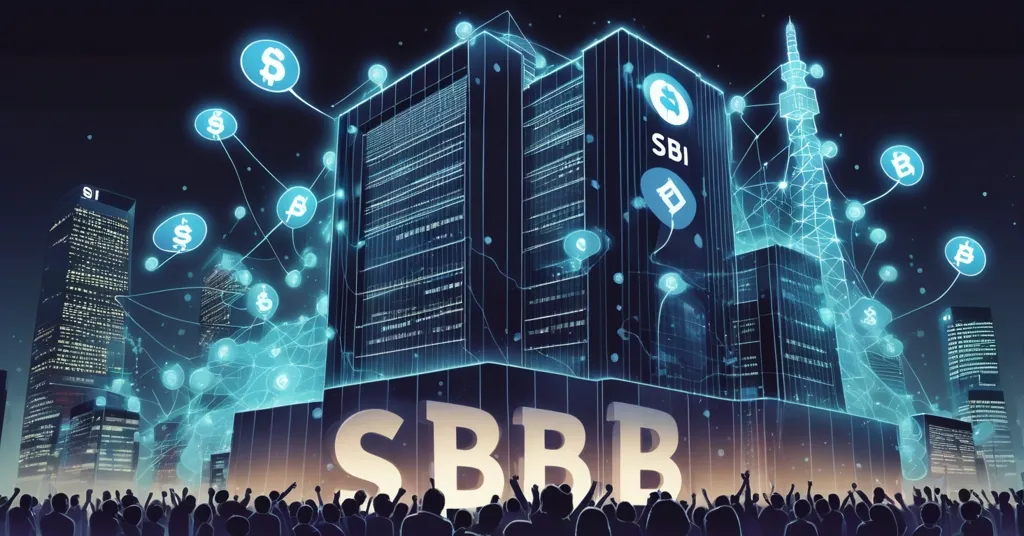
Japanese financial titan SBI Holdings has stomped out a viral rumor claiming it holds a staggering $10 billion in XRP tokens, setting the record straight with a confirmation of a 9% equity stake in Ripple Labs, valued at around $4 billion. This clarification isn’t just about debunking social media nonsense; it’s a window into the complex dance between traditional finance and blockchain innovation, with all its potential and pitfalls.
- Rumor Shutdown: SBI denies holding $10 billion in XRP, affirming a 9% stake in Ripple Labs worth $4 billion.
- Institutional Confidence: The investment underscores faith in Ripple’s blockchain solutions for cross-border payments.
- Blockchain’s Next Step: Ripple’s partnership with Aviva Investors hints at tokenized assets going mainstream.
SBI Draws the Line: No XRP Stockpile, Just a Strategic Investment
The crypto world is a cesspool of rumors, and SBI Holdings recently got caught in the crosshairs of a particularly juicy one. An anonymous user on X, going by “Ledger Man,” hyped up SBI’s crypto moves—namely their acquisition of Coinhako, a key digital asset platform in Singapore—before tossing out a baseless claim that the company was hoarding $10 billion in XRP, the native token of the XRP Ledger. Let’s cut the crap: X is a gossip factory on overdrive, and this kind of garbage can spark market chaos faster than a Bitcoin flash crash. Misinformation like this doesn’t just confuse retail investors; it risks tainting the entire industry’s credibility at a time when legitimacy is hard-fought.
SBI’s CEO didn’t hesitate to shut down the speculation with cold, hard facts. “Instead of $10 billion in XRP, it’s actually about 9% of Ripple Labs. This means our hidden asset could be much larger,” they declared. In plain English, SBI isn’t sitting on a mountain of tokens; they’ve got a direct ownership slice in Ripple Labs, the brains behind the XRP Ledger—a decentralized blockchain network engineered for lightning-fast, low-cost transactions, especially for international money transfers. For those new to the game, cross-border payments through traditional banks are a nightmare of high fees and snail-paced processing, often taking days. Ripple’s tech aims to slash those pain points, and SBI’s $4 billion valuation of their stake, based on recent market estimates, shows they’re betting big on this fix. For more details on SBI’s stance, check out the report on their denial of a $10B XRP holding and clarification of their equity stake.
“Instead of $10 billion in XRP, it’s actually about 9% of Ripple Labs. This means our hidden asset could be much larger.” – SBI Holdings CEO
That “hidden asset” line isn’t just hot air. Analysts suggest SBI sees this stake as undervalued, with its true worth tied to a massive wildcard: Ripple’s ongoing legal war with the U.S. Securities and Exchange Commission (SEC). Kicked off in December 2020, the lawsuit centers on whether XRP is a security—like a stock requiring strict regulatory oversight—or a currency for transactions. The SEC claims Ripple raised over $1.3 billion through unregistered XRP sales; Ripple argues it’s a utility token, not an investment scheme. If Ripple secures a win or a favorable settlement, SBI’s 9% could balloon in value. If the SEC clamps down, that $4 billion figure might take a brutal nosedive. As someone who leans Bitcoin maximalist, I’ll always champion BTC as the pinnacle of decentralization—no corporate overlords pulling strings. But I’ve got to admit, Ripple’s focus on dirt-cheap, instant transactions fills a gap Bitcoin doesn’t target. Still, SBI’s wager is a high-stakes roll of the dice in a space where regulators hold loaded guns.
Ripple’s Tokenization Play: Rewriting Finance or Overblown Hype?
While SBI’s clarification stole the spotlight, Ripple Labs dropped another bombshell that’s just as worthy of scrutiny. They’ve partnered with Aviva Investors, a major European asset management firm, to explore “tokenized traditional funds” on the XRP Ledger. If the term “tokenization” sounds like tech gibberish, here’s the breakdown: it’s about turning real-world assets—think stocks, bonds, or even property—into digital tokens on a blockchain. Picture transforming a stack of physical baseball cards into digital collectibles you can trade instantly online, with full transparency and slashed costs. The XRP Ledger, with transactions settling in seconds for pennies, is being pitched as an ideal platform for this kind of financial wizardry.
“Tokenization is shifting from testing to widespread use. We think that creating tokenized fund structures can bring significant technological improvements to the investment industry, and we anticipate seeing this fully realized in the next ten years.” – Nigel Khakoo, Ripple’s Vice President of Trading and Markets
Nigel Khakoo’s enthusiasm isn’t empty corporate speak. Some industry projections estimate tokenized assets could swell into a trillion-dollar market by 2026 or sooner. For players like Aviva Investors, the upside is glaring: cutting operational costs, speeding up settlements, and democratizing access to investment products. Imagine snapping up a fraction of a high-end real estate fund with a few clicks, no bloated middlemen in sight. That’s the vision. But let’s not chug the Kool-Aid just yet. Tokenization is still in diapers, stumbling through a maze of regulatory uncertainty and technical challenges. In Europe alone, data privacy laws like GDPR could butt heads with blockchain’s open-ledger nature, while fragmented national rules add another layer of mess. Can it scale without security cracks? Will traditional finance gatekeepers, who often view crypto as a shady back-alley deal, buy in? These aren’t minor speed bumps; they’re potential dealbreakers. Ripple’s move with Aviva is a bold first step in Europe, but it’s hardly a guaranteed home run.
Misinformation: Crypto’s Nasty Underbelly
Stepping back, SBI’s need to slap down the $10 billion XRP rumor exposes a festering wound in the crypto space: misinformation spreads like wildfire. Platforms like X are a double-edged sword—great for community buzz, terrible for fact-checking. When “Ledger Man” tossed out his wild claim, it wasn’t just a harmless tweet; it was a potential market mover, the kind of nonsense that fuels speculative bubbles or panic sells. This isn’t a one-off. We’ve seen it before with fake Bitcoin ban rumors that sent prices spiraling for no reason. For a legacy giant like SBI, diving into crypto means wading through a swamp of speculation while guarding their hard-earned reputation. Their swift rebuttal shows they’re not messing around, but it also lays bare a harsh reality: even the big fish aren’t safe from the rumor sharks.
This goes beyond a single bad post. False narratives warp market dynamics, mislead investors, and hand ammunition to regulators itching for an excuse to tighten the screws. If we’re genuinely pushing for blockchain to redefine global finance, then cutting through the noise isn’t just nice—it’s damn essential. SBI’s stake in Ripple Labs is a powerful nod to decentralized tech, but it’s also a tightrope act in a circus of scams, FOMO, and half-baked hot takes. The crypto community needs to clean up its act if it wants the mainstream to take it seriously. No tolerance for bullshitters or scammers here—we’re in this to inform and drive real adoption, not peddle pipe dreams.
The SEC Showdown: Ripple’s Fight, Crypto’s Future
Let’s drill into the Ripple-SEC clash because it’s not just about XRP—it’s a bellwether for how governments will wrangle with cryptocurrency as a whole. Launched in late 2020, the lawsuit accuses Ripple of raking in billions through XRP sales that should’ve been registered as securities offerings, complete with investor disclosures. Ripple’s counter? XRP is a tool for facilitating payments, not a stock or investment contract, akin to how Bitcoin and Ethereum were treated in their infancy before getting a regulatory pass. Nearly three years in, with partial rulings like a 2023 decision that programmatic XRP sales weren’t securities, the case remains a muddled mess. A final verdict or settlement might hit in 2024, but the outcome could swing either way.
For SBI Holdings, this legal drama isn’t some distant soap opera. A ruling against Ripple could saddle XRP with suffocating compliance costs, crater its price, and drag down Ripple Labs’ valuation—taking SBI’s $4 billion stake down with it. Worse, it risks setting a precedent that spooks institutional money across the altcoin landscape. Flip the script, and a Ripple victory could crack open the door for broader adoption, spiking valuations and fast-tracking projects like tokenized funds. As a Bitcoin diehard, I’ve got beef with Ripple’s semi-centralized setup—Ripple Labs holds a hefty chunk of XRP supply, a far cry from BTC’s leaderless ethos. Still, I can’t ignore that XRP plays in a sandbox Bitcoin doesn’t, like ultra-fast global remittances. SBI’s investment isn’t just cash on the table; it’s a stake in a battle that could redraw the lines for decentralized finance.
Zooming Out: Blockchain’s Promise and Perils
SBI’s public correction, Ripple’s tokenization experiments, and the looming SEC verdict paint a vivid picture of crypto in 2023: brimming with game-changing potential, yet weighed down by serious baggage. Heavyweights like SBI entering the fray is a huge stamp of approval—proof that blockchain isn’t just a nerdy side hustle anymore. Their 9% stake in Ripple Labs screams belief in tech that could gut-punch outdated systems like international wire transfers. Add in Ripple’s work with Aviva Investors, and you’ve got a sneak peek at how digitized assets might overhaul everything from pension funds to property investments.
But let’s not get drunk on optimism. The crypto arena is still a cesspit of scams, regulatory quicksand, and outright lies—case in point, the $10 billion XRP fairy tale SBI had to bury. Pushing for mass adoption means confronting these messes head-on, no excuses. While I’ll always back Bitcoin as the truest form of financial sovereignty, I can’t dismiss that altcoins like XRP and platforms like Ethereum plug holes BTC doesn’t aim to fill. Bitcoin is digital gold, a middle finger to centralized control; XRP is a utility knife for niche financial use cases. The path to blockchain going mainstream is a jagged one, studded with both dazzling opportunities and ugly traps. SBI and Ripple are placing big bets, but whether they’ve picked a winner or a dud depends on tech, courts, and a whole lot of grit.
Key Questions and Takeaways on SBI, Ripple, and Crypto’s Trajectory
- What does SBI Holdings’ stake in Ripple Labs signal about institutional trust in blockchain?
It shows heavyweight financial firms see lasting potential in blockchain for solving real issues like slow, expensive cross-border payments, even amidst regulatory fog. SBI’s $4 billion stake is a calculated leap of faith in Ripple’s vision. - Why does misinformation like the $10 billion XRP rumor matter so much?
Bogus claims can skew markets, dupe investors, and chip away at trust in a space already under a microscope. It’s a glaring sign that crypto’s hype and anonymity can backfire spectacularly. - Is tokenization on the XRP Ledger poised to transform finance?
It could, by boosting efficiency and access to digital assets. But scaling issues, security risks, and regulatory patchwork—especially in Europe—mean it’s far from a sure thing. - How could Ripple’s SEC lawsuit affect SBI’s investment and altcoins broadly?
A loss might tank Ripple Labs’ worth, hit SBI’s stake, and set a harsh tone for altcoin regulation, scaring off big money. A win could fuel institutional interest, lifting valuations and speeding up innovation. - Where does Bitcoin fit in with Ripple’s utility focus and SBI’s altcoin play?
Bitcoin stands as the unassailable bastion of decentralized value, free from corporate meddling, unlike Ripple’s more controlled model. Yet XRP’s emphasis on quick, cheap transactions serves a purpose Bitcoin doesn’t chase, proving altcoins can complement BTC’s reign.