Senate Banking Committee Advances Crypto Clarity Bill as Stablecoins, Tokenization Surge
 LTB
LTB The U.S. Senate Banking Committee just pushed crypto closer to a federal rulebook, while stablecoins, tokenization, and good old-fashioned leverage all kept doing their thing in the background.
- 15–9 vote: The Senate Banking Committee advanced the Crypto Clarity bill
- Market structure: The bill targets token classification, spot markets, custody, and exchange rules
- Stablecoins and tokenization: USDC, payments rails, and tokenized securities keep moving mainstream
- Leverage check: Futures liquidations showed the market still loves a brutal wipeout
Senate Banking Committee advances crypto market structure bill
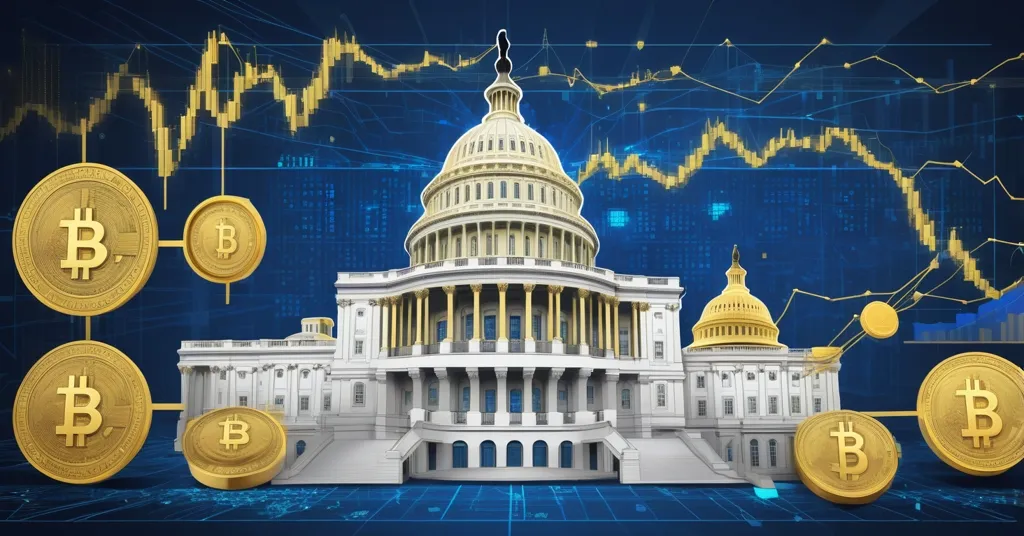
The U.S. Senate Banking Committee advanced the “Clarity” crypto market structure bill by a 15–9 vote, setting the stage for a broader Senate vote and nudging Washington toward a more coherent federal framework for digital assets. That is not final law, but it is a real procedural step — and in U.S. crypto policy, that alone counts as progress.
The bill is designed to draw clearer boundaries for exchanges, brokers, token issuers, and custodians. In plainer English: it tries to answer the basic questions the industry has been arguing about for years — what counts as a digital asset, who oversees trading platforms, how spot markets should be regulated, and what rules should apply to custody and issuance.
For readers newer to the jargon, spot markets are where assets are bought and sold for immediate settlement, rather than through futures or derivatives contracts. Custody refers to who safely holds the asset. In crypto, that matters because “not your keys, not your coins” is a catchy slogan until a platform implodes and everyone discovers the hard way that slogans don’t reimburse losses.
Supporters say roughly 68 million Americans hold digital assets, and a substantial share of trading activity has shifted to offshore venues with looser oversight. That part is hard for regulators to spin away: if the U.S. makes participation unclear, expensive, or hostile, trading does not disappear — it migrates. Usually somewhere less regulated, often with fewer guardrails, and occasionally with more nonsense than a Telegram group run by a rug-puller in a ski mask.
The Clarity bill is being framed as a companion to the “Genius” stablecoin effort, which suggests lawmakers are finally treating crypto as market infrastructure rather than a convenient punching bag for soundbites. That shift matters. Crypto is no longer just a speculative corner of the internet; it is increasingly tangled up with payments, savings, settlement, tokenized securities, and institutional plumbing. For the procedural backdrop, see the Senate panel’s push for crypto clarity.
ETF flows show a market still searching for direction
The regulatory push lands at a moment when the market is already sending mixed signals. Recent ETF flow data showed 3,638 BTC in net outflows from U.S. spot Bitcoin ETFs, 9,603 ETH in net outflows from spot Ether products, and 2,859 SOL in net inflows into Solana ETFs.
Net outflows mean more money left the products than entered them over the measured period. That does not automatically mean a long-term trend has flipped, but it does suggest investors are rotating, taking profits, or simply hesitating in the face of volatility. The Solana inflows are the oddball in the mix and a reminder that capital in crypto rarely moves in a neat straight line. It sloshes. Sometimes aggressively. Sometimes stupidly.
What the flow data does show is that institutional and retail sentiment remains unstable. Bitcoin still commands the biggest share of attention, but capital is clearly not treating the entire sector as one uniform trade. That matters for everything from price action to policy debates, because the market is no longer just “Bitcoin versus the world.” It is a pile of competing narratives, each with its own bagholders.
Stablecoins keep sliding into mainstream payments
While lawmakers argue over classification, the payments industry is quietly moving ahead. Mastercard reportedly received approval in New York to operate certain virtual-asset and stablecoin payment infrastructure, a notable development in one of the toughest regulatory jurisdictions in the United States.
The approval matters because New York is not exactly a regulatory free-for-all. If a payments giant can build stablecoin rails there, it signals that consumer and merchant demand for digital-dollar settlement is no longer a fringe experiment. Stablecoins are increasingly being used as fast, programmable dollar liquidity — the thing traditional finance likes to call “payments innovation” after spending a decade pretending it was not needed.
Block is making a similarly practical move. The company is expanding USDC support in Cash App, including deposits and withdrawals, transfers between external wallets and Cash App, and stablecoin settlement. The rollout supports Solana, Ethereum, Polygon, and Arbitrum, giving users access to USDC across multiple networks rather than locking them into a single chain.
USDC is a dollar-backed stablecoin, meaning it is designed to track the U.S. dollar closely. More specifically, it is a digital dollar token backed by cash and cash-like reserves. For payments and transfers, that is the whole point: move dollars quickly without the volatility circus that comes with most crypto assets.
The feature is currently available to about 25% of users, with a broader rollout planned within the week. That may sound incremental, but Cash App is a mainstream consumer product, not a niche crypto wallet. When stablecoins show up there, the conversation changes from “Can crypto be money?” to “How many people are already using it that way?”
Robinhood also enabled USDC trading for New York users, adding another mainstream on-ramp for stablecoin activity. Piece by piece, the sector is building a payment layer that looks less like speculative tech and more like digital cash infrastructure.
Tokenization inches closer to the plumbing of traditional markets
Another major development is the reported plan for DTCC — the dominant U.S. post-trade clearing and settlement firm — to integrate its tokenized securities platform with the Stellar network in the first half of 2027. The assets under discussion include stocks, ETFs, and U.S. Treasuries.
That is a big deal if it actually happens, because DTCC sits deep in the market’s settlement machinery. Tokenized securities are traditional assets represented on a blockchain, so they can be transferred and tracked with blockchain rails instead of older database systems. The promise is faster settlement, easier portability, and potentially more efficient market plumbing.
The catch is that tokenization can also become a fresh coat of paint on the same old centralized control. Faster rails do not automatically mean better freedom. A blockchain can be permissioned, surveilled, and tightly controlled just as easily as it can be open. So yes, tokenization could modernize market infrastructure — but it could also entrench more gatekeeping while wearing a blockchain costume. Regulators and incumbents do love a good costume party.
Still, the direction is unmistakable. Stocks, ETFs, and Treasuries are being discussed as tokenized assets not because crypto Twitter wished them into existence, but because major market players see practical value in moving parts of finance onto programmable rails. That is where the real adoption story lives: not in meme charts, but in settlement, custody, and liquidity.
Leverage is still doing what leverage does best
For all the progress in policy and infrastructure, the trading side of crypto remains as fragile as ever. Total crypto futures liquidations over 24 hours came in at about $314 million, with roughly $273 million in long positions wiped out and about $41 million in shorts liquidated.
Bitcoin liquidations were about $103 million, while Ethereum saw roughly $53.9 million. Liquidations happen when leveraged positions are automatically closed because traders can no longer meet margin requirements. Translation: too many people borrowed too much to bet on the next move, and the market answered with a faceplant.
This is the part that never gets old, even though it absolutely should. Crypto keeps maturing in one tab while people in another tab are still using leverage like it is a personality trait. The industry wants to be taken seriously as financial infrastructure, and fair enough — but it will keep getting judged by how often it turns overconfident traders into liquidity.
SpaceX Bitcoin chatter highlights the corporate treasury angle
There is also fresh talk around corporate Bitcoin holdings. Pete Rizzo cited reporting suggesting SpaceX may hold about $1.3 billion in Bitcoin, with the claim that SpaceX has accumulated Bitcoin over multiple years and holds roughly that amount without selling.
That claim should be treated carefully until confirmed. Rumors about corporate treasuries tend to spread fast, especially when the company in question is famous and the number is large enough to wake up every laser-eyed Bitcoin account on the internet.
If true, it would further support the idea that some of the most sophisticated companies in the world view Bitcoin as a long-term treasury asset rather than a quick flip. That is one of Bitcoin’s strongest use cases: a censorship-resistant, non-sovereign reserve asset that can sit on a balance sheet without needing a bank’s permission. Not flashy. Just useful. Which, annoyingly, is often how the best things work.
Disclosure standards are getting more serious
Blockworks launched a Transparency Alliance with 40+ crypto companies, and 44 projects reportedly registered. Among the participants are Morpho, Jupiter, Spark, and dYdX, alongside larger players like Coinbase, Kraken, and Binance.US.
The point of the alliance is to build institutional-grade disclosure standards around token allocations, market makers, listings, and redemption mechanics. In other words, make projects explain who got what, who is making markets, how tokens are listed, and how redemptions work. Radically simple stuff, which is exactly why the industry has historically struggled with it.
This matters because crypto has spent years tripping over credibility problems caused by shady token launches, insider games, misleading tokenomics, and sham “decentralization” that collapses the moment you ask who actually controls the keys. Better disclosure will not solve every problem, but it should make it harder for garbage to hide behind marketing copy and a Discord full of cope.
The bigger point is that the sector is increasingly being forced to grow up. If crypto wants institutional capital, consumer trust, and regulatory clarity, then it needs cleaner disclosures and more honest token structures. The days of “trust us, bro” should be winding down. Hopefully.
More dollar liquidity is still the real demand driver
Stablecoin issuance is also evolving on the product side. Falcon Finance launched fUSD, a stablecoin for U.S. dollar payments, issued by Anchorage Digital Bank and described as aligning with U.S. OCC reserve standards. Falcon Finance’s existing USDf supply is estimated at about $1.58 billion.
That matters because it shows there is still strong demand for dollar-linked liquidity across both regulated and on-chain ecosystems. People want fast-moving digital dollars, whether they are trading, settling payments, moving funds across borders, or just trying to avoid friction from the legacy banking system’s favorite hobby: making ordinary transfers feel like a hostage negotiation.
Stablecoins are one of the clearest examples of crypto solving a real problem. They are not just speculative assets. They are dollar rails with better speed, lower friction, and global portability. That does not make them risk-free — reserve quality, issuer trust, and regulatory capture all matter — but it does explain why they keep getting integrated into apps, payment networks, and fintech products.
What the broader shift really means
All of these developments point in the same direction. Crypto is being pulled deeper into regulated financial infrastructure, from federal legislation to payments apps to market settlement systems. That is good for adoption, liquidity, and legitimacy. It is also good for the people who were tired of watching the sector get defined by scams, offshore chaos, and leverage-induced carnage.
But there is a tradeoff. More regulation and more institutional infrastructure can also mean more surveillance, more gatekeeping, and less of the freedom that made Bitcoin and the broader decentralized movement so compelling in the first place. The challenge is not whether crypto becomes useful — it already is. The challenge is whether it stays open enough to matter.
Bitcoin does not need to become TradFi’s obedient pet. It does, however, benefit when the legal and financial scaffolding around it stops being a swamp.
Key questions and takeaways
What does the Clarity bill try to do?
It aims to define how digital assets are categorized and how exchanges, brokers, custodians, and spot markets should be regulated. In short, it is an attempt to give the U.S. a clearer crypto market structure bill instead of a patchwork mess.
Why does the Senate Banking Committee vote matter?
A 15–9 committee vote moves the bill closer to a full Senate vote and signals that lawmakers are taking federal crypto rules more seriously than they have in the past.
What do Bitcoin ETF outflows and Ether ETF outflows mean?
They show money leaving the funds over a given period, which can signal weaker sentiment, profit-taking, or simple rotation into other assets. Solana’s net inflows show that capital is still chasing different narratives inside crypto.
Why is USDC on Cash App important?
It puts stablecoin payments into a mainstream consumer app, making digital-dollar transfers more practical for everyday users rather than just traders and crypto natives.
What does Mastercard’s New York approval suggest?
It suggests that regulated stablecoin and virtual-asset payment infrastructure is gaining legitimacy even in a strict jurisdiction, which is a meaningful sign for broader adoption.
Why does DTCC tokenization matter?
Because DTCC is a core market infrastructure provider. If tokenized securities reach its rails, blockchain settlement could move much closer to the center of traditional finance.
Are the futures liquidations a warning sign?
Yes. About $314 million in liquidations over 24 hours shows the market is still highly leveraged and still very capable of humiliating overconfident traders.
Is SpaceX really holding $1.3 billion in Bitcoin?
That claim remains unconfirmed, so it should be treated as reported speculation for now. If true, it would reinforce Bitcoin’s role as a corporate treasury asset.
Why does the Transparency Alliance matter?
It pushes for stronger token disclosure standards around allocations, market makers, listings, and redemption mechanics, which could help reduce insider abuse and improve trust.
What is the big takeaway for Bitcoin and crypto?
The industry is moving from hype-driven speculation toward regulated payments, tokenized markets, and institutional infrastructure. That brings adoption and legitimacy, but also more control, more oversight, and a constant fight to preserve the open, decentralized ethos that gave Bitcoin its edge in the first place.