Senator Blumenthal Slams SEC Over Dropped Crypto Cases Amid Trump Influence Claims
 LTB
LTB SEC Under Fire: Senator Blumenthal Demands Answers on Crypto Enforcement Rollbacks
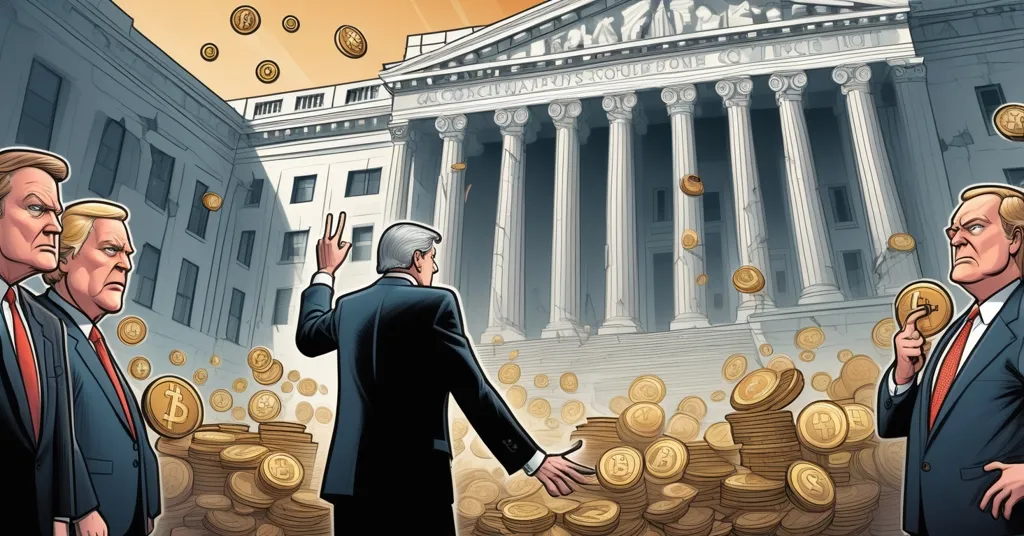
Is the SEC playing favorites with crypto giants, or is it finally paving the way for innovation? Senator Richard Blumenthal, a top Democrat on the Senate investigations subcommittee, is on a mission to find out, demanding records from SEC Chairman Paul Atkins over the abrupt dismissal of high-profile cryptocurrency enforcement cases under the Trump administration. From Tron founder Justin Sun to heavyweights like Coinbase, Kraken, and Binance, the sudden leniency has sparked accusations of political meddling—and we’re here to unpack the mess.
- Senator’s Crusade: Blumenthal requests SEC records on dropped crypto cases, deadline April 13th.
- Major Cases Dropped: Charges against Justin Sun, Coinbase, Kraken, and Binance withdrawn recently.
- Political Shadow: Allegations of Trump family influence and internal SEC discord surface.
Blumenthal’s Battle with the SEC: Why the Probe?
The U.S. Securities and Exchange Commission, tasked with overseeing securities markets, has long been a thorn in the side of the crypto industry, determining whether digital tokens qualify as securities subject to strict registration and disclosure rules. Under the Biden administration’s SEC Chair Gary Gensler, the agency was relentless, hitting a peak of 46 crypto-related enforcement actions in 2023. Think landmark cases like the Ripple/XRP lawsuit, where the SEC argued XRP was an unregistered security, setting a tone of aggressive investor protection against fraud and market manipulation. Fast forward to the Trump era, and the SEC’s tone has flipped from crypto cop to cautious bystander, withdrawing cases that could have shaped digital asset regulation for years.
Senator Blumenthal isn’t buying the sudden change of heart. His request for communications and records from Chairman Atkins stems from a glaring shift in policy and a troubling exit within the agency. Judge Margaret Ryan, interim head of SEC enforcement, started her role near the end of 2025 but left abruptly by March 2026. Reports suggest senior leadership intervened to block cases tied to associates of President Trump, raising red flags about internal conflicts and external pressures. Blumenthal’s probe, as part of broader scrutiny into SEC decisions on crypto enforcement rollbacks, aims to uncover whether this rollback in SEC crypto enforcement is a genuine policy pivot or a backdoor deal.
“Ms. Ryan’s abrupt departure from the agency raises questions in light of her short tenure and reports that senior leadership intervened to prohibit the Division of Enforcement from pursuing cases against certain cryptocurrency companies,” Blumenthal wrote in his pointed letter to Atkins.
Justin Sun and Tron: Dropped Charges Raise Eyebrows
At the center of this storm is Justin Sun, founder of the Tron Foundation and linked to BitTorrent (now Rainberry). Under Gensler’s watch, Sun faced serious charges for unregistered sales of TRX and BTT tokens, wash trading—a deceptive tactic where fake trades inflate volume to mislead investors—and undisclosed celebrity endorsements to pump his projects. The termination of these charges, paired with a mere $10 million civil penalty for BitTorrent/Rainberry, has critics up in arms. What’s more, Sun’s vocal support for Trump and his stakes in Trump-backed ventures like World Liberty Financial, a crypto platform tied to the Trump family, and the $TRUMP memecoin, add a layer of suspicion. Is this leniency a nod to innovation, or a favor for a political ally?
“This is a clear example of how President Trump’s blatant crypto corruption creates back doors for his family’s business partners, creating a pay-to-play enforcement regime that turns a blind eye to grave threats to national security and consumer protection,” Blumenthal charged.
Coinbase, Kraken, and Binance: A Regulatory Reprieve
Sun isn’t the only one catching a break. Major exchanges like Coinbase, Kraken, and Binance, previously under intense SEC scrutiny, have seen their charges vanish. Coinbase, a leading U.S. crypto exchange, was accused of operating as an unregistered securities exchange, a claim it’s long disputed by arguing digital assets don’t fit traditional securities frameworks. Their reprieve could signal a shift toward clearer rules, but it also raises questions about uneven enforcement.
Kraken, another key player, faced heat for offering unregistered staking services—where users lock up tokens to earn rewards, akin to interest on savings. The SEC argued this resembled a security, but with charges now dropped, Kraken’s operations face less friction. Does this mean the agency is rethinking its stance on staking, a cornerstone of many blockchain networks? Or is it just picking and choosing its battles?
Then there’s Binance, the global behemoth, which saw its case abandoned in May 2026. Accused of misrepresenting trading controls and dodging U.S. securities law, Binance’s withdrawal from prosecution is a massive win for the exchange—but a potential loss for investor trust if oversight remains lax. Each of these dismissals under the Trump administration’s SEC crypto policy hints at a broader hands-off approach, leaving the industry both relieved and wary.
Political Ties and Cronyism Concerns
The specter of political interference looms large. While hard evidence of White House meddling isn’t public, Blumenthal’s letter flags potential communications between SEC leadership, Trump associates, and firms like World Liberty Financial as areas of concern. Historically, the Trump administration has faced scrutiny for blending business and governance in other sectors, and crypto—now a multi-trillion-dollar industry—seems a ripe target for influence. Justin Sun’s ties to Trump-backed projects only deepen the suspicion. If Blumenthal’s requested records, due by April 13th, reveal cozy dealings, the fallout could shake confidence in both the SEC and the crypto market.
For those new to this saga, the concern here is simple: conflicts of interest. If regulatory decisions are swayed by personal or political connections rather than policy merit, the system meant to protect investors becomes a tool for the well-connected. That’s not decentralization—it’s just a new flavor of centralized corruption, and it’s the kind of nonsense we refuse to endorse, no matter how much we root for less regulatory overreach.
The Case for Leniency: Innovation Over Regulation?
Let’s play devil’s advocate for a moment. Could the SEC’s softer stance on cryptocurrency regulation in 2026 actually be a good thing? Proponents argue that heavy-handed enforcement, like Gensler’s 2023 crackdown, drove talent and capital offshore, stifling blockchain growth in the U.S. A lighter touch might reduce legal burdens for startups, attract global innovators back to American soil, and encourage Congress to craft bespoke legislation for digital assets. Bitcoin, as a decentralized currency outside the securities debate, could thrive in such an environment, reinforcing its dominance as the ultimate middle finger to centralized finance.
Even altcoins and platforms like Ethereum or Binance, which fill niches Bitcoin doesn’t—think smart contracts or global trading hubs—could benefit from clearer, less punitive rules. A balanced approach might define their roles without crushing them under outdated securities laws. But here’s the rub: if this rollback is just favoritism dressed as policy, as Blumenthal fears, we’re not building a future of decentralized finance. We’re swapping one rigged game for another. And frankly, that’s a pile of garbage no amount of blockchain hype can polish.
Implications for Crypto’s Future in the U.S.
The stakes couldn’t be higher as crypto cements itself as a financial powerhouse. A hands-off SEC could turbocharge DeFi—decentralized finance—adoption, where peer-to-peer systems powered by blockchain cut out middlemen like banks. Imagine lending, borrowing, or trading directly on networks like Ethereum, free from regulatory chokeholds. Bitcoin, often a safe haven amid altcoin chaos, could solidify its role as digital gold if lighter rules boost public trust in crypto broadly.
On the flip side, unchecked leniency risks a wild west redux. Without guardrails, scams and rug pulls—where projects disappear with investor funds—could erode confidence faster than a bear market. If fraudsters exploit this gap, public backlash might trigger harsher laws down the line, undoing any gains. Then there’s the specter of bespoke legislation: will lawmakers seize this moment to define crypto’s legal status, or will political gridlock leave us in limbo? As champions of effective accelerationism, we’re all for disrupting broken systems, but not at the cost of integrity.
Bitcoin Maximalism and the Bigger Picture
As someone leaning toward Bitcoin maximalism—meaning I see Bitcoin as the king of cryptocurrencies, often skeptical of altcoin hype—I can’t help but cheer a bit when regulators back off. Bitcoin’s strength lies in its decentralization, privacy, and defiance of traditional finance. Less SEC meddling could empower its peer-to-peer ethos, aligning with our push for freedom over control. Yet I’ll concede altcoins and other blockchains like Ethereum have their place, driving innovation in areas Bitcoin doesn’t touch. The trick is fostering that growth without letting scammers run rampant. If the SEC’s shift is genuine, count me in. If it’s cronyism in disguise, I’ll shout it down louder than a halving rally.
Key Takeaways and Burning Questions
- What triggered Senator Blumenthal’s investigation into SEC crypto enforcement?
The sudden exit of Judge Margaret Ryan and the withdrawal of cases against major crypto firms like Justin Sun and Coinbase, paired with hints of political interference, sparked his demand for records. - Why were charges against Justin Sun, Tron, and others terminated?
No official reason was provided by the SEC, but critics like Blumenthal point to potential political sway, especially given Sun’s ties to Trump-backed ventures like World Liberty Financial. - How has SEC crypto policy shifted under the Trump administration?
From a record 46 enforcement actions in 2023 under Gensler to a near standstill, with major cases against Binance, Kraken, and others dropped since 2025, signaling a dramatic pivot. - What does this mean for cryptocurrency regulation in the U.S.?
A lighter SEC grip could accelerate blockchain innovation and DeFi growth, but risks undermining investor protection if bad actors exploit the lack of oversight. - Is political interference in SEC decisions a credible threat?
While concrete proof awaits Blumenthal’s requested records, concerns over Ryan’s departure and connections to Trump associates suggest influence could be at play. - How does the SEC’s shift impact Bitcoin’s dominance over altcoins?
Bitcoin, outside the securities debate, may strengthen as a safe haven if regulation eases, while altcoins could innovate faster—but only if scams don’t tarnish the space.
The crossroads of crypto, regulation, and politics is a battlefield, and we’re watching every move. Decentralization thrives on skepticism, not blind faith, whether in regulators or crypto moguls. If the SEC’s rollbacks herald a freer, fairer market, we’re ready to champion it. If it’s just another power play, we’ll call it out with no hesitation. Stick with us as we keep digging into this saga of money, power, and digital disruption.