Senator Lummis Sparks Buzz on U.S. Bitcoin Reserve with Cryptic X Post
 LTB
LTB Senator Lummis Ignites Speculation on Federal Bitcoin Buys with Mysterious X Post
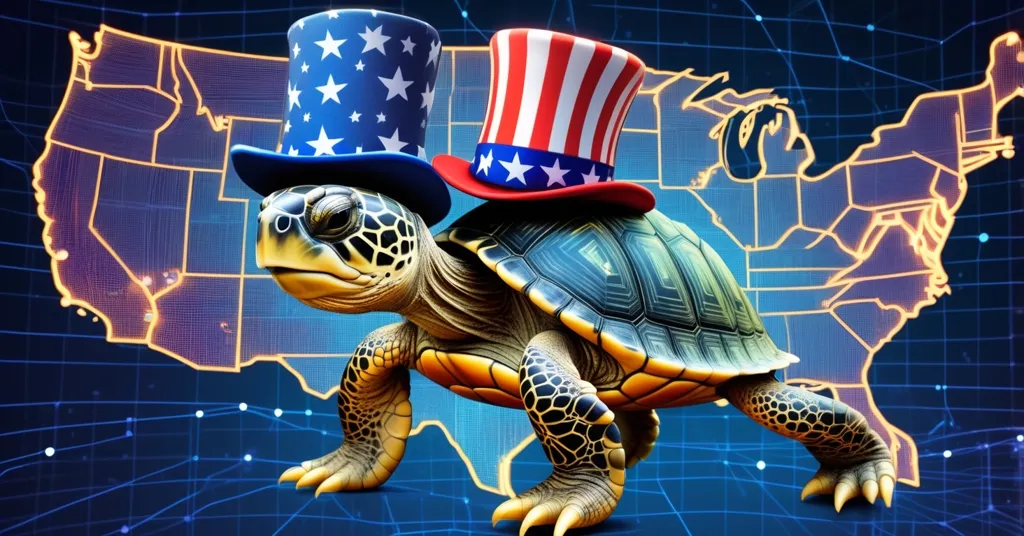
Senator Cynthia Lummis, a staunch Bitcoin advocate in Washington, has the crypto world on edge with a cryptic X post that hints at potential U.S. government involvement in Bitcoin. With a meme featuring Franklin the Turtle paired with Bitcoin imagery, captioned “₿ig things coming for Franklin,” her message has sparked wild speculation about whether the federal government might be poised to stack sats as a strategic reserve.
- Cryptic Hint: Lummis’ X post teases major Bitcoin developments with Franklin the Turtle and the caption “₿ig things coming for Franklin.”
- Texas Takes Action: Texas secures $5 million in Bitcoin via a BlackRock ETF, becoming the first state with a taxpayer-funded crypto reserve.
- Community Split: Reactions range from excitement over government adoption to warnings about volatility and centralization risks.
Lummis’ Bitcoin Tease: Decoding the Signal
Senator Cynthia Lummis of Wyoming isn’t just another politician; she’s been a relentless force pushing Bitcoin into the national conversation. With the U.S. national debt soaring past $35 trillion, she’s argued that Bitcoin could act as a financial lifeline—a hedge against inflation and a counter to fiscal recklessness. She’s long advocated for classifying Bitcoin as a strategic reserve asset, akin to gold or foreign currency reserves held by the Treasury, to bolster economic stability. Her latest move, a post on X featuring Franklin the Turtle—a children’s character turned meme symbolizing government bureaucracy after a viral spoof shared by U.S. Secretary of Defense Pete Hegseth—alongside Bitcoin imagery, has set tongues wagging. The caption,
“₿ig things coming for Franklin,”
suggests something seismic might be brewing at the federal level regarding Bitcoin adoption. You can see more about this intriguing post here.
What could this mean? Lummis has previously floated ideas like legislation to integrate Bitcoin into national financial strategy, including proposals to allow the Treasury to hold BTC as a reserve. While nothing concrete has emerged yet, her track record of pro-Bitcoin rhetoric—coupled with this cryptic tease—fuels speculation of federal Bitcoin purchases or policy shifts. For newcomers, a strategic reserve asset is something a government holds to protect against economic shocks, much like oil stockpiles or gold bars in Fort Knox. If Bitcoin joins that club, it would signal unprecedented legitimacy for a currency born from distrust of centralized systems.
Community Reactions: Hype Meets Hard Reality
The crypto crowd on X wasted no time dissecting Lummis’ post, with opinions split down the middle. Some are buzzing with optimism, envisioning a future where the U.S. Treasury diversifies into BTC. One user gushed,
“Imagine the treasury pivoting to Bitcoin, that’s a historic shift.”
The potential impact is staggering—government backing could catapult Bitcoin’s credibility, driving mass adoption and possibly stabilizing its price long-term. It’s not hard to see why enthusiasts view this as a watershed moment, a chance to cement Bitcoin as the future of money.
But not everyone’s buying the hype. Bitcoin’s infamous price swings are a glaring red flag. A single market panic or regulatory misstep can slash its value by double digits overnight—hardly the stability taxpayers expect from public funds. One critic on X pointed out the lack of oversight, warning that federal involvement without clear rules could be a financial fiasco. And then there’s the philosophical gut-punch: Bitcoin was forged as a rebellion against centralized power. If Uncle Sam starts hoarding sats (short for satoshis, the smallest unit of Bitcoin, like cents to a dollar), are we trading freedom for a shiny government stamp of approval? It’s a bitter pill for purists who see Satoshi Nakamoto’s vision as sacred.
The Nakamoto Dilemma: A Global Chess Game
Some X users raised an intriguing scenario dubbed the “Nakamoto Dilemma.” If the U.S. designates Bitcoin as a strategic reserve, it could set off a domino effect among G20 central banks. These financial powerhouses might feel compelled to accumulate Bitcoin themselves to avoid losing ground in global markets, where economic influence often hinges on reserve strength. Picture a race to stack digital gold, not for ideology, but for raw geopolitical leverage. It’s a fascinating twist—Bitcoin, born to bypass state control, could become a pawn in the very systems it sought to disrupt. For those new to the space, this dilemma underscores how a decentralized asset can still get tangled in centralized power plays, potentially reshaping international finance.
Texas Leads with a Bold Bitcoin Bet
While Lummis keeps us guessing on the federal front, Texas is already making moves. The Lone Star State confirmed this week a purchase of nearly $5 million in Bitcoin through a BlackRock-managed ETF (exchange-traded fund, a vehicle that lets investors gain exposure to assets without directly holding them). This makes Texas the first state to establish a taxpayer-funded cryptocurrency reserve under Senate Bill 21, signed by Governor Greg Abbott. The buy, executed late last month at roughly $87,000 per Bitcoin, translates to about 57 BTC at current estimates—a modest but symbolic stake. Lee Bratcher of the Texas Blockchain Council hailed the decision, saying,
“I think Texas staking out a leadership position will be very beneficial to Texans over time, similar to what the oil and gas industry has done over the last century. I think we’re only scratching the surface.”
For the uninitiated, using an ETF means Texas isn’t handling the coins directly via self-custody (managing and securing Bitcoin themselves, rather than through a third party), dodging the technical headaches of private key management. This move isn’t just a one-off; it’s part of a growing trend. Wisconsin and Michigan pension systems have dipped into crypto before, while New Hampshire and Arizona are crafting similar reserve frameworks. Texas’ play, though, stands out for its direct use of public funds, positioning the state as a pioneer in institutional Bitcoin adoption. Bratcher’s comparison to oil and gas isn’t just hype—it’s a nod to Texas betting on crypto as a cornerstone of future wealth, much like it did with energy a century ago.
Risks of Government Crypto Involvement
Before we get too carried away, let’s talk risks—and there are plenty. Bitcoin’s volatility isn’t just a buzzword; it’s a gut-wrenching reality. Look at late 2022, when BTC plummeted over 50% in months during the FTX collapse fallout. If Texas’ $5 million stash takes a similar hit, that’s real taxpayer money down the drain—hardly the fiscal responsibility voters expect. Critics argue that public funds should stick to safer bets, not rollercoasters that thrill speculators but nauseate budget planners.
Beyond the financial gamble, there’s a deeper issue: centralization. Bitcoin’s core appeal is its decentralized nature—no single entity controls it, thanks to a global network of nodes and miners. Government reserves, whether state or federal, could flip that script. Imagine state-managed wallets under tight surveillance, or worse, policies that pressure citizens to use government-approved channels for BTC transactions. It’s a slippery slope from adoption to overreach, potentially strangling the privacy and freedom that make Bitcoin revolutionary. As champions of disruption, we must ask: are we paving the way for empowerment, or just handing the powerful a new toy?
Playing Devil’s Advocate: The Upside of Government Adoption
Let’s flip the coin for a moment. Government involvement isn’t all doom and gloom. A U.S. Treasury reserve could inject unparalleled stability into Bitcoin’s market, smoothing out some of those wild price swings by signaling long-term confidence. Think of it as a massive vote of trust—when the world’s largest economy backs BTC, institutional investors and everyday users might follow suit, accelerating adoption faster than any grassroots campaign. Texas’ move already hints at this; state-level buys could prop up prices short-term, benefiting hodlers across the board.
Moreover, federal adoption might force regulatory clarity, something the crypto space desperately needs. Lummis has pushed for frameworks that protect innovation while curbing scams—government stakes could expedite those rules. But here’s the rub: stability and regulation often come with strings. What’s the cost of this legitimacy? Likely a trade-off in autonomy, with Bitcoin potentially morphing into a sanitized version of itself, tethered to state interests. It’s a devil’s bargain worth debating as these developments unfold.
Zooming Out: Bitcoin’s Institutional March
Texas’ bet and Lummis’ tease are just the latest chapters in Bitcoin’s journey from fringe experiment to mainstream contender. Since the 2021 bull run, institutional interest has surged—think MicroStrategy’s multi-billion-dollar BTC holdings or the SEC’s approval of Bitcoin ETFs like BlackRock’s, which opened the door for big players. Globally, El Salvador’s 2021 adoption of Bitcoin as legal tender, despite hiccups, set a precedent for state involvement. If the U.S. or its states follow, we’re witnessing a redefinition of money itself—a shift toward decentralized assets challenging fiat’s monopoly.
Yet history reminds us to stay grounded. Bitcoin’s path is littered with crashes, scams, and regulatory whiplash. Government entry could amplify those risks or, conversely, buffer them with scale. Other blockchains like Ethereum, with their focus on smart contracts and decentralized apps, might also catch state interest for different niches—think supply chain or identity systems. While I lean Bitcoin maximalist, I can’t ignore that altcoins fill gaps BTC doesn’t aim to address. This ecosystem diversity is a strength, not a flaw, in our financial revolution.
Key Takeaways and Questions
- What’s behind Senator Lummis’ cryptic X post?
Her post featuring Franklin the Turtle and Bitcoin imagery, captioned “₿ig things coming for Franklin,” hints at potential federal involvement in Bitcoin, possibly as a strategic reserve asset. - Why is Texas’ Bitcoin purchase a big deal?
Texas became the first state to allocate $5 million of taxpayer funds to a Bitcoin reserve via a BlackRock ETF under Senate Bill 21, marking a historic step in state-level crypto adoption. - What are the risks of government Bitcoin holdings?
Volatility could lead to significant losses of public funds, as seen in past crashes like 2022’s 50% drop, while centralization risks might erode Bitcoin’s core ethos of freedom and privacy. - What’s the ‘Nakamoto Dilemma’ and why does it matter?
It describes a scenario where U.S. Bitcoin reserves could pressure G20 central banks to accumulate BTC to maintain global financial influence, turning a decentralized asset into a geopolitical tool. - Could government adoption benefit Bitcoin?
Yes, it might stabilize prices and speed up mainstream adoption, but at the potential cost of regulatory overreach and diminished decentralization, a trade-off that needs careful scrutiny. - How might this impact Bitcoin’s future?
Government involvement could either solidify Bitcoin as a legitimate asset or twist it into a controlled instrument, shaping whether it remains a tool for the people or a pawn for the powerful.
As these events play out, one burning question lingers: will Bitcoin stay true to its roots as a bastion of individual liberty, or morph into just another lever for institutional power? The answer could define the trajectory of this financial upheaval, and we’re here to track every step of the chaos.