Silver Market Crisis 2026: Will Bitcoin and Crypto Survive the Fallout?
 LTB
LTB Silver Market on the Brink: Could a 2026 Crash Shake Bitcoin and Crypto?
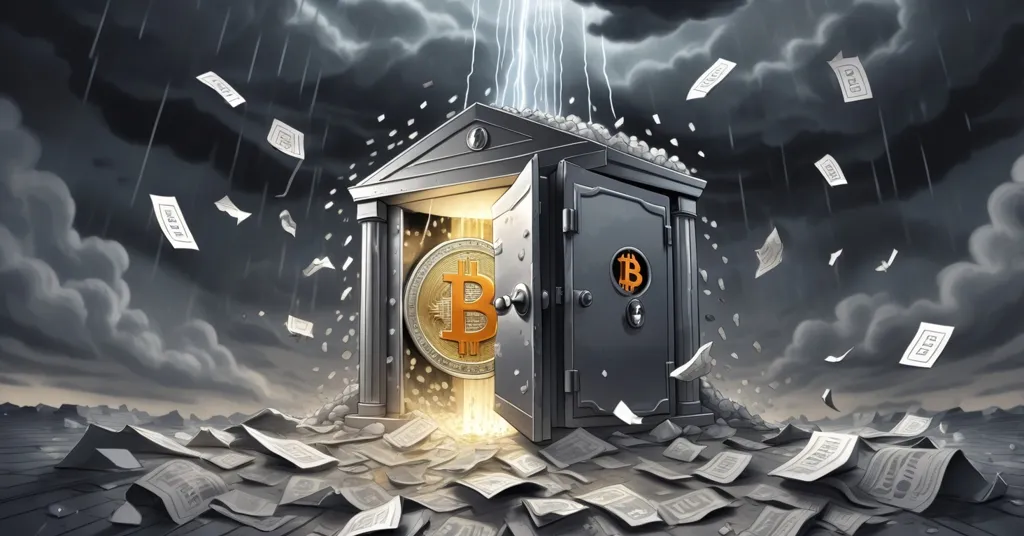
A potential crisis is brewing in the silver market, with analysts warning of a brutal reckoning that could send shockwaves through commodities and even rattle risk assets like Bitcoin. As we approach February 27, 2026—the First Notice Day for March silver futures on COMEX—a staggering disconnect between paper contracts and physical metal threatens to expose deep flaws in traditional financial systems, raising questions about broader economic stability.
- Massive Imbalance: COMEX silver futures show a 360-to-1 paper-to-physical ratio, with 360-380 million ounces in contracts against just 95-105 million ounces available.
- Critical Deadline: February 27, 2026, could strain the system if physical delivery demands surge.
- Wider Fallout: U.S. housing unaffordability and liquidity risks may drag down silver, Bitcoin, and other markets.
COMEX Silver Futures: A House of Cards Waiting to Collapse
The silver market on COMEX, a cornerstone exchange for global commodity trading, is sitting on a ticking time bomb. Analyst Danny_Crypton, breaking down the numbers on X, points to a jaw-dropping mismatch: paper futures contracts represent 360-380 million ounces of silver, while the physical metal actually available for delivery languishes at a mere 95-105 million ounces. That’s a paper-to-physical ratio of roughly 360 to 1—a house of cards where hundreds of financial claims exist for every single ounce in the vault. For those new to this space, futures contracts are essentially bets on a commodity’s future price, where traders agree to buy or sell at a set date. Most never intend to take the actual metal; they either roll over to another contract or settle in cash. But if too many demand the real stuff, the system could buckle under the weight of its own leverage.
Inventories are already in dire straits. For the first time in modern history, COMEX silver stockpiles have fallen below 100 million ounces, with daily withdrawals averaging a hefty 785,000 ounces. Normally, only 3-5% of contract holders request physical delivery on First Notice Day—the deadline when traders must declare if they want the metal, cash, or to roll over. But history shows demand can spike as high as 98% in extreme cycles. Danny_Crypton cautions that even a jump to 25-50% in March 2026 could push COMEX to the edge. If that happens, the exchange might be forced into cash settlements, admitting the paper game doesn’t match reality. As Danny starkly frames it:
If 25 to 50% of contract holders request delivery in March, the exchange would face intense strain… cash settlement would confirm a key distinction. Paper silver represents leverage inside a financial system. Physical silver represents final ownership of metal.
This isn’t just speculation. Look at January 30, when silver prices cratered from $121 to $64—a savage drop—yet 3.3 million ounces were still yanked from vaults. That’s a loud signal: big players are hoarding physical silver, showing zero trust in paper promises even as the market bleeds. This comes amid a brutal structural deficit. Globally, the silver market is short 40-50 million ounces every month, racking up a cumulative shortage of 820 million ounces since 2021. Silver isn’t just a pretty investment; it’s vital for industrial use in solar panels, electronics, and AI tech. Demand is relentless, but supply? That’s a whole other disaster. Curious about whether another crash is looming? Check out this detailed analysis on silver price warning signs.
Global Silver Supply: Choked by Geopolitics and Corporate Greed
The physical silver squeeze is getting worse thanks to geopolitical chess and corporate power plays. China, controlling a massive 70% of the world’s refined silver output, slapped tight export controls in January 2026, choking supply to Asian markets. Meanwhile, Samsung played a ruthless round of Monopoly, securing a two-year exclusive offtake agreement for the full output of a Mexican silver mine, yanking those ounces straight off the open market. Moves like these are strangling an already tight supply chain, and if physical demand spikes on COMEX, we’re looking at abrupt repricing—or a straight-up meltdown of confidence in paper instruments. Let’s not sugarcoat it: the system’s a mess, and anyone claiming it’s all fine is either delusional or hawking snake oil.
Historically, silver has seen wild volatility—think back to the Hunt Brothers’ infamous 1980 squeeze, when prices skyrocketed before crashing hard as the system fought back. Today’s setup feels eerily familiar, but with higher stakes due to industrial demand and global supply concentration. If COMEX can’t deliver, it’s not just traders who’ll feel the burn; it’s a wake-up call for anyone still trusting leveraged financial games over tangible ownership.
Macro Pressures: U.S. Housing Crisis as the Domino Trigger
This silver crunch doesn’t exist in a vacuum—it’s tangled up with broader economic fault lines. Macro analyst Wimar.X ties the commodity stress to a full-blown disaster unfolding in the U.S. housing market. Median home prices have skyrocketed to $415,000, up 54% in five years, while wages crawled up just 29%. Mortgage rates have jumped from 2.7% to 6.3%, and the income needed to buy a median home—$127,000—towers over the median household income of $80,000. Here’s the raw breakdown:
- Median Home Price: $415,000 (+54% since 2021)
- Mortgage Rates: 2.7% to 6.3%
- Qualifying Income: $127,000 vs. Median Household Income: $80,000
Pending home sales are plummeting, and Wimar.X isn’t holding back on the implications:
WARNING: SOMETHING EXTREMELY BAD IS COMING!! The US housing market just reached the most unaffordable point EVER. WORSE THAN 2008. And if you think housing has no impact on global markets, YOU ARE COMPLETELY WRONG. This is not just a real estate story. – This is a CREDIT…
The housing market isn’t just broken—it’s a rigged trap propping up a crumbling system. When housing tanks, credit tightens, and liquidity dries up across all markets. That’s bad news for risk assets, whether you’re holding silver bars or Bitcoin stacks. Historically, housing crises—like the 2008 debacle—have triggered broad sell-offs, and while Bitcoin wasn’t around back then, its price action during later economic stress (think 2020’s COVID crash) shows it’s not immune to macro panic. Silver’s volatility might just be the first domino in a chain reaction.
Why Should Bitcoin Hodlers Care About a Shiny Metal?
So, why does this matter to crypto enthusiasts? Simple: when liquidity vanishes, risk assets get hammered, and Bitcoin—despite its “digital gold” nickname—often trades like a speculative play in tough times. A silver market crash in 2026 could drag BTC down with it if investors dump everything for cash. Look at past commodity shocks—oil crashes or gold slumps often correlate with Bitcoin dips when fear dominates. Data from the 2022 bear market shows BTC shedding 60% of its value as macro conditions worsened, even without a direct commodity link. A credit crunch from housing could amplify that kind of pain.
On the flip side, a silver squeeze—or a total COMEX breakdown—might push capital into decentralized assets. If paper markets lose trust, Bitcoin’s appeal as a trustless, no-middleman store of value could spike. During the 2021 silver Reddit squeeze attempt, BTC saw inflows as some investors pivoted to “unrigged” systems. Bitcoin maximalists will argue this is exactly why BTC exists—to escape the paper scams of centralized exchanges like COMEX. No vaults, no fake ratios, just math you can verify. But don’t kid yourself: macro sell-offs spare no one, and BTC’s volatility could skyrocket in a panic. Anyone shilling “Bitcoin to $1M” off a silver crash is peddling hopium—markets don’t run on fairy tales.
There’s also a wildcard for altcoins and blockchain innovation. If COMEX stumbles, could decentralized finance (DeFi) step up? Tokenized silver on platforms like Ethereum—where assets are backed by blockchain transparency—might offer an alternative to rigged futures markets. Projects exploring commodity tokenization or supply chain tracking could find a niche, though they’re untested at scale. For now, it’s a long shot, but it fits the ethos of disrupting broken systems through tech. The question is whether Bitcoiners should even care about side quests like this, or double down on BTC as the ultimate hedge.
What This Means for You in the Crypto Space
Whether you’re a newbie stacking your first sats or an OG hodler, the silver market drama has implications worth watching. For newcomers, this is a brutal lesson in why decentralized systems like Bitcoin matter—paper promises can evaporate, but your private keys don’t. Start small, learn the fundamentals, and see BTC as a hedge against systemic BS. Seasoned Bitcoiners, keep an eye on macro trends; a silver crash might be a buying dip, but only if you’ve got steel nerves for volatility. Altcoin fans, brace for pain—speculative tokens often get crushed hardest in liquidity crunches, so trim the fat from your portfolio. We’re all about accelerating innovation, but not at the cost of blind risk.
Key Takeaways and Burning Questions on Silver, Bitcoin, and Beyond
- What’s fueling potential volatility in the silver market?
A glaring imbalance in COMEX silver futures—360-380 million ounces in paper contracts versus 95-105 million ounces physical—creates a 360-to-1 ratio. If delivery demands spike on February 27, 2026, the system could crack under pressure. - Why does physical silver demand persist even in price crashes?
Despite silver plummeting from $121 to $64 on January 30, 3.3 million ounces were withdrawn from vaults, showing big players prioritize real metal over paper, signaling deep distrust in leveraged systems. - How do global supply issues worsen the silver outlook?
Monthly deficits of 40-50 million ounces, China’s export controls on 70% of refined output, and corporate deals like Samsung’s mine offtake choke supply, setting the stage for sharp price swings or crises. - What links the U.S. housing crisis to Bitcoin and crypto?
Unaffordable housing and soaring mortgage rates could trigger a credit crunch, slashing liquidity and hitting risk assets like Bitcoin, though some might pivot to crypto as a haven from failing traditional markets. - Could Bitcoin benefit from a silver market collapse?
If COMEX’s paper system fails, eroded trust in centralized markets might drive capital to Bitcoin as a decentralized hedge, though BTC’s own volatility remains a wildcard in macro downturns. - What can crypto investors do to prepare for silver market chaos?
Diversify exposure, focus on Bitcoin’s fundamentals over altcoin speculation, and monitor macro indicators like housing data—be ready for dips as buying opportunities, but don’t bet the farm on unproven narratives. - Should Bitcoiners push for decentralized silver exchanges on blockchain?
It’s a divisive idea—tokenized commodities on chains like Ethereum could disrupt COMEX’s mess, but purists might see it as a distraction from Bitcoin’s core mission as sound money. The debate’s worth having.
Zooming out, the silver market’s looming stress test is a glaring reminder of why decentralization, freedom, and trustless systems are the future. Whether you’re stacking Bitcoin or eyeing silver bars, the lesson is brutal but clear: ownership matters, and paper games are a fool’s errand. As we barrel toward 2026, ask yourself—are you banking on rigged promises or unshakeable code? February could expose just how fragile the old financial guard really is. Stay sharp, stay skeptical, and don’t fall for the hype. We’re in for a wild ride.