Small-Cap Crypto Tokens Hit Record Highs While Bitcoin and Ethereum Plunge Deeply
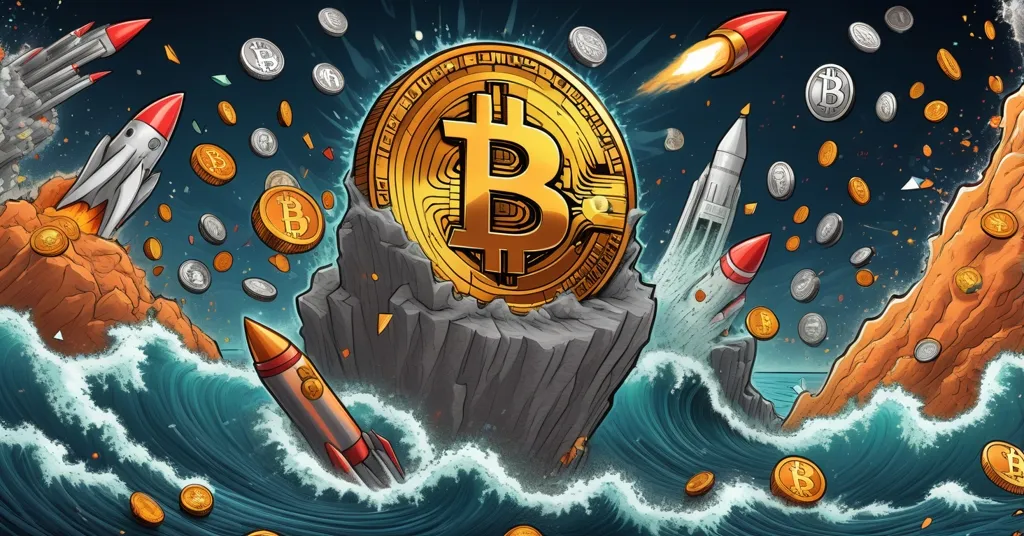
 LTB
LTB Small-Cap Tokens Skyrocket to Record Highs as Bitcoin and Crypto Giants Wallow in Deep Slumps
A bizarre split has gripped the cryptocurrency market: while Bitcoin and Ethereum languish far below their historic peaks, 15 small-cap tokens have blasted to all-time highs in just the past 24 hours. This stark divergence raises eyebrows—why are obscure crypto underdogs surging while the kings of the market bleed?
- Small-Cap Boom: 15 tokens with market caps over $10 million hit record highs recently.
- Large-Cap Pain: Bitcoin down 45%, Ethereum down 56% from their peaks.
- Speculative Fever: Traders chase quick gains in high-risk, low-volume assets.
The Heavyweights Stumble: Bitcoin and Ethereum’s Brutal Drawdowns
The numbers for the big players in crypto are downright ugly. Bitcoin, the gold standard of decentralization and the ultimate store of value, trades at $69,105—a gut-punching 45% below its all-time high. Ethereum, the backbone of smart contracts and decentralized finance (DeFi), sits at $2,134, down 56% from its peak. And they’re not alone in the muck. BNB trades at $603.50 (down 55%), XRP at $1.34 (down 65%), and Solana at $82.43 (a staggering 71% drop from its high). For those just dipping their toes into crypto, large-cap cryptocurrencies are the heavy hitters with market valuations in the billions. They’re the market’s pulse—when they flatline, it’s tough to claim the space is thriving.
These drawdowns aren’t just stats on a chart; they scream a lack of bullish momentum. Whether it’s macroeconomic headwinds like rising interest rates, regulatory saber-rattling from the SEC and beyond, or simply profit-taking after past bull runs, the giants are stuck in a bearish rut. Bitcoin, often hailed as digital gold, isn’t acting like a safe haven right now. And Ethereum, despite its dominance in DeFi and NFTs, can’t seem to reclaim its glory. It’s a bitter pill for Bitcoin maximalists like myself who see BTC as the bedrock of financial freedom. But even I have to ask: is the “store of value” narrative slipping when investors are fleeing to riskier bets?
Small-Cap Mania: Underdogs Steal the Spotlight
While the titans bleed, a wild party is raging in the small-cap corner. These are lesser-known tokens, often with market caps in the tens of millions, and they’re prone to dramatic price swings. In the past day alone, 15 of them—each valued at least at $10 million—hit all-time highs, as reported in recent market insights. We’re talking sUSDS at $1.09, Freedom of Money at $0.01608, Knoxnet at $0.02412, 404—GEN at $4.73, and Hilo Staking SOL at $85.77. Others like Drift Staking SOL, COCO, and LEO are also riding the wave to new peaks.
For the uninitiated, small-cap tokens are the underdogs of crypto. They often have fewer tokens in circulation—known as a low float—which means even a tiny wave of buyers can send prices to the moon. Think of it like a small pond: a single stone creates huge ripples, unlike the deep ocean of Bitcoin’s market where it takes a tsunami to move the needle. But here’s the flip side: those ripples can turn into a crash just as fast if sellers jump ship. Hilo Staking SOL, for instance, ties into Solana’s ecosystem with a focus on staking rewards—think of staking as locking up your tokens to earn interest or support the network. Freedom of Money, meanwhile, pitches itself on ideals of financial liberty, though details on its utility remain murky. Not all of these are pure speculation, but many sure smell like it.
Speculative Sparks: Why the Small-Cap Crypto Surge?
What’s fueling this small-cap crypto surge? It boils down to a mix of boredom and greed. With Bitcoin and Ethereum stuck in neutral, traders are hunting for quick wins elsewhere. They’re rotating capital into niche themes and high-risk, high-reward tokens where small trades can trigger massive jumps. It’s the Wild West of crypto—full of gold rushes and ghost towns. A little buying pressure in a low-volume market can create outsized gains, unlike the deep liquidity of large caps where you need serious cash to budge the price.
But let’s not pretend this is some noble quest for innovation. Small-cap markets are often a playground for manipulators. Pump-and-dump schemes—where prices are artificially inflated before insiders cash out—are rampant. For every genuine project, there are ten scams waiting to rug-pull your investment. I’m not here to shill or soft-pedal: chasing these altcoin rallies is like playing roulette with your savings. Do your damn research, because the hype train derails fast.
Regional Heat: Korea’s Retail Crypto Mania
Zooming in on regional trends, South Korea—a known hotspot for retail-driven crypto frenzies—plays a big role in this speculative fever. Trending lists on platforms like CoinMarketCap show tokens with insane rebound stories. Venice Token, at $7.29, is down 56% from its high but up a mind-blowing 692% from its low. Siren, trading at $0.5462, is down down 84% from its peak but has rocketed 1,970% from its bottom. Ontology, at a measly $0.09133, is down 99% from its all-time high but up 134% from its trough. These stats, pulled from CryptoRank and CoinMarketCap, scream speculative bounce, not sustainable growth.
Korea’s market has a long history of amplifying volatility in smaller assets. Retail investors, from Seoul to global Discord channels, often fuel these swings, chasing the next big thing. It’s electric to watch, but it’s not the kind of leadership that sparks a market-wide rally. It’s more like fireworks in a dark sky—dazzling, but they don’t brighten the whole landscape.
Cautionary Notes: Not Every Underdog Wins
Amid the small-cap euphoria, there’s a sobering outlier. Alloy Tether (aUSDT) hit an all-time low of $0.9103 before a slight rebound. While others soared, this token tanked, a stark reminder that not every small player gets a happy ending. Thin trading volumes mean a small sell-off can trigger a nosedive, and breakouts often lack the legs to last. It’s a glaring warning in a space already dripping with risk.
The Bigger Picture: Macro Pressures and Regulatory Risks
Crypto doesn’t operate in isolation. Large caps like Bitcoin and Ethereum are taking heavier hits from global forces. Rising interest rates, inflation fears, and regulatory crackdowns—especially from the U.S.—are spooking investors away from the big names. Small caps, often flying under the radar, dodge some of this heat for now, but they’re not bulletproof. Many are prime targets for scams or sudden delistings. The SEC has been sniffing around dubious projects, and a single “rug pull” horror story can spook the herd. If you’re diving into these altcoin rallies, tread with eyes wide open.
Historical Echoes: Have We Seen This Before?
This isn’t the first time small caps have outshone the giants. Cast your mind back to the 2017 ICO craze, where obscure tokens promised the moon and often delivered dust. Or the 2021 meme coin madness, where Dogecoin and Shiba Inu became household names—until they didn’t. History whispers a warning: small-cap surges without large-cap backing often end in tears. Are we doomed to repeat the cycle, or could some of these tokens redefine market trends? It’s a long shot, but the hunger for disruption keeps the flame alive.
Bitcoin Maximalism with a Side of Nuance
As a Bitcoin advocate, I’ll always root for BTC as the ultimate middle finger to centralized control. It’s the decentralized kingpin, the anchor of financial sovereignty. But I’m not blind—altcoins and niche tokens fill gaps Bitcoin doesn’t touch. Ethereum’s smart contracts power DeFi and NFTs, carving out a relevance that might outlast its current slump. Solana-based staking projects like Hilo and Drift offer experimental utility. The crypto ecosystem isn’t a monolith; it’s a chaotic lab of ideas. Still, without Bitcoin and Ethereum stepping up, these small-cap sparks feel more like a distraction than a revolution.
What’s Next? Can Small Caps Sustain the Hype?
The million-dollar question is whether these small-cap breakouts have staying power or if they’re just a fleeting sugar rush. Historically, lasting market rallies need the big dogs—Bitcoin smashing resistance, Ethereum reclaiming key levels—to set the tone. Without that, we’re just seeing isolated speculation, not a true trend flip. If Bitcoin keeps lagging, could altcoins steal the spotlight for good? Unlikely, but the possibility keeps things spicy. For now, these surges reflect a restless appetite for risk, a nod to decentralization’s rebellious spirit. But hype isn’t adoption, and moonshot gains don’t equal systemic change. We need utility, not just bubbles, to accelerate this financial shift.
Key Takeaways and Burning Questions
- Why are small-cap cryptocurrencies shattering records now?
Traders are chasing fast profits in high-risk, low-volume tokens where tiny buys spark huge price leaps, unlike the stagnant Bitcoin and Ethereum markets. - What’s dragging Bitcoin and Ethereum down so hard?
Large caps are battered by bearish sentiment, global economic pressures like interest rates, and regulatory uncertainty, with Bitcoin down 45% and Ethereum down 56% from peaks. - Do these small-cap surges mean the crypto market is healthy?
Hardly—isolated gains in volatile tokens don’t show broad strength, especially with major players still in a deep hole. - What dangers lurk in altcoin rallies and small-cap tokens?
Low trading volumes mean sharp crashes are a heartbeat away, and many gains stem from speculation or outright scams like pump-and-dumps. - Can altcoins redefine crypto market trends without Bitcoin leading?
It’s a stretch—past cycles show sustained rallies need Bitcoin and Ethereum’s momentum, or small-cap gains risk burning out. - How do global forces shape this crypto market split?
Regulatory risks and economic headwinds hammer large caps hardest, while small caps sometimes slip under the radar—but they’re not immune forever.
The crypto space remains a battlefield of hope and heartbreak. Small-cap tokens hitting record highs showcase the relentless drive for innovation, but they’re also a neon sign of speculative excess. Bitcoin and its large-cap peers might be bruised, but their revival could either legitimize these smaller wins or turn them into forgotten footnotes. For now, keep your skepticism razor-sharp, your wallet cautious, and remember: in crypto, today’s hotshot can be tomorrow’s has-been.