Solo Bitcoin Miner Defies 1 in 100,000 Odds to Win Block Reward
 LTB
LTB Solo Miner Beats 1 in 100,000 Odds to Claim Bitcoin Block Reward
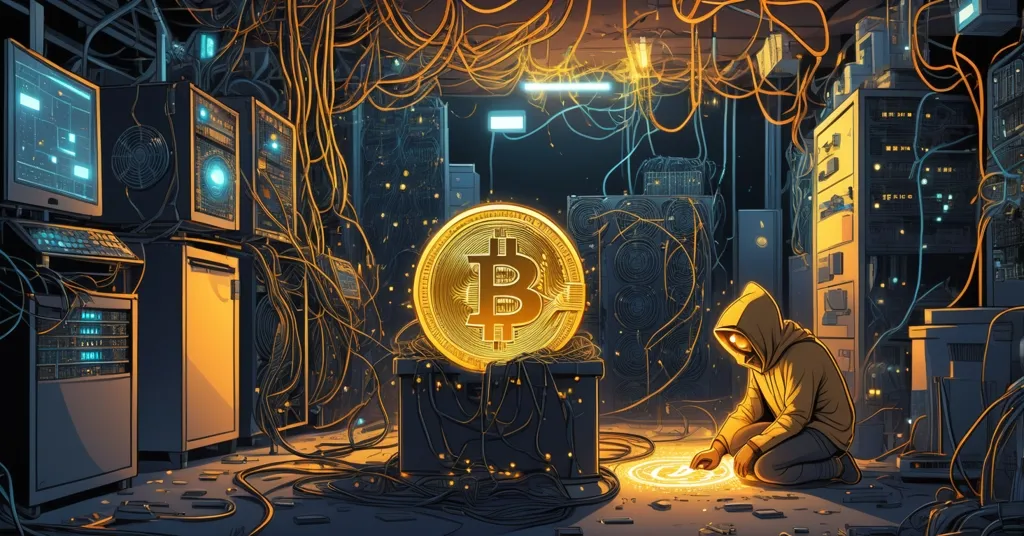
A solo Bitcoin miner has pulled off a digital miracle, defying odds of roughly 1 in 100,000 to mine a block and claim the full reward in a world dominated by industrial-scale mining giants. This rare triumph, happening in the week of [specific date pending confirmation], is a stark reminder that the little guy can still strike gold in Bitcoin’s hyper-competitive landscape.
- Unlikely Victory: Solo miner wins Bitcoin block against staggering odds.
- Reward Secured: Nets 3.125 BTC plus transaction fees post-2024 halving.
- Decentralization Symbol: Proves Bitcoin remains open to individual players.
The Grind of Solo Bitcoin Mining in 2024
Bitcoin mining isn’t the garage hobby it was back in 2009, when a basic laptop could churn out blocks with ease. Today, it’s a high-stakes arena ruled by specialized hardware called ASICs—think of them as supercomputers built exclusively for cracking Bitcoin’s cryptographic puzzles. These puzzles are the heart of mining: solving one validates a batch of transactions on the Bitcoin blockchain, a public ledger that records every transfer of BTC. In return, the winning miner gets newly minted Bitcoin—down to 3.125 BTC per block after the 2024 halving, which cuts the reward roughly every four years to cap Bitcoin’s total supply at 21 million—plus any transaction fees from that block. With Bitcoin’s price often hovering around $30,000 or more, that’s a payout potentially exceeding $100,000 in a single win.
Here’s the catch: the Bitcoin network uses a proof-of-work system where miners race to solve these puzzles. The more computational power—known as hash rate—you throw at it, the better your odds. But the network adjusts its difficulty every two weeks or so to keep blocks coming roughly every 10 minutes, meaning as more miners join or upgrade gear, the challenge ramps up. Solo miners, working with just their own rigs, are like a single rower against a fleet of battleships. Mining pools, which combine the hash power of thousands of participants and split the spoils, dominate the game. For a solo miner to win, as seen in this incredible 1 in 100,000 odds event? It’s like hitting a jackpot—comparable to winning a small lottery, except you’re also burning cash on electricity while you play.
A Middle Finger to Mining Centralization
This solo miner’s victory isn’t just dumb luck—though let’s be real, a cosmic roll of the dice definitely helped. It’s a raw, unfiltered nod to Bitcoin’s core promise: decentralization. When Satoshi Nakamoto launched Bitcoin, the idea was a network with no bosses, no gatekeepers—just individuals securing the system through code and consensus. Fast forward to 2024, and the reality’s messier. Massive mining pools and corporate server farms, often based in regions with cheap power like Iceland or Kazakhstan, control huge chunks of the network’s hash rate. Some estimates suggest the top five pools account for over 60% of mining power, sparking fears of centralization that could undermine Bitcoin’s resilience against censorship or control.
Yet, here’s this lone wolf, probably running a rig from a basement or garage, sticking it to the corporate overlords of hash power. It’s the crypto equivalent of David slinging a stone at Goliath’s data center. Bitcoin’s design still allows anyone with the grit—or sheer stubbornness—to plug in and play, no matter how stacked the deck. That’s not just inspiring; it’s a defiant reminder that the network’s soul hasn’t been entirely swallowed by industrial greed.
The Brutal Reality Behind the Fairy Tale
Before we get carried away with underdog heroics, let’s slap some cold water on this story. Solo mining in 2024 is a financial meat grinder. Post-halving, with block rewards at a slim 3.125 BTC, the margins are razor-thin. A decent ASIC rig costs thousands upfront, and that’s before maintenance or cooling. Then there’s the electricity bill—easily hundreds of dollars a month for a single setup in most regions. Compare that to the reward: even if transaction fees bump your haul by a few grand in BTC, you might not break even for months, if ever. For every solo winner popping champagne, there are thousands of hobbyists bleeding cash and kilowatts, chasing a mirage.
Consider the math. A top-tier ASIC might deliver a hash rate of 100 terahashes per second (TH/s), but mining pools collectively wield petahashes—thousands of times more power. Your odds as a solo player shrink to near zero unless lightning strikes, as it did here. And if you’re not in a spot with dirt-cheap energy (think 5 cents per kilowatt-hour or less), you’re basically gambling with worse odds than a Vegas slot machine. This win is a rare high, but it’s no blueprint for sustainable mining.
Bitcoin Mining’s Evolution: From CPU to Corporate
To understand why solo wins are so rare, let’s rewind. In Bitcoin’s early days, mining was democratic—run a CPU on your old Dell, and you could mine dozens of BTC in a week. By 2011, GPUs (graphics cards) took over, boosting efficiency. Then came ASICs around 2013, custom-built to mine Bitcoin and nothing else, rendering everything else obsolete. Meanwhile, mining pools like F2Pool and AntPool emerged, letting miners band together for better odds. Today, the network’s total hash rate is in the hundreds of exahashes per second (EH/s)—a mind-boggling leap from the megahashes of a decade ago. Solo mining hasn’t just gotten harder; it’s become a relic, a nostalgic throwback to a simpler era.
Each halving tightens the screws further. With rewards halving every four years (from 50 BTC in 2009 to 3.125 now), small players get squeezed out unless Bitcoin’s price moons to offset the drop. Add in skyrocketing difficulty, and solo mining feels like bringing a knife to a nuclear war. Yet, stories like this show the door isn’t fully slammed shut—just barely cracked open for the insanely lucky or doggedly persistent.
The Energy Debate: Villain or Victim?
Bitcoin mining often gets flak for its energy appetite, and this solo win ties into that messy debate. Critics point to reports like the Cambridge Bitcoin Electricity Consumption Index, estimating the network guzzles as much power yearly as a mid-sized country like Argentina. They argue it’s an environmental disaster, especially when rigs run on fossil fuels. Defenders fire back with data showing miners increasingly tap renewables—think hydropower in China or geothermal in Iceland—or use “stranded” energy, like excess gas flared at oil fields that’d otherwise go to waste.
Solo miners complicate the narrative. Unlike industrial setups optimized for efficiency, a lone rig in someone’s house might chug power with less regard for green creds. But their tiny footprint compared to mega-farms makes them a footnote in the broader impact. More importantly, this win shifts the PR lens: Bitcoin isn’t just for energy-hogging corporates; everyday folks can still contribute. Whether that sways the eco-critics is dubious, but it’s a nice counterpoint to the “Bitcoin boils the oceans” hyperbole.
Does This Win Matter for Decentralization?
Zooming out, what does this solo success mean for Bitcoin’s decentralization? On one hand, it’s a middle finger to centralization fears—a living proof that the network’s open to anyone with a rig and a dream. On the other, it’s a drop in the bucket. Mining power remains heavily concentrated, and no amount of solo wins will reverse the trend toward bigger players unless tech or economics shift dramatically. Could ASIC efficiency improve enough to make solo setups viable again? Or are we kidding ourselves thinking solo mining isn’t just a nostalgic sideshow?
There’s also a devil’s advocate angle: hyping these wins might encourage unsustainable behavior. Hobbyists could sink cash into rigs, rack up bills, and quit disillusioned when the math doesn’t add up. Bitcoin doesn’t need more burned-out dreamers; it needs informed participants. Celebrating this victory is fine, but let’s not pretend it’s a game-changer for the average Joe. The harsh truth? Mining’s largely a big-dog sport now, and outliers like this are the exception, not the rule.
Looking Ahead: Can Solo Mining Survive?
Peering into the future, solo mining’s outlook is murky. Hardware keeps getting faster, but so does difficulty. Innovations like smaller, more efficient ASICs could lower the entry barrier, though they won’t close the gap with pools. Regulatory shifts—say, energy taxes or mining bans in high-cost regions—could hit solo players hardest, lacking the scale to pivot. Meanwhile, Bitcoin’s community debates alternatives to proof-of-work, though any switch (like Ethereum’s move to proof-of-stake) is a long shot given BTC’s diehard ethos. For now, solo wins are lightning strikes—rare, electrifying, but not a forecast of clear skies ahead.
Community buzz on platforms like Reddit’s r/Bitcoin and X shows a split. Some hail this as a win for the little guy, a throwback to Bitcoin’s roots. Others shrug it off as a fluke, pointing out the winner likely burned more in costs than they earned before striking lucky. Both takes have merit, reflecting the tension between Bitcoin’s ideals and its gritty reality.
Key Takeaways and Burning Questions on Solo Bitcoin Mining
- What are the real odds of a solo miner winning a Bitcoin block today?
Roughly 1 in 100,000, depending on your hardware and the network’s hash rate. It’s akin to winning a small lottery while paying a steep entry fee in power costs. - Why is solo mining nearly extinct in the Bitcoin ecosystem?
ASICs, skyrocketing difficulty, and mining pools’ efficiency have turned it into a David-vs-Goliath battle where David rarely wins without insane luck. - How does this solo win impact Bitcoin’s decentralization narrative?
It’s a symbolic boost, showing the network’s still accessible to individuals, but it doesn’t dent the reality of mining power concentrating in fewer, bigger hands. - What’s the effect of the 2024 halving on solo miners?
With rewards slashed to 3.125 BTC per block, profitability is a pipe dream for most solo setups unless Bitcoin’s price explodes or energy costs plummet. - Should we celebrate solo mining wins, or see them as a risky distraction?
Celebrate the spirit, sure—it embodies Bitcoin’s rebel roots. But promoting it as viable risks misleading newcomers into financial quicksand.
Stepping back, this solo miner’s feat is a gritty snapshot of why Bitcoin still matters. It’s a system built to disrupt, to empower individuals against bloated institutions, even if the odds are brutal. Yeah, mining’s skewed toward the heavyweights, and no single win rewrites the rules. But for one fleeting moment, this unnamed miner proved the impossible isn’t always out of reach. In a space often tainted by scams, overblown hype, and corporate creep, that’s a spark of raw, unpolished hope—just don’t bet your life savings on catching the next one.