South Korean Crypto Whales Bet Big on Bitcoin and Ethereum as Altcoins Collapse

 LTB
LTB South Korean Crypto Whales Double Down on Bitcoin and Ethereum Amid Altcoin Crash
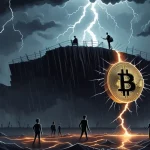
South Korean crypto giants are building fortresses with Bitcoin and Ethereum while the altcoin battlefield burns to ashes. High-net-worth investors, often called “whales” due to their massive holdings and market influence, are shunning speculative gambles for blue-chip assets with ironclad liquidity as market volatility rages on. Why the retreat, and what does it mean for the broader crypto space?
- Whale Defense: South Korean investors prioritize Bitcoin (83% hold/buy), Ethereum (80%), and XRP (70%) amid turbulent markets.
- Altcoin Rout: Smaller tokens like Katana (KAT) hit extreme oversold levels with RSI as low as 7.24, but recovery is far from certain.
- Market Divide: Capital consolidates in major coins while illiquid altcoins suffer brutal, localized selloffs.
Whale Strategy Unveiled: Safety in Blue-Chip Giants
Recent data out of South Korea, compiled as of Friday U.S. Eastern Time, reveals a market firmly in defensive mode. Wealthy investors are stacking their portfolios with established cryptocurrencies, showing a clear preference for Bitcoin (BTC/KRW) at an 83% hold/buy share, Ethereum (ETH/KRW) at 80%, and XRP (XRP/KRW) at 70%. Trailing behind are Solana (SOL/KRW) at 49% and Ethereum Classic (ETC/KRW) at 36%. This isn’t blind loyalty to big names—it’s a calculated move toward assets with deeper order books, minimal slippage, and mature derivatives markets, all of which are lifelines for managing risk when the crypto seas get stormy.
For those new to the game, order book depth is the volume of buy and sell orders waiting at different price points for an asset. A deep order book means high liquidity—your trade is less likely to jolt the price against you, a nasty effect called slippage. Derivatives like futures and options let investors hedge their bets or amplify gains with leverage, a must-have for whales juggling huge sums. In volatile times, Bitcoin and Ethereum shine as safe harbors. Bitcoin, the original cryptocurrency, often plays the role of digital gold, a store of value when uncertainty looms. Ethereum, powering a vast ecosystem of decentralized apps (dApps) and smart contracts, brings utility and resilience. Even XRP, despite regulatory headaches globally, holds appeal with its focus on fast cross-border payments and consistent trading volume, especially in Asian markets where Ripple has forged key partnerships.
South Korea’s whales aren’t just random big spenders. The country is a crypto trading powerhouse, fueled by a tech-savvy culture and historically high retail and institutional participation. From the 2017-2018 ICO frenzy to today’s strict KYC/AML regulations, South Korean market moves often send ripples across Asia and beyond. Their current flight to safety signals a broader unease—whether it’s global economic pressures or local crypto tax laws biting since 2021, these investors are battening down the hatches with assets they trust, as highlighted in reports on South Korean whales favoring Bitcoin and Ethereum while altcoins show oversold signals.
Altcoin Apocalypse: Oversold Signals and Liquidity Woes
While whales fortify their positions in blue-chip coins, smaller tokens are caught in a devastating storm. Technical scans from 12:00 p.m. Seoul time (11:00 p.m. ET Friday) show several altcoins in freefall, flashing extreme oversold signals on the Relative Strength Index (RSI). Think of RSI as a speedometer for market momentum—ranging from 0 to 100, a reading below 30 often means selling pressure has slammed the brakes too hard, hinting at a possible rebound. But don’t start buying just yet.
Katana (KAT/KRW), for instance, sits at a staggering RSI of 7.24 with a -2.14% price drop, while Sentient (SENT/KRW) clocks in at 17.82 RSI with a punishing -4.32% slide. Several other obscure tokens hover in similar misery, with RSI readings screaming capitulation. Yet, here’s the cold reality: in thinly traded, illiquid markets, an RSI of 7 might look like a garage sale bargain, but it’s often a trapdoor. Without a spike in trading volume or tightening bid-ask spreads to confirm a trend shift, these tokens could wallow in despair—or sink deeper.
Liquidity is the name of the game in times like these. Bitcoin and Ethereum offer deep pools to swim in, reducing the risk of wild price swings. Illiquid altcoins, on the other hand, are like shallow puddles—one big trade can send prices spiraling. For retail traders eyeing these beaten-down tokens, the lesson is clear: fundamentals trump hype. We’re not peddling false hope here—don’t FOMO into a “dip” that might just be a cliff.
Market Divide: Causes and Implications
The stark split between capital flooding into major coins and altcoins getting routed points to a maturing market phase. Analysts often call this a late-cycle dynamic, where growth slows, easy speculative gains dry up, and money consolidates into proven assets. South Korean whales, known for their sharp trading instincts, are reading the room and sticking to what works. But this defensive stance isn’t just about market mechanics—it reflects deeper anxieties. Global inflation, interest rate hikes, and regulatory crackdowns, from the U.S. SEC’s war on exchanges to South Korea’s own stringent rules, are pushing even the biggest players to minimize exposure.
Is this trend unique to South Korea, or a sign of global sentiment? While specific data on other regions isn’t at hand, trading volumes and whale activity in markets like the U.S. and Europe often mirror regional leaders. If South Korean behavior catches on, we could see Bitcoin’s market share climb even higher, cementing its dominance. Yet, this consolidation also exposes a dark side of crypto: not every project survives the grind, and smaller tokens often bear the brunt of risk aversion, sometimes deservedly so when they lack real utility or community support.
Counterpoints: Altcoins and the Innovation Edge
As much as I lean toward Bitcoin maximalism—cheering BTC as the ultimate decentralized store of value—it’s worth a reality check. Bitcoin isn’t perfect. Slow transaction speeds and high fees make it clunky for everyday use, and it’s not built for the complex smart contract ecosystems that power decentralized finance (DeFi) or non-fungible tokens (NFTs). This is where altcoins, even the battered ones, carve out their place. Ethereum, despite being a “blue-chip,” is fundamentally an altcoin that revolutionized blockchain with programmable contracts. Solana offers blistering speed for NFT marketplaces and gaming apps, while projects like Polkadot push interoperability—connecting disparate blockchains into a cohesive network.
Many smaller altcoins might be speculative fluff, doomed to fade in this purge, but dismissing the entire space ignores the experimentation driving crypto forward. South Korean whales may be bunkering with Bitcoin now, but capital often rotates back to riskier plays when sentiment shifts. The trick is separating wheat from chaff—look for projects with real use cases, active development, and liquidity, not just moonboy promises on social media. Innovation in niches Bitcoin doesn’t touch is why I can’t fully write off altcoins, even as I watch their current devastation with a grim nod.
What’s Next for Crypto Markets?
South Korean whales doubling down on Bitcoin and Ethereum raises big questions about the market’s trajectory. Are we headed for a permanent flight to quality, where only the biggest coins with ironclad liquidity survive? Or is this a temporary cleanse before risk appetite returns? Given South Korea’s outsized influence—its trading volumes often shape Asian markets and spill globally—this trend could signal a longer consolidation phase for crypto. Only projects with genuine utility or deep pockets might weather the storm, while meme coins and half-baked tokens get swept away.
On the flip side, oversold altcoins could be the canary in the coal mine, warning of structural flaws in how speculative assets are valued or traded. If liquidity doesn’t return, or if regulatory pressures tighten further, we might see more localized crashes before any recovery. For now, the whales’ pragmatism echoes the ethos of decentralization and freedom—control your risk, stick to what you trust. But it’s also a sobering reminder that crypto, for all its disruptive potential, dances to the same tune of fear and caution as traditional finance when push comes to shove.
Key Takeaways: Unpacking the South Korean Crypto Shift
- Why are South Korean whales betting big on Bitcoin, Ethereum, and XRP?
They’re seeking safety in volatile times, favoring coins with high liquidity, deep order books, and mature derivatives markets to manage risk with precision. - What do oversold RSI signals mean for struggling altcoins?
An RSI below 30 shows intense selling pressure, potentially hinting at a bounce, but in illiquid markets, recovery isn’t guaranteed without volume or trend confirmation. - Are altcoins doomed in this market divide?
Not entirely—while many face harsh selloffs now, some fill unique roles in DeFi, NFTs, or scalability, and could rebound if sentiment or liquidity improves. - Why is liquidity so critical during crypto volatility?
It dictates execution quality—deep liquidity in Bitcoin and Ethereum minimizes slippage, while illiquid altcoins risk exaggerated price swings and trading traps. - Does this trend validate Bitcoin maximalism over altcoin diversity?
Partially, as capital flows to BTC affirm its dominance, but altcoins like Ethereum and Solana still drive innovation in areas Bitcoin can’t, balancing the ecosystem.
Navigating this market means staying sharp and skeptical. South Korean whales are setting a precedent—build with the giants, avoid the chaos. As we champion effective accelerationism and a financial revolution through blockchain, let’s not ignore the brutal reality: not every dip is a deal, and not every project deserves to survive. Do the homework, prioritize fundamentals, and don’t get suckered by hype—whether it’s a $1 million Bitcoin fantasy or a desperate altcoin pleading for a lifeline.