SpaceX Acquires xAI: Elon Musk’s Bold Move and Its Impact on Crypto Innovation
 LTB
LTB SpaceX Acquires xAI: Elon Musk’s Orbital Gambit and Its Echoes in Crypto
Elon Musk has dropped another bombshell: SpaceX has officially acquired xAI, his AI startup, in a move that fuses cutting-edge rocketry with artificial intelligence. Announced through a memo on SpaceX’s website, this merger aims to tackle colossal challenges, like the unsustainable energy demands of AI, with space-based solutions. But beyond the sci-fi allure of orbital data centers, there’s a parallel here for the crypto world—disrupting entrenched systems and rethinking what’s possible, much like Bitcoin did for finance.
- SpaceX-xAI Merger: Combining rockets and AI for unprecedented innovation.
- Orbital Vision: Space-based data centers to power AI with solar energy.
- Investment Walls: SpaceX shares remain a fortress for the elite, akin to early crypto barriers.
- Crypto Parallels: Could space tech inspire solutions for blockchain energy woes?
The SpaceX-xAI Merger: A Tech Titan Emerges
Musk’s latest play is nothing short of a power move. By bringing xAI under SpaceX’s umbrella, he’s crafting what he describes as a groundbreaking force in technology. As he put it in his memo:
“SpaceX has acquired xAI to form the most ambitious, vertically-integrated innovation engine on (and off) Earth.”
The goal is clear—merge SpaceX’s mastery of rockets and satellites with xAI’s AI aspirations to create a synergy that could redefine entire industries. xAI, though still a fledgling compared to AI heavyweights like OpenAI and Anthropic, now has the backing of a company that’s already conquered low Earth orbit with Starlink. This isn’t just about building smarter chatbots; it’s about solving fundamental problems that Earth-bound tech struggles to address, particularly the energy crisis gripping AI development. For more on this bold acquisition, check out the details of SpaceX’s acquisition of xAI.
But let’s pump the brakes for a second. xAI isn’t yet in the same league as its competitors, and a merger doesn’t magically close that gap. Integrating two wildly different fields—space hardware and AI software—comes with cultural and technical clashes. Musk has a knack for audacious bets, but history (think Tesla production delays) shows he’s not immune to overpromising. This could be a game-changer, or it could be another shiny distraction in his sprawling empire. Only time will tell if this union delivers the knockout punch Musk envisions.
Orbital Data Centers: Sci-Fi Fix or Pipe Dream?
At the heart of Musk’s strategy is a problem that’s becoming impossible to ignore: AI’s voracious appetite for power. Modern artificial intelligence, especially systems like large language models that underpin tools like ChatGPT, demands insane computational resources. These are digital beasts, requiring thousands of servers running non-stop, consuming electricity on a scale that could power a small city. For context, training a single high-end AI model can emit as much carbon as five cars over their lifetimes. Earth’s data centers are hitting a wall—not just in energy supply but in environmental fallout and sheer physical space.
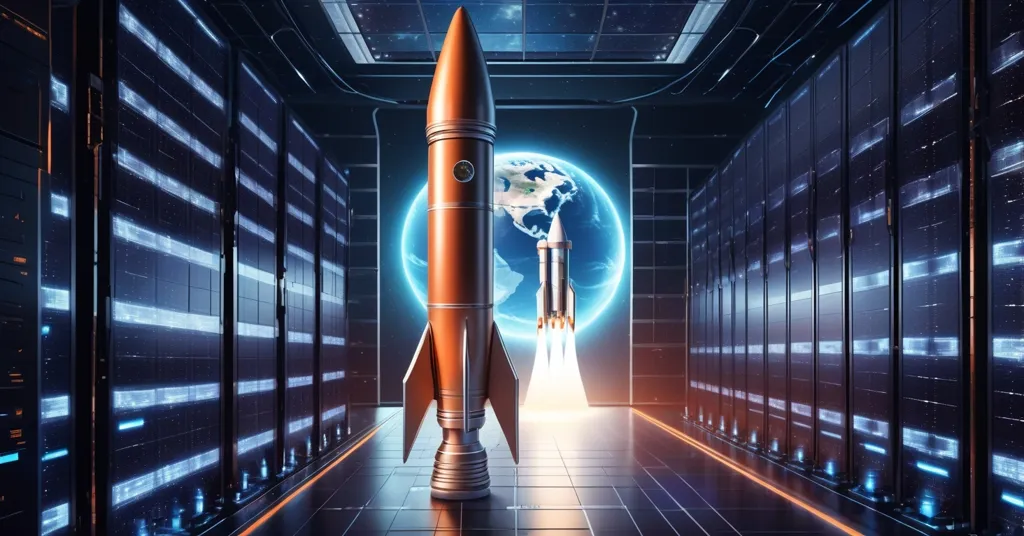
Musk’s fix? Take it to space. He proposes orbital data centers—server farms floating above Earth, powered by solar energy harvested directly in space, unhindered by clouds or nightfall. The vacuum of space also offers natural cooling, slashing another massive energy cost of terrestrial setups. It’s a concept straight out of a sci-fi flick, but with SpaceX’s track record of launching thousands of Starlink satellites, it’s not entirely far-fetched. Imagine “cloud computing” taken to its most literal extreme, with data processing literally in the clouds—or above them.
Yet, before we start booking server space on the next Falcon 9, let’s play devil’s advocate. Building and maintaining infrastructure in orbit is a logistical nightmare. The cost of launching hardware into space is still astronomical (pun intended), even with reusable rockets. Then there’s the risk of space debris—collisions could turn these data centers into high-tech confetti, adding to an already cluttered orbit. International regulations are another minefield; who governs servers in space? And what about latency issues for real-time applications? Musk might have the vision, but the practical hurdles could make this a decades-long slog rather than a quick win.
Still, the idea resonates with a problem crypto folks know all too well—energy consumption. Bitcoin mining, for instance, has long been slammed for its power usage, with critics pointing to rigs guzzling electricity like there’s no tomorrow. Could space-based solar tech one day power off-grid mining farms? It’s a stretch, but the overlap in challenges—sustainability, scalability, and defiance of centralized grids—makes Musk’s gambit worth watching for anyone in the blockchain space.
Investment Barriers: Locked Out of the Future
While the tech side of this merger sparks imagination, the financial reality check is a cold shower. Want a piece of SpaceX before it goes public? Good luck. In the U.S., you need to be an accredited investor—someone with an annual income over $200,000 for two years straight or a net worth above $1 million, excluding your home. Even if you qualify, SpaceX often blocks private share deals and restricts updates to its shareholder registry. It’s a walled garden, and the gatekeepers aren’t handing out keys.
For those desperate to get in, alternatives exist but aren’t exactly welcoming to the average person. Special-purpose vehicles (SPVs) pool investor money to buy stakes, but you’re looking at a minimum buy-in of $100,000 plus fees. Platforms like Hiive and Rainmaker Securities facilitate nonpublic stock trades, yet require six-figure sums to participate. Mutual funds and ETFs offer indirect exposure—Baron Partners Fund has over 25% of its $9.7 billion in SpaceX, while the Private Shares Fund and ARK Venture Fund also hold significant chunks, albeit with hefty fees. ETFs like XOVR and RONB provide slivers of access, but again, it’s a game for those with deep pockets.
This exclusivity isn’t new to tech revolutions. Remember Bitcoin’s early days? Back in 2010, getting in meant either mining with specialized hardware most couldn’t afford or buying coins on sketchy forums if you even knew they existed. The barriers—whether financial or technical—mirror what SpaceX represents now: a future that’s dazzling but out of reach for most. Musk did hint in 2024 at possibly rewarding loyal Tesla shareholders if SpaceX goes public, but that’s a vague carrot, not a concrete plan. For now, the ticket to ride this rocket is prohibitively costly, much like the early crypto gold rush was for the uninitiated.
Crypto Connections: Lessons for Decentralization
So, where does this leave the crypto community? At first glance, SpaceX and xAI merging might seem like a distant spectacle, unrelated to Bitcoin or blockchain tech. But dig deeper, and the parallels are striking. Musk’s push for orbital data centers isn’t just about AI—it’s a middle finger to terrestrial limitations, echoing the very ethos that birthed Bitcoin: a rejection of centralized control and a bet on radical innovation. If space can host AI infrastructure free from Earth’s grid constraints, could it do the same for decentralized networks?
Think about Bitcoin’s energy narrative. Mining operations face constant heat (no pun intended) for their electricity use, often relying on fossil fuels in regions with cheap power. Imagine solar-powered mining rigs in orbit, untethered from local grids or government oversight. Or consider blockchain nodes hosted in space—off-planet servers that could secure transactions beyond the reach of any nation-state’s kill switch. It’s a wild hypothetical, but in an era where governments crack down on crypto with alarming ease, such ideas might not be as crazy as they sound.
Bitcoin itself, as a core protocol, might not need this kind of sci-fi backup. Its strength lies in its simplicity and terrestrial decentralization—thousands of nodes worldwide already make it damn near unstoppable. But altcoins, layer-2 solutions, and DeFi platforms? They could benefit from space tech for niche use cases. Global decentralized finance networks, for instance, might leverage orbital relays to ensure uptime and security in ways Earth-based systems can’t. Even Ethereum’s sprawling ecosystem, with its gas fee woes and scalability challenges, might find inspiration in off-world infrastructure to process transactions or host dApps.
Let’s not get carried away, though. Space tech isn’t a silver bullet for crypto any more than it is for AI. The costs, risks, and timelines make it a long-term play at best. And Musk’s track record of ambitious timelines—Hyperloop, anyone?—suggests we should temper enthusiasm with skepticism. Still, there’s a historical echo here. When the internet emerged, skeptics scoffed at its feasibility; when Bitcoin launched, it was dismissed as nerd money. Musk’s orbital vision might face the same doubt, but revolutions often start with ideas that sound absurd. For crypto enthusiasts, this merger is a reminder that pushing boundaries—whether in code or the cosmos—requires audacity and a willingness to fail spectacularly.
Key Questions and Takeaways
- What is the SpaceX-xAI merger aiming to achieve?
It seeks to integrate space technology with AI innovation, creating a powerhouse under Elon Musk’s control to solve major challenges like AI’s energy demands through orbital infrastructure. - Why are orbital data centers proposed for AI energy needs?
Earth-based data centers can’t keep up with AI’s massive electricity consumption, so Musk envisions space-based servers powered by solar energy, free from terrestrial limits and with natural cooling benefits. - How does this relate to Bitcoin and cryptocurrency challenges?
The energy crisis in AI mirrors Bitcoin mining’s sustainability issues, raising questions about whether space-based solar tech could one day power off-grid mining or secure decentralized networks. - Could space tech support decentralized blockchain networks?
Potentially, by hosting nodes or transaction relays in orbit, immune to local censorship or grid failures, though costs and feasibility remain major hurdles for such applications. - What are the risks of Musk’s orbital ambitions?
Challenges include astronomical costs, space debris risks, regulatory uncertainty, and latency issues, all of which could delay or derail the practicality of orbital data centers. - How do investment barriers mirror crypto’s past?
SpaceX’s exclusivity for accredited investors echoes Bitcoin’s early days, when access required significant capital or technical know-how, showing how tech revolutions often start as elite playgrounds.
Musk’s latest venture is a testament to the power of thinking beyond limits, a mindset that resonates deeply with the crypto community. While Bitcoin doesn’t need satellites to remain the king of decentralization, the ethos behind SpaceX and xAI—challenging centralized systems, defying conventional wisdom—feels like a page from our playbook. Whether it’s data centers in orbit or a truly borderless financial system, the future belongs to those willing to push the impossible. Let’s keep dreaming big, in code and in the stars.