Square Auto-Enables Bitcoin Payments for 4M U.S. Merchants in Major Rollout
 LTB
LTB Bitcoin Payments Break Through: Square Auto-Enables BTC for 4 Million U.S. Merchants
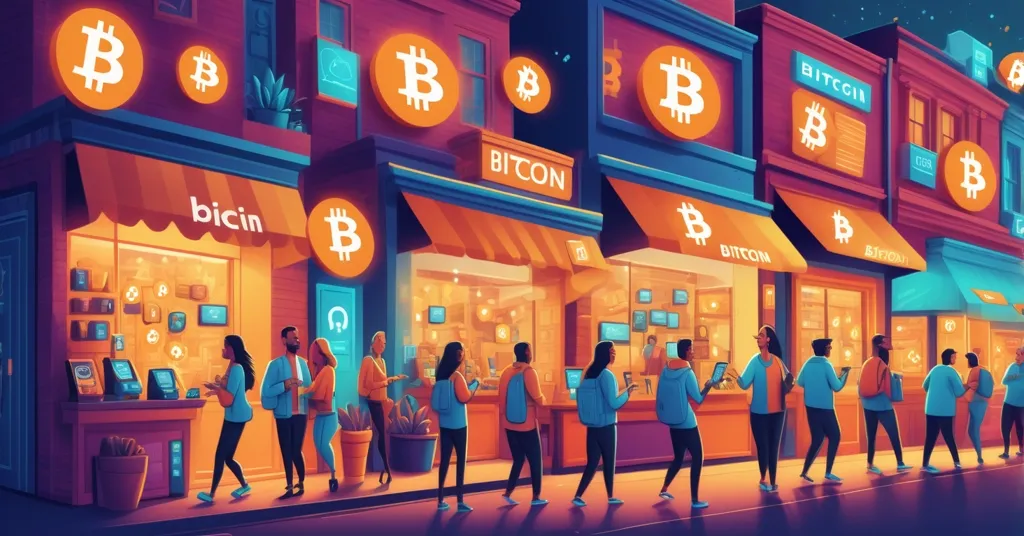
Bitcoin just smashed a major barrier to mainstream acceptance. Square, the payment processor under Jack Dorsey’s Block, has launched a phased rollout to automatically enable Bitcoin payments for around 4 million eligible U.S. merchants. Starting this week and completing by November 10, this move could redefine how small businesses interact with money in a digital age.
- Scale of Impact: Auto-enabling Bitcoin payments for 4 million U.S. merchants via Square’s point-of-sale systems by November 10.
- Transaction Perks: Automatic conversion to USD at checkout, near-instant settlement, and zero processing fees until 2026.
- Regional Gap: New York merchants are excluded due to strict state regulations.
How Square’s Bitcoin Integration Works
For the uninitiated, Square is a go-to payment platform for businesses ranging from local cafes to bustling retail shops. It provides point-of-sale systems—those little devices or apps that process card payments—and now, it’s embedding Bitcoin directly into that setup. Merchants can accept BTC as effortlessly as they take Visa or Mastercard, without needing a PhD in blockchain tech. As Block’s Bitcoin product lead Miles Suter announced, transactions are converted to U.S. dollars at checkout, shielding businesses from Bitcoin’s wild price swings. Settlements happen almost instantly—meaning funds hit the merchant’s account in a snap, unlike traditional bank transfers that can drag on for days.
“Starting today, eligible U.S. Square sellers will begin having Bitcoin payments automatically enabled. Sellers who accept Bitcoin will receive USD as default.” – Miles Suter, Block’s Bitcoin product lead.
Suter’s vision, echoed by Bitcoin advocate and Block co-founder Jack Dorsey, is to transform Bitcoin into “everyday money.” Dorsey, a relentless champion of decentralization, reshared the news to his vast audience, underscoring his belief that Bitcoin can upend traditional finance with a borderless, censorship-resistant alternative to fiat currency. Block isn’t just preaching this gospel—they’re backing it with action. Holding 8,883 BTC, they rank as the 14th-largest publicly traded Bitcoin holder per BitcoinTreasuries.net, a clear signal they’ve got serious skin in this game.
A Deeper Look at Merchant Benefits
This isn’t a sudden experiment. Square laid the groundwork last November by introducing Bitcoin payments to all sellers after earlier testing phases. Now, with auto-activation, the barrier to entry is practically nonexistent. Zero processing fees until 2026 is a hell of a deal for small businesses already hammered by credit card charges—think 2-3% per swipe gone, at least for Bitcoin transactions. Near-instant settlement? That’s a game-changer for cash flow, especially for merchants who can’t afford to wait days for funds to clear. No more holding your breath for the bank to play nice.
Merchants aren’t locked in, either. They can opt out or adjust settings if Bitcoin feels like a leap too far. For those who dive in, this could be a way to tap into a growing crypto-savvy customer base while sidestepping the middlemen of traditional finance. It’s a slice of the decentralized ethos Bitcoin was built on—cutting out banks and gatekeepers, giving businesses more control over their money. In fact, this bold step by Square to enable Bitcoin payments for millions of U.S. sellers might just be the push needed for wider adoption.
Regulatory Roadblocks and Merchant Hesitations
But let’s not pretend it’s smooth sailing. New York merchants are left out in the cold, and it’s no mystery why. The state’s BitLicense, a special permit for crypto businesses introduced in 2015, is a bureaucratic nightmare. Critically slammed for its cost and complexity, it’s driven countless blockchain firms out of the state and likely poses a compliance headache for Square. This exclusion raises a bigger question: if one of the U.S.’s financial hubs can’t play ball, will other states or federal rules throw up similar walls down the line?
Even beyond regulation, merchants have reasons to pause. Sure, USD conversion dodges Bitcoin’s volatility, but what about the grunt work of explaining crypto to baffled customers? Picture a diner owner breaking down Bitcoin wallets to a puzzled regular over a $5 coffee—good luck with that checkout line. Then there’s the specter of regulatory scrutiny. While New York’s the outlier now, who’s to say other jurisdictions won’t start sniffing around businesses dabbling in decentralized currencies? And let’s be real—Bitcoin’s rep still carries baggage from scams, hacks, and dark web lore. Some merchants might worry about guilt by association.
The Bigger Picture: Bitcoin as Everyday Currency?
Zooming out, Square’s rollout arrives at a pivotal moment. Institutional interest in Bitcoin is climbing, with heavyweights like MicroStrategy stacking BTC as a treasury asset to hedge against inflation and economic uncertainty. Distrust in centralized systems is pushing businesses and consumers toward alternatives, and Square’s integration could be the spark that turns Bitcoin from a speculative “digital gold” into a practical tool for commerce. If 4 million merchants start accepting BTC—even passively—it could create a snowball effect: more acceptance fuels more usage, which fuels more demand.
Block’s history with Bitcoin adds weight to this push. Since enabling BTC purchases on their Cash App in 2018, they’ve doubled down with initiatives like open-source hardware wallets and Bitcoin mining projects. This isn’t a PR stunt—it’s a calculated strategy from a company that sees Bitcoin as the future of money. With Jack Dorsey at the helm, a vocal maximalist who believes BTC can empower individuals over institutions, Square’s move feels like a direct challenge to the financial status quo.
Playing Devil’s Advocate: The Hurdles Ahead
Now, let’s tear into the other side. Bitcoin as “everyday money” is a sexy pitch, but it’s not without cracks. First, network transaction fees can spike during peak demand—think $20 to send $10 during the 2021 bull run insanity. That makes small purchases a nonstarter unless merchants and customers use the Lightning Network, a secondary layer on Bitcoin that Square supports for faster, cheaper transactions. It’s like a digital express lane, but adoption isn’t universal, and the tech can still trip up the average user.
Then there’s the environmental elephant in the room. Bitcoin mining’s energy consumption draws relentless flak, often painted as a climate disaster despite shifts toward renewables in places like Texas or El Salvador. Merchants accepting BTC might catch heat from eco-conscious customers or activists, even if they’re just using Square’s system. Public perception lags behind the reality, and that’s a PR battle Bitcoin hasn’t fully won.
Consumer readiness is another mess. How many folks walking into a local bakery even know how to pay with Bitcoin, let alone want to? Setting up a wallet, securing private keys, and navigating apps is a steep learning curve for most. Merchants might enable BTC payments only to find crickets—nobody’s using it. Square’s made it dead simple on the business end, but the customer side remains a chaotic frontier.
Industry Ripple Effects and Crypto Comparisons
Square’s gamble could light a fire under competitors. PayPal already dabbles in crypto payments, and Stripe has flirted with blockchain tech. If merchants flock to Square for zero-fee Bitcoin transactions, it might force a fintech arms race—everyone scrambling to offer crypto integrations or risk losing market share. That’s a win for adoption, even if it’s messy getting there.
Bitcoin isn’t the only player in town, either. While I lean toward maximalist views, it’s worth noting that stablecoins like USDT or USDC, pegged to the dollar, might tempt merchants wary of volatility more than BTC does, even with Square’s conversion safeguard. Ethereum’s smart contracts also open doors for payment innovations Bitcoin can’t match natively. Each has a niche—Bitcoin as a decentralized store of value and medium of exchange, stablecoins for stability, Ethereum for programmability. Square’s focus on BTC is a bold statement, but the broader crypto payment landscape is far from settled.
Key Takeaways and Questions on Square’s Bitcoin Rollout
- How does Square’s Bitcoin integration function for U.S. merchants?
Square is auto-enabling Bitcoin payments for 4 million eligible U.S. merchants through its point-of-sale systems, with a rollout finishing by November 10. BTC transactions convert to USD at checkout to avoid price swings, settle near-instantly for quick funds, and carry zero processing fees until 2026. - Why are New York merchants excluded from this Bitcoin rollout?
New York’s stringent crypto regulations, notably the BitLicense—a costly, complex permit for blockchain businesses—likely create compliance issues for Square, blocking merchants in the state from participating at launch. - What benefits do small businesses gain from accepting Bitcoin via Square?
Merchants enjoy zero processing fees until 2026, faster settlements than traditional methods, and access to a crypto-friendly customer base, all while avoiding Bitcoin volatility through automatic USD conversion. - What challenges or risks do merchants face with Bitcoin payments?
Risks include customer confusion over using Bitcoin, potential future regulatory crackdowns, technical integration hiccups, and backlash over Bitcoin’s environmental or reputational baggage, despite protections like USD conversion. - How does Block’s Bitcoin holding reflect their strategy?
With 8,883 BTC, Block ranks as a top corporate holder, showing unshakable faith in Bitcoin’s future. This aligns with their push to normalize BTC as everyday money through platforms like Square. - Could Square’s move drive mainstream Bitcoin adoption?
It has potential to normalize Bitcoin by embedding it in millions of businesses, possibly sparking a cycle of wider acceptance and usage. Yet, consumer readiness, network fees, and regulatory uncertainty could dampen the pace of impact.
Stepping back, Square’s bold play is a middle finger to the financial old guard. It tests whether Bitcoin can graduate from a hodler’s dream to a real-world currency for everyday buys. With 4 million merchants as the proving ground, Jack Dorsey’s vision of a decentralized future hangs in the balance. Sure, the road’s littered with potholes—regulation, adoption gaps, and Bitcoin’s own quirks won’t vanish overnight. But if this ignites even a flicker of the momentum Block envisions, we might be watching the first sparks of a financial upheaval. In a system ripe for disruption, where freedom and privacy are worth fighting for, that’s a damn exciting prospect to witness.