Stablecoin Showdown: Banks Battle White House Over Financial Risks
 LTB
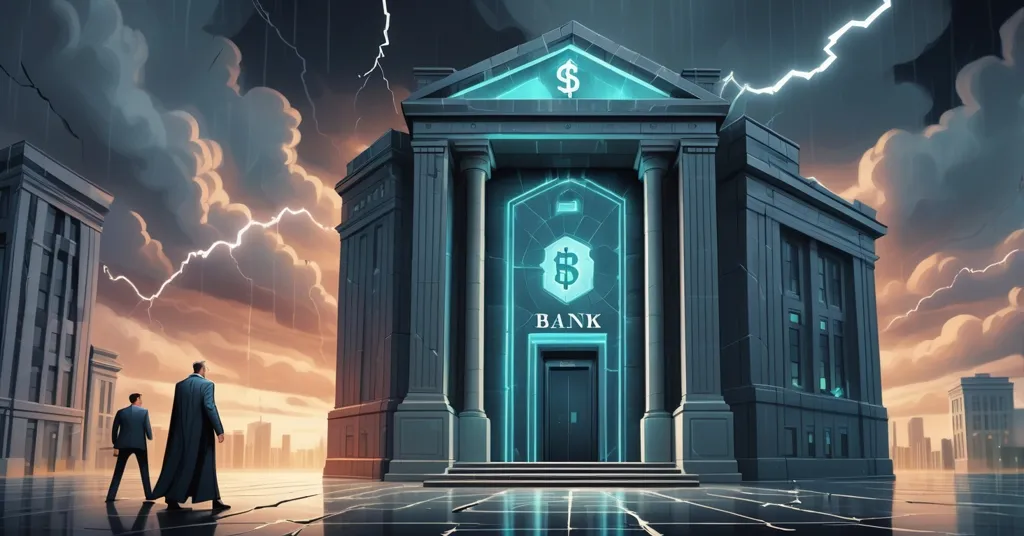
LTB Banks and White House Clash Over Stablecoin Risks: A Financial Showdown
A heated battle is brewing between traditional banking heavyweights and the U.S. government over the explosive growth of stablecoins—digital tokens tied to fiat currencies like the dollar. While the White House brushes off concerns about these assets disrupting the financial system, banks are raising hell, warning of serious threats to stability, especially for smaller lenders. With stablecoins already processing tens of trillions in transactions yearly, this isn’t just a niche spat; it’s a fight over the future of money itself.
- White House Stance: A report claims banning stablecoin yields would barely nudge bank lending, up just $2.1 billion in a $12 trillion market.
- Banks’ Alarm: Financial institutions warn of deposit erosion, liquidity crises, and long-term systemic dangers from unregulated stablecoins.
- Crypto’s Defense: Advocates like Coinbase argue stablecoins can benefit users and banks alike if clear rules are set.
Stablecoins 101: Digital Dollars in a Nutshell
For the uninitiated, stablecoins are a unique breed of cryptocurrency designed to avoid the wild price swings of assets like Bitcoin. Pegged to stable assets—often the U.S. dollar—they aim to hold a steady value, making them a go-to for payments, trading, and even earning yields in the digital economy. Think of them as digital cash you can send globally in seconds, without the volatility of most crypto. Their market cap has skyrocketed from $5 billion in 2019 to over $150 billion today, with players like Tether (USDT) handling over $50 billion in daily transactions, rivaling some traditional payment giants. But unlike bank deposits, which are often insured up to $250,000 by the FDIC in the U.S., most stablecoins lack such safety nets, raising eyebrows when things go wrong.
White House Downplays the Threat
The U.S. government recently dropped a report that’s got banks fuming. Their take? Stablecoins aren’t the monster under the bed that financial institutions claim. If yields—those interest-like rewards users earn for holding stablecoins—were banned, bank lending would creep up by a measly $2.1 billion, a microscopic 0.02% of the $12 trillion U.S. loan market. Community banks, often seen as the most vulnerable, would gain just $500 million. On the flip side, the report notes that such a ban would cost stablecoin users around $800 million annually in lost earnings. The message is loud and clear: don’t panic, the banking system isn’t on the brink of collapse over this. It’s a surprisingly chill stance from policymakers, especially given past crypto calamities that have rattled markets. For more on this clash, check out the detailed coverage on how banks are pushing back against the White House’s assessment of stablecoin risks.
Banks on the Brink: A Cry for Caution
Traditional banks, from Wall Street titans to small-town lenders, aren’t swallowing the White House’s calm assessment. They’re sounding the alarm over what they see as a ticking time bomb for financial stability. Their biggest fear is deposit outflows—money draining from bank accounts as users chase better returns with stablecoins. For smaller community banks, which rely heavily on local deposits to fund loans for homes and businesses, even a 10% drop could be catastrophic. Picture a rural bank in the Midwest with $100 million in deposits losing a chunk to digital alternatives; that could mean dozens of small business loans denied, stalling local growth. That’s the nightmare keeping bankers up at night.
Bigger banks aren’t off the hook either. While they’ve got deeper pockets and more funding options, a widespread shift to stablecoins could force them into expensive borrowing or asset fire sales to maintain liquidity—basically, keeping enough cash on hand to cover withdrawals. The result? Higher interest rates for everyone, hitting local borrowers hardest. Banks also point out a glaring gap: oversight. Unlike their heavily regulated industry, stablecoins often dodge reserve requirements (cash backups for withdrawals) and stress tests (checks for surviving market crashes). This regulatory black hole could amplify chaos if a major stablecoin implodes, like TerraUSD did in 2022, when its peg to the dollar shattered, erasing billions in value overnight.
To counter this, banks are pushing hard for strict rules. They want stablecoin issuers to hold full reserves, pass rigorous stress tests, and report holdings transparently to track risks. Without these guardrails, they argue, we’re gambling with the entire financial system. It’s not hard to see their point—when uninsured digital assets rival insured deposits, a single failure could send shockwaves far beyond crypto Twitter.
Crypto’s Counterpunch: Opportunity in Disguise
The crypto camp isn’t backing down in the face of banking’s doomsday warnings. Coinbase’s Chief Policy Officer, Faryar Shirzad, has fired back with a perspective that flips the script.
Stablecoins allow users to earn rewards safely and offer banks new opportunities if the rules are clear.
Shirzad argues that stablecoins aren’t just a threat—they’re a potential lifeline. With proper stablecoin regulation, banks could tap into this tech for new revenue streams, like integrating digital payments or offering hybrid products. Users, meanwhile, get yields often juicier than what traditional savings accounts cough up. It’s a bold pitch, almost a plot twist: what if stablecoins aren’t the villain but the unlikely hero for a creaky financial system? Look at Circle, issuer of USDC, which publishes regular audits of its reserves to build trust—proof that not all stablecoins operate in the shadows. Still, crypto advocates can’t ignore the scars of past failures. TerraUSD’s collapse showed how quickly “stable” can turn to rubble, and without ironclad rules, banks have every right to be skeptical.
Regulatory Crossroads: Lawmakers Step In
This showdown isn’t just between banks and crypto—it’s playing out under the watchful eye of Capitol Hill. Senators Thom Tillis, Bill Hagerty, and Cynthia Lummis, known for their interest in crypto policy, pushed for the White House report to inform broader discussions on stablecoin regulation. Their involvement hints at a bipartisan consensus that the clash between traditional finance and decentralized tech isn’t a sideshow; it’s center stage for the future of money. Regulatory debates around stablecoins aren’t new—back in 2021, the President’s Working Group on Financial Markets urged bank-like oversight for these assets, a call that’s echoed in today’s demands. But what might a middle ground look like? Some propose treating stablecoin issuers as money transmitters under FinCEN, a lighter touch that preserves innovation but ensures accountability. Others push for full banking charters, which would slap on heavier compliance but level the playing field with traditional lenders. For crypto users, lighter rules mean flexibility; for banks, stricter ones mean safety. Finding the sweet spot won’t be easy.
The Bigger Picture: Ideology and Disruption
As someone leaning toward Bitcoin maximalism, I see stablecoins as a double-edged sword. Many Bitcoin purists view them as a compromise—tied to fiat, they’re not the pure, sovereign store of value that BTC represents. Yet, they’re undeniably greasing the wheels of adoption, making crypto less intimidating for everyday use. Bitcoin itself stands as the ultimate outsider in this debate, neither pegged to dollars nor reliant on banking yields. It’s the wildcard neither banks nor stablecoin shills fully account for—a radical alternative that could outlast both if fiat systems falter. That said, not every blockchain needs to mimic Bitcoin’s ethos. Ethereum and others fill niches BTC doesn’t touch, and stablecoins are part of that messy, vibrant ecosystem driving a financial revolution. As champions of decentralization, privacy, and freedom, we’re all for disrupting the status quo, but let’s not kid ourselves—there are landmines aplenty on this road.
I’m also a firm believer in effective accelerationism, pushing tech to its limits to solve big problems fast. Stablecoins fit that vision, potentially speeding up global payments and financial inclusion. But acceleration without guardrails is a recipe for disaster. Banks aren’t wrong to fret about their bottom line, and we’d be reckless to dismiss their warnings as mere turf protection. This isn’t about hyping some altcoin or tossing out garbage price predictions—we’re here to cut through the noise and foster responsible adoption. Scammers and shameless shills peddling stablecoin fantasies can take a hike. The hard truth is that while stablecoins could reshape finance, they could also destabilize it if mishandled.
Key Questions and Takeaways on Stablecoins and Banking Risks
- What core risks do stablecoins pose to traditional banking systems?
They can drain bank deposits as users seek higher yields, creating liquidity shortages, especially for smaller banks. This risks slashing lending and hiking local borrowing costs, while uninsured stablecoin holdings could trigger systemic crises if issuers collapse. - Why does the White House downplay stablecoin threats to banks?
Their report estimates banning stablecoin yields would boost bank lending by just $2.1 billion, a tiny 0.02% of the $12 trillion U.S. loan market, suggesting the impact on banking stability is negligible. - How are smaller banks uniquely vulnerable in this debate?
Community banks depend on local deposits for lending; losing even a small slice to stablecoins could cripple their ability to fund mortgages or small businesses, hammering local economies. - What stablecoin regulations are banks demanding to curb risks?
They’re pushing for mandatory reserves to back withdrawals, stress tests to survive market crashes, and transparent reporting of holdings to prevent unchecked systemic dangers. - Can stablecoins and banks coexist in today’s financial landscape?
Crypto leaders like Coinbase’s Faryar Shirzad say yes—with clear rules, banks could harness stablecoin tech for new revenue while users enjoy safe yields, turning rivalry into partnership. - Where does Bitcoin fit in this stablecoin vs. banks showdown?
Bitcoin remains the ultimate outsider, a decentralized store of value untied to fiat or banking yields, offering a radical alternative that neither side fully reckons with in this clash.
The stablecoin saga is a microcosm of the broader war between old finance and new tech, and its resolution could set the tone for how decentralized systems mesh with—or tear down—traditional structures. Banks are justified in worrying about their survival, but clinging to the past won’t save them; adaptation will. Crypto, on the other hand, must prove it’s not just hawking flashy gimmicks but crafting resilient, trustworthy alternatives. As advocates for shaking up the system, we’re rooting for disruption, but not at the cost of a fiery crash. We’ll be keeping a close eye on lawmakers as they draw battle lines—the future of money hangs in the balance, and it’s up to all of us, from Bitcoin diehards to cautious regulators, to ensure it doesn’t blow up in our faces.