Stablecoins Dominate Africa: Outpacing Remittances and Aid, Ex-UN Official Confirms
 LTB
LTB Stablecoins Surge in Africa: Outpacing Remittances and Aid, Ex-UN Official Reveals
A financial tidal wave is sweeping across Africa, powered by stablecoins—cryptocurrencies pegged to assets like the US dollar. These digital tools are transforming how money moves, outstripping traditional remittances and aid in both efficiency and reach, as a former UN official emphasized at a global summit. With economic hardship as a backdrop, this shift signals a bold step toward decentralized finance, though not without significant hurdles.
- Stablecoins represent 43% of crypto transactions in sub-Saharan Africa.
- Nigeria recorded nearly $22 billion in stablecoin activity over 12 months.
- Inflation, costly remittances, and regulatory uncertainty shape this complex boom.
Why Stablecoins Are Winning Hearts and Wallets in Africa
In sub-Saharan Africa, economic realities bite hard. Inflation has spiked beyond 20% in 12 to 15 countries since the pandemic, eroding the value of local currencies overnight. For millions in nations like Nigeria, Egypt, Ethiopia, and South Africa, accessing US dollars through traditional channels is often a pipe dream due to strict capital controls and banking barriers. Enter stablecoins: digital currencies tied to stable assets, typically the US dollar, designed to hold steady value unlike volatile cryptocurrencies such as Bitcoin. Think of them as a digital prepaid gift card—loaded with dollar value, usable anywhere, no bank required.
The numbers are staggering. In Nigeria, a crypto juggernaut on the continent, stablecoin transactions hit nearly $22 billion between mid-2022 and mid-2023, according to data from Chainalysis. Across the broader sub-Saharan region, these dollar-linked assets account for 43% of all cryptocurrency volume, overshadowing speculative coins in practical, everyday use. For the unbanked—hundreds of millions without access to traditional banking services—stablecoins are more than a novelty. They’re a safety net for payroll, savings, and sending money home, offering stability in a sea of economic chaos, as highlighted by insights from a former UN official on stablecoin growth in Africa.
Remittances, a lifeline for many African families, highlight the stark contrast between old and new systems. Vera Songwe, a former UN under-secretary-general, drove this point home during a panel at the World Economic Forum in Davos, Switzerland.
Sending $100 through traditional money transfer services in Africa often costs around $6, making cross-border payments both slow and costly.
That $6 fee per $100 is a gut punch for those scraping by, and the days-long wait for funds to clear only adds insult to injury. Stablecoins flip the script, cutting costs to mere cents and slashing transfer times to minutes via blockchain technology, which eliminates greedy middlemen. Picture a Nigerian migrant in London sending $200 home to Lagos. With legacy systems, $12 vanishes in fees, and the family waits days. With stablecoins, it’s pennies and near-instant. This isn’t just efficiency—it’s survival for communities where remittances often dwarf foreign aid as a primary income source.
Mobile Money: The Gateway to Crypto Adoption
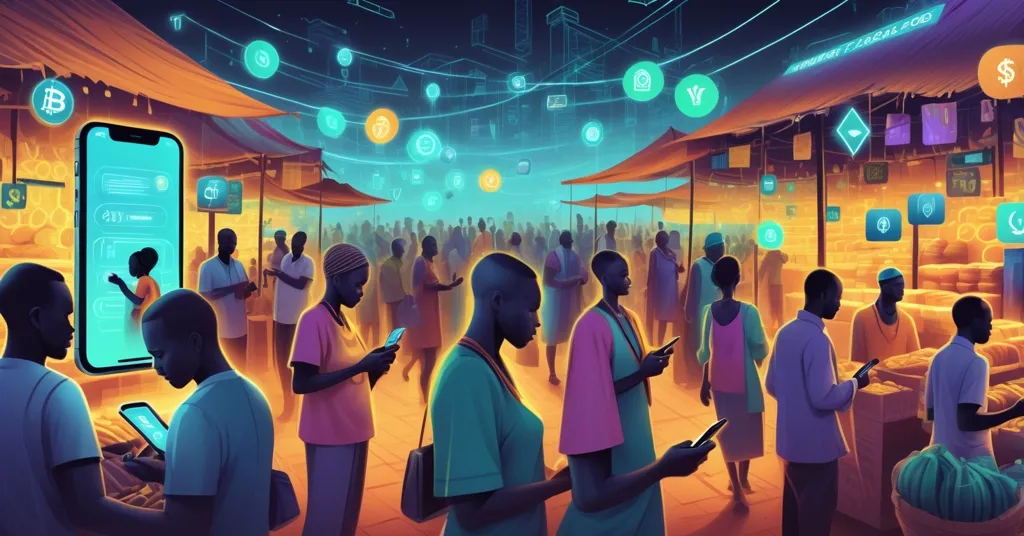
The backbone of this revolution isn’t some fancy tech lab; it’s the humble mobile phone. Mobile money platforms like Kenya’s M-Pesa have already reshaped African finance, enabling the unbanked to send, receive, and store money using basic handsets. With smartphones increasingly common even in rural areas, these networks are now a bridge to stablecoin adoption. A farmer in remote Ethiopia or a trader in bustling Lagos can accept payments in stablecoins through a mobile wallet, hold them as a hedge against inflation, or convert to local currency when needed. This is decentralized finance, or DeFi—financial systems on blockchain that sidestep banks and traditional gatekeepers—at its most practical.
Yet, integration isn’t seamless. Converting stablecoins to cash via mobile money often involves small fees or limited merchant acceptance, and not all platforms support direct crypto transactions yet. Still, the synergy between mobile money and stablecoins is undeniable, accelerating financial inclusion at a pace traditional banks could only dream of. It’s raw, grassroots empowerment, handing control to individuals over institutions, transaction by transaction.
Beyond Remittances: Stablecoins in Trade and Aid
Stablecoins aren’t just remittance tools; their utility stretches further. In cross-border trade, African businesses use them for settlements, dodging the high fees and delays of international bank transfers. Microfinance initiatives are also experimenting with stablecoins to disburse small loans to entrepreneurs without bank accounts. Even humanitarian aid is getting a blockchain makeover—organizations like the World Food Programme have piloted digital payments in crisis zones, ensuring aid reaches recipients directly without siphoning by corrupt intermediaries. These use cases underscore stablecoins as versatile tools filling gaps that legacy systems have ignored for decades.
The Regulatory Tightrope: Promise Meets Peril
As adoption skyrockets, African governments are scrambling to respond, and their approaches couldn’t be more varied. Ghana recently enacted a Virtual Asset Service Providers law to legitimize and regulate crypto trading. On January 13, Nigeria took a firmer stance, requiring crypto platforms to tie transactions to tax ID numbers for tracking and formalization—a move to curb illicit activity while tapping into taxable revenue. Meanwhile, South Africa’s central bank is waving red flags, cautioning that stablecoins could threaten financial stability if unchecked. Other nations, like Zimbabwe, have historically imposed outright crypto bans, though attitudes are slowly softening.
Their wariness isn’t baseless. A stablecoin collapse could wreak havoc on fragile economies. Take TerraUSD as a grim lesson: in 2022, this algorithmic stablecoin lost its dollar peg due to flawed design, obliterating billions in value overnight and leaving investors burned. Closer to home, Tether (USDT), a dominant stablecoin in Africa, faces ongoing scrutiny over whether its claimed dollar reserves truly back every token issued. If a major player like Tether falters, the fallout for Nigerian traders or Ethiopian savers holding USDT as a lifeline could be catastrophic.
Flipping the Script: Are Regulators Overreacting?
Now, let’s challenge the naysayers. Sure, South Africa’s central bank has valid concerns about stability, but let’s be real—traditional finance isn’t exactly a bastion of reliability. The 2008 global crisis, sparked by reckless banking, devastated millions, and local African banks have collapsed under corruption or mismanagement countless times. Why smother innovation with red tape when the old guard has proven just as shaky? Stablecoins are stepping into a void that governments and banks have failed to fill for generations. The unbanked aren’t waiting for polished solutions—they’re grabbing digital tools now, risks be damned. Isn’t that the essence of decentralization? Power to the people, not the suits.
That said, we can’t be naive. Trust in mobile platforms and stablecoin systems is far from universal, and scammers are salivating at the opportunity. Fake apps, phishing schemes, and sham tokens prey on the uninformed, especially in regions where digital literacy lags. Truth is, not all stablecoins are built equal—some lack transparency, hiding whether they’re truly backed by reserves. Without robust safeguards and user education, this revolutionary tech risks becoming a fraudster’s paradise. Africa’s path to mainstream stablecoin integration demands regulation that protects without strangling. It’s a tightrope, and slipping either way spells trouble.
Bitcoin’s Place in the Puzzle: A Maximalist View
As someone who leans toward Bitcoin maximalism, I see stablecoins as a necessary detour, not the destination. Bitcoin, with its decentralized purity, remains the ultimate middle finger to centralized control, but its price swings make it impractical for remittances or daily transactions in Africa. A Lagos vendor can’t accept BTC if its value drops 10% by tomorrow. Stablecoins fill this niche—mundane, yes, but vital. Ethereum and other protocols also play their part, often hosting the infrastructure for stablecoins like USDC. This isn’t a betrayal of Bitcoin’s ethos; it’s a pragmatic ecosystem where different tools tackle different problems. Still, let’s not kid ourselves into thinking stablecoins are the endgame. They’re a stepping stone, often tethered to the very fiat systems Bitcoin seeks to disrupt.
Accelerating Access, Not Recklessness
Africa’s stablecoin surge embodies effective accelerationism—the drive to rapidly deploy solutions to systemic failures like financial exclusion. We must push these tools forward, iterating fast to empower the disenfranchised. But speed can’t mean sloppiness. Scams and collapses aren’t just risks; they’re active threats. Take the countless “get-rich-quick” crypto schemes targeting African users with promises of 100% returns—pure garbage that taints legitimate innovation. User education is non-negotiable. Spotting red flags like unverified apps or unrealistic guarantees must become second nature. Acceleration works only if we protect the very people we aim to liberate.
Key Takeaways and Questions on Stablecoins in Africa
- Why are stablecoins booming across African nations?
They counter high inflation, unstable local currencies, and scarce US dollar access, acting as a reliable option for remittances and daily needs. - How do stablecoins compare to Africa’s traditional remittance systems?
They’re far cheaper and faster, dropping costs from $6 per $100 to cents and cutting wait times from days to minutes. - What’s the extent of stablecoin use in sub-Saharan Africa?
They make up 43% of crypto transactions, with Nigeria alone handling $22 billion in stablecoin volume from mid-2022 to mid-2023. - How are African governments tackling this crypto rise?
Responses range from Ghana’s new regulatory laws and Nigeria’s tax ID tracking to South Africa’s warnings of financial stability risks. - Why are mobile money networks crucial to stablecoin growth?
Platforms like M-Pesa enable the unbanked to access digital finance via smartphones, bridging the gap to stablecoin transactions. - What hurdles could stall stablecoin adoption in Africa?
Regulatory gaps, trust issues with mobile services, scam proliferation, and potential stablecoin failures like TerraUSD pose serious challenges.
Africa’s embrace of stablecoins is a raw, unfiltered push against a financial order that’s long excluded millions. It’s messy, fraught with danger, and met with skepticism, yet it pulses with the promise of liberation. The balance between runaway innovation and necessary oversight will define this journey. Will stablecoins cement themselves as the continent’s financial future, or fizzle as a risky gamble? Only time—and the blockchain—will reveal the answer.