Supreme Court Backs SEC and FCC, Tightening Crypto Regulatory Pressure
 LTB
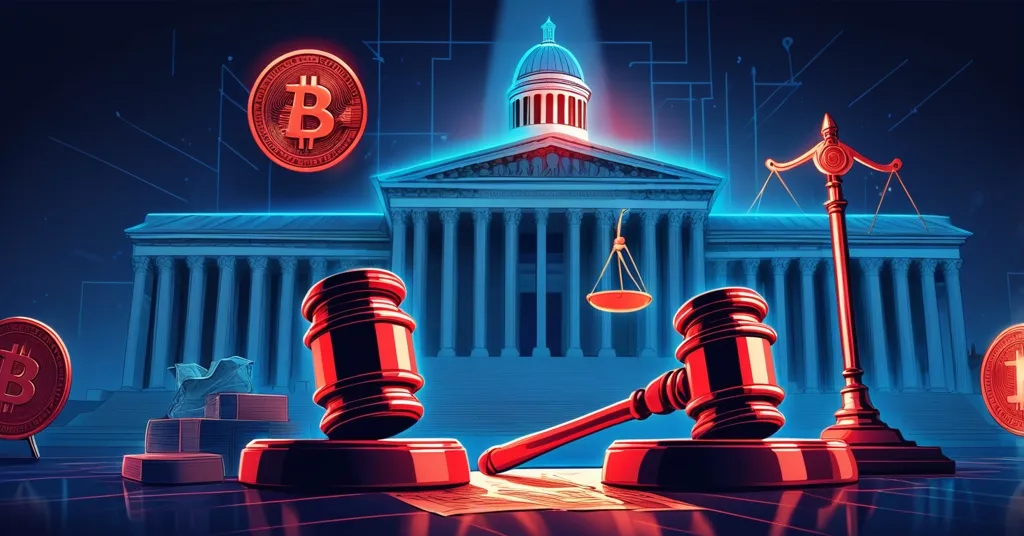
LTB US Supreme Court backs FCC and SEC in rulings that strengthen regulatory enforcement
The US Supreme Court has handed the FCC and SEC a pair of important wins, making it harder for companies to swat away enforcement actions with clever legal gymnastics. For regulated industries, that means compliance just got more expensive, and for crypto, it’s another reminder that the SEC is not going anywhere anytime soon.
- Supreme Court backs FCC and SEC enforcement powers
- Challenges to agency authority get tougher
- Crypto firms face more regulatory pressure
- Fraudsters lose one more excuse, but overreach remains a real risk
The rulings reinforce the ability of federal agencies to enforce the rules they’re tasked with policing. That sounds boring until you remember what these agencies actually do: they can fine companies, bring cases, shape disclosure standards, and decide how aggressively the government can push back when markets get messy. In other words, this is not a minor procedural footnote — it’s the machinery of enforcement itself.
The Federal Communications Commission (FCC) oversees communications networks, spectrum use, broadcast licensing, and parts of the infrastructure that keeps digital life connected. The Securities and Exchange Commission (SEC) is the US market watchdog charged with investor protection, securities disclosure, and enforcement in capital markets. One regulates the pipes and signals of modern communication; the other keeps watch over the money game and all the characters trying to bend the rules.
What the Supreme Court just did
The practical effect of the Court’s rulings is straightforward: it is now harder to knock down agency enforcement on the grounds that regulators simply went too far or lacked authority to act. That doesn’t mean agencies have limitless power. They still have to operate within the law. But the Court is not handing out free passes to companies hoping a judge will do the heavy lifting for them.
That distinction matters. In the US, a lot of regulatory battles are really fights over who gets the final say: Congress, agencies, or courts. When the Supreme Court backs the FCC and SEC, it tilts the balance toward agencies continuing to enforce their interpretation of the law unless Congress has clearly said otherwise. For companies, that means fewer easy outs and a much steeper hill when trying to shut down enforcement actions.
Why the SEC ruling matters for crypto
The SEC is the agency crypto loves to hate, and for good reason. Its approach to digital assets has often been inconsistent, slow, and at times flat-out hostile. The agency has relied heavily on enforcement instead of giving the market clear, modern rules. That has created a legal swamp where token issuers, exchanges, custodians, and DeFi platforms are left guessing what might trigger the next lawsuit.
With this new legal backing, the SEC can keep pressing its case with more confidence. That does not automatically mean every token project is toast, but it does mean the agency’s hand is stronger when it decides to go after platforms it believes are operating outside securities laws. If you run a crypto business, “we didn’t think that counted as a security” is not a magic shield. More often than not, it’s the kind of argument that gets tested the hard way in court.
For bitcoin specifically, the picture is mixed. Bitcoin itself doesn’t need regulatory permission to exist, and that remains one of its greatest strengths. But the surrounding ecosystem — exchanges, ETF issuers, custodians, payment firms, brokerages, and public companies holding BTC on balance sheets — absolutely lives inside the traditional financial system. The stronger the SEC’s enforcement posture, the more that ecosystem tends to favor large, compliant, institution-friendly players.
That can bring real benefits. More legitimacy. More capital. More product access for mainstream users. But there’s a tradeoff: the market can become more centralized, more permissioned, and more hostile to smaller builders who can’t afford a legal department the size of a small city.
Why some people will cheer this
Let’s not pretend all regulation is evil just because it annoys the people building in the space. The crypto industry has been crawling with scammers, fake yield schemes, rug pulls, offshore clown shows, and “decentralized” platforms run like personal piggy banks. Some of the loudest voices preaching freedom were only really free to steal your money faster.
When regulators crack down on outright fraud, that is not tyranny. That is the basic job description. The market has too many parasites already. A functioning enforcement regime can help clean out the worst garbage and restore some trust for actual builders and users.
That said, there’s a hard truth here: the same blunt tools that catch scammers can also hit legitimate innovation in the face. If a regulator uses vague definitions, retroactive reasoning, or lawsuits as substitute rulemaking, the result is not consumer protection — it’s bureaucratic chokeholding. Innovation dies when companies have to guess the rules after they’ve already been punished for breaking them.
The FCC angle still matters
The FCC may not grab the same headlines in crypto circles as the SEC, but its importance should not be dismissed. Communications infrastructure is the nervous system of the digital economy. Spectrum, access, network oversight, and broadcast policy all affect how information moves and how markets function.
When the Supreme Court backs the FCC, it strengthens the government’s hand in maintaining order in a sector where a free-for-all would be chaos. No serious economy runs on vibes, venture capital buzzwords, and whatever a startup thread on X says before lunch. Networks need standards, and someone has to enforce them.
There is also a broader signal here: the Court is not automatically interested in ripping authority away from administrative agencies just because critics want smaller government in theory. In practice, the judiciary can and does let agencies do their jobs, especially when the legal framework still gives them room to maneuver.
What this means for crypto businesses
If you’re running a bitcoin or crypto company, the message is simple: get your house in order. Expect more scrutiny, not less. Expect higher compliance costs. Expect agencies to keep using enforcement as a pressure tool when rulemaking lags behind reality.
That will affect:
- crypto exchanges
- custodians and wallet providers
- broker-dealers and market intermediaries
- stablecoin issuers
- DeFi interfaces and front ends
- public companies holding BTC on treasury
Some of these players may welcome tighter enforcement if it clears out bad actors and attracts institutional capital. Others will hate it because it increases legal uncertainty and pushes small teams out of the market. Both reactions are fair. Regulation can raise standards and also raise barriers to entry. That’s the tradeoff, and anyone pretending otherwise is selling something.
The bigger danger is selective enforcement. If agencies go after easy targets while allowing politically favored firms to skate, the result is not fairness — it’s regulatory theater. Nobody needs more of that nonsense.
The real issue: power without clarity
Supporters of stronger agency enforcement will argue that regulators need flexibility because markets move faster than Congress. There is truth in that. Fraud doesn’t wait for a committee meeting. Bad actors exploit gaps immediately. Agencies often are the only bodies capable of reacting in real time.
But that flexibility is exactly where the danger starts. When agencies are given room to interpret broad laws however they want, the line between enforcement and invention gets blurry fast. That is especially dangerous in crypto, where the legal status of many assets and activities is still unresolved or heavily contested.
The better answer is not to neuter regulators completely. It is to force clearer lawmaking. Congress should write sharper rules, and agencies should stop pretending enforcement alone can replace actual policy. Until that happens, businesses are stuck in a legal maze built by politicians, polished by lawyers, and patrolled by people with badges and subpoenas.
What bitcoin holders should care about
Bitcoin itself remains outside the reach of any one agency’s choke collar. That is the point. It does not rely on permission to function. But the financial rails around it do, and those rails matter more every year as bitcoin gets pulled deeper into mainstream markets.
More regulatory power for the SEC can mean more institutional adoption, more compliant products, and more friction for the wildcard corners of the market. For BTC holders, that is not automatically bad. If it pushes away scammers and helps legitimate capital enter the space, good. If it buries small innovators under a mountain of paperwork and fear, that’s a different story.
Bitcoin doesn’t need the permission of the SEC to be money for those who already get it. But the market around Bitcoin is increasingly shaped by the institutions that do care what the SEC thinks. That tension is not going away. If anything, it just got louder.
Key questions and takeaways
What did the Supreme Court decide?
The Court backed the FCC and SEC in rulings that strengthen their enforcement authority and make it harder for companies to knock down agency actions in court.
Why does this matter for crypto?
The SEC is the main US regulator pressuring crypto businesses. A stronger enforcement footing means more legal risk for exchanges, token projects, custodians, and other digital asset firms.
Does this mean regulators can do whatever they want?
No. Agencies still have to stay within the law. But challengers now face a tougher battle when trying to limit agency power.
Is this good for bitcoin?
Indirectly, it can be. Stronger enforcement can cut down on scams and improve market trust. But it can also increase costs and push the market toward larger, more centralized players.
Could this slow innovation?
Yes, if regulators overreach or keep rules vague. Legitimate builders can get crushed when compliance becomes a guessing game.
What should crypto firms do next?
Treat compliance as a core business function, not an afterthought. The regulatory environment is not becoming softer, and waiting for perfect clarity is a luxury most companies do not have.
The Supreme Court’s backing of the FCC and SEC is a clear reminder that agency power in the US is still alive and kicking. For fraudsters, that’s bad news. For honest builders, it’s a mixed bag. For crypto, it means the fight over regulation is not ending anytime soon — and the SEC is still very much in the ring, swinging for the fences.