Taiwan’s Bitcoin Gambit: A Digital Shield Against Chinese Threats?
 LTB
LTB Bitcoin: Taiwan’s Unlikely Shield Against Geopolitical Storms?
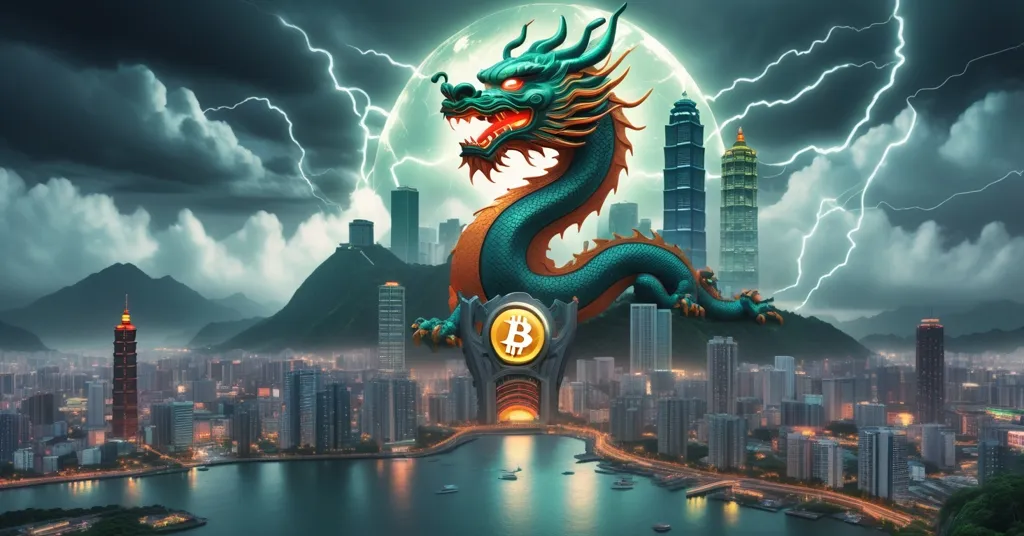
Taiwan, a nation living under the constant threat of conflict with China, could find an unconventional ally in Bitcoin. A bold new report from the Bitcoin Policy Institute (BPI) proposes that Taiwan establish a national Bitcoin reserve as a strategic asset to weather potential military blockades or invasions, framing the cryptocurrency not just as a financial tool but as a lifeline for sovereignty in times of crisis.
- Strategic Proposal: BPI urges Taiwan to build a Bitcoin reserve to counter Chinese military threats.
- Unique Edge: Bitcoin’s digital, borderless nature ensures access during crises, unlike gold or frozen dollar reserves.
- Existing Holdings: Taiwan holds 210 Bitcoin ($14 million) from criminal seizures, a potential global top rank.
- Central Bank Hesitation: Volatility and storage issues remain major barriers to adoption.
A Financial Escape Hatch in Times of Siege
The brainchild of BPI research fellow Jacob Langenkamp, this idea leverages Bitcoin’s core strengths for a nation like Taiwan, where the specter of Chinese aggression—whether through blockades or outright invasion—is a persistent reality. China’s long-standing territorial claims and frequent military posturing around the island make such threats far from hypothetical. Unlike gold, which sits heavy and immovable in vaults during a conflict, or US dollar reserves, which can be frozen by international banking systems under political pressure, Bitcoin thrives on its decentralized blockchain. It needs no physical transport—just a private key and, ideally, an internet connection. Even in dire scenarios, funds could be accessed or moved with nothing more than a memorized code or a hardware device smaller than a thumb drive. For Taiwan, this could mean the difference between financial paralysis and a fighting chance to sustain critical operations under siege.
Picture this: a blockade cuts Taiwan off from global markets. Banks are locked out of international systems, dollar reserves are untouchable, and gold sits uselessly in fortified bunkers. Yet, a government official with access to a Bitcoin wallet could, via a satellite link or pre-arranged offline method, transfer value to secure vital supplies or pay allies. Far-fetched? Maybe not. This kind of resilience is exactly what BPI is betting on, positioning Bitcoin as a strategic pivot for a nation with its back against the wall, as highlighted in a recent analysis on how Bitcoin could serve as Taiwan’s lifeline during conflict.
Taiwan’s Central Bank: Not Buying the Bitcoin Hype
Don’t expect Taiwan’s central bank to jump on the Bitcoin bandwagon anytime soon, though. As of December 2023, they’ve flat-out rejected it as a reserve asset, and their reasoning isn’t baseless. They point to Bitcoin’s infamous volatility—price swings of 10-20% in a single day aren’t rare—and the thorny issue of secure storage. You can’t just toss millions in BTC onto a USB stick and call it national treasure; losing a private key means losing the funds forever, and cyberattacks are a constant menace. Then there’s liquidity: Bitcoin’s market depth pales compared to the US dollar, making it harder to convert large holdings into usable cash without tanking the price. The central bank prefers the predictability of dollar-denominated assets, and frankly, it’s hard to blame them for eyeing Bitcoin like a risky guest at a conservative dinner party.
Still, BPI pushes back, arguing these hurdles aren’t dealbreakers. With proper expertise, they claim, Taiwan could implement multi-signature wallets—think of them as digital safes requiring multiple keys to unlock, reducing the risk of theft or loss. State-backed custodial services, akin to banks safeguarding physical assets, could also manage reserves with military-grade security. It’s not a pipe dream; private firms and even some governments are already doing this on smaller scales. The question isn’t whether it’s possible, but whether Taiwan’s leadership has the stomach to pioneer such a radical shift.
The Dollar Trap: A Vulnerability Too Big to Ignore
Taiwan’s reluctance to diversify isn’t just caution—it’s tethered to a deep dependence on the US dollar. A staggering 80% of its central bank reserves, totaling around $550 billion as of mid-2023, are held in dollar-denominated assets. Most of its international trade, particularly in semiconductors—a sector Taiwan dominates globally—also flows through dollars. This makes the island acutely vulnerable to any hiccup in the US economy. BPI’s report spells out the risks: skyrocketing US government debt (over $33 trillion and counting), relentless money printing by the Federal Reserve, and potential downturns in tech sectors like AI or chips, which could ripple through Taiwan’s export-driven economy.
If the dollar wobbles, Taiwan’s financial stability could crumble. Gold, which makes up about 5% of reserves, offers some hedge, but it’s immobile in a crisis. Bitcoin, despite its wild price gyrations, isn’t tied to any nation’s fiscal folly. It’s a borderless bet, a way to diversify without relying on another country’s currency or policy. Sure, it’s a gamble—but so is putting 80% of your eggs in a basket that’s starting to show cracks.
A Hidden Stash: Taiwan’s Bitcoin Footprint
Taiwan isn’t a complete stranger to Bitcoin, either. The justice ministry currently holds 210 Bitcoin, valued at approximately $14 million as of late 2023, seized from criminal activities. If classified as official reserves, this modest stash would catapult Taiwan to seventh place among Bitcoin-holding nations, per data from crypto treasury tracker BitBo. That’s behind El Salvador, a pioneer in making Bitcoin legal tender, but ahead of countries like Finland. It’s a drop in the bucket compared to total reserves, but it’s a start—one that could grow if BPI’s vision gains traction.
Interestingly, the central bank has shown a sliver of curiosity through a sandbox program, a controlled environment to test digital assets using existing crypto holdings. While details are sparse, this initiative suggests they’re not entirely closed off to blockchain innovation. It’s less about Bitcoin specifically and more about exploring digital finance broadly—think central bank digital currencies (CBDCs) or tokenized assets. No timelines or results have been publicized yet, but it’s a cautious nod to the future, even if they’re not ready to bet the house on BTC.
Bitcoin in a Blockade: Practical Nightmares
Let’s cut to the chase—using Bitcoin in a full-blown blockade isn’t a walk in the park. Internet access, critical for most transactions, could be severed by military action or cyberattacks. Taiwan would need contingency plans like satellite networks—Starlink, for instance, has proven viable in conflict zones like Ukraine—or mesh networks that relay data through decentralized nodes. Even offline methods exist: Bitcoin transactions can be broadcast via radio waves or stored on physical media for later use. These aren’t sci-fi fantasies; they’re real, if niche, solutions being honed in the crypto space. But they require preparation, technical know-how, and infrastructure that Taiwan may not yet have.
Then there’s cybersecurity. National Bitcoin reserves would be a juicy target for state-sponsored hackers—think North Korea, which has already siphoned billions in crypto through sophisticated attacks. A single breach could wipe out funds faster than a missile strike. Mitigation strategies, like splitting reserves across cold storage (offline wallets) in secure, geographically dispersed locations, are essential. This isn’t just optimism from BPI; it’s a gritty reality check. Taiwan would need to treat digital reserves with the same paranoia as nuclear codes.
Geopolitical Backlash: A Double-Edged Sword?
Here’s a devil’s advocate thought: stockpiling Bitcoin could poke the bear. If Taiwan ramps up crypto reserves, China might interpret it as a deliberate move to evade financial controls or sanctions, escalating tensions further. It’s not hard to imagine state media spinning it as economic defiance, justifying harsher military or diplomatic posturing. On the flip side, Bitcoin’s very nature—un-seizable and outside traditional systems—might deter interference, as there’s little China could do to block it short of total internet shutdowns. It’s a high-stakes chess move, and Taiwan would need to weigh whether the financial freedom is worth the political heat.
Global Precedents: Is Taiwan Next in Line?
Taiwan wouldn’t be alone in this experiment. El Salvador’s Bitcoin adoption as legal tender, despite bumpy execution, has shown that nations can rethink money at a state level. Bhutan quietly mines Bitcoin using hydroelectric power, while Germany holds significant BTC from criminal seizures, though not as official reserves. Even Ukraine leveraged crypto donations during its conflict with Russia, proving digital assets can play a role in warzones. These cases paint a picture of a slow but undeniable shift—small or vulnerable nations are eyeing Bitcoin as a tool for financial autonomy. If Taiwan takes the plunge, it could trigger a domino effect, inspiring other geopolitically exposed states to explore “Bitcoin sovereignty” as a defense mechanism.
Bitcoin Maximalism vs. Blockchain Diversity
As a Bitcoin-first advocate, I’d argue BTC stands above altcoins for national reserves. Its first-mover status, unmatched network security, and sheer market dominance make it the most battle-tested option for raw financial sovereignty. Ethereum’s smart contracts or other protocols might carve out niches—say, for state-issued tokens or decentralized governance—but they lack Bitcoin’s simplicity and resilience as a store of value. Taiwan doesn’t need bells and whistles; it needs a digital fortress. Still, I’ll concede the broader blockchain space deserves a seat at the table for innovation that Bitcoin itself might not tackle.
Environmental Baggage: A PR Hurdle?
One often-overlooked snag is Bitcoin’s environmental footprint. Mining, which secures the network, guzzles energy—often from non-renewable sources globally. Critics could slam Taiwan for embracing an asset tied to climate concerns, especially as green policies gain traction worldwide. Counterarguments exist: mining can shift to renewables (Taiwan’s energy mix includes significant hydropower potential), and the nation’s survival stakes might outweigh carbon critiques. But public perception matters, and this could complicate political buy-in if not addressed head-on.
Breaking Down the Basics for Newcomers
For those just dipping their toes into crypto, let’s unpack the essentials. Bitcoin is a digital currency running on a blockchain—a tamper-proof, public ledger spread across thousands of computers worldwide. No government or bank controls it, which is both its superpower and its kryptonite. A reserve asset, traditionally, is something like gold or foreign currency a country stockpiles to back its economy or weather shocks. Proposing Bitcoin for this role is radical because its value comes from market belief, not state authority, exposing it to wild swings but also freeing it from external meddling. For Taiwan, it’s a potential ticket to financial independence in a crisis, assuming they can navigate the tech and market minefields.
Key Takeaways and Burning Questions
- Why is Bitcoin pitched as a defense asset for Taiwan?
Its decentralized, digital nature allows access to funds during a Chinese blockade, sidestepping limitations of physical gold or frozen US dollar reserves. - What’s holding Taiwan’s central bank back from adopting Bitcoin?
They’re wary of Bitcoin’s extreme price volatility, complex storage security needs, and lower liquidity compared to the stability of the US dollar. - How exposed is Taiwan to US dollar risks?
With 80% of its $550 billion reserves and most trade in dollars, Taiwan faces major vulnerabilities from US debt, inflation, and tech sector downturns, fueling calls for diversification. - Could Taiwan rank high among Bitcoin-holding nations?
Absolutely—its 210 Bitcoin, worth $14 million from seizures as of late 2023, would place it seventh globally if counted as reserves, per BitBo data. - What real-world challenges come with Bitcoin reserves in conflict?
Internet disruptions during a blockade could block transactions without satellite or offline setups, while state-sponsored cyber theft poses a massive threat to unsecured digital funds. - Does Bitcoin hold genuine geopolitical weight, or is it overhyped?
Despite undeniable risks, Bitcoin’s ability to operate beyond controlled financial systems offers a unique edge for nations like Taiwan, potentially redefining resilience in conflict zones.
Taiwan sits at a precarious crossroads, torn between the safety of traditional finance and the disruptive promise of Bitcoin. Whether they cling to the US dollar’s familiar embrace or dare to stockpile a digital wildcard, the stakes couldn’t be higher. This isn’t just about money—it’s about power, survival, and redefining what financial sovereignty means when the drums of war are beating. If Taiwan steps into this uncharted territory, it might not only secure its own future but also light the way for other nations grappling with similar threats. The blockchain revolution, it seems, is no longer just a tech story—it’s a geopolitical saga in the making.