Teens Charged in $66M Crypto Heist: Arizona Home Invasion Exposes Dark Side of Bitcoin
 LTB
LTB Teens Charged in Arizona Home Invasion Targeting $66M in Crypto: A Gut-Wrenching Wake-Up Call
Picture this: you open your door expecting a package, only to be confronted by two masked teens tying you up, demanding the keys to $66 million in cryptocurrency. That’s the horrifying reality a Scottsdale, Arizona, family faced on January 31, 2026, when two California teenagers allegedly traveled over 600 miles to execute a violent home invasion. This isn’t just a crime—it’s a blaring alarm about the dark, dangerous underbelly of crypto’s meteoric rise.
- California Teens in Violent Heist: Two suspects, aged 16 and 17, targeted a Scottsdale home for $66M in crypto.
- Brutal “Wrench Attack” Tactics: Victims were restrained and assaulted to access digital wallets.
- Escalating Crypto Crime: Personal data leaks and shadowy networks fuel a terrifying trend.
The Scottsdale Horror: A Planned $66M Crypto Theft
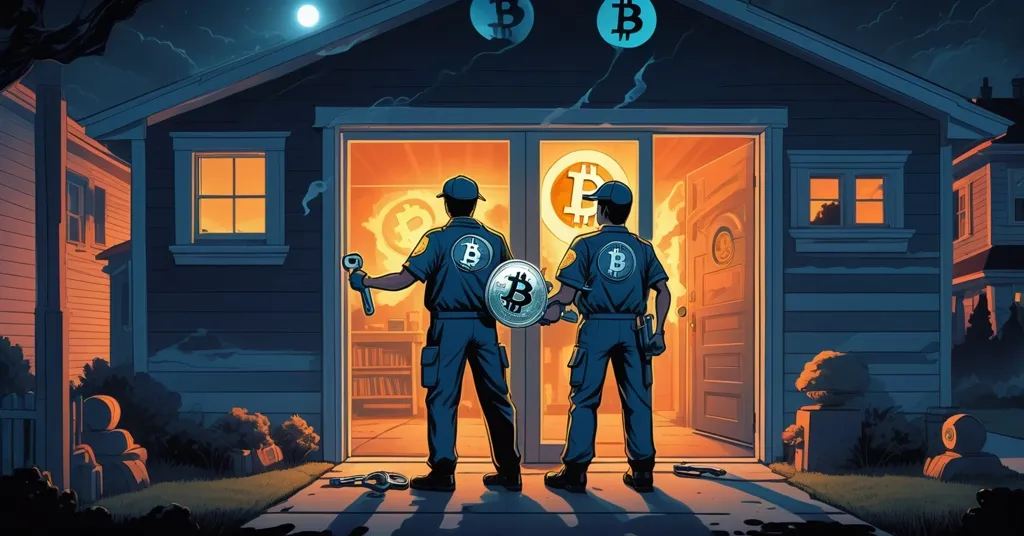
The specifics of this case are as chilling as they are calculated. Originating from San Luis Obispo County, California, the two teens—aged 16 and 17—donned delivery-style uniforms to mask their sinister intent. They forced their way into a residence in Scottsdale’s upscale Sweetwater Ranch neighborhood, immediately restraining two adults with duct tape. Their demand was clear: hand over the private keys to cryptocurrency holdings valued at a staggering $66 million. For those new to the space, private keys are the digital passcodes that unlock your crypto wallet—lose them, and your wealth vanishes into thin air.
When the victims resisted, the situation turned violent. The teens resorted to physical assault, embodying the literal brutality of a “wrench attack”—a term used for physical coercion to extract access to digital assets. Fortunately, an adult son in the home managed to trigger a distress call. Police arrived mid-struggle, and after a short pursuit in a blue Subaru with stolen license plates, the suspects were apprehended. Recovered items included zip ties, duct tape, and a 3D-printed firearm, though without ammunition, its functionality remains uncertain. These tools paint a picture of premeditation, revealing just how sophisticated and ruthless crypto-targeted crimes have become. For more details on this shocking incident, see the report on the Arizona home invasion targeting $66M in crypto.
Both teens now face eight felony counts each, including kidnapping, aggravated assault, and burglary, with the older suspect also charged with unlawful flight. They’ve been released on $50,000 bail with electronic monitoring and will be tried as adults. But the plot thickens with revelations from court records. The younger suspect claims they were mere pawns, orchestrated by unknown individuals via the encrypted messaging app Signal, identified only as “Red” and “8.” These mysterious figures allegedly wired $1,000 for disguises and equipment, even providing the target’s address. This begs a haunting question: who’s really behind this, and how vast is the criminal web exploiting vulnerable youth for crypto heists?
Wrench Attacks Exploding: A 2025 Crime Wave
This Scottsdale incident isn’t a freak occurrence—it’s the latest in a sickening surge of violence against crypto holders. Security researcher Jameson Lopp, who maintains a public database on such attacks, marks this as the first recorded wrench attack in the US for 2026. His data reveals a staggering 70 similar incidents in 2025 alone, a dramatic escalation from prior years when such crimes were sporadic. The term “wrench attack” is as literal as it sounds: criminals use physical force—sometimes with actual tools or weapons—to coerce victims into surrendering access to their digital wallets.
These attacks first gained traction around 2018, with early cases targeting Bitcoin pioneers in Europe and Asia. As cryptocurrency adoption skyrocketed, so did the violence, fueled by the massive value often concentrated in a single wallet and the blockchain’s pseudonymity—where transactions are tied to coded addresses rather than real-world identities. Lopp has warned that reported figures likely understate the problem, as many victims stay silent out of fear or embarrassment. Imagine your loved ones bound, your life savings hanging by a thread, all for a string of code. That’s the nightmare gripping the crypto community, and it’s not slowing down.
How Criminals Pinpoint Crypto Holders: Data Leaks and Dark Recruitment
What’s powering this epidemic of crypto home invasions? It’s a deadly mix of personal data leaks and online manipulation. Over recent years, high-profile breaches at cryptocurrency exchanges and platforms have exposed troves of user information. We’re talking names, addresses, and even estimates of holdings often collected through Know-Your-Customer (KYC) requirements. Historic disasters like the Mt. Gox collapse and more recent leaks have handed criminals a roadmap to real-world targets. If a hacker snags your details from a compromised database, you’re a sitting duck for a wrench attack.
Compounding this is the shadowy recruitment happening on encrypted platforms like Signal. Masterminds hide behind anonymity, coercing or paying impressionable young individuals to carry out their dirty work. In this case, a paltry $1,000 was enough to turn two teens into violent intruders. These puppet masters play a twisted game of chess, letting their pawns take the fall while they stay untouchable. It’s a gutless, insidious tactic, and it’s proving alarmingly effective, leaving crypto holders wondering if their address is next on some dark web hit list.
Industry Shortcomings: Are We Fueling Our Own Peril?
Let’s not bullshit ourselves—the crypto industry bears some ugly responsibility here. Bitcoin and other cryptocurrencies are game-changers, offering financial sovereignty, privacy, and a middle finger to centralized control. They’re tools of effective accelerationism, speeding us toward a freer future. But that freedom comes with a brutal catch: there’s no safety net. No bank to reverse a transaction, no hotline to recover stolen funds. If your private keys are taken—whether by a phishing scam or a thug with duct tape—your wealth is gone. Period.
Playing devil’s advocate, hasn’t the industry failed miserably on security and education? Too many users, especially newcomers, don’t grasp the basics of protecting their assets. Exchanges and platforms rake in billions but can’t secure a damn database—where’s the outrage? Look at the endless string of hacks and leaks; it’s a disgrace. As a Bitcoin maximalist at heart, I see BTC as the ultimate store of value, but I can’t ignore that altcoins and ecosystems like Ethereum often lead on security innovation. Ethereum’s smart contract audits and privacy-focused chains like Monero have mechanisms that could inspire Bitcoin-centric fixes. A united push across the blockchain space for better protective tech and user awareness is long overdue. Still, no app or gadget stops a determined attacker if your personal info is floating around the dark web. Until data leaks are crushed, wrench attacks will keep spreading like wildfire.
Locking Down Your Crypto: Practical Steps to Stay Safe
This is a gut punch to every crypto holder: you’re on your own to stay safe in this decentralized wild west. So, let’s cut to the chase with actionable ways to protect your digital gold. Start with a hardware wallet—a physical device, think of it as a USB vault, that stores your private keys offline, far from digital hackers. Brands like Ledger or Trezor are popular choices. Next, explore multi-signature wallets, which require multiple approvals to move funds; even if one key is compromised, your stash remains locked. Also, split your holdings across different secure locations—don’t dump everything into a single wallet like a rookie.
Beyond tech, guard your personal life. Oversharing your crypto gains on social media is like begging for trouble. Keep a low profile, and consider decoy wallets with small amounts for everyday use, hiding your real wealth elsewhere. Physically, beef up your home security—alarms, cameras, and a sturdy safe for hardware devices can deter intruders. These measures won’t make you untouchable, but they’ll sure as hell make you a tougher target. The responsibility is yours; own it or risk losing everything.
The Stark Reality: Crypto’s Promise Meets Its Predators
Stepping back, this Scottsdale nightmare isn’t just a standalone crime; it’s a flashing neon sign of the tension between technology’s liberation and human greed. The same features that make crypto revolutionary—encryption, pseudonymity, borderless wealth—also attract predators. Bitcoin stands as the pinnacle of decentralization, but the wider blockchain world fills critical niches. Ethereum’s smart contracts and obscure protocols often test security ideas that could bolster Bitcoin’s ecosystem. Yet, let’s not delude ourselves: no amount of innovation fully shields us while personal data remains a free-for-all and user complacency persists. Wrench attacks are a bone-chilling reality we can’t ignore.
Looking forward, will this violence spike further as crypto adoption surges? Are law enforcement agencies even remotely prepared for crimes that blend cutting-edge tech with old-school brutality? These two teens face harsh consequences, but the deeper challenge looms over us all. How do we preserve crypto’s vision of freedom without inviting more horror stories? It’s a high-stakes balancing act, and we’d better nail it before the next attack lands on someone’s doorstep—maybe yours.
Key Takeaways and Questions
- What drove two teens to attempt a violent $66M crypto heist?
Unknown figures on Signal allegedly orchestrated it, providing $1,000 for gear and the target’s address, exploiting the teens’ vulnerability or coercion. - Why are wrench attacks a growing threat to Bitcoin holders?
Jameson Lopp’s data shows 70 cases in 2025, driven by crypto’s high value and easy access to personal info through blockchain data leaks, making holders easy prey for physical coercion. - How do criminals zero in on crypto home invasion targets?
Breaches at exchanges expose user details like names and holdings, while encrypted apps like Signal allow anonymous recruitment of young perpetrators to dodge traceability. - What Bitcoin security risks does this case expose?
It highlights the peril of real-world violence alongside digital threats, pressing holders to secure keys offline and shield personal information at all costs. - How can crypto enthusiasts avoid becoming victims of theft?
Use hardware and multi-signature wallets, diversify holdings, stay discreet online, and fortify home security to make yourself a less appealing target. - Does the crypto industry need to step up against wrench attacks?
Damn right—better education, cross-chain security solutions, and a hard crackdown on data leaks are urgent, though personal vigilance is non-negotiable.