Telegram Overtakes WhatsApp in Russia as State-Backed Max Gains Amid Privacy Crackdown
 LTB
LTB Telegram Surpasses WhatsApp in Russia, But State-Backed Max Looms Large
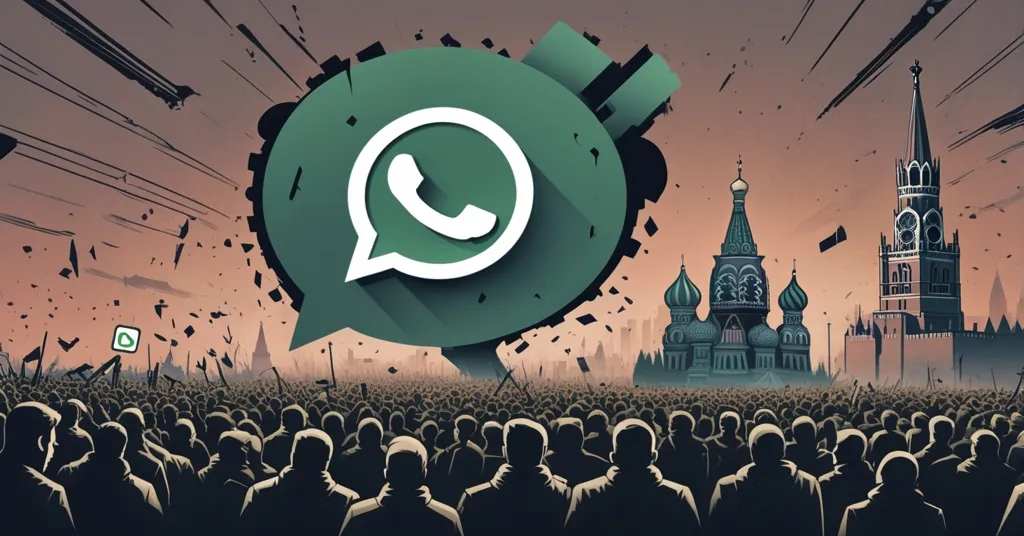
Telegram has taken the top spot as Russia’s most popular messaging app in January 2026, dethroning WhatsApp in a market throttled by Moscow’s heavy-handed regulations. Yet, both giants are hemorrhaging users under government pressure, while Max, a state-backed alternative, surges forward as the Kremlin tightens its digital grip.
- Telegram’s Brief Triumph: Reached 95.978 million users in January 2026, overtaking WhatsApp, but slipped to 95.692 million by February.
- WhatsApp’s Collapse: Dropped from 89.418 million users in January to 80.301 million in February, shedding nearly 15 million over a year.
- Max’s Ascent: State-supported app climbed to 77.561 million users, the only top-three messenger showing growth.
Russia’s Digital Crackdown: A War on Privacy
The messaging arena in Russia isn’t just a popularity contest; it’s a battleground for control, privacy, and state power. Telegram, often celebrated for its strong encryption and defiance against overzealous authorities, hit a peak of nearly 96 million active users at the start of 2026, according to a study by Okkam using data from Mediascope, which tracks users over 12 accessing apps monthly on mobile or desktop. This surge allowed Telegram to edge past WhatsApp, a former titan with 94.47 million users as of December the previous year. But the celebration was short-lived. By February, Telegram lost over 280,000 users, while WhatsApp suffered a staggering decline of 9.1 million in a single month, as detailed in a recent report on Telegram overtaking WhatsApp in Russia’s messaging landscape.
What’s fueling this exodus? The answer lies with Roskomnadzor, or RKN, Russia’s federal agency acting as the Kremlin’s internet enforcer. Since August of the prior year, RKN has targeted both Telegram and WhatsApp by restricting voice calls, using vague justifications like combating fraud and extremism. Things escalated in February 2026 when Telegram’s traffic was deliberately slowed, turning a once-snappy app into a frustrating slog for users. WhatsApp faced an even uglier fate—its domain was removed from Russia’s DNS servers earlier in the year, effectively blocking access for millions. With Meta, WhatsApp’s parent company, branded an “extremist organization” by Moscow, this move reeks of calculated oppression, not public safety.
Russia’s playbook for digital dominance doesn’t stop at technical barriers. The so-called “landing law” demands that platforms with over 500,000 daily users establish local offices and store data domestically—a clear attempt to enforce compliance and enable monitoring. Telegram, led by the uncompromising Pavel Durov, has outright refused to bend to these rules, painting a target on its back. WhatsApp, shackled by Meta’s blacklisted status, has no hope of meeting these demands either. Meanwhile, other privacy-focused apps like Signal, Discord, and Viber were already banned by late 2024, signaling a broader purge of uncooperative platforms.
Max: The Kremlin’s Surveillance Tool
Amidst this chaos, Max, a messaging app developed by VK, a Russian social media conglomerate with deep ties to the state, is reaping the benefits. Unlike its beleaguered competitors, Max boasts a growing user base, reaching 77.561 million, making it the only top-three app not in decline. This is no happy accident. Backed by the government, Max is positioned as the “safe” alternative, fully compliant with Moscow’s rules and likely equipped for oversight, despite any public claims of user protection. State-backed app on the rise? Sounds like Big Brother just upgraded to a smartphone.
Pavel Durov, Telegram’s founder, doesn’t hold back on what he sees as the true agenda behind these maneuvers. His words cut through the official noise:
“Russia’s main motive for restricting competitors is to force its citizens to ‘switch to a state-controlled app built for surveillance and political censorship.’”
Durov’s accusation lays bare a chilling reality. This isn’t about shielding citizens from scams or dangerous content, as RKN insists. It’s about funneling communication into channels where every word can be watched. The historical backdrop only sharpens this perspective. Since tensions flared with the West, particularly after 2014 and the 2022 Ukraine conflict, Russia has ramped up its quest for digital sovereignty—think total government oversight of online activity. Banning Western tech giants and promoting homegrown tools like Max are steps toward an internet where dissent can be easily silenced.
Analysts see a bleak horizon for platforms prioritizing user privacy. Leonid Konik, a partner at Comnews Research, offers a sobering outlook:
“Telegram will repeat WhatsApp’s fate with some delay. Part of its users will move to Max, others will stay by employing acceleration tools, which will make them appear as foreign subscribers, and some will switch to less known alternatives.”
Konik predicts a fragmented future. Some users will reluctantly shift to Max, others will resist using tech tricks like VPNs—tools that mask your location to bypass internet blocks—and a few might turn to obscure apps still under RKN’s radar. Whispers of a full Telegram ban by April 1, 2026, are circulating, though unconfirmed by authorities. If it happens, it would deal a massive blow to private communication in the region.
Decoding the Jargon: Key Terms Explained
For those new to this saga, let’s unpack a few critical concepts. Roskomnadzor, or RKN, is Russia’s federal body overseeing communications and media, essentially acting as the state’s online gatekeeper. The “landing law” is legislation forcing foreign tech firms to set up local operations and store user data within Russia, often as a pretext for surveillance. And Max, crafted by VK—a company intertwined with Kremlin interests—isn’t merely a chat app; it’s a government-endorsed platform, likely designed with mechanisms for monitoring, no matter the marketing spin.
Impact on Bitcoin and Crypto Freedom
Why should the crypto community care about a messaging turf war in Russia? Simple: apps like Telegram are lifelines for privacy and uncensored communication, cornerstones of the Bitcoin and blockchain ethos. Think of a Russian Bitcoin trader trying to coordinate a wallet setup or discuss market moves in a private chat. When Telegram gets throttled, those secure conversations grind to a halt. How do you trade BTC or brainstorm DeFi projects without a reliable channel? Many in the crypto space—enthusiasts, developers, and OGs alike—lean on these platforms to organize airdrops, share wallet tips, or debate decentralized finance, especially in regions where traditional systems are under state stranglehold.
Russia’s crackdown is a gut punch to grassroots crypto adoption. A major market losing access to private communication tools could slow the spread of decentralized tech, hampering coordination among users who rely on Bitcoin to sidestep financial censorship. Yet, there’s a flip side—this mess highlights why decentralization is non-negotiable. Centralized apps, even those championing privacy like Telegram, can be choked by state power. Bitcoin, by contrast, operates on a peer-to-peer network no single government can shut down. You don’t need a chat app to send BTC; the blockchain doesn’t bend to RKN’s whims. Still, the human element—needing trusted ways to connect—remains a vulnerability if state-sanctioned tools like Max become the only option.
Lessons for Decentralization Advocates
This situation screams a hard truth to anyone rooting for freedom through tech: centralized systems are fragile under authoritarian pressure. Telegram’s past clashes with Russia, like the failed 2018 ban attempt, show this fight isn’t new, yet it’s escalating. For crypto advocates, the lesson is clear—rely on truly decentralized solutions. Blockchain-based messaging protocols like Status or Matrix offer alternatives where no central server can be targeted or shut down. Projects like Session or Orchid even integrate privacy-focused networks, letting users chat without fear of state snooping. These aren’t perfect; adoption is low, and usability often lags behind mainstream apps. But they embody the spirit of Bitcoin’s censorship resistance, unlike Ethereum-based dApps that might still need centralized coordination points.
Let’s play devil’s advocate for a moment. Could Max, in theory, provide better security for everyday users not dabbling in politics, compared to Telegram’s sometimes spotty moderation? Perhaps. National security arguments from Moscow might claim a controlled app prevents scams or illegal activity more effectively. But here’s the rub—state oversight almost always prioritizes surveillance over safety. When your messages pass through a Kremlin-aligned server, privacy isn’t just at risk; it’s dead on arrival. History shows governments rarely stop at “just” catching criminals; control creeps into every corner of digital life.
Global Ripple Effects and User Resistance
Russia’s actions aren’t an isolated incident—they could embolden other regimes to target privacy tools, impacting crypto hubs in places like Asia or the Middle East. If messaging apps fall under state dominance worldwide, will Bitcoin’s peer-to-peer nature still thrive without secure ways to communicate? Possibly, as BTC doesn’t rely on third-party platforms for transactions. Yet, community building and education, critical for adoption, take a hit when coordination gets stifled. On the brighter side, human ingenuity often outsmarts overreach. Russian users might turn to Tor—a network for anonymous browsing—or decentralized VPNs to keep accessing Telegram. Some may explore niche blockchain chat tools, though these remain a tiny fraction of the market.
Don’t expect Moscow to ease up. Max’s rise signals a future where digital cages are the norm, not the exception. But let’s not pretend Telegram or WhatsApp are flawless knights in shining armor. Telegram’s moderation has drawn flak for inconsistency, and WhatsApp’s link to Meta carries its own privacy baggage. The real showdown is whether users will accept a state-monitored panopticon or fight back with whatever tech tricks they can muster. For the crypto crowd, this is a call to double down on systems no ruler can touch—Bitcoin’s unyielding network being the gold standard. Will Russian privacy advocates and crypto heads outmaneuver the Kremlin’s grip, or be forced into its digital trap? The stakes for internet freedom couldn’t be higher.
Key Takeaways and Questions
- What’s behind the user drop for Telegram and WhatsApp in Russia?
Government tactics like traffic slowdowns, voice call restrictions, and outright blocks by Roskomnadzor, under excuses of fraud and extremism, are driving millions away. - Why is Max gaining traction while others falter?
As a state-supported app by VK, Max thrives on the suppression of foreign competitors, marketed as a compliant tool likely built for Kremlin oversight. - What does Russia’s “landing law” mean for messaging apps?
It forces platforms with large user bases to set up local offices and store data in Russia, a rule Telegram defies, inviting regulatory wrath and potential bans. - How does Pavel Durov interpret Russia’s intentions?
He believes the restrictions aim to push users into state-controlled apps for surveillance and censorship, stripping away privacy and free speech. - What’s the impact on Bitcoin and crypto communities?
Losing private communication channels in Russia hampers crypto coordination and adoption, reinforcing the urgency of fully decentralized systems beyond state control. - Could global crypto adoption face broader threats from such policies?
Yes, Russia’s moves might inspire other authoritarian regimes to clamp down on privacy apps, disrupting crypto hubs worldwide unless decentralized tools gain traction.