Tesla-L&F $2.9B Deal Collapse: $800M Loss and Crypto Diversification Warning
 LTB
LTB Tesla’s $2.9 Billion Deal Collapse with L&F Co.: $800 Million Loss and Crypto Diversification Lessons
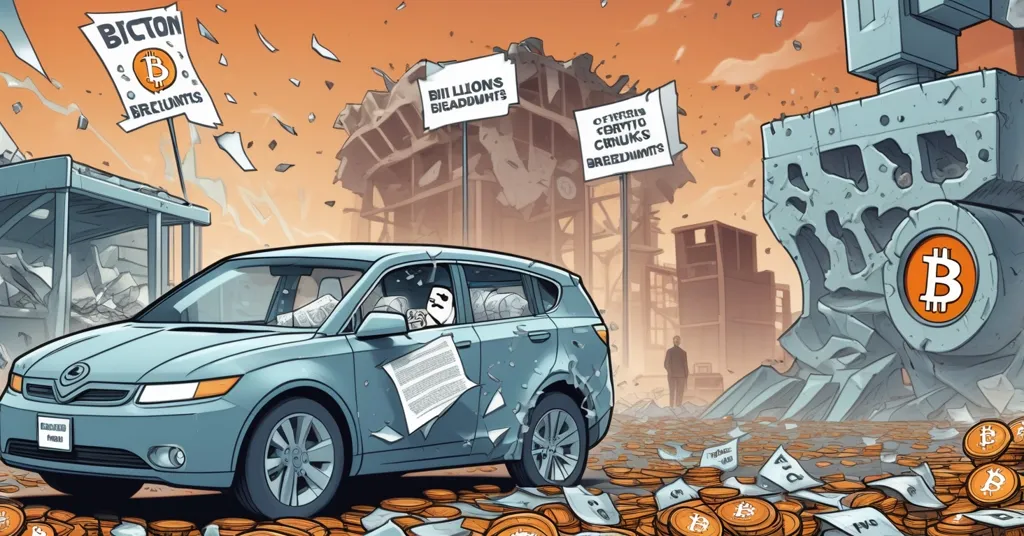
A blockbuster $2.9 billion deal between Tesla and South Korean battery supplier L&F Co. has spectacularly cratered to a measly $7,386, obliterating 99% of its value and delivering a brutal $800 million wealth blow to L&F’s board. This fiasco isn’t just an EV supply chain horror story—it’s a stark warning for crypto enthusiasts about the perils of betting the farm on a single player.
- Deal Implosion: Tesla-L&F contract tanks from $2.9B to $7,386 due to Cybertruck delays and weak demand.
- Wealth Carnage: Chairman Hur Jae-hong’s holdings plummet from $800M to $134M.
- Crypto Parallel: Over-reliance on one partner mirrors dangerous single-coin bets in blockchain investments.
The Tesla Deal Debacle: From Billions to Breadcrumbs
Back in 2021, L&F Co., a South Korean firm specializing in high-nickel cathodes for electric vehicle (EV) batteries, landed what seemed like the deal of a lifetime with Tesla. Valued at $2.9 billion, this contract was supposed to cement L&F’s role in the booming EV market while supplying Tesla with critical materials for its futuristic Cybertruck. For the uninitiated, high-nickel cathodes are like the high-octane fuel of EV batteries—packing more energy density to let cars drive further on a single charge, a massive edge in a cutthroat industry.
But dreams turned to dust as Tesla’s Cybertruck, unveiled with Elon Musk’s signature bravado in 2019, stumbled into a quagmire of production delays. From design headaches like its unconventional stainless steel exoskeleton to supply chain snarls and now a glaring lack of consumer enthusiasm, the Cybertruck has become the EV world’s equivalent of vaporware—shiny, hyped, and perpetually “coming soon.” The fallout for L&F? A contract now worth a staggeringly paltry $7,386. That’s not a typo—it’s a 99% loss, as detailed in a recent report on Tesla’s fading order leading to an $800 million setback for L&F’s board. As Changmin Lee, an analyst at KB Securities, pointed out with brutal clarity:
“L&F had probably already stopped supplying cathodes to Tesla since last year.”
This isn’t just a bad business day; it’s a catastrophic miscalculation that exposes the fragility of tying your fate to a single, high-profile client—sound familiar, crypto hodlers?
L&F’s Financial Fallout: A $660 Million Personal Hit
The financial wreckage for L&F is staggering. The company’s stock has nosedived over 70% since its 2023 peak, battered by both the Tesla collapse and a broader slump in global EV demand. Consumers worldwide are pumping the brakes on EV purchases, spooked by economic uncertainty, high interest rates, and spotty charging infrastructure. In key markets like Europe and China, sales growth has slowed—China saw a dip in EV subsidies, while Europe grapples with policy flip-flops. For supply chain players like L&F, this isn’t a speed bump; it’s a cliff.
On a personal level, the damage cuts even deeper. Hur Jae-hong, L&F’s chairman and CEO, has seen his listed holdings shrink from $800 million to just $134 million, per the Bloomberg Billionaires Index. That’s a personal wealth loss of over $660 million—a number that doesn’t just sting, it scars. How do you rebound when a single failed bet wipes out two-thirds of your net worth? For crypto investors who’ve gone all-in on one token only to watch it crater, this pain might hit uncomfortably close to home.
Crypto Lessons in Diversification: Don’t Bet on One Blockchain
Let’s pivot to why this matters to Bitcoiners and blockchain buffs. L&F’s downfall screams a lesson that echoes through the crypto space: over-reliance on a single partner or project is a recipe for ruin. Think of L&F’s Tesla obsession as a Bitcoin maximalist ignoring altcoins, or a DeFi project staking everything on one chain like Ethereum pre-merge, only to get burned by scalability hiccups. Remember Terra Luna’s implosion in 2022? Billions vanished because too many pinned their hopes on a single algorithmic stablecoin. Diversification isn’t just jargon—it’s a lifeline.
For L&F, some ties to Tesla remain, albeit indirectly. They supply components for the Tesla Model Y through LG Energy Solution, their biggest customer, which accounts for 80% of sales. But leaning on a middleman isn’t the same as a direct, game-changing deal. It’s like a crypto project surviving on side gigs while their main token launch flops—sustainable, maybe, but hardly inspiring. L&F aimed to cut reliance on LG Energy Solution to 50% by 2025 through a 2021 partnership with Redwood Materials, a US battery recycling outfit founded by ex-Tesla CTO JB Straubel. That goal now looks like a long shot, with the Tesla debacle casting doubt on bold diversification plays.
Broader EV Market Struggles: Tesla’s Hype vs. Reality
Zooming out, the Tesla-L&F saga reflects systemic cracks in the EV ecosystem. South Korea dominates the global EV battery market with titans like LG Energy Solution and SK On, but smaller players like L&F face ruthless competition and razor-thin margins. Over-dependence on a flashy deal with Tesla—however prestigious—left L&F exposed when the Cybertruck faltered. And let’s not let Tesla off the hook. Elon Musk’s hype machine can sell a vision, but turning stainless steel fantasies into showroom reality is another story. Does this reflect poorly on Tesla’s innovation model, much like overhyped crypto ICOs that raised millions only to fizzle out post-launch? It’s a fair question.
Counterpoint: Tesla isn’t entirely the villain here. Scaling something as ambitious as the Cybertruck in a softening market is no small feat. Maybe suppliers like L&F should’ve hedged their bets sooner, much like savvy crypto projects spread risk across multi-chain strategies or stablecoin reserves. But when a giant like Tesla pulls back, the ripple effects are brutal—and accountability feels like a one-way street.
Could Blockchain Tech Prevent Supply Chain Disasters?
Here’s where decentralization could shine. Imagine a blockchain-based ledger tracking every cathode shipment from L&F to Tesla in real time. Smart contracts could flag production delays or demand drops instantly, giving suppliers like L&F a chance to pivot before a $2.9 billion deal turns to pocket change. Transparency via decentralized tech isn’t just a buzzword—it’s a shield against blindsiding risks. Crypto’s ethos of cutting out blind trust in middlemen could revolutionize EV supply chains, much like it’s disrupting finance. L&F might’ve dodged this bullet if they’d had a tamper-proof window into Tesla’s production mess.
That said, blockchain isn’t a magic fix. Adoption costs, scalability issues, and integration hiccups remain—much like Bitcoin’s own growing pains. Still, in an industry where opacity can tank a company overnight, decentralized tracking feels less like a luxury and more like a necessity.
Future Outlook: EVs, AI Storage, and Blockchain Potential
Looking ahead, L&F isn’t dead in the water—yet. They’re set to start production for Rivian, an American EV maker, in 2026, and currently supply mid-nickel cathodes to SK On Co. for Hyundai Motor’s EVs. For clarity, mid-nickel cathodes differ from their high-nickel cousins by balancing cost and performance, often used in more budget-friendly vehicles. These deals could be a lifeline, though timelines in this industry slip as often as crypto project roadmaps.
A wildcard lies in energy storage systems—think giant battery packs powering massive tech operations like AI data centers running 24/7. As tech giants race to fuel artificial intelligence infrastructure, demand for such storage could eclipse even EV battery needs. Analyst Anna Lee from Yuanta Securities Korea offered a sliver of hope:
“A short-term damper in investor sentiment is inevitable, but there is an increasing possibility that the sector will regain attention in 2026, specifically centering on energy storage systems for AI data centers.”
But 2026 is a distant horizon, and L&F needs to weather today’s storm. Could blockchain play a role here too, tracking energy storage supply chains with the same transparency? It’s speculative, but aligns with crypto’s parallel hunger for energy-intensive operations like mining. The overlap between EV tech and crypto’s infrastructure needs—think Bitcoin mining rigs guzzling power—hints at shared innovation paths ahead.
Key Takeaways and Questions for Crypto and EV Enthusiasts
- What sparked the Tesla-L&F deal collapse?
Tesla’s Cybertruck production delays and dismal consumer demand slashed the contract from $2.9 billion to a pitiful $7,386. - How has L&F been hit financially and strategically?
L&F’s stock crashed over 70%, and Chairman Hur Jae-hong’s wealth dropped from $800 million to $134 million. Diversification away from LG Energy Solution is now a shaky prospect. - Does L&F still have ties to Tesla?
Indirectly, yes—L&F supplies Tesla Model Y components via LG Energy Solution, which drives 80% of their sales. - What recovery paths are open for L&F in the EV space?
Production for Rivian in 2026, current supply to SK On for Hyundai EVs, and potential growth in AI data center energy storage offer hope, though risks remain. - What can crypto investors learn from L&F’s Tesla dependency?
Betting everything on one partner mirrors gambling on a single coin or chain. Diversification, much like in Bitcoin or altcoin portfolios, is critical to avoid a total wipeout. - Could blockchain tech avert such supply chain catastrophes?
Potentially—decentralized ledgers could ensure real-time transparency, letting firms like L&F spot risks early and adapt before disaster strikes.
L&F Co. stands at a brutal crossroads, reeling from a failed Tesla deal and a softening EV market, yet grasping at future opportunities that may or may not materialize. For Bitcoin and crypto advocates, this downfall hits like a cautionary tale straight from the blockchain playbook. Whether you’re in EVs or DeFi, over-concentration is a ticking time bomb. As we champion decentralization and disruption, L&F’s crash begs a hard look in the mirror: are we truly diversified, or just one bad bet away from seeing our own billion-dollar dreams turn to dust?