TikTok Outage and Censorship Claims Spark Decentralization Debate in Crypto Community
 LTB
LTB Oracle’s Data Center Outage Disrupts TikTok as Censorship Allegations Ignite Controversy
TikTok users across the United States are reeling from a double blow: technical disruptions caused by a power outage at an Oracle data center and mounting accusations of content suppression following a high-profile ownership change. While a severe winter storm knocked out critical infrastructure over the weekend, whispers of political bias and censorship are growing louder, with California Governor Gavin Newsom’s office pointing fingers at the platform for silencing criticism of President Donald Trump. This mess exposes the fragility of centralized tech and begs the question—could decentralized, blockchain-based systems offer a better way?
- Storm-Induced Outage: Oracle blames a winter storm for a data center power failure, disrupting TikTok services, especially content uploads.
- Ownership Shift: ByteDance’s stake in TikTok drops to 19.9%, with 80.1% now held by American and international investors via TikTok USDS Joint Venture LLC.
- Censorship Claims: Allegations surface that TikTok is suppressing anti-Trump content, fueling distrust among its 200 million US users.
Technical Breakdown: Oracle’s Data Center Failure
Over the weekend, countless TikTok users found themselves unable to upload videos or engage as usual on the platform. The culprit? A brutal winter storm that triggered a power outage at one of Oracle’s key data centers, a vital piece of TikTok’s digital backbone. Oracle, a major player in cloud computing, confirmed the issue through spokesperson Michael Egbert, who stated:
“Over the weekend, an Oracle data center experienced a temporary weather-related power outage which impacted TikTok.”
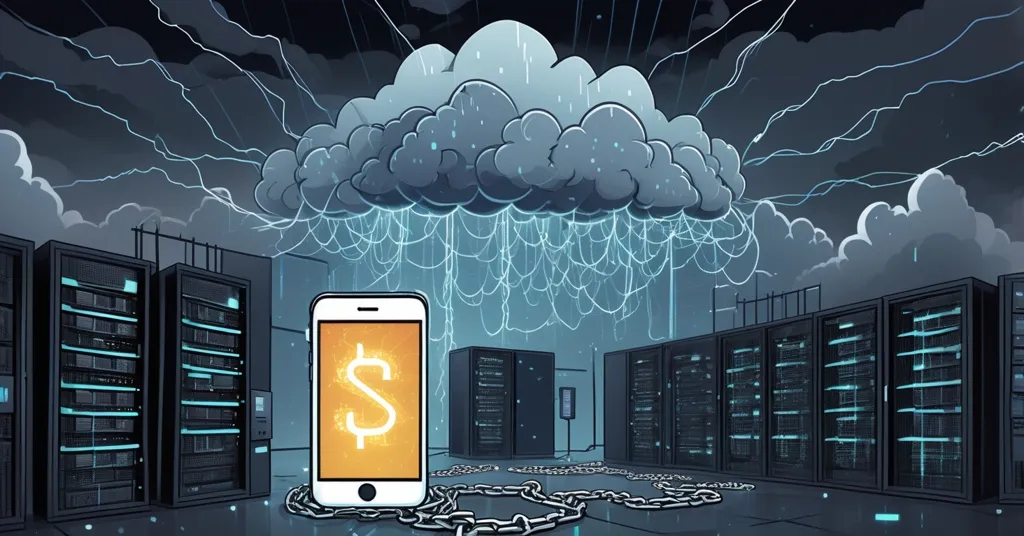
For the uninitiated, data centers are the physical hubs that power the internet—think massive warehouses full of servers that store and process the data behind apps like TikTok. When they go down, so do the services they support. With over 200 million Americans regularly scrolling through TikTok, this wasn’t a minor inconvenience; it was a stark wake-up call about how vulnerable our hyper-connected world is to something as mundane as bad weather. Oracle hasn’t released specifics on the number of affected users or a clear timeline for full recovery, but posts on X suggest the disruptions hit hardest in uploading new content, leaving creators and casual users alike stranded. If a snowstorm can bring down a cultural behemoth like TikTok, what does that say about the reliability of centralized tech giants? It’s a black eye for Oracle, which holds a 15% stake in TikTok’s newly restructured entity, and a reminder that even the biggest players can stumble when Mother Nature throws a punch. For more details on the incident, check out the report on Oracle’s data center outage impacting TikTok users.
Ownership Overhaul: TikTok’s New Masters
While Oracle and TikTok scramble to restore normalcy, the platform’s recent ownership restructuring adds another layer of complexity to the saga. TikTok’s original Chinese parent company, ByteDance, has seen its control slashed to just 19.9%. The majority—80.1%—is now held by American and international investors through a new entity called TikTok USDS Joint Venture LLC. For clarity, a joint venture is a business arrangement where multiple parties share ownership and decision-making. In this case, Oracle, Silver Lake, and Abu Dhabi-based MGX each claim a 15% stake, forming a coalition meant to safeguard TikTok’s US data security.
This shift wasn’t random. It’s a direct response to years of scrutiny from US authorities over national security and privacy fears tied to ByteDance’s Chinese roots. Both the Trump and Biden administrations previously flagged concerns that user data—everything from your goofy dance videos to personal info—could be accessed by foreign governments, potentially used to influence opinions or worse. The restructuring, endorsed publicly by President Donald Trump, who commands over 16 million followers on the app and credits it for his 2024 election win, was supposed to put those fears to rest. But here’s the rub: retaining even 19.9% ownership for ByteDance raises eyebrows. That specific percentage often dodges certain regulatory thresholds, but does it truly eliminate the risk of foreign influence? And with Trump’s vocal support, some worry the pendulum has swung too far the other way, aligning the platform with specific political interests rather than neutrality.
Censorship Storm: Free Speech Under Fire
As if technical glitches weren’t enough, TikTok is now caught in a firestorm over alleged content suppression. California Governor Gavin Newsom’s office dropped a bombshell, claiming the platform is deliberately muffling voices critical of Trump since the ownership change. Their statement didn’t mince words:
“Following TikTok’s sale to a Trump-aligned business group, our office has received reports, and independently confirmed instances, of suppressed content critical of President Trump.”
User frustration backs this up. Reports are flooding in about blocked searches and disappearing posts, targeting terms like “Epstein” or content related to immigration enforcement. California State Senator Scott Wiener shared his own experience, noting a video he posted about legal action on immigration vanished from public view without explanation. Across X, hashtags and complaints paint a grim picture—thousands of users feel silenced, with many threatening to ditch the app over what they see as censorship baked into TikTok’s updated terms of service.
Let’s break this down. Content moderation refers to the rules and algorithms platforms use to decide what gets shown, restricted, or banned. It’s a contentious space, often criticized for inconsistency or hidden biases, especially when ownership ties to political figures come into play. TikTok’s history in the US has been a tightrope act, balancing user freedom with regulatory pressure. The ownership overhaul was pitched as a solution to security concerns, but if users can’t trust the platform to let them speak freely, what’s the point? A counterargument might be that TikTok is enforcing community standards to curb misinformation or hate speech, but when specific political critiques vanish, it smells like bias. Trust is crumbling, and for a platform that thrives on unfiltered expression, that’s a death knell.
Centralized Failures: The Bigger Picture
Zooming out, TikTok’s dual crisis—technical outages and content control—lays bare the inherent weaknesses of centralized systems. When one data center fails, millions suffer. When a handful of executives or algorithms decide what’s “acceptable” speech, entire narratives get buried. Social media platforms aren’t just apps; they’re gatekeepers of modern discourse, especially for younger generations who get their news and form opinions through 15-second clips. With ownership structures increasingly tied to political agendas, impartiality becomes a pipe dream.
The outage itself is a glaring example of infrastructure fragility. Big tech’s servers can’t even withstand a snowstorm, yet we entrust them with shaping public conversation. Oracle, despite its technical prowess and stake in TikTok’s future, couldn’t prevent this hiccup. And while they’re working to fix it, the damage to user confidence is done. Pair that with censorship allegations, and you’ve got a platform teetering on the edge of a mass exodus. For those of us who value privacy and freedom, this is a neon sign flashing “centralized control is failing.”
Decentralization: A Crypto-Inspired Alternative
Here’s where the crypto ethos kicks in. Imagine a social media platform where no single data center outage can grind everything to a halt, and no shadowy boardroom decides what you can say. That’s the promise of decentralized systems, often built on blockchain technology—a distributed ledger that records data across countless nodes, making it damn near impossible to censor or shut down. Bitcoin, the granddaddy of crypto, sets the ideological tone here with its unshakeable resilience; no government or storm can kill it because it’s not owned by any one entity. While Bitcoin itself isn’t a social media tool, its principles of user sovereignty inspire a wave of alternatives.
Projects like Steemit, a blockchain-based blogging platform, reward users with cryptocurrency for content, cutting out middlemen who might suppress posts. Mastodon, though not fully on-chain, operates on a federated model where communities host their own servers, dodging centralized choke points. Ethereum, another blockchain heavyweight, hosts numerous decentralized apps (dApps) for social interaction, leveraging smart contracts to ensure transparency. These systems aren’t perfect—scalability is a headache, user interfaces can be clunky, and adoption is still niche. Steemit, for instance, struggles with spam content, and Mastodon’s fragmented setup confuses newcomers. But they offer something TikTok can’t: a framework where users, not corporations, hold the reins.
Let’s not overhype this. Decentralized social media isn’t a magic bullet. Building a user base to rival TikTok’s 200 million Americans is a Herculean task, and the tech isn’t yet polished enough for the average Joe who just wants to post memes without a learning curve. Still, the potential is undeniable. If crypto teaches us anything, it’s that systems built on transparency and resilience can disrupt even the most entrenched giants. Bitcoin maximalists might argue that BTC’s purity as a decentralized store of value should be the model, but altcoins like Ethereum play a crucial role in experimenting with broader applications like dApps. Together, they push the needle toward a future where outages and censorship are relics of a flawed past.
Key Questions and Takeaways
- What caused TikTok’s recent disruptions in the US?
A severe winter storm led to a power outage at an Oracle data center over the weekend, halting key services like content uploads for millions of users. - Why are there accusations of censorship on TikTok?
California Governor Gavin Newsom’s office and numerous users report content critical of President Trump being suppressed since the platform’s ownership shifted, raising fears of political bias. - How has TikTok’s ownership changed?
ByteDance now holds only 19.9%, while 80.1% is owned by American and international investors through TikTok USDS Joint Venture LLC, with Oracle, Silver Lake, and MGX each at 15%. - What does this mean for trust in social media?
Technical failures and perceived censorship erode confidence in platforms like TikTok, spotlighting the risks of centralized control over digital discourse. - Could decentralized tech solve these issues?
Blockchain-based platforms like Steemit or Ethereum dApps offer resilience against outages and censorship by prioritizing user autonomy, though they face hurdles in scalability and adoption. - How does this tie to Bitcoin and crypto values?
Bitcoin’s decentralized ethos and altcoins’ innovative applications highlight a path to user-controlled systems, challenging the fragility and overreach of centralized tech giants.
TikTok’s current mess is a microcosm of bigger battles in the digital realm. Oracle and TikTok need to iron out the technical kinks pronto—users won’t stick around for a broken app, no matter how addictive the content. But the deeper scar is on credibility. If TikTok can’t prove it’s a neutral space for expression, especially amid politically charged accusations, it risks losing a generation of users who value unfiltered voices. For those of us championing decentralization, privacy, and freedom, this saga is fuel for the fire. Centralized tech’s grip on our digital lives keeps slipping, whether through a storm-induced outage or heavy-handed moderation. Blockchain and crypto-inspired systems aren’t ready to replace TikTok tomorrow, but they’re planting seeds for a future where users call the shots. So, ask yourself—how much control are you willing to hand over to the next big app, and isn’t it time we built something better?