Top 7 Bitcoin Cloud Mining Platforms for 2025: Best Picks, Risks, and Rewards
 LTB
LTB Top 7 Cloud Mining Platforms for Bitcoin (BTC) in 2025: Risks and Rewards
Bitcoin cloud mining in 2025 has become a magnet for investors hungry for passive income, offering a way to earn BTC without the hassle of owning hardware or paying sky-high electricity bills. Yet, beneath the promise lies a landscape riddled with risks, scams, and questions about centralization that challenge Bitcoin’s core ideals. Let’s break down the mechanics, spotlight seven platforms worth a look, and face the harsh realities head-on.
- Cloud Mining Basics: Rent mining power remotely to earn BTC without managing hardware.
- Top Platforms: Seven options for 2025, led by Bitsmine, but none without flaws.
- Hard Truth: High risks and past scams mean thorough research is mandatory.
How Cloud Mining Works: A Quick Primer
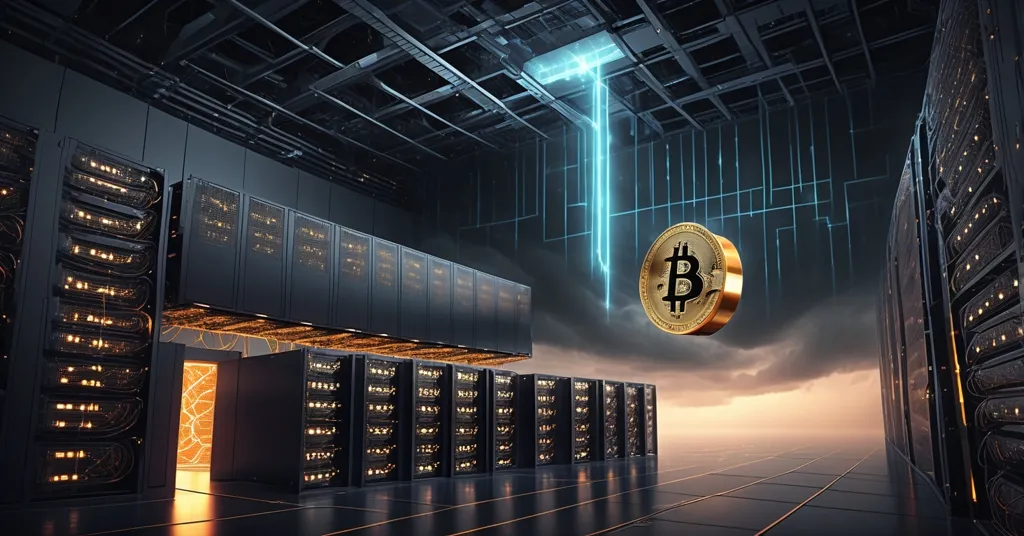
For those new to the game, cloud mining is a model where you rent computational power from remote data centers to mine Bitcoin. Instead of buying and running your own mining rig—think specialized machines called ASIC (Application-Specific Integrated Circuit) devices built to solve Bitcoin’s complex math puzzles—you pay a provider to do the heavy lifting. These puzzles are part of Bitcoin’s proof-of-work system, where miners validate transactions on the network and earn BTC as a reward. The provider handles hardware, cooling, and power costs, while you get a share of the mined Bitcoin, typically paid out daily or weekly. It’s a hands-off approach, ideal for those lacking technical skills or the budget for a personal setup. But as accessible as it sounds, the profitability and legitimacy of these services vary wildly, often hinging on Bitcoin’s price and network dynamics beyond your control.
The Evolution of Bitcoin Mining: From Garage Rigs to Cloud Powerhouses
Bitcoin mining wasn’t always this polished. In the early days, circa 2009-2011, enthusiasts mined BTC on regular PCs or GPUs in their basements, with electricity costs barely a blip. Back then, mining a single Bitcoin might’ve cost a few dollars in power. Fast forward to 2025, and the picture is starkly different. The network’s mining difficulty—a measure of how hard it is to solve those math puzzles—has skyrocketed as more miners join, requiring industrial-grade ASIC rigs that cost thousands and gulp electricity like there’s no tomorrow. Today, mining one BTC can cost anywhere from $20,000 to $50,000 in hardware and power, depending on location and efficiency (these are rough estimates based on historical trends). For the average Joe, solo mining is a losing battle, birthing the rise of cloud mining as a way to democratize access. Yet, this shift has trade-offs, centralizing mining power in the hands of a few data center giants, a tension we can’t ignore in Bitcoin’s decentralized vision.
The Ugly Truth: Cloud Mining Risks and Scams
Before we even touch on specific platforms, let’s rip the Band-Aid off: cloud mining is a gamble in a barely regulated frontier. The potential for loss is real, and the crypto space has a graveyard of scams to prove it. Remember BitConnect or MiningMax? These so-called cloud mining schemes promised insane returns, only to collapse, leaving investors with nothing but regret. Even with legitimate operations, profitability isn’t guaranteed. Bitcoin’s price swings can turn profits to dust overnight, while mining difficulty adjustments mean that as more miners pile in, your share of rewards shrinks. Hidden fees, shady contract terms, and outright fraud are rampant—some platforms vanish with your funds before mining even starts. Then there’s the centralization issue: by relying on massive data centers, you’re handing over control, clashing with Bitcoin’s ethos of individual empowerment. Regulatory bodies like the SEC have issued warnings on cloud mining for years, and every four-year halving event—where mining rewards are cut in half—squeezes profitability further. Research isn’t optional; it’s your lifeline. Never invest what you can’t afford to lose, and if a deal smells like a fairy tale, it’s probably a nightmare in disguise.
7 Cloud Mining Platforms to Watch in 2025
With the risks laid bare, let’s turn to seven cloud mining platforms that have garnered attention in 2025 for their operations. These are options to consider, not endorsements—your due diligence is non-negotiable. Each has strengths and flaws, so let’s dissect them with a critical eye. For a deeper look into trusted platforms, check out this guide on proven cloud mining services for earning BTC in 2025.
Bitsmine: High Returns, High Stakes
Bitsmine often gets billed as the frontrunner in cloud mining for 2025, thanks to its slick interface and bold claims of transparency. They offer high-powered ASIC setups, daily BTC payouts, and a free $100 trial bonus to lure new users. Their plans range widely—a 7-day $5,000 investment supposedly yields a $507.50 profit, while a 30-day $100,000 plan promises a whopping $51,000 return, based on current Bitcoin prices and difficulty levels (which, let’s be clear, can shift dramatically). Starting is simple: sign up, verify your email, deposit BTC or USDT (a stablecoin tied to the US dollar), and watch for payouts. But those numbers? They’re projections, not promises. High minimums for bigger plans might lock out smaller players, and unverified user feedback raises eyebrows. Ideal for risk-takers with cash to spare, but don’t bet blindly.
Bitdeer: Industrial Might with a Price Tag
Bitdeer flexes muscle with industrial-scale mining operations, boasting data centers that could power small towns. Their dashboard offers real-time tracking of mining output, a transparency win in a murky field. They cater to serious investors, but their plans often demand steeper upfront costs, potentially alienating casual users. While their infrastructure screams reliability, profitability hinges on market conditions, and fees can bite. Best for those already comfortable with larger crypto investments, though watch for cost creep.
ECOS: Regulated, Accessible, but Not Cheap
Operating from a regulated economic zone in Armenia, ECOS brings a rare whiff of legitimacy to cloud mining. Their platform is beginner-friendly, with low entry barriers and a straightforward setup. Transparency around operations is a plus, but fees can erode gains if you’re not vigilant, and smaller plans might not scale well. Perfect for newbies wanting a safer feel, but don’t expect blockbuster returns without scrutinizing the fine print.
Genesis Mining: The Old Guard with Room to Innovate
As one of the longest-running cloud mining services, Genesis Mining carries a legacy of stability. Their infrastructure is dependable, and they’ve weathered crypto winters that buried others. However, their plans can feel outdated compared to flashier newcomers, lacking the flexibility or innovation some investors crave. A strong choice for those valuing track record over cutting-edge features, but don’t overlook competitors’ perks.
HashShiny: Budget-Friendly with Bare-Bones Service
HashShiny targets the frugal crowd with low minimum deposits and daily payouts, making it easy to dip a toe in. They’re not glamorous—support can be spotty, and features are basic—but they deliver a no-frills entry point. Imagine a college kid with $100 to spare testing the waters; this is their spot. Just don’t expect hand-holding or massive profits, and double-check user experiences before committing.
KuCoin Pool: Exchange Integration for Convenience
Tied to the major crypto exchange KuCoin, KuCoin Pool offers cloud mining with the security and ease of a familiar ecosystem. It’s a seamless fit for existing KuCoin users, integrating mining with trading accounts. However, their mining plans lack the variety of standalone providers, and returns may underwhelm compared to dedicated platforms. Great for exchange loyalists, but shop around if variety is your priority.
StormGain: Mobile Mining with Question Marks
StormGain stands out with a mobile app-based cloud mining feature, requiring zero hardware on your end. It’s absurdly accessible—think mining BTC while sipping coffee on your commute. Yet, skeptics question its scalability and long-term viability; app-based mining feels more gimmick than game-changer. Suited for casual tinkerers, but serious investors should tread lightly and dig into the mechanics before diving in.
Why Cloud Mining Might Not Be for Everyone
Cloud mining isn’t the only path to crypto gains, and for some, it’s a detour worth skipping. Buying and holding Bitcoin directly remains the purest play for many maximalists—myself included—who see BTC as the ultimate store of value, free from third-party risks like shady mining contracts. You control your keys, your coins, and sidestep centralization concerns inherent in cloud setups. Alternatively, staking cryptocurrencies like Ethereum or other altcoins offers passive income with different risk profiles, often aligning better with specific use cases Bitcoin doesn’t serve. Staking can be less volatile than mining, though it locks up funds and varies by protocol. Both options demand research, but they cut out the middleman that cloud mining introduces. If decentralization and privacy are your north star, relying on a data center might feel like a compromise too far.
Key Questions and Takeaways on Bitcoin Cloud Mining
- What is cloud mining, and why is it gaining traction in 2025?
Cloud mining lets you rent remote computing power to mine Bitcoin without owning hardware. Its popularity in 2025 stems from accessibility and the allure of passive BTC income amid rising mining costs. - Which cloud mining platforms stand out for earning BTC?
Bitsmine leads with bold return projections and ease of use, followed by Bitdeer, ECOS, Genesis Mining, HashShiny, KuCoin Pool, and StormGain, each with unique strengths but notable risks. - Can cloud mining deliver significant profits?
Potentially—Bitsmine claims profits like $51,000 on a $100,000 plan over 30 days—but these are projections, not guarantees, hinging on Bitcoin’s volatile price and network difficulty. - What are the biggest dangers of cloud mining?
Scams, financial loss, and hidden fees top the list. Past failures like BitConnect show the peril, while market swings and centralization risks add layers of uncertainty. - How does cloud mining impact Bitcoin’s decentralization?
It centralizes mining power in data centers, often run by large entities, clashing with Bitcoin’s ethos of distributed control and raising concerns for purists. - Are there alternatives to cloud mining for passive crypto income?
Yes, holding Bitcoin directly or staking altcoins like Ethereum offers different risk-reward balances, often cutting out third parties and aligning closer to decentralization ideals. - How do I start with a platform like Bitsmine?
Create an account, verify email, select a plan, deposit BTC or USDT, and track payouts. But prioritize vetting the platform’s credibility—user reviews and forums are gold.
Cloud mining in 2025 dangles the carrot of Bitcoin earnings with minimal effort, potentially accelerating adoption by lowering barriers—a win for the effective accelerationism we back. Yet, it’s a double-edged sword, concentrating power in ways that undermine the very freedom and privacy Bitcoin was built to protect. Platforms like Bitsmine and others offer intriguing entry points, but the crypto revolution isn’t about blind trust—it’s about empowering yourself. Weigh the risks against the rewards, consider direct BTC ownership or altcoin staking, and never stop questioning. If cloud mining is your play, step in with caution and a relentless drive to understand the game. The future of finance is yours to shape, but only if you navigate it with both eyes open.