Tron Inc. Bets Big on TRX with $50K Daily Buys Amid Crypto Winter
 LTB
LTB TRX Stays Firm at $0.28 as Tron Inc. Goes All-In on Token Accumulation
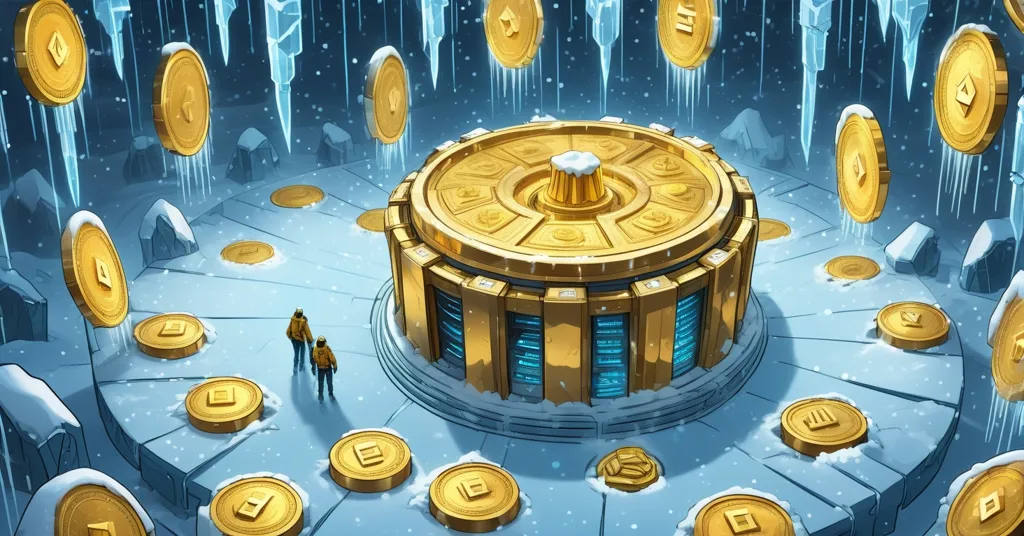
Can a daily $50,000 investment in TRX shield a blockchain from the brutal crypto winter? Tron Inc. is betting hard that it can, aggressively stockpiling their native token in a move that’s turning heads amid a market slump. The company just scooped up another 177,925 TRX at an average price of $0.28, boosting their treasury to over 681.9 million tokens—a clear signal they’re doubling down on the future of the TRON ecosystem.
- Relentless Buying: Tron Inc. adds 177,925 TRX, with treasury now at 681.9 million tokens.
- Daily Commitment: Plans to buy $50,000 worth of TRX each day for 360 days.
- Market Defiance: TRX up 17.6% year-to-date while Bitcoin and Ethereum bleed value.
Tron Inc.’s High-Stakes Accumulation Gamble
Tron Inc., the corporate force behind the TRON blockchain and a NASDAQ-listed entity under the ticker TRON, isn’t just testing the waters—they’re cannonballing into the deep end. Their strategy, laid out in a rare show of transparency via SEC Form 8-K filings on February 12, commits to purchasing $50,000 worth of TRX daily for a full 360 days. Since January 22, they’ve already amassed roughly 3.6 million tokens, with recent daily hauls ranging from 176,558 to 181,346 at the current price of $0.28. This isn’t a casual side bet; it’s a deliberate play to build one of the largest public token treasuries in the crypto space, as detailed in their aggressive TRX accumulation strategy.
CEO Rich Miller is crystal clear on the rationale behind this audacious plan.
“Building the largest TRX token treasury in the public markets is not symbolic but strategic,”
Miller stated, pointing to TRON’s scalability and its potential to harness growing blockchain activity. Tron founder Justin Sun backs this up, noting that accumulating TRX “strengthens the company’s core treasury.” These statements aren’t empty hype—they reflect a belief that TRX is more than a speculative coin; it’s a cornerstone for a financial system ripe for disruption. But let’s not kid ourselves: stacking millions of tokens in a volatile market is a ballsy move, and ballsy can mean broke if the winds shift.
TRON Ecosystem: A Stablecoin Powerhouse
Beyond token stockpiling, TRON’s real muscle lies in its role as a hub for stablecoin transactions—a sector that’s absolutely exploding. For those new to the game, stablecoins are cryptocurrencies pegged to assets like the US dollar to keep price swings in check, offering a safe harbor in crypto’s wild seas. TRON has become a go-to network for this, especially with USDT (Tether) leading the charge at a staggering 85.4 billion tokens. Smaller players like USDD (705 million), TUSD (168.5 million), and USDCOLD (38.4 million) also contribute, pushing TRON’s stablecoin supply up 41% recently. With 72.75 million active participants and over 3.2 million transactions processed in a single day—a 53.5% spike—this network is a critical pipeline for digital dollars.
Why does this matter? TRON acts as a settlement layer—think of it as a digital highway for financial transactions—with dirt-cheap fees and lightning-fast confirmations that make it a lifeline in underbanked regions like Asia, Africa, and Latin America. Sending remittances or making microtransactions on TRON costs pennies compared to Ethereum’s often exorbitant gas fees or Bitcoin’s slower, pricier transfers. Add to that over 100 million monthly active addresses and a whopping 342 million transactions in January alone, and you’ve got a blockchain that’s not just alive but thriving. DeFi platforms like SUN.io, with $115.85 million in liquidity, are also reaping the rewards of this high transaction volume.
Then there’s the money side. TRON’s protocol revenue—cash generated from network fees—hit $5.56 million daily, with $203.35 million over the last 30 days and a massive $3.39 billion over the past year, up 43.03%. Sure, short-term dips exist, like a 17.87% drop over 90 days, but in a market this choppy, long-term growth tells the real story. TRON isn’t just holding ground; it’s gaining it.
TRX Performance: Defying the Crypto Bloodbath
Let’s zoom out to the bigger picture. The cryptocurrency market is a mess right now, with total market cap down 25% and giants like Bitcoin and Ethereum taking brutal hits of 29.4% and 27.7%, respectively. Yet TRX is somehow defying gravity, posting a 17.6% year-to-date gain despite a minor 0.3% dip recently. Having peaked at $0.45 earlier in 2024, it now sits at $0.28, with a market cap ranking of #8 and a valuation over $26.4 billion on a total supply of 94.7 billion tokens. That’s not shabby for an altcoin often dismissed by the Bitcoin crowd.
But here’s the nagging doubt: is this strength genuine, or is Tron Inc.’s relentless buying artificially propping up the TRX price? Corporate buybacks in traditional markets can juice stock prices short-term, only to crash if fundamentals don’t hold. Crypto isn’t much different—look at past token accumulation stunts that fizzled when hype faded. If Tron Inc. is the main buyer keeping TRX afloat while others sell off, what happens when their $50,000-a-day well runs dry or market sentiment sours further? It’s a question worth chewing on.
Risks and Regulatory Shadows Looming Large
Speaking of souring, let’s not sugarcoat the risks. Tron Inc.’s strategy ties up massive capital in TRX, leaving them exposed to price volatility. If the market tanks harder—and let’s be real, it easily could—that $0.28 price tag might look like a distant dream at $0.18 or lower. Overexposure to a single asset, even your own, is a dangerous game. And while their SEC filings scream “legitimacy,” they also paint a target on their back for regulatory hawks. Increased transparency is a double-edged sword; it builds trust but invites scrutiny, especially for a project tied to Justin Sun, whose polarizing history includes run-ins with regulators and accusations of centralization.
Sun’s past isn’t just trivia—it’s context. From SEC probes into his activities to community grumbles about TRON’s governance lacking true decentralization, there’s baggage here. Compare this to other token buyback plays like Binance with BNB, where accumulation fueled growth but also drew heat over market manipulation concerns. Tron Inc. might be banking on confidence to drive value, but if regulatory clamps tighten or public perception sours, this treasury could become a liability faster than you can say “bear market.”
Then there’s the tech itself. Critics have long jabbed at TRON for being less decentralized than claimed, with a relatively small number of nodes controlling much of the network compared to rivals like Solana or Ethereum. While TRON’s high throughput and low costs are undeniable strengths, scalability and security concerns linger. Balancing rapid growth with robust infrastructure isn’t easy, and any hiccup could dent trust—especially with so much stablecoin activity riding on their rails.
TRON’s Niche: Digital Plumbing in a Bitcoin World
Here’s where I’ll tip my hat to TRON, even as a Bitcoin enthusiast. While Bitcoin maximalists might sneer at TRX as “just another altcoin,” TRON is carving out a space Bitcoin doesn’t—and frankly, shouldn’t—occupy. Bitcoin is digital gold, a store of value built for scarcity and security. TRON? It’s more like digital plumbing. Less sexy, sure, but try building a decentralized economy without pipes to move money fast and cheap. With stablecoin transactions and micro-payments as its bread and butter, TRON fills a gap that BTC was never meant to address.
This isn’t about dethroning Bitcoin; it’s about complementing it. In emerging markets, where a coffee costs less than a Bitcoin transaction fee, TRON’s near-zero costs for USDT transfers are a game-changer. Institutional interest, though still speculative, is reportedly warming to TRON’s role as a stablecoin settlement hub. If they can lock in partnerships or broader adoption—think remittance corridors or DeFi integrations—this accumulation strategy might look like genius in hindsight. But that’s a big “if” in a market that chews up dreamers for breakfast.
Key Questions and Takeaways on TRON’s Bold Play
- Why is Tron Inc. stockpiling TRX so aggressively?
They’re banking on surging blockchain activity and growing institutional interest in the TRON ecosystem, seeing a massive treasury as a long-term value driver. - How does TRX performance compare to Bitcoin and Ethereum in 2024?
TRX shines with a 17.6% year-to-date gain, outpacing Bitcoin’s 29.4% loss and Ethereum’s 27.7% drop, defying a brutal market downturn. - What makes stablecoin activity a cornerstone for TRON?
With USDT at 85.4 billion tokens and over 3.2 million daily transactions, TRON’s low-cost, fast network is a vital hub for digital dollar transfers, especially in underbanked regions. - What are the biggest risks of Tron Inc.’s TRX accumulation?
Price volatility could wipe out value, and regulatory scrutiny—amplified by SEC filings and Justin Sun’s history—might turn this bold bet into a costly misstep. - Can TRON play a unique role alongside Bitcoin in decentralization?
Yes, TRON’s focus on high-volume, low-cost transactions like stablecoins makes it essential infrastructure, while Bitcoin remains the ultimate store of value.
Tron Inc.’s TRX accumulation is a stark reminder that crypto isn’t just about tech—it’s about gutsy plays in a high-stakes arena. Whether this turns out to be a masterstroke or a cautionary tale, one thing’s certain: the TRON saga is a rollercoaster worth watching. In a market this unforgiving, is confidence alone enough to win? That’s for you to wrestle with as the battle for blockchain supremacy rages on.