Trump’s 2026 Tariff Threats Trigger Crypto Chaos and Pepeto Presale Hype
 LTB
LTB Crypto Carnage: Trump’s 2026 Tariff Threats, Market Mayhem, and the Pepeto Presale Hype
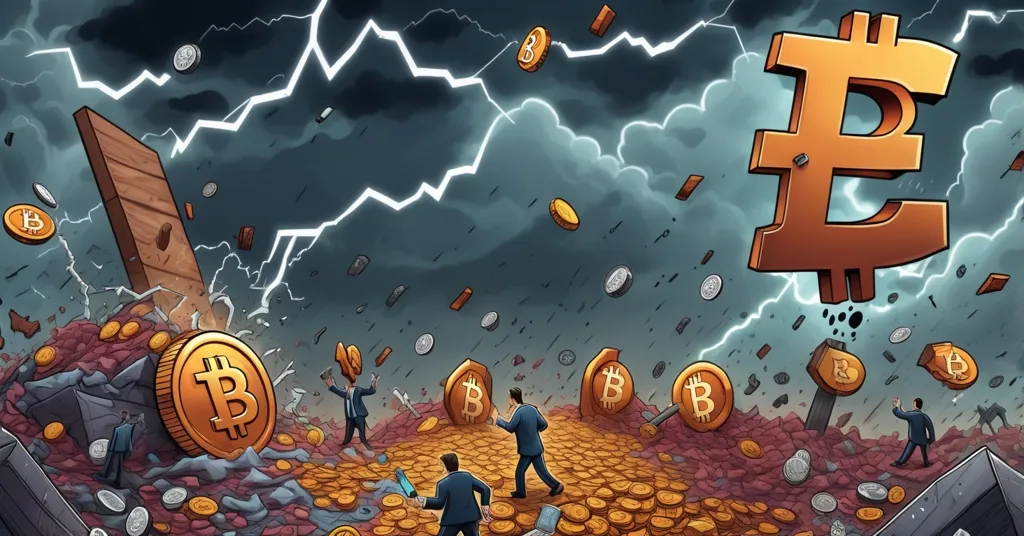
President Trump’s bombshell tariff threats on April 2, 2026, have sent global markets into a tailspin, with the crypto sector bleeding a 3% drop in total market cap while oil prices soar past $98 per barrel. Amid this chaos, a new presale project named Pepeto is being peddled as the “best crypto to buy” with wild claims of a 100x return—but is this just another scam preying on panic, or a genuine opportunity?
- Tariff Turmoil: Trump’s April 2, 2026, tariff threats on key trade partners crash crypto market cap by 3%, per CoinGecko data.
- Pepeto Presale: New token Pepeto raises $8M, hyped for a 100x return before a rumored Binance listing, despite market fear.
- Established Coins: Solana (SOL) and Cardano (ADA) slump with setbacks, while Bitcoin’s role as a safe haven is questioned.
Tariff Shockwaves: Crypto’s 3% Wipeout
The crypto market took a brutal hit when President Trump announced sweeping tariff threats against major trade partners like China and the EU on April 2, 2026. These tariffs—taxes on imported goods—threaten to ignite trade wars, inflate costs, and choke economic growth, sending investors into full-blown risk-off mode. That’s when traders ditch volatile assets like stocks and crypto for safer bets like cash or bonds. According to CoinGecko, the total crypto market cap plummeted 3% in a single day, while equity markets tanked alongside it. Oil prices, often a fear indicator, shot up to $98 per barrel as geopolitical tensions flared. The Fear and Greed Index, a gauge of investor sentiment where low scores signal panic and high scores reflect overconfidence, sank to a dismal 12, showing just how spooked the market really is.
This isn’t the first time global shocks have rattled crypto. Back in 2018, the US-China trade war saw Bitcoin and altcoins dip as uncertainty spread, proving that despite its decentralized roots, crypto isn’t immune to the whims of policymakers. If you’re watching your portfolio bleed red right now, know you’re not alone—these macro punches land on retail investors hardest. But while fear dominates, some are sniffing out bargains or speculative bets in this mess, which brings us to the loudest noise in the room: Pepeto.
Pepeto Presale: Hype or Hazard?
Enter Pepeto, a shiny new cryptocurrency still in its presale stage, raking in over $8 million despite the market’s meltdown. Priced at a microscopic $0.000000186 per token, it’s being pitched as the holy grail of quick riches, with so-called analysts projecting a staggering 100x return before a supposed listing on Binance, the heavyweight of crypto exchanges. For those new to the game, a presale is like buying into a startup before it goes public—tokens are cheap, but the risk of the whole thing imploding is sky-high. Pepeto’s marketing is slick, touting features like a risk scorer tool to sniff out dodgy smart contracts, a zero-cost cross-chain bridge (think of it as a digital highway to move crypto between blockchains without fees, in theory), and staking rewards with a jaw-dropping 189% APY, or annual percentage yield, which is the return you get for locking up your tokens.
They’ve even thrown in some big-name credentials, claiming their team includes the architect of the original Pepe coin—a meme token that allegedly peaked at $11 billion—and a former Binance expert. Add to that a code audit by SolidProof, a firm that checks smart contracts for vulnerabilities, and it’s packaged as a can’t-miss deal. But let’s slam the brakes here. This kind of hype, often seen in projects touted as the top crypto picks during market unrest, is the oldest trick in the crypto playbook, and it stinks of borderline predatory nonsense. A 100x return? That’s the kind of math only a carnival barker could love. There’s zero hard evidence of a Binance listing—exchanges keep those cards close to the chest until the last minute, and even then, listings don’t guarantee moonshots. Unverified team claims are just that: unverified. Anyone can say they built a billion-dollar meme coin. And while audits are a plus, they don’t mean squat if the project’s intent is to fleece you—plenty of audited tokens have turned into rug pulls, where devs vanish with your cash.
Those features? Until they’re live and battle-tested, they’re just buzzwords on a whitepaper. A 189% APY screams unsustainable tokenomics, where early investors get paid with money from later suckers—a setup that smells like a Ponzi scheme. In a market paralyzed by panic, Pepeto is banking on FOMO (fear of missing out) to reel in desperate punters. Seriously, when has a 100x return ever been a sure thing in crypto? This isn’t innovation; it’s a gamble dressed up as a lifeline.
Solana and Cardano: Battle-Tested but Bruised
While Pepeto grabs headlines with fairy-tale promises, let’s not forget the heavyweights still in the ring. Solana (SOL), trading at $80.40 per CoinMarketCap data, is down 3.36% over the past week, reeling from a gut-punch $285 million exploit on Drift, a DeFi protocol on its network. An exploit, for the uninitiated, is a hack where flaws in code let thieves drain funds—a digital stick-up. Solana’s price has a support level at $75, a floor where buying might kick in, but faces resistance at $88, a ceiling it can’t crack. Despite the drama, Solana’s ecosystem is a powerhouse with lightning-fast transactions fueling DeFi apps and NFT markets. The community is buzzing with developer updates to patch vulnerabilities, showing resilience amid these growing pains. But network hiccups and security woes remain a thorn in its side.
Cardano (ADA), meanwhile, is languishing at $0.25, down a brutal 11% weekly, as it gears up for a governance overhaul with Protocol 11. This update aims to boost decentralized decision-making, potentially drawing more projects and users to its eco-friendly blockchain. If it delivers, some see a climb to $0.50, a modest 2x return—nowhere near Pepeto’s fantasy figures, but rooted in a network with years of academic rigor and a die-hard following. Community forums are cautiously optimistic, with talks of upcoming partnerships to expand use cases beyond slow-and-steady research. Still, Cardano’s pace of adoption has critics yawning, and this tariff storm isn’t helping.
Comparing Pepeto to Solana or Cardano is like pitting a lottery ticket against a weathered fighter. Presales dangle early-entry dreams, but most flop or scam out, leaving bagholders with nothing. Solana and Cardano, for all their stumbles, have transparent chains, active codebases, and real utility—Solana with speed, Cardano with sustainability. They’re not perfect, but they’re not built on smoke and mirrors either.
Bitcoin’s Bigger Picture: A True Safe Haven?
Amid this tariff-induced chaos, where’s Bitcoin, the king of crypto, in all this? Hypothetically sitting at $85,000 in April 2026, it’s down 2% this week, mirroring the broader market’s risk-off dive. Often hailed as digital gold, Bitcoin’s narrative as an inflation hedge and safe haven shines in theory—but in practice, it still dances to the tune of equities during crises. Correlation data shows BTC moving in lockstep with the S&P 500 when fear strikes, as it did post-tariff news. Yet, whispers of institutional buying and the lingering effects of past halvings—events that cut mining rewards and historically boost scarcity-driven rallies—keep the long-term hope alive.
Bitcoin’s community on platforms like X is split: some see it as unshackled from fiat woes, others scoff at its failure to decouple from Wall Street. If anything, this crisis exposes crypto’s dirty little secret—it’s not as independent as we preach, yet. But every shock is fuel for effective accelerationism, the idea that pushing boundaries fast, even through pain, drives progress. Could tariff fears spark a surge in privacy coins or DeFi as true hedges against geopolitical mess? Bitcoin’s path to becoming a standalone financial fortress isn’t clear-cut, but its decentralized ethos remains the North Star.
Navigating Market Fear: A Reality Check
Zooming out, Trump’s tariff threats—let’s assume they’re targeting 25-30% levies on tech and manufacturing imports—could ripple beyond immediate sell-offs. Higher costs for goods mean less consumer spending, which hits tech investment and, by extension, blockchain startups reliant on venture cash. Crypto’s tie to macroeconomics is tighter than we’d like to admit, a reminder that decentralization doesn’t equal isolation. But crises like these are also wake-up calls for the industry to build systems that don’t buckle under trade spats or policy whims.
For retail investors caught in the crossfire, a few hard rules apply. Diversify—don’t dump everything into one hyped presale or even one blockchain. Use stop-loss orders to cap your downside when markets tank. And above all, focus on fundamentals over flash—does a project solve a real problem, or is it just hot air? The crypto space is a wild west of opportunity, but it’s also crawling with snake oil salesmen. Pepeto might be the next unicorn, or it might be the next rug pull. We’re not here to shill or soft-pedal: for every Bitcoin rewriting the rules of money, there are a thousand shitcoins waiting to burn you.
As advocates for decentralization, privacy, and smashing the status quo, we see crypto’s potential to upend power structures. But that doesn’t mean swallowing every shiny promise whole. Market fear is real, opportunities are out there, but so are traps. The road to a truly independent financial system is a gauntlet, and tariff chaos is just the latest hurdle. Stay sharp, dig deep, and don’t let hype cloud your judgment—if it sounds too good to be true, it damn well probably is.
Key Takeaways and Questions for Crypto Enthusiasts
- How do Trump’s 2026 tariff threats impact Bitcoin and crypto markets?
They’ve sparked a 3% drop in crypto market cap as of April 2, 2026, driving risk-off sell-offs alongside stocks. Crypto remains tied to global shocks, underlining the gap between its decentralized ideal and real-world vulnerability. - Is Pepeto presale a smart investment during the April 2026 market dip?
Highly doubtful—claims of a 100x return and 189% APY scream speculative hype, with unverified team creds and no confirmed Binance listing. Presales in fear-driven markets often exploit FOMO, making them a dangerous bet. - Why are Solana and Cardano struggling in the 2026 tariff crisis, and are they safer?
Solana ($80.40) is down 3.36% with a $285M exploit, while Cardano ($0.25) drops 11% despite governance plans. Their established ecosystems and transparency make them far less risky than untested presales like Pepeto, though challenges persist. - Can crypto investors trust high staking rewards like Pepeto’s 189% APY?
Almost never—such rates often hide unsustainable tokenomics or scams, paying early investors with later funds. Scrutinize the project’s economic model before staking anything. - Will Bitcoin become a safe haven amid 2026 geopolitical tensions?
Not fully yet—despite its digital gold tag, Bitcoin ($85,000, down 2%) correlates with equities in crises. Long-term, institutional adoption and scarcity could bolster its independence, a core aim for decentralization fans.