Trump’s Nvidia H200 Chip Sales to China: Security Risk or Strategic Play?
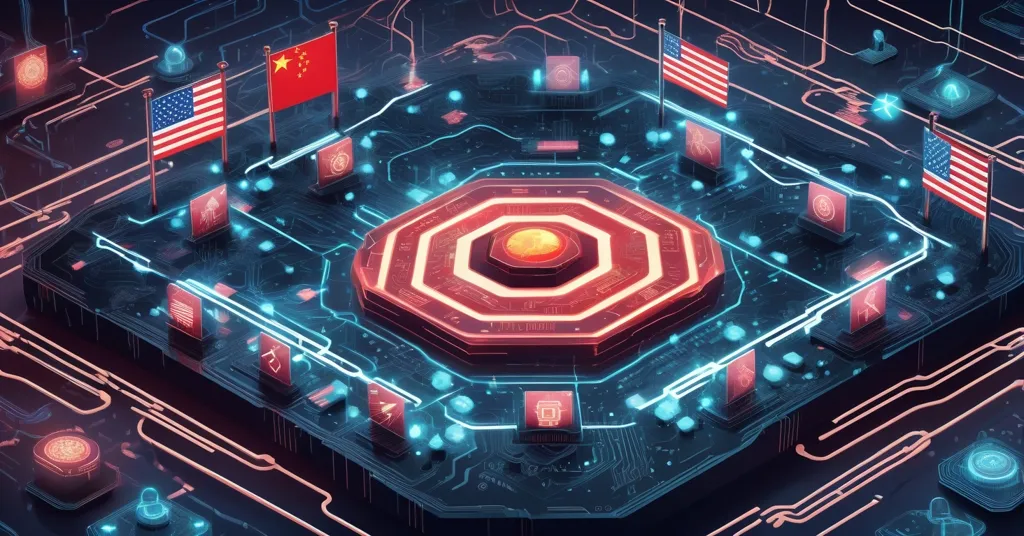
 LTB
LTB Trump Approves Nvidia H200 Chip Sales to China: A Dangerous Tech Gambit?
The Trump administration has ignited a firestorm with its decision to approve the sale of Nvidia’s H200 AI chips to China, slapping on a 25% fee and a laundry list of security restrictions. This reversal of the Biden-era ban on advanced tech exports is a calculated risk—potentially padding Nvidia’s pockets while flirting with the danger of supercharging China’s AI capabilities at the expense of U.S. dominance.
- Policy Flip: Nvidia H200 chips are now sellable to China with a 25% fee, mandatory external testing, and strict sales limits.
- Massive Demand: Chinese firms have ordered over 2 million chips, far outstripping Nvidia’s current 700,000-unit stock.
- Security Risks: Critics slam the move as a potential boost to China’s military tech, with enforcement looking like a pipe dream.
The Policy Breakdown: What’s Really Happening?
Let’s cut through the noise and get to the meat of this decision. The Nvidia H200 chip isn’t just some shiny gadget; it’s the brain behind cutting-edge AI systems, capable of crunching massive data sets at speeds most hardware can only dream of. Think of it as the engine driving everything from self-driving cars to complex financial models—or even crypto mining rigs and decentralized computing networks. Under the previous administration, these chips were locked away from China, with fears they’d end up powering military tech or eroding U.S. leadership in artificial intelligence. President Trump, however, has swung the pendulum the other way, declaring the sales permissible “under conditions that allow for continued strong National Security.”
So, what are these conditions? First, every H200 chip bound for China must undergo AI performance testing in an external lab—a kind of stress test to gauge just how powerful these beasts are and ensure they’re not handed over without scrutiny. Sales volume is capped too; Chinese buyers can’t get more than half of what’s sold to American customers, a move to prevent the U.S. market from being left high and dry. Nvidia has to prove it’s got enough stock to satisfy domestic demand before shipping anything overseas. And for the Chinese firms salivating over this tech? They’ve got to jump through hoops—proving “secure usage” (a vague term if there ever was one) and swearing the chips won’t touch military projects. Good luck enforcing that in a landscape where state and corporate lines often blur into a messy smear.
Demand Overload: China’s Tech Hunger
The numbers coming out of China are downright staggering. Chinese tech firms have placed orders for over 2 million H200 chips, priced at roughly $27,000 each, while Nvidia’s current inventory sits at a measly 700,000 units. That’s a tech buffet Nvidia can’t possibly serve fast enough. Speaking at the Consumer Electronics Show in Las Vegas, Nvidia CEO Jensen Huang didn’t mince words about the global frenzy, highlighting how demand from China and beyond has jacked up production efforts and sent rental prices for H200 chips soaring in cloud computing centers. For those of us in the crypto space, this matters—AI chips like these often overlap with blockchain infrastructure, powering the heavy lifting behind decentralized networks or data-intensive DeFi platforms.
Why It’s Controversial: A National Security Minefield
Now, why ditch Biden’s blanket ban for this conditional green light? The Trump administration pitches it as a strategic middle finger to penalized Chinese giants like Huawei, with White House AI director David Sacks steering the policy to balance economic gain with geopolitical leverage. But not everyone’s buying the hype. Stock analyst Jay Goldberg from Seaport Research didn’t hold back, calling it out with brutal clarity:
“As we have seen, companies have found ways to get access to those chips, and the U.S. government appears highly transactional in their approach to chip exports. Put another way, this looks like a Band-Aid, a temporary attempt to cover the huge gap among the U.S. government’s export policy makers.”
A Band-Aid, indeed. Past smuggling operations worth $160 million have already shown how easily export bans can be sidestepped—think of it as guarding a bank with a screen door.
Criticism isn’t just coming from market watchers. Saif Khan, a former White House official on tech and national security during the Biden years, dropped a chilling warning:
“The rule would allow about two million advanced AI chips like the H200 to China, an amount equal to the compute owned today by a typical U.S. frontier AI company. The Administration will also face challenges enforcing the rule’s know-your-customer requirements that restrict Chinese cloud providers from supporting nefarious uses.”
In plain English, even with all these supposed safeguards, China could end up with computing power rivaling top U.S. AI firms. And policing who’s using these chips—and for what—is like trying to track a ghost in a fog. For more details on the policy specifics and reactions, check out this report on Trump’s approval of Nvidia H200 chip sales to China.
Enforcement Nightmares: Can This Even Work?
Let’s be real—enforcement is the glaring weak spot here. History isn’t kind to export restrictions; smugglers have already moved millions in tech under the radar, exploiting loopholes in supply chains that are murkier than a swamp. The so-called “know-your-customer” rules—background checks to ensure buyers aren’t funneling chips into shady projects—sound nice but crumble against opaque systems and state-backed players in China. Imagine a Chinese firm using these chips to build a surveillance network that rivals anything the West has. How does the U.S. stop that when it can barely track where the hardware lands? On the flip side, completely blockading sales might just light a fire under China’s domestic chip industry. Huawei’s already pushing hard on self-reliance with state-backed semiconductor projects—cut them off entirely, and you might accelerate a bigger long-term threat. It’s a damned-if-you-do, damned-if-you-don’t mess.
Crypto Connections: Why Bitcoiners Should Care
For the Bitcoin maximalists and decentralization diehards among us, this saga hits closer to home than you might think. Sure, H200 chips aren’t mining rigs, but AI and blockchain tech often intersect in critical ways. These chips could power decentralized AI models for DeFi protocols, optimize data processing for Web3 platforms, or even enhance the hardware efficiency of crypto mining operations. If you’re rooting for a future where tech escapes centralized chokeholds, policies like this are a wake-up call. If governments and tech giants are duking it out over AI hardware, what’s stopping them from targeting Bitcoin mining gear or privacy-focused tech next? The U.S.-China tech war isn’t just about chips; it’s about who controls the infrastructure of tomorrow. And if that infrastructure stays in the hands of centralized powers, the dream of financial sovereignty through Bitcoin takes a serious hit.
From an effective accelerationism standpoint, there’s a silver lining—letting tech flow globally could speed up innovation, even in crypto spaces. Open exchange might spark breakthroughs in decentralized computing that benefit us all. But that’s a big “if” when the risk of surveillance tech or state overreach looms large. Bitcoin’s value proposition as a neutral, uncontrollable system shines brighter against this backdrop of tech monopolies and government meddling. If you can’t trust a chip export policy to hold, how do you trust centralized powers with your privacy or wealth?
What’s Next in This Tech Tug-of-War?
Looking ahead, this policy feels like the opening shot in a broader battle over technological sovereignty. Nvidia’s scrambling to ramp up production, but Chinese demand isn’t slowing down, and neither are the risks of tech leakage. Will the Trump administration tighten the screws if enforcement flops, or double down on this transactional approach? And what precedent does this set for other sectors crypto relies on—like ASIC miners or blockchain hardware? For now, companies like Nvidia and AMD remain the flag-bearers of U.S. innovation, but every policy tweak sends shockwaves through global markets. The fight for tech autonomy isn’t just about code or coins; it’s about the silicon that powers our future.
Key Questions and Takeaways
- What are the specifics of Trump’s Nvidia H200 chip sales policy to China?
Sales are greenlit with a 25% fee, external AI performance testing, a cap at 50% of U.S. sales volume, and mandates for Chinese buyers to prove secure, non-military use. - Why is this decision sparking so much backlash?
Experts and politicos fear it could turbocharge China’s AI and military tech, undermine U.S. leadership, and prove impossible to police given smuggling history and compliance gaps. - How does this differ from Biden’s approach to AI chip exports?
Biden enforced a total ban on advanced AI chip sales to China, while Trump opts for conditional approval, blending economic motives with strategic posturing. - Why should the crypto community pay attention to this?
AI chips like the H200 could bolster blockchain infrastructure or DeFi computing, and this policy hints at how governments might control future crypto hardware, threatening decentralization. - Is enforcing these export rules even feasible?
Not likely—past smuggling worth $160 million and murky supply chains show regulations often lag behind reality, especially with vague “know-your-customer” mandates.
This Nvidia H200 saga is a tightrope walk—potentially a goldmine for a company under supply strain, but a national security quagmire for the U.S. For those of us championing Bitcoin and decentralization, it’s a stark reminder: the battle for tech freedom extends far beyond digital currencies. If governments can’t secure something as concrete as a chip, how do we trust them with the intangible ideals of privacy and financial independence? Keep your eyes on this space—the stakes are only getting higher.