Trump’s Venezuelan Oil Tanker Seizures Target China, Highlight Blockchain Potential
 LTB
LTB Trump’s Seizure of Venezuelan Oil Tankers: A Strike at China’s Energy Core and a Case for Blockchain
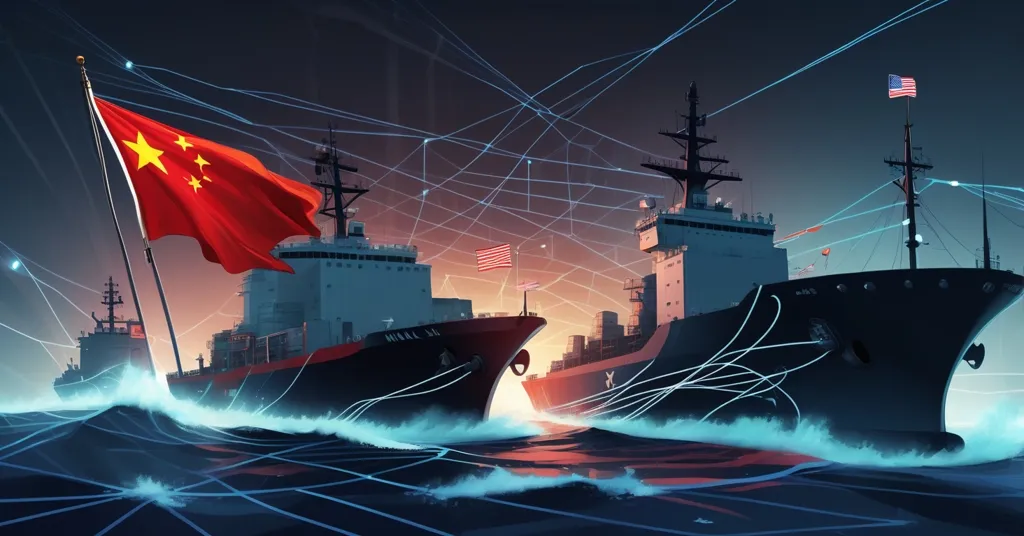
The high seas just became a battleground for global power plays. Last weekend, the Trump administration seized the Panama-flagged tanker Centuries, packed with sanctioned Venezuelan crude, in a move that’s less about punishing Venezuela’s Maduro regime and more about landing a blow to China’s economic gut. With Beijing consuming 76% of Venezuela’s oil exports, these seizures aim to disrupt a critical energy lifeline while flexing muscle over trade chokepoints like the Panama Canal. But as superpowers clash over oil and shipping lanes, could disruptive tech like blockchain offer a way to expose the shadowy underbelly of these trades?
- Strategic Target: U.S. seizures aim to choke China’s access to discounted Venezuelan oil, hitting their economic core.
- Geopolitical Chess: Actions exploit U.S.-Panama agreements while challenging Beijing’s influence at key trade routes.
- Tech Potential: Blockchain could disrupt shadow trades, aligning with decentralization’s push against centralized control.
Tanker Seizures: Cutting Off China’s Cheap Oil Fix
On Saturday, the U.S. made waves by intercepting the Panama-flagged tanker Centuries, brimming with Venezuelan crude under strict sanctions. This isn’t just a jab at Nicolás Maduro’s regime in Caracas—it’s a calculated strike at China, which relies on Venezuela for a staggering 76% of its imported oil. By disrupting these shipments, the U.S. aims to force Beijing to seek pricier alternatives from nations like Russia or Middle Eastern producers, inflating costs and carving out leverage for diplomatic negotiations. Meanwhile, the U.S. share of Venezuelan oil has plummeted to 17% from 34% last year, with smaller buyers like Cuba, Spain, and Italy scraping up the rest. Venezuela pumps about 900,000 barrels daily in 2025, a mere 1% of global supply, but its cut-rate crude is a vital bargain for allies like China. Mess with that, and you’re messing with Beijing’s bottom line.
The U.S. wields a powerful tool in this fight: the Salas-Becker agreement. Signed in 2002 with Panama, this pact lets American authorities board Panama-flagged vessels with just two hours’ notice—basically a fast-track pass to seize ships like Centuries. Dimitris Ampatzidis, a senior compliance analyst at Kpler, highlighted the significance of this deal in enabling such swift action. And the threat looms large for others; 23 tankers currently sit in Venezuela’s exclusive economic zone, many flagged under Panama and loaded with oil, making them prime targets if they attempt to sail. As former U.S. Coast Guard captain Aaron Roth from Chertoff Group put it, this dual pressure hits hard:
By squeezing Venezuelan oil, you are not only putting tremendous pressure on the Maduro regime, but you are also impacting China strategically.
Roth also hinted at the broader game plan, suggesting that sustained pressure could open doors for U.S.-China talks. It’s a bold strategy, but not without teeth.
Shadow Fleets: The Sneaky Underworld of Sanctioned Oil
Things get dirtier when you dig into how these tankers operate. The Centuries has a rap sheet—back in April 2020, it ferried two million barrels of Venezuelan Merey crude to Yantai, China, and during its latest run, it allegedly spoofed its AIS (Automatic Identification System) signals to cover its tracks. For the uninitiated, AIS is like a public GPS for ships, broadcasting their location to prevent collisions and aid tracking. Spoofing it is akin to faking your location on social media—pure deception to dodge detection. This is a hallmark of shadow fleets, rogue networks of vessels that rename themselves (Centuries briefly became “Crag”) or disable tracking to skirt sanctions. Another tanker, Bella 1, was recently nabbed too, after moving Iranian and Venezuelan oil to Chinese ports like Qingdao and Tianjin. These seizures aren’t random; they zero in on ships feeding China’s refineries.
Let’s call it what it is: shadow fleets are a brazen middle finger to international rules. They slink through loopholes with fake data and name swaps while enforcers chase ghosts. But every seizure ramps up friction with China, risking spikes in oil prices or chaos in global shipping at a time when supply chains are already strained. It’s a dangerous gamble for the U.S., and the blowback could bite hard. Still, if you’re in the camp of smashing centralized control (as we are), there’s a nagging thought: what if tech could blow the lid off these shadow games for good?
Panama Canal: A Geopolitical Powder Keg
Oil isn’t the only front in this war. The Trump administration is also gunning for control over the Panama Canal, a linchpin of global trade and a symbol of U.S. influence since the early 20th century. Trump has accused China of pulling strings through Hong Kong-based CK Hutchison, which operates major ports at Balboa and Cristóbal, claiming it violates U.S.-Panama treaties like the 1977 Torrijos-Carter agreements that ceded canal control to Panama with U.S. oversight stipulations. Tensions flared when a $22.8 billion deal to sell these ports to a consortium led by BlackRock and Mediterranean Shipping fell apart, reportedly due to Beijing’s push to maintain influence via state-owned carrier Cosco. Brandon Daniels, CEO of Exiger, sounded the alarm on China’s potential grip:
China may gain a chokepoint in global trade container transshipment capacity, berthing priority, yard operations, and commercial data exhaust.
Translation: Beijing could snoop on and steer trade flows through a vital corridor. Panama, caught in the crossfire, is treading carefully. President José Raúl Mulino prioritizes national sovereignty over the canal and vessel dealings, yet seeks U.S. cooperation for economic stability. Daniels noted Panama’s delicate balancing act, wanting to be a key South Asian trade hub while leaning on American support. But let’s not kid ourselves—being squeezed between superpowers could tank Panama’s economy if this escalates. For the U.S., overplaying its hand risks not just Chinese retaliation but losing a crucial regional ally. For deeper insight into how these actions target China more than Venezuela, check out this detailed analysis of the Trump administration’s strategy.
Blockchain: A Radical Transparency Tool?
If shadow fleets thrive on secrecy, could a tech as game-changing as Bitcoin’s blockchain be the antidote? Envision a public, tamper-proof ledger where every tanker’s route, cargo, and owner is logged in real time, accessible to anyone. Spoofed AIS signals would stick out like a sore thumb, and sanctions evasion could become damn near impossible. Initiatives like IBM’s TradeLens have already toyed with blockchain for supply chain clarity—why not apply it to oil tankers? It’s not foolproof; centralized powers could twist such systems into surveillance tools rather than liberation mechanisms. True decentralization demands that no single entity owns the ledger. Done right, though, this aligns perfectly with our push for disrupting outdated, opaque systems and accelerating toward a tech-driven future where transparency reigns.
Take it a step beyond. While blockchain tracks physical trades, Bitcoin could cut through geopolitical quagmires entirely. Picture Venezuela—or any sanctioned nation—trading value directly via peer-to-peer digital currency, sidestepping sanctions, middlemen, and centralized chokeholds like shipping lanes. Scalability issues and adoption barriers stand in the way, no doubt, but it’s the kind of ballsy disruption we’re rooting for. If effective accelerationism means speeding toward solutions, let’s fast-track blockchain and crypto to gut-punch these old-school power plays. Oil wars and trade spats are relics; the future we’re fighting for hinges on tech rewriting the playbook before the next tanker gets snared.
Key Questions and Takeaways
- What’s driving the U.S. seizures of Venezuelan oil tankers?
The core aim is to disrupt China’s access to cheap Venezuelan crude as an economic pressure tactic, with weakening the Maduro regime as a side goal. - How does the Salas-Becker agreement bolster U.S. actions?
Signed in 2002 with Panama, this deal allows U.S. authorities to board Panama-flagged ships with just two hours’ notice, enabling rapid seizures like that of the Centuries. - Why is China the main target in this oil showdown?
China consumes 76% of Venezuela’s oil exports, making it a key focus for the U.S. to force reliance on more expensive sources and gain diplomatic upper hand. - What’s the significance of the Panama Canal in this conflict?
It’s a critical trade route where Trump claims China wields influence via CK Hutchison, spurring U.S. efforts to curb Beijing’s control and block Cosco’s stake. - Can blockchain technology counter shadow fleet tactics?
Yes, blockchain could offer a transparent ledger to track tanker movements in real time, exposing spoofed signals and sanctioned trades, though risks of centralized exploitation linger. - What role could Bitcoin play in bypassing geopolitical trade issues?
Bitcoin could enable direct, decentralized value transfers for nations like Venezuela, evading sanctions and centralized systems, despite current scalability and adoption hurdles.