U.S. Crypto Bill 2023: Senate Stalls, House Advances, Industry Clashes Over Regulation
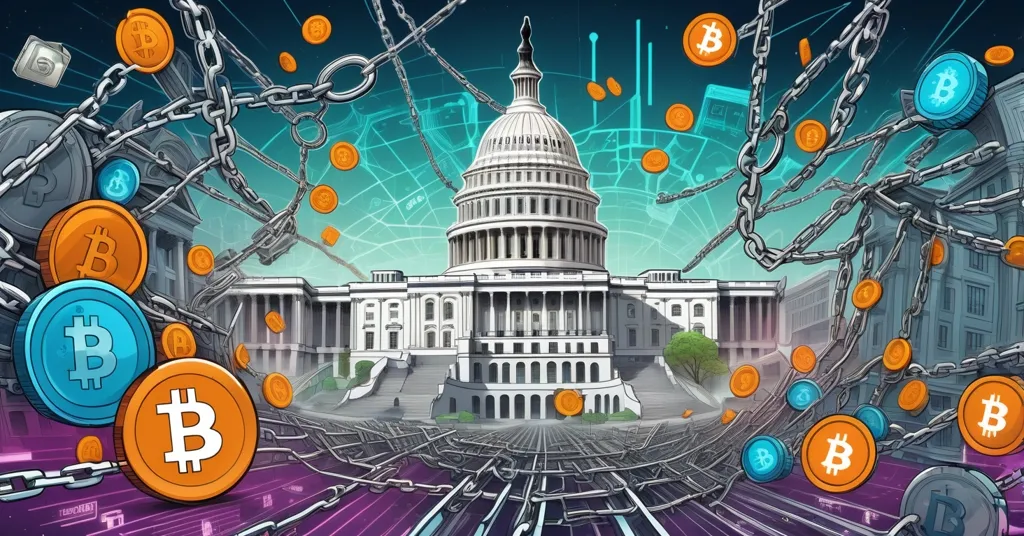
 LTB
LTB Crypto Market Structure Bill 2023: Senate Deadlock, House Wins, and Industry Battles
The push for cryptocurrency regulation in the U.S. is hitting a wall in the Senate, while the House offers a glimmer of hope, and industry heavyweights clash over the future of digital assets. As Bitcoin and blockchain technology stand poised to redefine finance, the crypto market structure bill—a potential game-changer for clarity and adoption—remains mired in partisan gridlock, competing priorities, and high-stakes disputes. This is a pivotal moment for decentralized tech, and the outcome could either propel us forward or shackle innovation to the whims of traditional finance.
- Senate Gridlock: The Senate Agriculture Committee’s draft bill favors Republican priorities, lacking Democratic support, with a party-line vote looming.
- House Triumph: A bipartisan 47-6 vote in the House Agriculture Committee shows what’s possible when politics align.
- Industry Tensions: Coinbase and big banks butt heads over yield products, while Binance pleads for any regulation over none.
Senate Stalemate: What’s Holding Things Up?
On Wednesday, the Senate Agriculture Committee rolled out an updated draft of the crypto market structure bill, but it’s a document steeped in Republican priorities with zero public backing from Democrats. After two weeks of failed bipartisan talks, key Democratic negotiator Senator Cory Booker remains silent on support, leaving Committee Chairman John Boozman to steer toward a markup session this coming Tuesday. For those new to the legislative game, a markup is where committee members debate and tweak a bill before voting on whether to advance it. Without Democratic buy-in, we’re likely looking at a party-line vote—a bitter split that could weaken the bill’s legitimacy down the road.
This deadlock stands in stark contrast to the House Agriculture Committee, which pulled off a rare feat of unity with a 47-6 bipartisan vote on its version of the legislation. That kind of agreement signals a shared recognition of crypto’s importance, or at least a willingness to hash out differences. Meanwhile, the Senate Banking Committee, another crucial player in financial oversight, is dragging its feet. Republicans there are prioritizing housing legislation—possibly tied to a Trump-driven affordability push—over crypto concerns. With a Senate recess from February 16-20 for Presidents’ Day, plus hearings with bank regulators clogging the calendar, a markup on their end could be weeks away. January is a no-go, and February looks like a scheduling mess. Apparently, crypto isn’t as urgent as bricks and mortar—or maybe senators just can’t HODL their focus. For more on the current state of this legislation, check out the latest update on where the crypto market structure bill stands.
Bill Breakdown: Wins, Worries, and Weirdness
So, what’s actually in this bill that’s got everyone riled up? Let’s cut through the noise and look at the key provisions, because the fine print matters when you’re talking about the future of money.
First off, there’s a significant nod to decentralization with protections for noncustodial software developers and infrastructure providers. If you’re scratching your head, noncustodial refers to entities that don’t control user funds or private keys—think Bitcoin Core contributors or the folks behind open-source wallets like MetaMask. Shielding these innovators from direct regulatory oversight is a victory for privacy and autonomy, ensuring the backbone of decentralized tech isn’t crushed by overreach. But here’s the flip side: could this be a loophole for bad actors to dodge accountability? Without clear checks, we risk shielding scammers under the guise of “decentralization.”
Next, the bill takes a stab at taming the Wild West of meme coins—those often satirical assets like Dogecoin that can moon or crash on a single tweet. It classifies them as digital commodities under specific conditions, though details on those conditions (trading volume? community size?) remain murky. On one hand, this could bring legitimacy to a speculative corner of the market; on the other, it might just be a meme-worthy mess. Will Dogecoin finally get its day in regulatory court, or are lawmakers barking up the wrong tree?
Then there’s the funding model for the Commodity Futures Trading Commission (CFTC), the body tasked with overseeing parts of the crypto market as commodities. The bill proposes ongoing funding through fees on overseen platforms, mirroring how the Securities and Exchange Commission (SEC) operates. This could beef up the CFTC’s ability to monitor markets and prevent another FTX-style implosion—a disaster that still haunts the space. But let’s not kid ourselves: fees often hit smaller players hardest. Could this centralize power in bigger exchanges while pricing out DeFi projects or startups? It’s a valid concern for a space built on disrupting gatekeepers, not creating new ones.
Industry Clash: Coinbase vs. Big Banks
While lawmakers bicker, a heavyweight fight between Coinbase, a leading U.S. crypto exchange, and major banks is stalling progress. The core issue? Yield-bearing crypto products—offerings where users earn returns on holdings through staking or lending, like Ethereum’s proof-of-stake rewards. Banks see these as encroaching on their turf, akin to interest-bearing savings accounts, and want them under tight control. Coinbase, backed by much of the crypto industry, argues this is innovation, not imitation, and excessive rules could strangle growth. This dispute has frozen formal talks with the White House and the Senate Banking Committee, leaving the bill in limbo.
Coinbase CEO Brian Armstrong has hinted at withdrawing support ahead of the markup, a sign of deep frustration with the draft’s direction. From a Bitcoin maximalist lens, there’s a case to be made that yield products dilute BTC’s narrative as “sound money”—a store of value free from speculative gimmicks. Why chase yield when Bitcoin’s strength lies in scarcity and resilience? Yet, Ethereum’s DeFi ecosystem and its staking rewards fill a niche BTC doesn’t, driving utility that can’t be ignored. The hard truth is, until this turf war resolves, we’re stuck watching two giants slug it out while the regulatory clock ticks.
Voices from the Industry: Mixed Signals
The crypto world isn’t sitting quietly on the sidelines, and reactions to the bill range from pragmatic to pissed off. Binance CEO Richard Teng, leading the world’s largest exchange by volume, puts it bluntly:
“Any regulation would be better than no regulation.”
Having navigated Binance’s own regulatory battles, Teng’s stance reflects the exhaustion of operating in a legal gray zone. Some structure, even flawed, beats dodging lawsuits and fines. Contrast that with Summer Mersinger, CEO of the Blockchain Association, who’s called out the “big bank lobby” for meddling in crypto policy to protect their own interests. Her critique points to a deeper fear: that legislation could tilt toward traditional finance, undermining the very disruption crypto stands for. Meanwhile, venture capital titan Andreessen Horowitz (a16z), with hefty stakes in blockchain startups, backs the bill as written, likely betting it’s a workable foundation for their investments.
These mixed signals highlight a broader tension. Regulatory clarity could cement Bitcoin as the gold standard of decentralized money and give altcoins room to carve out legitimacy in their niches—think Ethereum’s smart contracts or meme coins’ cultural clout. But a botched bill risks either stifling innovation or leaving gaps for scams to thrive. We’ve seen the fallout of no oversight with collapses like FTX in 2022, where billions vanished overnight. Yet, overregulation could choke the freedom that makes crypto revolutionary. It’s a high-wire act, and right now, the Senate looks more likely to stumble than stick the landing.
Global Context: Where Does the U.S. Stand?
Zooming out, it’s worth noting the U.S. isn’t crafting crypto policy in a vacuum. The European Union’s Markets in Crypto-Assets (MiCA) framework, set to roll out in 2024, offers a comprehensive rulebook for digital assets, balancing consumer protection with innovation. While imperfect, it’s a step ahead of the U.S., where past attempts—like the 2021 Infrastructure Bill’s controversial tax reporting rules—have been patchwork at best. If the Senate keeps stalling, the U.S. risks falling behind in the global race to define crypto’s future, potentially ceding influence to regions with clearer rules. For a country that prides itself on tech leadership, that’s a bitter pill to swallow.
What’s Next for Crypto Regulation?
Looking ahead, the Tuesday markup in the Senate Agriculture Committee is a critical checkpoint. A party-line push might advance the bill, but without bipartisan muscle, its odds in the full Senate—or reconciliation with the House version—look shaky. Delays in the Banking Committee mean we might not see movement until late February or beyond, and that’s assuming housing and other priorities don’t keep crypto on the back burner. The Coinbase-big bank standoff adds another layer of uncertainty; without a compromise, the White House won’t budge.
For Bitcoin and blockchain advocates, the stakes are sky-high. Clear rules could stabilize markets, boost mainstream adoption, and maybe even dampen the wild volatility that scares off institutional players. Imagine Bitcoin ETFs flowing freely or small businesses accepting BTC without legal dread. But inexcusable stalling or a bill skewed toward big banks could set us back years, entrenching the status quo crypto was born to disrupt. From a maximalist view, Bitcoin will endure regardless—its decentralized heart doesn’t bend to bureaucrats. But altcoins and DeFi projects, often more reliant on regulatory green lights, could take a brutal hit.
Key Takeaways and Questions for Reflection
- What’s stalling the crypto market structure bill in the Senate?
Partisan deadlock in the Agriculture Committee, with no Democratic support, and competing priorities like housing in the Banking Committee, plus a February recess, are pushing delays into weeks or months. - How does the House’s progress compare to the Senate’s mess?
The House Agriculture Committee passed its version with a strong 47-6 bipartisan vote, while the Senate struggles with division and a packed legislative calendar. - What are the bill’s key provisions for the crypto space?
It protects noncustodial developers from direct oversight, classifies meme coins as digital commodities under certain conditions, and funds the CFTC via platform fees to enhance market monitoring. - Why is the Coinbase-big bank dispute a roadblock?
Their clash over yield-bearing products, seen by banks as too close to traditional finance, has halted talks with the White House and Senate Banking Committee, freezing the bill’s momentum. - Can we be hopeful about U.S. cryptocurrency regulation in 2023?
Hope lies in the House’s bipartisanship and industry push for clarity to drive adoption, but skepticism is warranted with Senate gridlock and the risk of rules favoring entrenched financial powers over decentralization.
The crypto community must keep the heat on lawmakers to prioritize this bill without letting it become a political pawn or a gift to Wall Street. We stand for effective accelerationism—ramming down barriers with tech that liberates and disrupts—but not at the cost of half-assed laws that could haunt us for a decade. Bitcoin’s resilience will carry it through regulatory chaos, but the broader ecosystem needs a fair shot to thrive. As the Senate dithers, the crypto clock keeps ticking—will clarity emerge this year, or are we in for another round of chaos?