U.S. Crypto Chaos: Regulation Stalls, Bitcoin Theft Allegations, and Trump’s DeFi Drama Unfold
 LTB
LTB Turmoil in Crypto: U.S. Regulation Hits Roadblocks, Government Bitcoin Faces Threats, and Trump Stirs the Pot
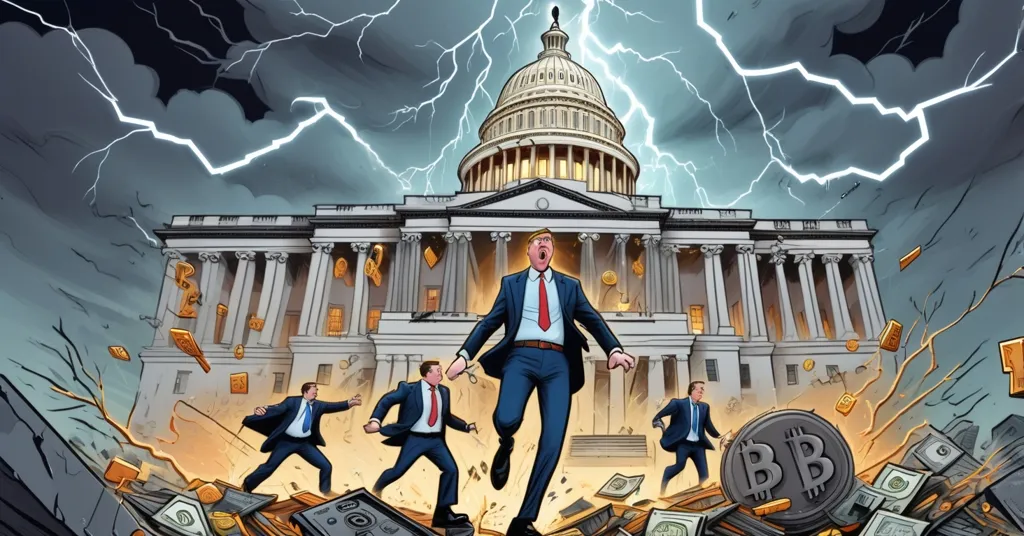
Washington, D.C. is caught in a perfect storm of chaos this week as U.S. cryptocurrency regulation grinds to a halt amid brutal weather, bitter political divides, and jaw-dropping scandals. From stalled market structure legislation to allegations of insider theft of government-seized Bitcoin, the crypto space is a battleground of innovation and dysfunction. Add in President Trump’s personal financial fights and pro-crypto maneuvers, and you’ve got a recipe for high-stakes drama at the intersection of politics, finance, and decentralized tech.
- Legislative Standoff: Winter storm and political gridlock delay the Digital Commodity Intermediaries Act.
- Stablecoin Clash: Banks demand reward bans, threatening Coinbase’s revenue stream.
- Government BTC Scandal: Insider theft allegations shake trust in federal crypto custody.
Legislation Hits a Wall: Weather and Politics Derail Progress
The Senate Agriculture Committee had big plans to mark up the Digital Commodity Intermediaries Act, a pivotal bill aimed at shaping how digital assets are regulated under the Commodity Futures Trading Commission (CFTC). But a historic winter storm slammed Washington, D.C., forcing the session to be rescheduled from Tuesday to later in the week. As if that wasn’t enough, the bill is mired in deep partisan disagreements. Democrats, led by Senator Amy Klobuchar (D-MN), are pushing amendments to postpone implementation until the CFTC has a full slate of commissioners, arguing that rushing risks shoddy oversight. Republicans, meanwhile, aren’t exactly united in support, leaving the legislation without the bipartisan momentum it desperately needs.
Compounding the mess are unrelated distractions like looming government shutdowns and heated debates over immigration enforcement policies, which have sucked up congressional bandwidth. The result? U.S. crypto market structure legislation—a framework meant to bring clarity to an industry plagued by uncertainty—remains in limbo. For Bitcoin maximalists and altcoin enthusiasts alike, this delay is a stark reminder that the path to mainstream adoption is often blocked by forces beyond the blockchain. While we champion decentralization as a way to sidestep bureaucratic nonsense, the reality is that regulatory clarity (or lack thereof) still holds immense sway over market confidence and innovation. For more on the delays and potential compromises in this space, check out this detailed report on U.S. market structure challenges and government token issues.
Stablecoin Showdown: Banks vs. Crypto Giants
Meanwhile, a fierce battle is brewing over stablecoins, those blockchain-based tokens pegged to stable assets like the U.S. dollar to minimize price swings. Think of them as digital cash with the perks of decentralized tech—fast, borderless transactions without the volatility of Bitcoin or Ethereum. Many platforms offer rewards on stablecoin holdings, akin to earning interest on a savings account, as an incentive for users. But the American Bankers Association (ABA) is on a warpath to ban these rewards, claiming they act as deposit substitutes that divert funds from community banks and cripple local lending.
For crypto exchanges like Coinbase, this is a direct threat to their bottom line. Roughly 20% of Coinbase’s revenue comes from stablecoin rewards, a massive chunk that underscores how integral these incentives are to the industry. In response, Coinbase withdrew support for the Senate Banking bill tied to these restrictions. CEO Brian Armstrong pushed back hard against the banking lobby’s narrative, emphasizing the nuances of their reward system:
“Rewards can’t be based solely on the balance you’re holding. The customer has to do some sort of other activity like payments or trading or they have a subscription to Coinbase One.”
This isn’t just a financial spat—it’s a philosophical clash between the old guard of centralized banking and the disruptive promise of decentralized finance. If banks win, platforms like Coinbase could face a brutal hit, potentially slowing stablecoin adoption in the U.S. and stifling a key gateway for new users entering crypto. On the flip side, unchecked rewards could indeed strain traditional banking, especially smaller institutions already struggling to compete. While we’re all for shaking up the status quo, there’s a valid argument that rapid shifts need guardrails to prevent collateral damage. The question is, who gets to draw the line?
Trump’s Crypto Controversies: Debanking and DeFi Dilemmas
President Trump is stirring the pot in multiple ways, thrusting crypto into the political spotlight. First, he’s slapped JPMorgan with a $5 billion lawsuit, alleging the banking giant “incorrectly and inappropriately” debanked him after the January 6, 2021, Capitol riot. Trump’s team frames this as part of a wider pattern of financial exclusion targeting crypto-friendly entities, echoing long-standing complaints about policies like Operation Choke Point 2.0 under the prior administration, which allegedly choked off banking access for digital asset firms. Trump minced no words on the matter:
“Incorrectly and inappropriately DEBANKING me.”
This resonates deeply with the crypto community, many of whom have faced similar struggles to secure basic banking services. It’s a rallying cry for financial sovereignty, a core tenet of Bitcoin’s ethos. Yet, there’s a counterpoint: banks argue they’re mitigating risk by distancing from volatile or controversial clients. While we lean toward Trump’s side on the principle of inclusion, it’s worth asking whether this lawsuit is more about personal vendetta than systemic change.
Then there’s World Liberty Financial (WLF), a decentralized finance (DeFi) platform linked to Trump and his family, currently under fire for seeking a bank charter. DeFi, for the uninitiated, uses blockchain to offer financial services—lending, borrowing, trading—without traditional intermediaries like banks. WLF’s application has raised ethical red flags, with critics like Senator Elizabeth Warren (D-MA) accusing the Office of the Comptroller of the Currency (OCC) of bias due to Trump’s involvement. Warren pulled no punches:
“The president’s unprecedented crypto corruption has metastasized to the banking system… The OCC’s review is a sham.”
Her concerns aren’t unfounded. A sitting president tied to a DeFi platform seeking regulatory approval smells like a conflict of interest waiting to explode. If WLF gets its charter, it could open the door to political favoritism in finance—a far cry from decentralization’s promise of neutrality. That said, Trump’s supporters see this as a necessary jab at banking monopolies, a chance to level the playing field. We’re all for disruption, but let’s not pretend cronyism isn’t a risk. The line between innovation and exploitation is razor-thin here.
Government Bitcoin Under Threat: Insider Theft Allegations
Perhaps the most alarming development this week comes from blockchain investigator ZachXBT, who uncovered evidence suggesting insider theft of Bitcoin seized by the U.S. government. The trail points to Command Services & Support (CMDSS), a contractor linked to the U.S. Marshals Service (USMS), the federal agency tasked with managing confiscated digital assets. For context, the USMS handles cryptocurrencies seized from criminal operations—think Silk Road or darknet busts—often auctioning them off to the public. Historically, these holdings have been worth billions; Silk Road alone netted over $5 billion in Bitcoin at peak values.
ZachXBT’s findings, based on suspicious wallet transactions and address patterns, suggest that someone with access—potentially at CMDSS—siphoned off funds meant to be under lock and key. This isn’t just a breach; it’s a glaring indictment of custody practices at the federal level. White House Crypto Advisor Patrick Witt offered a brief, cryptic response to the allegations:
“On it. More to follow.”
The timing couldn’t be worse. Trump recently signed an executive order establishing a Strategic Bitcoin Reserve, prohibiting the sale of government-held BTC and positioning it as a national asset akin to gold. The concept is bold—embracing Bitcoin as a store of value could cement the U.S. as a crypto leader and signal global confidence in decentralized money. But with murmurs of theft and zero transparency on the reserve’s size or management, public trust is on shaky ground. If the government can’t secure its own stash, how can it lecture private custodians or users on safety? Worse, it fuels critics who argue that centralizing Bitcoin in government hands contradicts its anti-establishment roots. As maximalists, we love the nod to BTC’s importance, but let’s not ignore the irony of Uncle Sam playing HODLer while fumbling the keys.
Industry Updates: Wins and Losses in the Crypto Space
Amid the turmoil, there’s a rare bright spot. The Securities and Exchange Commission (SEC) moved to dismiss its civil complaint against Gemini, a major crypto exchange, over its Gemini Earn program. This initiative allowed users to lend their digital assets for interest, but it hit turbulence during past market crashes. After Gemini shelled out a $50 million penalty and fully reimbursed customers, the SEC dropped the case. This isn’t just a win for Gemini—it’s a tentative sign that regulators might ease off the warpath if firms make amends. For an industry battered by legal fights, it’s a small step toward clarity on lending and yield products, which remain a vital on-ramp for new investors. That said, don’t expect the SEC to suddenly go soft; this is more exception than rule.
Less inspiring is BitGo’s Nasdaq debut. The crypto custodian, which specializes in secure storage for digital assets, saw its shares crater from an $18 IPO price to $13.32 in days. In a space where hacks and scams are an ever-present threat, custodians like BitGo are linchpins of trust. Their stumble out of the gate isn’t a great look, especially when confidence in custody is already rattled by the USMS scandal. Perhaps they should’ve locked their hype in cold storage alongside their clients’ coins. It’s a harsh lesson that even established players aren’t immune to the market’s wild swings.
Key Questions and Takeaways
Let’s break down the critical issues and insights from this week’s whirlwind of crypto developments. Whether you’re a seasoned Bitcoin OG or just exploring the space, these points cut to the heart of what’s at stake for decentralization and the future of finance:
- What’s stalling U.S. crypto market structure legislation?
A savage winter storm disrupted Senate schedules, while deep political divides and competing priorities like government funding battles keep the Digital Commodity Intermediaries Act stuck in neutral. - Why are stablecoin rewards sparking such fierce debate?
Traditional banks view them as a threat to their lending models, while Coinbase, with 20% of its revenue at stake, sees them as essential—turning this into a showdown between centralized finance and crypto disruption. - What’s behind the uproar over World Liberty Financial’s bank charter?
Trump’s personal ties to the DeFi platform fuel fears of regulatory favoritism, with critics like Elizabeth Warren labeling it corruption, though backers argue it challenges banking elites. - How does alleged theft of government Bitcoin damage the industry?
It exposes glaring security flaws in federal custody practices, eroding trust in both government and private systems at a time when Trump’s Strategic Bitcoin Reserve aims to legitimize national holdings. - What broader impact could Trump’s debanking lawsuit against JPMorgan have?
It amplifies the crypto sector’s fight against financial exclusion, potentially driving policies that protect digital asset firms under a pro-crypto administration, though skeptics question the motives.
What This Chaos Means for Crypto’s Future
The crypto landscape is a war zone right now, with regulatory roadblocks, security lapses, and political power plays colliding at full speed. Bitcoin and blockchain tech remain beacons of hope—tools for financial freedom, privacy, and a hard reset on a broken system. We’re unwavering in our belief that decentralization can outpace the inefficiencies of centralized control, aligning with the spirit of effective accelerationism to push boundaries fast and hard. Yet, we can’t ignore the ugly realities: legislative dysfunction breeds uncertainty, insider thefts highlight vulnerabilities, and political entanglements risk tainting the very ethos of this revolution.
For every step forward—like Gemini’s regulatory reprieve—there’s a gut punch like BitGo’s flop or the USMS debacle. And while Trump’s Strategic Bitcoin Reserve could signal a seismic shift, it’s hard to cheer when transparency is nonexistent and security is in question. Playing devil’s advocate, one might argue that government involvement, even if flawed, normalizes crypto on a global stage. But at what cost to Bitcoin’s soul? These growing pains are inevitable, but they’re also a call to action. Stay informed on custody best practices, track legislative updates through reliable sources, and keep pushing for a world where power lies in code, not corridors. We’ll keep slicing through the noise to deliver the raw truth—because crypto doesn’t wait, and neither should you.