U.S. Sanctions Chinese Refinery in Crackdown on Iranian Oil Shipping Networks
 LTB
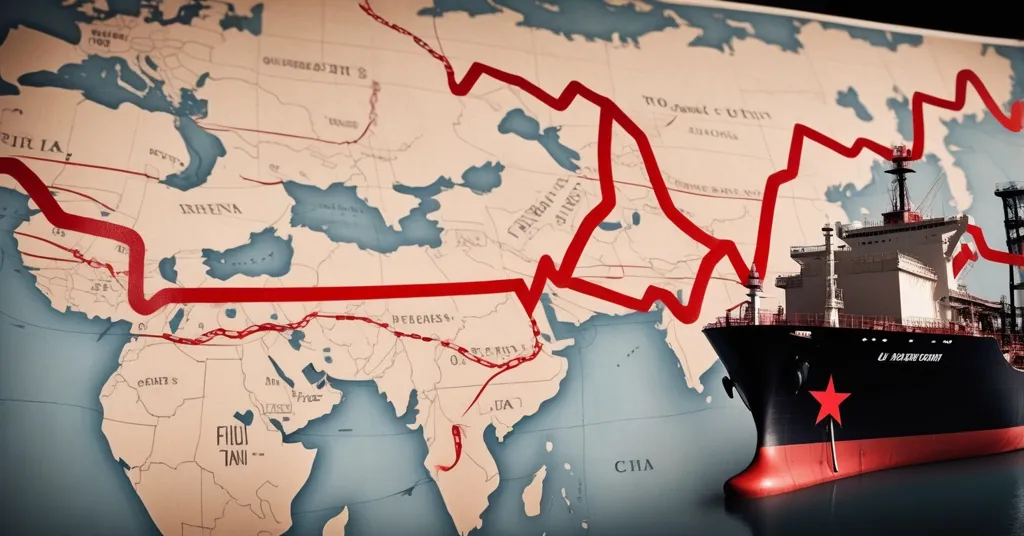
LTB Washington has slapped new sanctions on a Chinese refinery and oil shipping networks tied to Iranian crude, another reminder that the global energy game is still being fought with blacklists, tankers, and a whole lot of geopolitics.
- U.S. sanctions target a Chinese refinery
- Iranian oil shipping is also in the crosshairs
- The move is part of sanctions enforcement against crude flows linked to Tehran
- China’s role in buying and moving discounted oil remains a major flashpoint
The U.S. is once again trying to choke off the financial and logistical routes that keep Iranian oil moving. That usually means going after the firms, vessels, traders, and processors that help sanctioned crude slip through the cracks. In plain English: Washington is trying to make it harder to buy, ship, insure, and refine Iranian barrels without getting caught in the blast radius.
That matters because oil sanctions are never just about oil. They are about leverage, revenue, and political pressure. For Iran, energy exports are a lifeline. For the U.S., restricting those exports is one of the few non-military tools available to squeeze Tehran. For China, which often ends up on the receiving end of these sanctions, the message is less subtle: stop helping the trade move, or pay the price.
A Chinese refinery being sanctioned is not a random bureaucratic slap on the wrist. It signals that Washington believes the refinery was involved in processing or enabling crude linked to Iran’s sanctions network. That is the usual logic behind these moves. When U.S. officials think a refinery, shipping company, or intermediary is helping move sanctioned oil, they try to cut off access to the U.S. financial system and scare off insurers, banks, and counterparties.
That’s the real punch of U.S. sanctions. They do not need to physically stop a tanker at sea. They just need to make everyone around the tanker nervous enough to back away. In the sanctions world, fear is the product. The designation is the receipt.
Why the China angle matters
China sits at the center of this mess because it is one of the biggest pressure points in Washington’s campaign against Iranian oil exports. Chinese buyers have historically been willing to take discounted crude that other buyers avoid, especially when the sanctions regime gets stricter and the bargains get sweeter. That makes Chinese refineries, traders, and shipping facilitators particularly sensitive targets.
This is where the geopolitics get spicy. Washington sees sanctions enforcement. Beijing often sees American overreach. Same event, different religion.
Chinese officials and companies frequently argue that U.S. sanctions are unilateral and politically motivated. They are not wrong that Washington uses economic pressure like a sledgehammer. But that does not change the fact that sanctions are designed to make the trade expensive, risky, and annoying enough that some actors eventually decide the juice is not worth the squeeze.
For China, the issue is bigger than one refinery. It is about strategic autonomy, access to cheap crude, and resistance to U.S. financial pressure. If the U.S. can dictate which Chinese firms can buy which barrels, then the sanctions regime becomes a kind of shadow tariff on global trade. Beijing does not like that one bit.
How Iranian oil still moves
Iranian oil shipping is the other half of the story. Oil does not magically teleport from a sanctioned field to an eager buyer. It moves through tankers, brokers, insurers, front companies, shell ownership structures, ship-to-ship transfers, and paperwork that can be as slippery as a greased eel.
For readers not deep into shipping jargon, a ship-to-ship transfer is exactly what it sounds like: one vessel passes cargo to another vessel at sea. It is legal in many contexts, but it is also a favorite trick in sanctioned oil trades because it helps obscure where the crude really came from. Combine that with altered documentation and hidden ownership, and you get a system built to dodge scrutiny.
That is why sanctions enforcement often targets not just the oil seller, but the whole support network around it. One tanker can be replaced. A whole financial and logistics ecosystem is harder to rebuild quickly if banks, insurers, and operators start getting cold feet.
Still, let’s not pretend sanctions are some magic kill switch. They are not. They raise costs, create friction, and force the trade into more shadowy channels, but they rarely erase demand. As long as there is a buyer willing to take discounted crude and a network willing to move it, the barrels usually find a route. Criminal ingenuity is undefeated in the same way bureaucracy is undefeated: both are annoyingly persistent.
What the U.S. is really trying to achieve
The immediate goal is to tighten sanctions enforcement and make it harder for Iran to monetize its oil exports. The broader goal is political: signal resolve, show the sanctions regime is still active, and warn other buyers or shippers that they could be next.
There is also a deterrence angle. If a Chinese refinery gets hit, the message to others in the region is simple: do not assume you can keep handling sanctioned crude and skate by unnoticed. Washington wants the compliance fear to spread faster than the oil does.
But there is a counterpoint worth taking seriously. Sanctions can also push trade deeper underground. That means more opaque shipping, more hidden ownership, more risky routing, and more incentives for bad actors to build parallel systems outside Western oversight. The sanctions may not stop the oil; they may just make the shadows fatter.
And that is where the hypocrisy starts to smell a bit. Governments love to preach transparency until transparency threatens their leverage. Then suddenly everybody is acting shocked that global trade is a web of double standards and backroom arrangements. Give us a break.
Market implications: what traders should watch
For energy markets, the real question is whether this action actually disrupts supply. If buyers, insurers, and shipping firms take the sanctions seriously, some barrels may get delayed, rerouted, or sold at steeper discounts. If the market shrugs, the oil will keep moving and the headline will just become another entry in the long sanctions bingo card.
Traders should watch three things:
- Compliance behavior — whether refineries and shipping firms pull back
- Physical flows — whether Iranian crude exports actually drop
- Price response — whether crude prices or freight rates react meaningfully
The likely short-term impact depends on how aggressively the U.S. follows through. A single designation can be painful, but a broader enforcement campaign creates real friction. That friction matters because it can raise shipping costs, reduce liquidity, and make energy flows less efficient. In a market already obsessed with inflation, supply chains, and central bank nerves, even modest disruptions can ripple outward.
There is also a macro angle worth noting for crypto readers. Higher oil prices or broader energy uncertainty can feed into inflation expectations, risk sentiment, and the wider appetite for hard assets. Bitcoin is not oil, obviously, but macro stress tends to leak across asset classes. When energy gets volatile, markets get twitchy. That is not exactly new physics.
Why this keeps happening
The U.S.-Iran sanctions cycle has been running for years because the underlying incentives have not gone away. Iran still wants revenue. Buyers still want cheap crude. Middlemen still want a cut. And Washington still wants to make the cost of trading with Tehran painful enough to alter behavior.
That creates a permanent game of cat and mouse. Sanctions officials chase intermediaries. Traders hide behind shell companies. Tankers change flags, routes, or paperwork. Every time one loophole gets shut, another one opens somewhere else. It is less a clean enforcement system than a global bureaucratic street fight with invoices.
That does not make sanctions meaningless. It just means they are blunt instruments. They can hurt, but they rarely produce neat, tidy outcomes. Sometimes they successfully squeeze revenue. Sometimes they just produce a more corrupt and harder-to-monitor version of the same trade.
Key takeaways and questions:
Why did the U.S. sanction a Chinese refinery?
Because Washington likely believes the refinery was involved in handling or enabling Iranian crude exports, which it views as sanctions evasion.
What does “sanctions enforcement” mean here?
It means the U.S. is using blacklists and financial pressure to make it harder for firms to buy, ship, insure, or process sanctioned oil.
Will this stop Iranian oil shipping?
Not fully. It can make the trade more expensive and risky, but sanctioned oil often finds a way through unofficial channels.
Why is China such a big part of this fight?
Because Chinese buyers and refiners are major pressure points in the global crude trade, and Washington sees them as key to Iran’s export network.
Could oil prices rise because of this?
Possibly, if flows are disrupted enough. If the market thinks the impact is limited, the reaction may be muted.
What is the bigger geopolitical signal?
The U.S. is warning that it will target not just Iran, but also the commercial networks helping Iran move oil — including actors in China.
At the end of the day, this is not just a sanctions story. It is a reminder that energy markets are still shaped by power politics, economic coercion, and the endless struggle between official rules and unofficial workarounds. The barrels keep moving, the enforcement keeps tightening, and the whole system keeps proving that the global oil trade is less “free market” and more “managed chaos with a security clearance.”