US Senate Crypto Market Structure Bill Stalls Over Stablecoin Fight, July Deadline Looms
 LTB
LTB The Digital Asset Market Clarity Act is still alive in the U.S. Senate, but the road ahead is being slowed by stablecoin politics, committee wrangling, and a legislative clock that is very much not on crypto’s side.
- Crypto market structure bill still has a path forward
- Stablecoin regulation is the main fight
- Yield-bearing stablecoins have banks on defense
- May hearing could be the next key milestone
- July deadline may decide whether it lives or dies this cycle
The Digital Asset Market Clarity Act is supposed to give the U.S. a clearer digital asset regulatory framework, defining how crypto markets should be supervised and where different agencies draw their lines. Right now, though, the bill is stuck in the usual swamp of Washington delay: competing committee versions, policy disputes, and election-year math. As Crypto Clarity Act Faces Delays but Still Has Path Forward in 2026 notes, the measure still has life, but it is very much crawling through the mud.
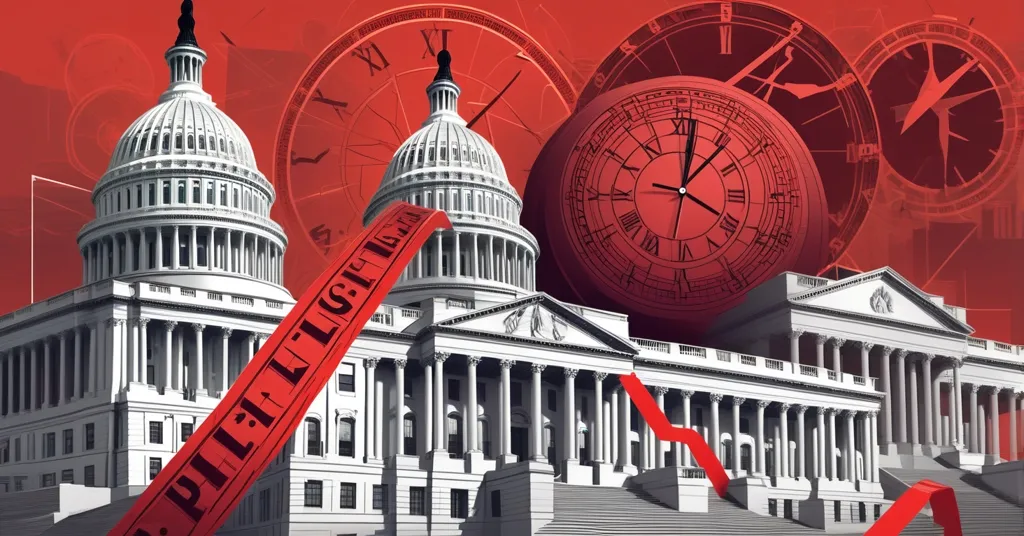
A breakthrough was once expected in April, but that now looks unlikely. Lawmakers are reportedly eyeing a Senate Banking Committee hearing in May as the next major checkpoint, with a full Senate vote by July seen as the last realistic shot before election-season priorities crowd everything else out. If it misses that window, the bill may get shoved to the back burner until 2026.
The biggest reason for the delay is stablecoin regulation. For readers new to the term, stablecoins are crypto tokens designed to hold a steady value, usually by being tied to the U.S. dollar. They’re the plumbing of a lot of crypto trading and payments. They’re also where the fight gets messy, because one category in particular has banks worried: yield-bearing stablecoins.
Yield-bearing stablecoins are tokens that not only aim to stay stable, but also generate returns for holders. In plain English, they can act a little like a savings product or an interest-bearing account. That is exactly why banks are grumbling. If a crypto token starts looking too much like a deposit account that pays interest, traditional lenders see a direct threat to their business model. No surprise there: incumbents rarely enjoy it when someone builds a better mousetrap and the squeaking starts from the old one.
The banking sector’s resistance is less about philosophy and more about turf. Stablecoins that pay yield blur the line between crypto cash equivalents and conventional banking products. That makes regulators nervous too, for reasons that are not entirely nonsense. There are real concerns about reserve quality, consumer protection, and whether people fully understand the risks they’re taking when chasing “safe” returns in a sector known for occasional faceplants.
At the same time, the political battle is not just about protecting consumers. It is also about who gets to issue money-like products and who gets to capture the yield. That is a much bigger fight than one bill. It’s the kind of fight that can expose how much of finance is built on legacy privilege wrapped in “prudence” branding.
There has been at least one meaningful area of progress: decentralized finance (DeFi) protections are mostly settled. DeFi refers to financial tools and applications built on blockchains without the usual centralized middlemen. It’s not a bank branch, it’s not a brokerage, and it doesn’t ask for permission before running code. That makes it a headache for old regulatory playbooks, but it also explains why lawmakers have started treating it differently from conventional finance.
That matters because it suggests some members of Congress are beginning to understand that decentralized systems need a different rulebook than Wall Street with a blockchain sticker slapped on the side. It’s not a miracle. It’s just basic reality finally getting a seat at the table.
Still, the bill has a lot of ground left to cover. If the Senate Banking Committee signs off, the text will still need to be reconciled with a separate version moving through the Senate Agriculture Committee. For casual observers, that may sound random, but it’s not. In Washington, committee jurisdiction matters, and crypto often lands between agencies and congressional silos like a fork in the road nobody wants to own.
After that, the bill would need revisions to its ethics provisions and updates to its regulatory oversight language. Those phrases may sound dry, but they are exactly the sort of details that can derail a deal or water it down into something so vague it barely constrains anyone. Legislative sausage-making: always appetizing, never elegant.
Another hurdle is bipartisan support. That may depend on compromise around government officials’ involvement in crypto markets and the appointment of regulatory commissioners. Those are not side issues. They affect who shapes the rules, who enforces them, and whether the resulting framework gets a fair hearing from both parties or gets treated like a partisan trophy to be smashed at the next campaign stop.
Some lawmakers want a framework that brings more clarity to exchanges, issuers, developers, and investors. Others want tighter guardrails before the industry gets too comfortable. Both views have a point. The crypto industry has spent years complaining about regulatory ambiguity, often with good reason. But the sector has also produced its fair share of hacks, rug pulls, fake yield farms, and “trust me bro” financial engineering. Critics are not hallucinating when they ask for standards.
The key is whether Congress can produce rules that separate legitimate innovation from scammy nonsense without crushing the useful parts in bureaucratic cement. That’s a tough ask for any legislature, and especially for one that tends to move only when the calendar starts screaming.
If the Senate eventually passes the bill, it would still need approval from the House of Representatives before heading to the president. So even if the current logjam clears, there is no guarantee it becomes law. That is why the odds remain uncertain despite lobbying efforts and growing pressure for a coherent U.S. crypto framework.
The bill is also being viewed as complementing the GENIUS Act, another part of the broader push toward clearer crypto rules in the U.S. Taken together, these efforts suggest that lawmakers are inching toward some kind of market structure regime, even if the path is messy, fragmented, and painfully slow.
For Bitcoin, the stakes are indirect but real. Bitcoin does not need Washington’s blessing to function, and frankly it was born to operate outside the kind of centralized control this bill is trying to define. But broader U.S. crypto regulation still matters because it affects the exchanges, custodians, payment rails, and stablecoin systems that many Bitcoin users and businesses rely on. Less regulatory fog could make the environment healthier. Bad regulation, on the other hand, can still spill over and create nonsense for everyone.
There is also a bigger philosophical point here. If lawmakers can finally write rules that recognize decentralized systems as distinct from old-school finance, that would be a small but meaningful win for crypto’s long-term legitimacy. If they botch it, they will likely hand more power to the biggest incumbents and keep innovation trapped in permissioned cages. That would be a classic Washington outcome: expensive, clumsy, and somehow presented as progress.
Key questions and takeaways:
-
What is the Digital Asset Market Clarity Act trying to do?
It aims to create a clearer U.S. crypto market structure framework by defining how digital assets should be regulated and which agencies oversee them.
-
Why is the bill delayed?
The main holdup is stablecoin regulation, especially disputes over yield-bearing stablecoins, along with the usual Senate bottlenecks and election-year time pressure.
-
Why are banks opposing yield-bearing stablecoins?
Because those products can resemble interest-bearing deposits and threaten the banking sector’s grip on savings, deposits, and yield capture.
-
What role does DeFi play in the bill?
Decentralized finance protections are mostly settled, which is notable because it suggests lawmakers are starting to treat decentralized systems differently from traditional finance.
-
What still has to happen before it becomes law?
The bill would need Senate committee approval, reconciliation between committee versions, a full Senate vote, House approval, and finally presidential signature.
-
Why is July such an important deadline?
If the bill does not move by then, election-year politics and limited Senate time could push it off the active agenda.
-
Is passage in 2026 guaranteed?
No. The bill still faces unresolved policy fights, legislative horse-trading, and the very real chance that Congress stalls out again.
-
What does this mean for Bitcoin and the wider crypto market?
A clearer framework could reduce regulatory chaos for exchanges, stablecoins, and crypto businesses, but messy or overly restrictive rules could still create problems for Bitcoin-adjacent infrastructure.
The bottom line is simple: the Digital Asset Market Clarity Act is still in the game, but the path is narrow and the clock is loud. If lawmakers can get past the stablecoin knife fight, reconcile the committee versions, and stop turning every policy question into a partisan food fight, the bill could still move in 2026. If not, Washington will once again prove that it can talk about clarity for months while producing something impressively unclear.