USMCA Review Crisis: Trump’s 100% Tariff Threat Risks 7% Hike on Canadian Exports
 LTB
LTB USMCA Review Looms: Trump’s Tariff Threats Risk 7% Hike on Canadian Exports
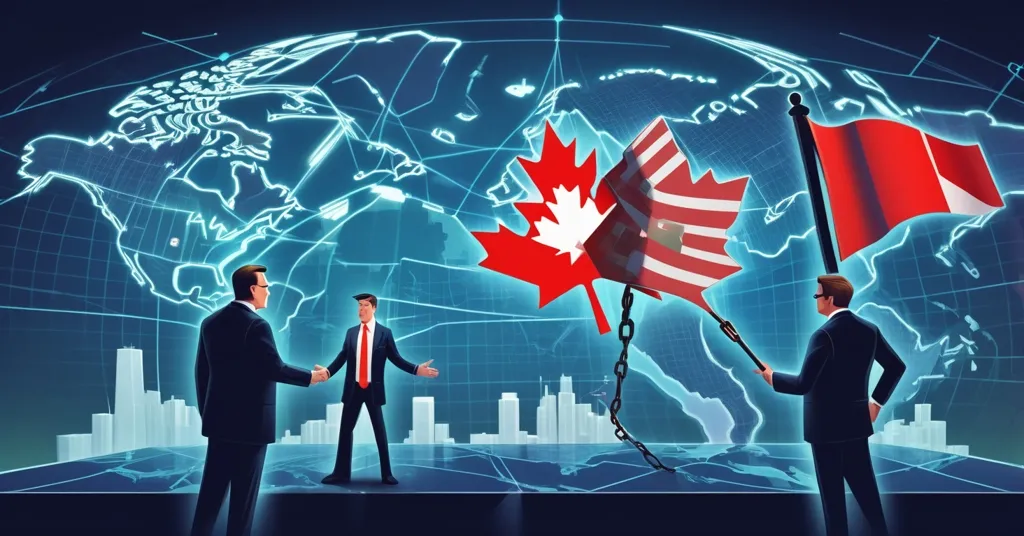
The United States-Mexico-Canada Agreement (USMCA) hits its sixth anniversary on July 1, and a geopolitical firestorm is brewing. President Donald Trump’s threat of 100% tariffs over a Canada-China trade deal has rattled nerves, while economists warn that a failed USMCA review could slap tariffs averaging over 7% on Canadian exports, threatening key industries and exposing the fragility of centralized trade systems.
- USMCA Review Deadline: Sixth anniversary on July 1 sparks a pivotal review; no extension means yearly renegotiations or expiration by 2036.
- Trump’s Tariff Warning: 100% tariffs threatened if Canada moves forward with a China deal involving electric vehicles (EVs).
- Economic Peril: Without USMCA protections, Canadian exports to the U.S. face over 7% tariffs, hitting sectors like steel, autos, and lumber.
USMCA Review: A Make-or-Break Moment for Canada
Let’s get straight to the point: the USMCA, which replaced NAFTA in 2020 after intense negotiations under Trump’s administration, was designed to ensure tariff-free trade—meaning no extra taxes on goods moving between the U.S., Canada, and Mexico. As we approach the six-year mark on July 1, all three nations must agree to extend the pact for another 16 years. Failure to do so triggers yearly reviews, a bureaucratic nightmare of constant renegotiation, until the deal potentially expires in 2036. Even worse, any country can pull the plug with just six months’ notice, leaving the entire framework on shaky ground.
For Canada, this is no academic exercise. With roughly 75% of its exports heading to the U.S. (based on 2022 trade figures), the risk of losing USMCA protections is a direct threat to economic stability. Economists are sounding the alarm: if the review flops, tariffs on Canadian goods could average over 7%, a devastating blow to industries already battered by uncertainty. Steel and aluminum, still stinging from targeted taxes imposed during Trump’s first term, could see costs soar. The auto sector, a backbone of Canadian manufacturing, risks losing competitiveness overnight. Even less glamorous industries like lumber—supplying over 25% of U.S. softwood for construction—and dairy, constrained by tight export quotas, face a grim future. This isn’t just about corporate bottom lines; it’s about workers, farmers, and consumers on both sides of the border getting squeezed by higher prices.
Trump’s Tariff Ultimatum: The Canada-China Deal Ignites Fury
The spark in this powder keg is a trade deal Canada announced on January 16 with China. Under the agreement, up to 49,000 Chinese electric vehicles (EVs) can enter the Canadian market each year—less than 3% of new vehicle sales—in exchange for reduced tariffs on Canadian food exports like wheat and pork to China. Initially, Trump appeared to give a reluctant nod. Fast forward, and he’s now threatening a jaw-dropping 100% tariff on Canadian goods if the deal proceeds. His logic is blunt: he fears Canada could become a loophole for Chinese products to flood the U.S. market, dodging American trade barriers meant to counter Beijing’s economic influence.
“Carney would be sorely mistaken to think the U.S. will let Canada turn into a dumping ground for Chinese products.” – Donald Trump
Canadian leaders are pushing back with equal grit. Prime Minister Mark Carney frames the move as a “back to the future” strategy, aligning EV and agricultural tariffs with 2023 levels while insisting it complies with USMCA rules. Trade official Dominic LeBlanc reinforces this, highlighting the limited scope of the China deal and the enduring strength of U.S.-Canada ties. Yet, with Trump’s rhetoric escalating, these defenses feel like flimsy shields in a storm. Why did Canada take this gamble? After years of U.S. trade volatility, diversifying—even marginally—is less a provocation and more a desperate hedge against over-reliance on one unpredictable partner.
“There’s no pursuit of a free trade agreement with China. [The deal is] limited and only about fixing tariff problems. [The U.S.-Canada relationship is a] remarkable partnership.” – Dominic LeBlanc
“We’re going to use the expression ‘back to the future’ with respect to EVs, with respect to agriculture.” – Mark Carney
Economic Fallout: Canadian Businesses on Edge
The numbers don’t lie, and they’re ugly. A recent Bank of Canada survey shows businesses slamming the brakes on growth plans amid this uncertainty. Desjardins economist Randall Bartlett nailed the mood, pointing out that the investment environment in Canada is downright hostile, especially in these early months. Bloomberg economists dangle a faint hope, forecasting a 1.3% rise in Canadian investment by 2026 if USMCA talks succeed—a leap from last year’s pitiful 0.6% growth. But let’s not kid ourselves: that’s a massive “if” with Trump playing wrecking ball.
Drill down to specific sectors, and the pain gets real. Lumber, critical to U.S. housing, could see a 7% tariff hike drive up construction costs south of the border while gutting mill jobs in Canada. Dairy farmers, already navigating strict USMCA quotas, might find their U.S. market access choked further, compounding struggles with rising operational costs. These aren’t abstract figures; they’re families and communities bracing for impact. On the flip side, U.S. industries largely support USMCA—testimonies at U.S. Trade Representative hearings show sectors like manufacturing and agriculture crave the stability it brings. Yet Trump’s unpredictability overshadows even this backing, leaving everyone guessing.
“The vast majority of U.S. industries that testified at USTR hearings strongly supported the USMCA deal.” – Derek Holt, Bank of Nova Scotia
Matthew Holmes from the Canadian Chamber of Commerce didn’t mince words: companies are already feeling the heat, and a quick resolution is urgent. Good luck getting that when one side’s playbook reads like a chaotic memecoin chart—pure volatility with a sprinkle of dread.
“Companies are already dealing with the fallout and [I urge] both sides to come to a better understanding quickly.” – Matthew Holmes
Decentralized Trade: Can Blockchain Disrupt This Mess?
Now let’s talk something our crypto crowd will sink their teeth into: could decentralized technologies like blockchain and DeFi (decentralized finance) offer a way out of this geopolitical dumpster fire? Traditional trade frameworks are riddled with opacity, currency wars, and political ego trips—precisely the kind of centralized garbage blockchain was built to upend. Picture this: an unalterable digital ledger tracking every EV crossing into Canada, proving whether it’s a legitimate import or the “Chinese dump” Trump rants about. No more endless finger-pointing; the data’s public, secure, and tamper-proof.
For context, blockchain is a decentralized record-keeping system where transactions or data are stored across a network of computers, ensuring transparency without a middleman. Platforms like VeChain are already doing this in supply chains, tagging products with digital fingerprints to log their origin and journey in real-time. Applied to this EV spat, U.S. and Canadian officials could verify compliance instantly, slashing disputes and bureaucratic bloat. Then there’s DeFi—financial systems on blockchain that cut out banks. Imagine a Canadian lumber exporter settling with a U.S. buyer via stablecoins (cryptos pegged to stable assets like the dollar), dodging fiat currency swings and tariff wars. A transaction in USDC could clear in minutes, no government meddling required.
Even Bitcoin, the OG of decentralization, offers inspiration with its borderless ethos—why not trade payments that laugh at national boundaries? Meanwhile, protocols like Ethereum, with smart contracts (self-executing agreements coded on the blockchain), could automate complex trade terms, ensuring compliance without a lawyer army. This aligns with our push for effective accelerationism—speeding up tech-driven disruption to fix broken systems.
But let’s not get carried away with hopium. Blockchain in international trade isn’t ready for primetime. Scalability sucks—networks like Ethereum choke under heavy loads with high fees and sluggish speeds. Governments won’t just roll over; they’ll fight tooth and nail to keep control over monetary policy and trade oversight. And adoption? Most businesses still think “blockchain” is a trendy buzzword, not a tool. Regulatory roadblocks could strangle DeFi faster than a bear market tanks an altcoin. Still, the potential is undeniable. If centralized pacts like USMCA keep crumbling under political weight, decentralized systems—built on transparency and autonomy—could be the middle finger to a failing status quo.
The Bigger Picture: Testing North American Unity
Stepping back, this USMCA crisis is more than a tariff squabble—it’s a brutal stress test for economic unity in North America. If the pact falls apart, costs spike for everyone: businesses bleed, consumers pay more for everything from Canadian maple syrup to car parts, and the ripple effects hit hard. Canada might pivot harder to partners like China, fracturing a regional alliance that’s (mostly) held since NAFTA’s bumpy start in the ‘90s. Back then, trade spats were common, but globalization kept things patched together. Now, with protectionism and populism on the rise, the cracks are widening.
That pivot to diversification could crack open doors for crypto-driven trade solutions—think borderless payments or tokenized supply chains where goods are tracked as digital assets. But it also risks short-term chaos, especially with Trump’s next move as predictable as a rug pull in a shady NFT drop. Centralized trade systems are showing their age, creaking under the weight of geopolitics and inefficiency. Decentralization—whether through blockchain transparency, DeFi autonomy, or Bitcoin’s rebellious spirit—might just get its shot to rewrite the playbook. Or maybe we’re just dreaming in code. Either way, the next few months will be a wild, messy ride, and the stakes couldn’t be higher.
Key Questions and Takeaways
- What’s the USMCA review, and why is it critical for Canada?
Set for July 1, the USMCA review determines if the trade pact extends 16 years or faces yearly renegotiations until a potential 2036 expiration. With 75% of Canada’s exports tied to the U.S., failure could mean tariffs over 7%, crushing industries like steel, autos, and lumber. - Why is Trump threatening 100% tariffs on Canada?
He’s reacting to Canada’s deal allowing 49,000 Chinese EVs annually, fearing it creates a backdoor for Chinese goods to enter the U.S. market, bypassing American trade restrictions aimed at Beijing. - How are Canadian leaders handling the U.S. backlash?
Mark Carney and Dominic LeBlanc defend the China deal as limited and USMCA-compliant, framing it as a necessary diversification while underscoring the vital U.S.-Canada economic bond. - Can blockchain or DeFi address trade disputes like this?
Blockchain could ensure transparent tracking of goods (e.g., EV origins via platforms like VeChain), cutting disputes, while DeFi enables tariff-resistant payments with stablecoins. Yet scalability, regulation, and adoption remain massive obstacles. - What’s the worst-case outcome if USMCA collapses?
A collapse drives up trade costs, disrupts North American markets, and pushes Canada toward partners like China, potentially sparking interest in decentralized trade solutions despite crypto’s current limitations. - Why does this matter for decentralization advocates?
Trade wars expose the flaws of centralized systems—political games and opacity hurt everyday people. Decentralized tech like blockchain or Bitcoin’s borderless nature challenges this broken status quo, pushing for autonomy and disruption.