Uzbekistan Launches Tax-Free Crypto Mining Zone in Karakalpakstan with 2035 Holiday

 LTB
LTB Uzbekistan is giving crypto miners a very real sweetener: a state-backed zone in Karakalpakstan with a tax holiday, lighter energy rules, and a direct line into the country’s banking system.
- Besqala Mining Valley launched in Karakalpakstan by presidential decree
- No taxes until January 1, 2035 for resident companies
- 1% monthly fee replaces standard tax payments
- Solar-only rules removed; miners can use renewables, hydrogen, and the national grid
- All revenue must be deposited into Uzbek bank accounts
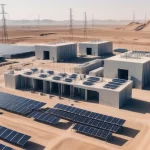
Uzbekistan has created a new state-sanctioned crypto mining zone in the autonomous Republic of Karakalpakstan, a move aimed at pulling foreign capital into one of the country’s most underdeveloped regions. The zone, called Besqala Mining Valley, was established by a presidential decree signed on April 17 and took effect on April 20.
Registered companies inside the zone are allowed to mine digital assets, use a mix of energy sources, and sell mined assets on both domestic exchanges and foreign platforms. That last part matters. Uzbekistan is not pretending this is a closed-off sandbox for domestic use only. It wants the money, the infrastructure, and the attention — but on its own terms, with the state keeping close tabs on the flow of funds.
The biggest catch is also the clearest sign that this is not some free-wheeling crypto frontier. All revenue must be deposited into Uzbek bank accounts. In plain English: miners get the incentives, but the state gets visibility and control over the cash. That is not exactly the cypherpunk dream. It is, however, classic government behavior: welcome the capital, keep a hand on the hose.
Companies granted resident status inside Besqala Mining Valley — meaning firms officially registered and approved to operate there — will pay no taxes until January 1, 2035. Instead of the usual tax bill, they will pay a monthly fee equal to 1% of mining income to the zone directorate. Officials have also been told to propose updates to the national tax code within two months, which suggests this is more than a publicity stunt. Uzbekistan appears to be building a long-term policy framework, not tossing out a one-off deal for headlines and handshakes.
The structure is clearly designed to make the zone attractive to foreign miners and infrastructure operators. Cheap access, low tax friction, and permissive operating rules are the usual bait. Governments around the world have tried this playbook with varying success: offer land, power, tax relief, and a regulatory umbrella, then hope private capital does the rest. Sometimes it works. Sometimes it just creates a subsidized parking lot for speculative businesses looking for the cheapest place to plug in.
The energy shift is especially notable. Under a 2023 rule, mining firms in Uzbekistan had to run entirely on solar power. That restriction is now gone. Miners in Besqala Mining Valley can use renewable energy, hydrogen, and the national grid. Put simply, the state has moved from a hard clean-energy boundary to a much looser setup that gives mining firms more options — and the grid more pressure.
That tradeoff is easy to understand. Solar-only mining sounds clean, tidy, and politically safe. It also can be restrictive, especially for an energy-hungry industry that often needs steady power around the clock. By opening the door to more sources, Uzbekistan is making the zone more commercially realistic. But it is also making a bet that it can supply the electricity without creating headaches for everyone else. In the real world, power policy has a nasty habit of biting back when governments get too enthusiastic about attracting load-heavy industries.
A region long marked by poverty and sparse industry is getting an unusual shot at foreign money — through crypto mining. Karakalpakstan is not being chosen because it is already booming. Quite the opposite. A 2025 UN Development Programme report flagged the region for high poverty and a weak industrial base. That makes it a natural target for a government trying to force economic activity into a place that has not attracted much of it on its own.
That broader development logic is hard to miss. Uzbekistan is using crypto mining as one piece of a wider industrial strategy, not as some ideological nod to Bitcoin maximalism or blockchain utopianism. It is trying to lure capital into a neglected region with a blend of tax breaks, infrastructure promises, and state oversight. In other words, this is not “decentralization” in the pure sense. It is a highly centralized attempt to direct money, power, and growth where the government wants it.
The move also fits neatly alongside Uzbekistan’s separate push into AI and data centers in the same region. Last November, the country launched a tax-free zone for AI and data center projects in Karakalpakstan. Foreign companies investing $100 million or more in that initiative receive full tax exemptions and duty exemptions until 2040. Officials reportedly expect that program to attract more than $1 billion in foreign investment by 2030.
That pairing is no coincidence. Crypto mining and AI data centers are both electricity-heavy, capital-intensive, and politically attractive to governments trying to signal modernity without giving up control. They are anchor industries in the eyes of policymakers: build the power infrastructure, pull in foreign money, and maybe other businesses will follow. The upside is obvious if the plan works. The downside is just as obvious if it doesn’t: expensive facilities, tax giveaways, and a lot of hope dressed up as strategy.
Key takeaways and questions:
-
Why is Uzbekistan creating a crypto mining zone?
It wants to attract foreign investment, push economic activity into Karakalpakstan, and build out infrastructure-heavy sectors like mining and data centers.
-
Why Karakalpakstan?
Because the region is underdeveloped, with high poverty and a weak industrial base, so officials see it as a place where aggressive incentives might actually move the needle.
-
What do miners get in Besqala Mining Valley?
Resident firms get a tax holiday until 2035, a low 1% monthly fee instead of standard taxes, access to domestic and foreign markets, and broader energy options.
-
What changed with the energy rules?
The old solar-only requirement was removed. Miners can now use renewable energy, hydrogen, and the national power grid.
-
Why does the bank account rule matter?
It keeps revenue inside Uzbekistan’s financial system, giving the state more oversight and control over the money flowing through the zone.
-
Is this a pro-crypto policy or a development policy?
It is both, but the bigger goal is development. Crypto mining is being used as a tool to bring capital into a neglected part of the country.
-
What are the risks?
Energy strain, regulatory uncertainty, dependence on a volatile industry, and the chance that tax holidays end up subsidizing firms without creating durable local growth.
-
Could this actually help the region?
Possibly. If the zone brings infrastructure, banking activity, construction, and long-term business interest, it could create real spillover benefits. But a tax holiday is not the same thing as economic transformation.
There is a legitimate upside here if Uzbekistan can execute it properly. Mining operations can create demand for electricity, logistics, banking services, and maintenance. Data-heavy projects can also encourage better infrastructure in places that have been ignored for too long. That is the optimistic case, and it is not nonsense.
But the darker side is just as real. Crypto mining has a long history of promising local prosperity while quietly leaning on cheap power and generous policy favors. If the economics turn sour, miners can pack up fast. If the grid gets strained, residents are the ones who feel it first. And if the state gives away too much for too long, it may discover that it subsidized an industry without building a durable economy underneath it. That is the sort of development strategy that looks clever in a press release and expensive in hindsight.
Uzbekistan is betting that controlled incentives, monitored cash flows, and infrastructure-heavy industries can do what ordinary regional policy has struggled to achieve. Whether Besqala Mining Valley becomes a serious industrial foothold or just another government-backed experiment will depend on execution, energy supply, and whether the promised investment turns into something more lasting than a tax break with a fancy name.