Venezuela’s Economic Crisis: Stablecoins Like USDT Surge as Bolívar Collapses
 LTB
LTB Venezuela’s Economic Abyss: Stablecoins Surge as the Bolívar Burns
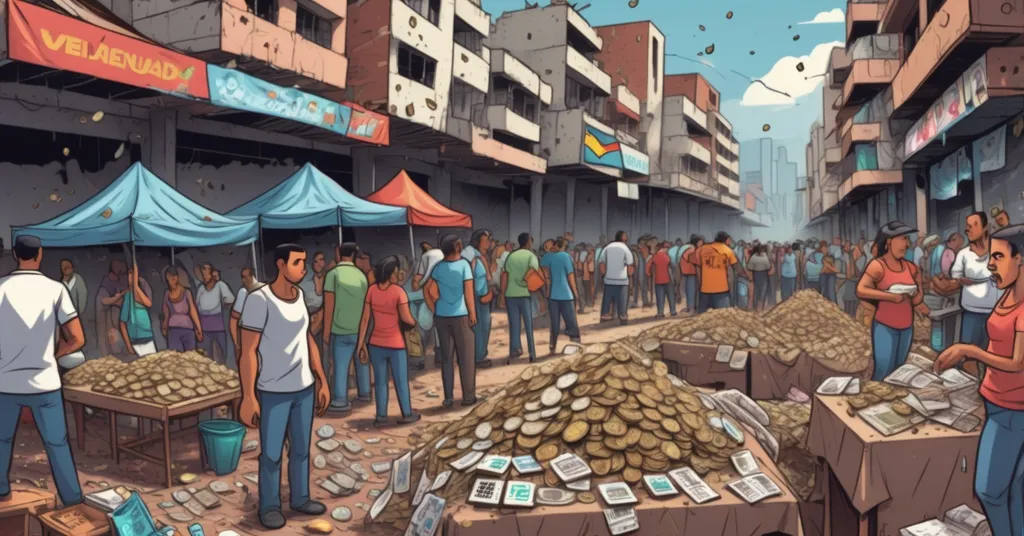
Venezuela is a nation on the brink, where the national currency, the bolívar, crumbles faster than a house of cards in a windstorm. With hyperinflation scorching savings and economic ruin entrenched, citizens and businesses are flocking to US-dollar stablecoins like USDT as a desperate lifeline, embracing digital alternatives to navigate a financial system that’s long past broken.
- Currency Catastrophe: The bolívar is in a death spiral, with inflation rates estimated in the hundreds of percent for 2025.
- Stablecoin Salvation: USDT is now a go-to for daily needs—think groceries, rent, even salaries.
- Regulatory Wildcard: The government’s flip-flopping on crypto keeps everyone guessing, with crackdowns always a looming threat.
The Bolívar’s Relentless Collapse
The economic horror show in Venezuela is playing out in real time. The bolívar, once a symbol of national pride, is now a cruel joke. As of recent data in late 2025, it was trading at approximately 267 to the US dollar, a sharp drop from 254 just a week prior. That’s not just depreciation; it’s annihilation. Hyperinflation, pegged at an estimated 100% to 200% year-on-year for 2025, means a paycheck today might not buy a loaf of bread tomorrow. This isn’t new—since the early 2010s, a toxic mix of government mismanagement, crashing oil prices (Venezuela’s economic backbone), and crippling international sanctions has gutted the nation. Traditional banks, often under tight state control or simply defunct, offer no refuge. For millions, holding bolívars is like clutching burning paper—useless unless you offload it fast.
Stablecoins: A Grassroots Rescue
So, where do you turn when fiat fails? For many Venezuelans, the answer is stablecoins—digital currencies pegged to stable assets like the US dollar. USDT, or Tether, is the heavyweight here, offering a steady value that the bolívar can only dream of. Unlike Bitcoin, which can swing wildly in price (great for speculation, less so for buying milk), stablecoins aim to hold steady, making them a practical store of value and a medium of exchange. In cities like Caracas and beyond, merchants are accepting USDT directly through mobile wallets for everyday purchases. Rent? Paid in stablecoins. Groceries? Same deal. Even salaries, especially for freelancers or those with overseas clients, are increasingly denominated in digital dollars. Data from blockchain tracking firms like TRM Labs shows a massive uptick in stablecoin transactions and active wallets across Latin America in 2024 and 2025, with Venezuela leading the charge, as detailed in recent research on Venezuela’s currency crisis. This isn’t a tech fad—it’s pure survival.
Picture a small shop owner in Maracaibo: he’s tired of bolívar prices skyrocketing overnight, so he starts accepting USDT via a QR code on his counter. A customer scans, pays, and done—no banking middleman, no currency collapse to worry about. That’s the reality for many. For those getting money from family abroad, remittances in stablecoins are a game-changer, preserving value that would vanish if converted to bolívars. This shift is raw, real, and driven by necessity, not ideology.
How It Works: The Peer-to-Peer Pivot
But how do Venezuelans even get their hands on stablecoins in a country with spotty infrastructure and tight financial controls? The magic lies in peer-to-peer (P2P) platforms—direct trading setups where individuals swap assets without a bank or centralized exchange playing gatekeeper. Think of it as a digital barter system, often facilitated through messaging apps like WhatsApp or Telegram, or via local crypto brokers operating out of corner shops. These P2P networks let you trade bolívars for USDT quickly, sidestepping a banking system that’s either inaccessible or outright hostile. While platforms like LocalBitcoins (before its shutdown in 2023) once dominated, newer alternatives and informal networks have filled the gap. It’s not uncommon to see deals hashed out in group chats or through trusted middlemen who convert cash to crypto for a small fee. This isn’t polished or pretty—it’s gritty, grassroots, and prone to scams if you’re not careful. Fraud and rip-offs lurk in these unregulated spaces, a harsh reminder that desperation breeds both innovation and opportunists.
Government Hypocrisy and Looming Threats
Now, let’s talk about the elephant in the room: the Venezuelan government. Their stance on crypto is a maddening game of hot-and-cold. On one hand, they’ve hammered down on unofficial dollar markets, cracking the whip on anyone trading outside state-approved channels. On the other, they’ve turned a blind eye to limited crypto use and—here’s the kicker—reportedly dipped their own toes into digital assets to dodge sanctions. Word is, state-owned entities use crypto to access foreign funds, playing the same game they vilify in citizens. Talk about double standards! For the average Venezuelan, this hypocrisy means uncertainty. A sudden policy shift could ban your favorite exchange or freeze your wallet overnight. Regulatory roulette isn’t a theory; it’s a lived risk in a country where the state’s whims trump consistency.
Let’s not forget the Petro, Venezuela’s ill-fated attempt at a state-backed cryptocurrency launched in 2018. Pegged to oil reserves (a laughable anchor given the industry’s woes), it flopped spectacularly, distrusted by citizens and ignored by markets. Compare that to USDT’s adoption, and it’s clear why decentralized or semi-centralized options win out over government-controlled pipe dreams. People aren’t dumb—they’ve been burned by centralized failures before, and the Petro was just another chapter in that saga.
Regional Ripple Effects and Bigger Questions
Zooming out, Venezuela’s stablecoin boom isn’t happening in a vacuum. It’s part of a larger wave crashing through Latin America, where currency volatility is a shared curse. Argentina, for instance, battles its own inflation demons, with the peso losing ground fast. Yet, unlike Venezuela’s regulatory mess, Argentina’s government has been more crypto-friendly, even flirting with legal frameworks for digital assets. Both nations showcase how economic pain fuels blockchain adoption, but their paths diverge on state response. Stablecoins, particularly USDT, are stepping into the void left by failing fiat, acting as a bridge between decentralization’s promise and the brutal reality of financial collapse. Data suggests the trend is only accelerating—Latin America’s stablecoin transaction volumes have soared, per TRM Labs, pointing to a regional shift that’s hard to ignore.
Barriers and Blind Spots
Still, let’s not pretend this is a universal fix. Not every Venezuelan can jump on the stablecoin train. Reliable internet? A luxury in rural areas or slums. Smartphones? Not everyone’s got one. Power outages are routine, and tech literacy isn’t universal. For the poorest or most isolated, digital currencies remain out of reach, leaving them stuck with a worthless bolívar or bartering goods. Some offline wallet solutions are emerging—think paper-based backups or SMS transactions—but they’re niche and untested at scale. Adoption, while impressive, is skewed toward urban centers and the tech-savvy, exposing a digital divide that mirrors the economic one.
Then there’s the elephant in the stablecoin room: centralization risks. USDT might feel like a safe haven, but it’s backed by Tether, a company whose reserve transparency has been questioned time and again. Bluntly put, trusting Tether’s claim that every token is backed by real dollars or assets is a leap of faith—especially dicey when you’ve already been screwed by broken systems. If those reserves falter or face legal scrutiny, the peg could slip, and users could be left holding the bag. Bitcoin maximalists in our crowd might smirk here, arguing BTC’s fully decentralized nature trumps any stablecoin. They’ve got a point—Bitcoin’s censorship resistance makes it a beast for long-term wealth protection, even if its volatility disqualifies it for buying groceries. In Venezuela, it’s less about ideology and more about what works day-to-day, and USDT fits that bill, flaws and all.
Acceleration Through Crisis
Here’s where Venezuela’s mess gets fascinating from an “effective accelerationism” lens—crisis is turbocharging blockchain tech in ways gradual reform never could. Out of sheer necessity, millions are adopting decentralized tools, proving that disruption often outpaces bureaucracy. Stablecoins aren’t just a workaround; they’re a middle finger to a failed status quo, showing how fast tech can step in when systems collapse. But let’s not romanticize it—these are messy, imperfect solutions, vulnerable to both local crackdowns and global hiccups. The question isn’t just whether stablecoins can sustain a nation’s economy, but whether their rise signals a tipping point for decentralization—or a trap waiting to spring when centralized issuers stumble or governments clamp down.
Key Takeaways: Unpacking Venezuela’s Stablecoin Surge
- Why are Venezuelans turning to stablecoins like USDT?
Hyperinflation and the bolívar’s collapse make local currency worthless almost overnight, pushing people to digital dollars for stability in daily transactions and savings. - How are stablecoins used in everyday life in Venezuela?
From groceries to rent and even salaries, merchants and individuals accept USDT via mobile wallets, bypassing the failing banking system. - What role do peer-to-peer platforms play in crypto adoption?
P2P setups allow direct trades of bolívars for stablecoins through apps or local brokers, dodging banks and enabling quick access despite risks like scams. - What dangers do stablecoin users face in Venezuela?
Government unpredictability means sudden bans or exchange restrictions could cut off access, while centralized stablecoin risks like Tether’s reserve doubts add global uncertainty. - Is this a long-term fix for Venezuela’s economic woes?
Hardly. Stablecoins are a desperate patch on systemic rot—corruption and mismanagement persist, and tech barriers limit reach for many. - What can the crypto world learn from Venezuela’s crisis?
Economic collapse accelerates blockchain adoption, but it also exposes gaps—centralization vulnerabilities, access inequalities, and regulatory hazards must be tackled for lasting impact.
Venezuela stands as a raw, unfiltered experiment in blockchain’s potential amid chaos. Stablecoins aren’t a magic fix—they’re a dented lifeboat in a raging storm. They offer hope to millions while carrying baggage that could sink unwary users. As the bolívar burns, this nation’s desperate embrace of crypto might inspire other crumbling economies—or serve as a cautionary tale of betting on untested tech in uncharted waters. One thing’s certain: in a land of broken promises, digital dollars are less a revolution and more a last resort. Can they hold under the weight of a nation’s pain? That’s the gamble Venezuelans are forced to make every damn day.